Page 146 of 409

This Piece of Wall Art Doubles as a Light-Emitting Lantern

YOY-depth-picture-lampp (1)

Photos by Yasuko Furukawa

Is it a lantern? Is it a photo of a lantern? Is it wall art? Well, it’s all of the above. And it’s the latest design from the mind-bending design duo YOY, who enjoy incorporating clever illusions into their work. This year at Milan Design Week Naoki Ono and Yuki Yamamoto, the pair behind YOY, are debuting “Depth,” a playful light that plays with our sense of depth.

Continue reading

Cones of Light Create Abstract Trees in Sou Fujimoto’s Interactive Forest

sou-fujimoto-cos-forest-of-light (1)

After teaming up with Nendo 2 years ago, COS, the high-end cousin of fast fashion brand H&M, is has collaborated with Japanese architect Sou Fujimoto to stage an immersive installation made up primarily of light. Taking cues from the brand’s minimal, monotone collection, Fujimoto created a multisensory experience of light, sound and fog that interacts with visitor’s movements.

Continue reading

A Piaggio Ape Covered in Green and Converted Into a Flower Shop

FENDI FLOWER SHOP by Makoto Azuma 9

all photos courtesy makoto azuma

The Ape is an adorable 3-wheeled vehicle produced by Italian carmaker Piaggio. It was originally designed by the inventor of the Vespa and was intended to aid the struggling class of post-war Italy. Well now instead of transporting goods it’s selling flowers at the Ginza flagship store of Italian luxury brand Fendi.

Continue reading

Music Monday: Degurutieni

Degurutieni 1jpg

Degurutieni is a musician, make no mistake. But to better understand his dark, gothic aesthetic you may want to learn about where he’s from: the Nishinari district in Osaka, which holds the inglorious title of Japan’s biggest slum. Degurutieni describes his childhood as “Neverland,” a world where he was free to explore and observe his city with little to no parental guidance. He’d often stay out all night among the riots and red lights, an experience that would go on to inspire his raucous sound and haunting lyrics.

Continue reading

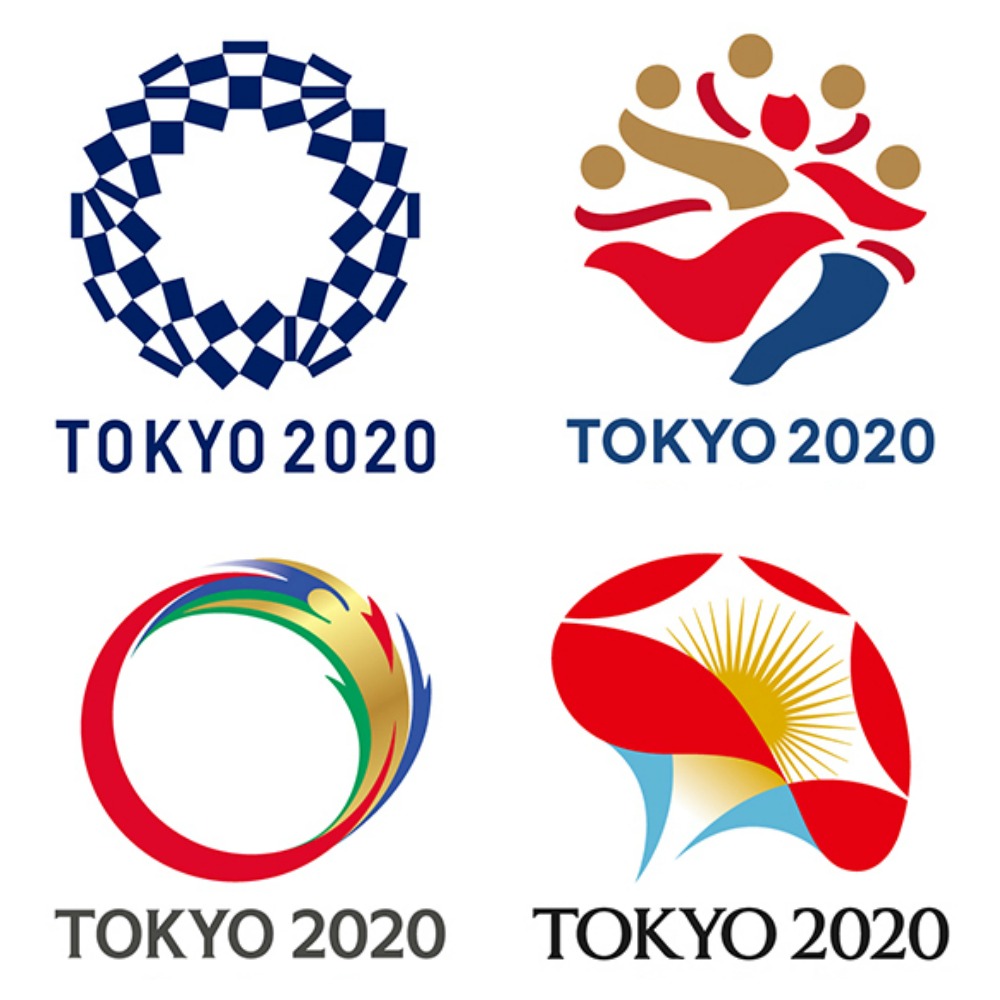
Four Shortlisted Designs Revealed for the Tokyo 2020 Olympics Logo

shortlisted emblems tokyo 2020

Update: On 4/25/16 the olympics committee decided to go with idea A, the harmonized checkered emblem.

After sifting through over 14,000 designs submitted in a public call for entries for Tokyo’s 2020 Olympics logo, the committee has revealed 4 outstanding designs that have been shortlisted. Kenjiro Sano’s original logo was withdrawn last year after a controversial plagiarism scandal so the committee has been very cautious, noting  that each design has been vetted for originality and selected in consultation with design and trademark professionals. The creators of each design have been masked and the committee is asking the public to help them decide, because no one wants to take responsibility for making a decision.

Continue reading

Radios Made From Real Turban Seashells

sazae-turban-shell-radio (3)

There’s a popular folk myth that if you hold a seashell to your ear you can hear the sound of the ocean. While what you actually hear is resonance within the cavity of the shell, there’s now a seashell that plays real music. It’s been 90 years since radio came to Japan. So to commemorate that milestone the staff at Japanese radio station BayFM decided to create seashell radios.

Continue reading

Music Monday: KAO:S

KaoS-crop11

“Out of chaos comes order,” wrote the philosopher Friedrich Nietzsche. And while many scientific examples seem to point to the truth of this profound statement, in this case it’s KAO:S that arose from chaos. By chaos I’m referring to the 2011 earthquake and tsunami that wreaked havoc in Northern Japan. And by KAO:S I’m referring to the Japanese band that was founded just a month after the earthquake.

Continue reading

The Bicycle Culture Center in Tokyo is a Museum for Bicycle Lovers

BCC-Bicycle-Culture-Center-1

all photos by kentahasegawa

Established in 1981, the Bicycle Culture Center is a unique space in Tokyo where you’ll find anything and everything pertaining to bicycles. They have over 9000 publications pertaining to bicycles. But that’s just for starters – they also have bicycles themselves, rare parts, vintage posters and magazines from around the world.

Continue reading

Toyota’s Stunning Concept Car Made From 86 Handmade Wooden Panels

Toyota-SETSUNA (1)

“Wood is not for cars,” lamented automobile enthusiast Jerry Seinfeld, recently. “It makes no sense.” But therein lies the beauty of Toyota’s new concept car Setsuna, whose exterior is made from 86 handmade wooden panels. Although it offers basic vehicular performance like driving, turning and stopping, the Setsuna, named after the Japanese Buddhist word for “moment or “instant,” is not supposed to make sense. It’s supposed to make us rethink our relationship with our car as one that is something more than just an industrial product loaded with the latest technology.

Continue reading

Japan Finalizes Foreigner-Friendly Pictograms, Leaves Manji Symbol (卍) Unchanged

Japan-new-pictograms

6 of the 15 new pictograms Japan will be incorporating into maps

Japan is in the midst of a tourism boom, and it’s expected to continue as Tokyo prepares to host the 2020 Olympics. Just yesterday the government doubled their estimates for annual number of tourists by the year 2020 from 20 million to 40 million. And one step they’re taking to make Japan more accessible is to redesign the pictograms used on maps to be more foreigner-friendly.

Earlier this year the GSI (Geospatial Information Authority of Japan), in an effort to improve some of the country’s pictograms that are only recognizable to the Japanese, announced an initiative to redesign many of them. And now they’ve officially finalized designs for 15 pictograms that will begin to be incorporated into maps. Most of the changes are understandable, but it’s going to be sad to see the postal code sign 〒 become a generic letter.

But on the flip-side, the organization decided to leave Japan’s manji symbol 卍 unchanged. The symbol, which indicates Buddhist temples, is often confused for the Nazi swastika and many groups had urged Japan to change it. But a counter movement to leave the symbol unchanged and educate tourists instead took root, which seems to have had an effect on the final decision.

« Older posts Newer posts »

© 2026 Spoon & Tamago

Up ↑

Design by Bento Graphics