Page 147 of 409

Go treasure hunting in an Arita porcelain warehouse for just 5000 yen

kouraku kiln treasure hunt 1

The Kouraku Kiln was founded in Arita (Saga Prefecture, Japan) in 1865 and has been producing ceramics for the past 150 years. Over that time the facility has accumulated a vast collection of pottery that has, for one reason or another, gone unsold. The warehouse is so vast that some workers use a bicycle to get from one side to the other. And they’ll be the first to admit that even they don’t really know what’s in there. The production facility is now inviting visitors on a “treasure hunt” to try and get rid of some of their stock.

Continue reading

Tokyo’s Hippest New Select Shop is a Basement Parking Garage

the parking ginza (1)

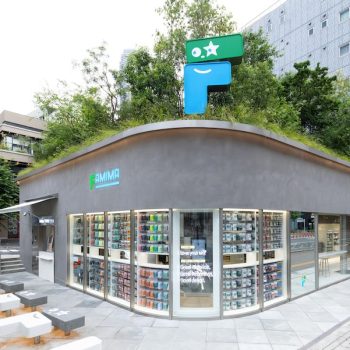
you won’t find any parking in the new Park-Ing (photos courtesy Fashionsnap)

After realizing people don’t want to shop inside a swimming pool, DJ-turned-fashion-guru Hiroshi Fujiwara has called it quits on his retail venture The Pool. Does that mean he’s getting out of retail? Hardly. In fact, he’s doubling down on unique shopping experiences by opening a new select shop called The Park-Ing and it’s located in – you guessed it – a parking garage.

Continue reading

Music Monday: Wednesday Campanella

wednesday campanella ZIPANGU CD jacket

cover art for Wednesday Campanella’s “ZIPANGU” album (released Nov. 2015)

It’s ironic that our sporadic music column, Music Monday, is featuring an artist with a conflicting name of the week: Wednesday Campanella. The group, who takes their name from the fact that they often practiced in the middle of the week, are formed around the lead vocal Kom I, known for her eccentricity and slacker vibe. Making up the trio are composer Kenmochi Hidefumi and Dir. F, who plays the role of manager/director.

Continue reading

An elongated market in Niigata inspired by the Engawa

sanjo-spice-lab-engawa 1

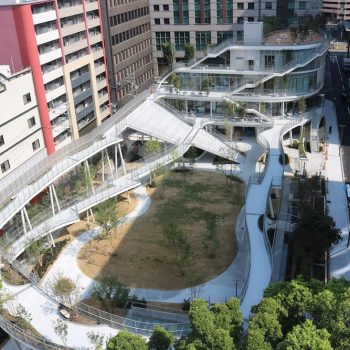
Stage Engawa, which opened right outside Kita-Sanjo Station (Niigata)

The engawa is a generous hallway, often likened to a veranda, that is part of traditional Japanese homes. Located between interior rooms and the garden, the engawa defies typical architectural spaces by being not entirely closed yet not entirely open. Mimicking this feature, and hoping to inspire a community space where locals can come and go as they please, a new market has opened in the center of Sanjo City, Niigata.

Continue reading

Haunting Photographs of Residents Returning to Daily Activities in the Fukushima Exclusion Zone

Fukushima-retrace-our-steps 9

Kanoko Sato in a gymnasium of a school in the Ukedo district, destroyed by the tsunami and left like this since the disaster. “If it was not for this project, I would never have seen this forbidden zone with my own eyes. “

A young student stands in her school’s gymnasium. A woman pushes a shopping cart through the fresh fish section of her local supermarket. A man looks at his winnings as he sits inside a pachinko parlor. Five years ago, before the Tohoku earthquake, tsunami and nuclear power plant disaster, these all would have been normal activities. But now, after the government’s mandatory evacuation and the establishment of an exclusion zone, the town of Namie, as well as many others, have become ghost towns.

Working closely with the inhabitants, French photographers Carlos Ayesta and Guillaume Bressio set out on a long-term project to document Namie residents in their old settings in a project called Retrace Our Steps.

Continue reading

6 Japanese Art & Design Shows to See This Spring in New York

ny-art-walk-spring-2016-header

Although the winter this year in New York was one of the warmest in recent memory, we’re still excited that Spring is finally here. March brings warmer temperatures but it also brings new art shows. So why not get outside and enjoy both? We’ve put together a simple map of our top picks to see this Spring for lovers and admirers of Japanese art & design!

Continue reading

Itoman Gyomin: a restaurant in Okinawa inspired by local fisherman culture

Itoman Gyomin 01

“Nozura-Zatsuzumi” (野面雑積み) is a Okinawan technique of stacking Ryukyu limestone to create walls. It was used by fisherman in the Itoman region of the island to construct fishing grounds. Picking up where their ancestors left off, architects decided to use this same technique and material to create the facade of a restaurant “promoting the local tradition and culture through its cuisine.”

Continue reading

Plate: An Idyllic Woodland Market that Promotes Local Production for Local Consumption

PLATE_04

PLATE: a magical marketplace for local fair

Chisan chisho (地産地消) is a concept that took root in Japan in the early 80s and translates to “local production for local consumption.” Similar to the notion of buying local, the movement, which was intended to deliver ultra-fresh, in-season food, fell out of favor in the 90s as trade barriers came down and imported foods became more and more cheaper.

But over the last couple of years several food scandals involving imported food, as well as domestically-produced food, has refocused people’s attention on the food they consume and where it comes from. And several restaurants have popped up around Japan, promoting this very concept.

Continue reading

Tracing the Revolutionary Work of Issey Miyake

the-work-of-miyake-issey-exhibition (1)

For the last 45 years Issey Miyake has been interested in clothing, a word he prefers to fashion. “I want to make clothes like T-shirts and jeans that many people can wear with ease.”

Yet his work has hardly been stagnant. By incorporating art and technology into his practice he’s managed to make revolutionary advances in a series of futuristic ideas that led to accolades from all parts of the fashion and art world. “Issey Miyake’s work stems from a challenging yet elementary question: how to wrap the body, which is three dimensional, with fabric, which is two dimensional, without forgetting that the body is also alive and moving.”

Now, a new exhibition at the National Art Center in Tokyo reflects on almost a half century of work by Miyake Issey.

Continue reading

Papa’s Maze 1 & 2 (Limited Time Set)

Papas-maze-set

It’s been exactly 1 year since we released Papa’s Maze 2.0. To commemorate, we’re offering both the original (1.0) and the newer version (2.0) for a special price this week only!

In 1983 Mr. Nomura, better known as Papa, completed a mindbogglingly intricate maze that he had worked on for 7 years. 32 years later he picked up his pen once again to return to his passionate hobby, creating an equally complex and beautiful maze for his daughter, who had discovered the original artwork in the family’s attic.

The set of 2 prints are available here through March 27, 2016.

« Older posts Newer posts »

© 2026 Spoon & Tamago

Up ↑

Design by Bento Graphics