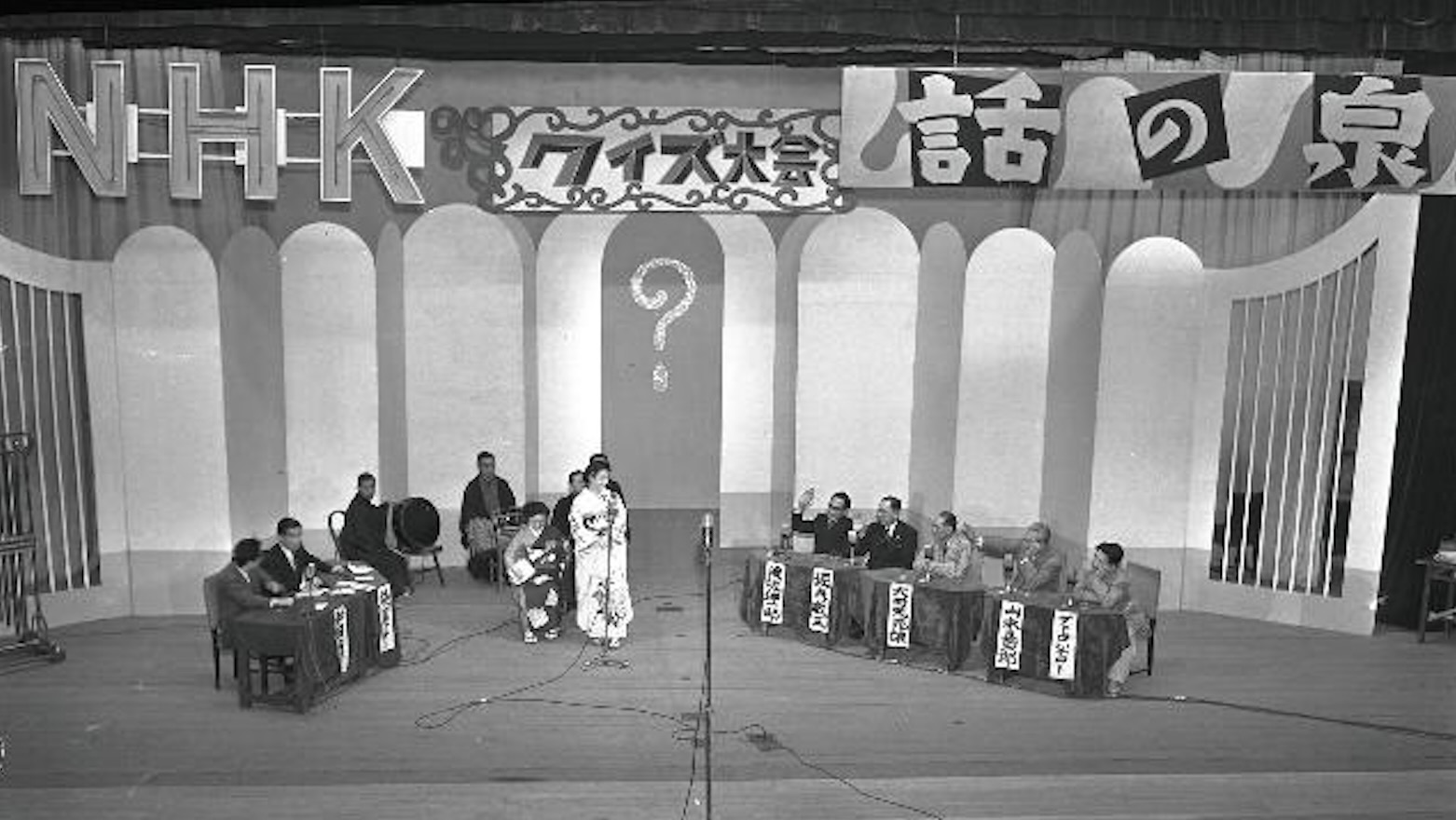
the set of hanashi no izumi, Japan’s very first quiz show
Today, Japan is famous for its quiz culture. Television quiz shows attract millions of viewers, quiz clubs thrive at schools and universities, and trivia competitions remain a popular form of entertainment. But Japan’s fascination with quizzes actually has roots in one of the most transformative periods in the nation’s history: the Allied Occupation after World War II.
In his recent book, “kuizu no sengoshi” (Heibonsha, April 2026), author and quiz champion Noriyasu Tokuhisa explains how quiz shows were introduced to postwar Japan as part of the Allied Occupation’s effort to reshape Japanese society. Far from being mere entertainment, quiz programs embodied American values and were seen as tools for democratization.
Japan Between Defeat and Occupation
Following Emperor Hirohito’s radio broadcast announcing Japan’s acceptance of the Potsdam Declaration on August 15, 1945, most Japanese understood that the war had ended. However, few people knew what unconditional surrender would actually mean.
Even senior government officials had only a vague understanding of what occupation by Allied forces would entail. Rumors spread widely. Some Japanese officials had warned citizens that surrender would result in men and women being enslaved. As a result, anxiety was particularly high in Kanagawa Prefecture, where Allied troops were expected to land first.
At the same time, others believed that Allied forces would quickly withdraw after Japan complied with the Potsdam Declaration. Extreme optimism and extreme pessimism coexisted amid widespread uncertainty. This was the climate that GHQ found themselves in when they arrived.
GHQ’s Media Strategy
Occupation information policy was carried out by two organizations:
- The Civil Information and Education Section (CIE), which sought to influence Japanese thinking over the long term.
- The Civil Censorship Detachment (CCD), which monitored publications and public discourse.
The CIE’s mandate included educational reform, media guidance, public opinion research, and information policy.
While brief, one of its most important projects was Shinsō wa Kōda, which aired on NHK from December 1945 through February 1946. The program used dramatic sound effects—gunshots, shouting, screams—and even opened with Beethoven’s Fate Symphony. Media scholars argue that its format, which featured conversations between Japanese participants, was carefully designed to make Occupation narratives about the war more persuasive.
The program explained how Japan had been led into war and sought to convince listeners of the responsibility and guilt of the militarists who had brought about defeat.
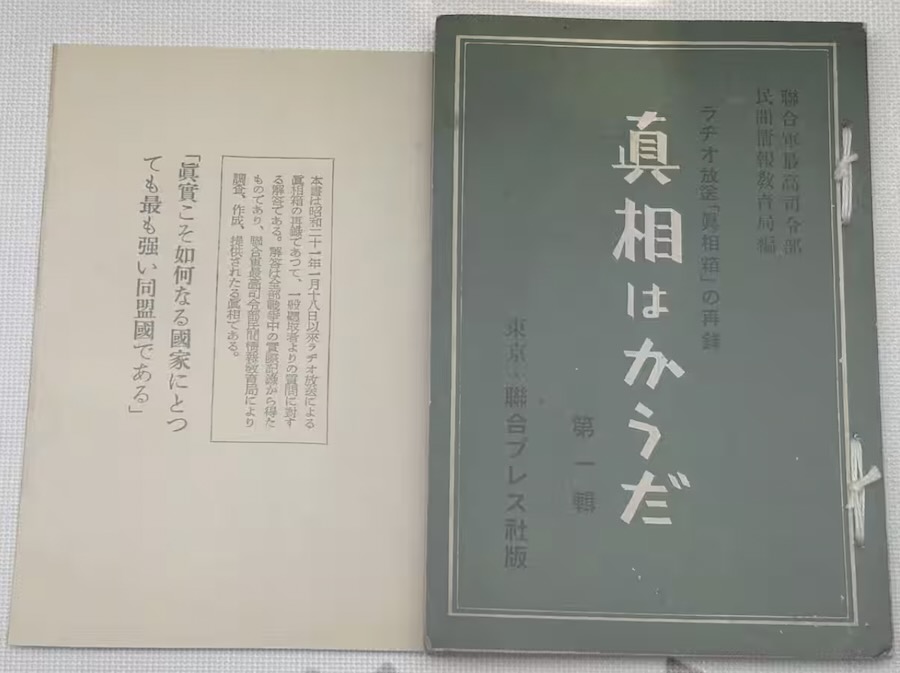
a transcript of shinso wa kouda (NHK Museum of Broadcasting)
GHQ saw quiz shows not merely as educational programming but as a way to normalize participation, merit-based competition, and equal opportunity—values that contrasted sharply with the hierarchical structures associated with prewar Japan.
Japan’s First Quiz Show
On December 3, 1946, NHK Radio launched Hanashi no Izumi (“The Fountain of Knowledge”), Japan’s first quiz program. The show became an immediate hit and remained on the air until 1964.
It was modeled after the American radio program Information Please, which had debuted in 1938. Other American-inspired quiz programs soon followed, including Twenty Questions and What’s My Name. Behind all of these programs was the intentional guidance of the CIE.
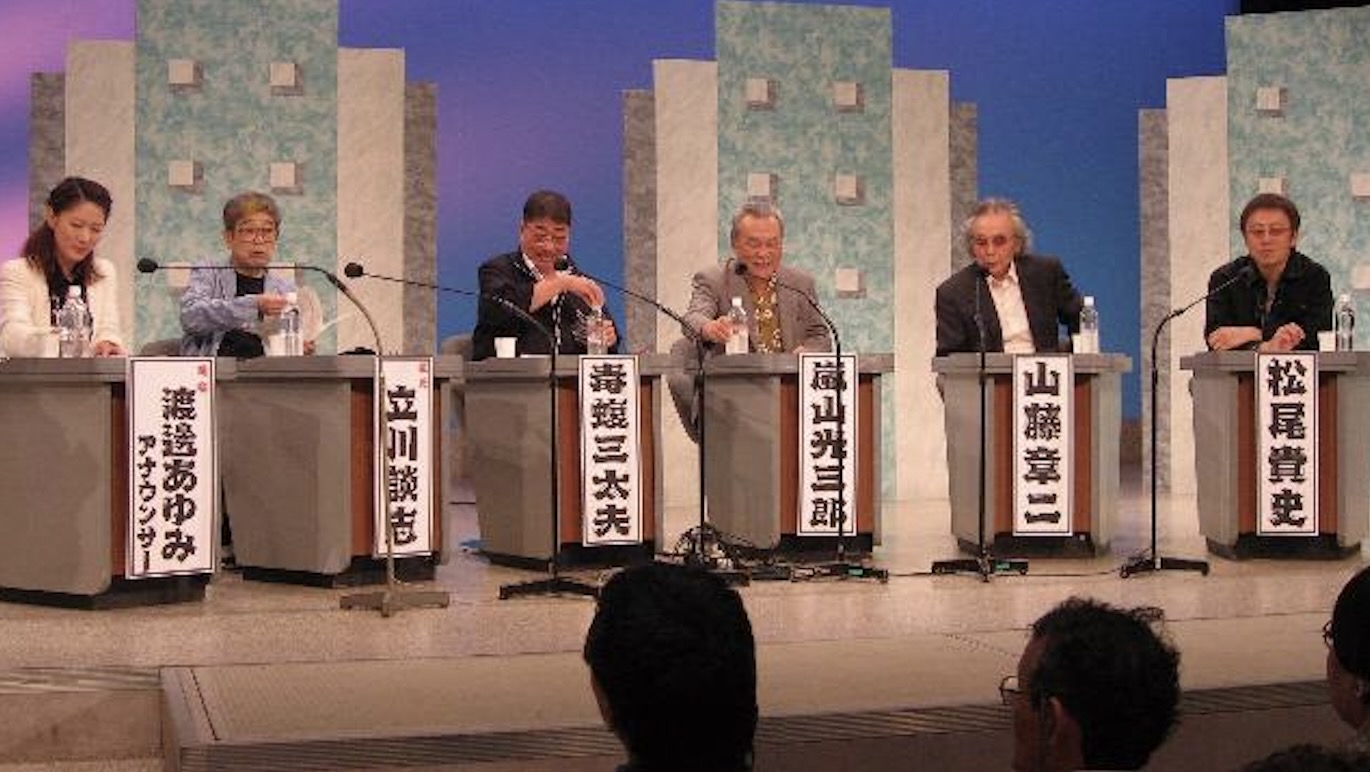
The format of Hanashi no Izumi was simple. Listeners submitted questions, which were read aloud by the host, while a panel of celebrity guests attempted to answer them. Questions often resembled riddles rather than straightforward trivia, and contestants had only ten seconds to respond—a surprisingly short amount of time by modern standards.
The show’s guests included prominent intellectuals and cultural figures such as poet Hachirō Satō, film director Kajirō Yamamoto, and music critic Keizō Horiuchi. The host was Tokugawa Musei, one of Japan’s first true multimedia celebrities.
A National Quiz Craze
The popularity of Hanashi no Izumi exceeded all expectations. Listeners whose questions were selected received prize money. If the celebrity panel failed to answer, the reward was even larger. By 1950, the show received an astonishing 1.33 million submissions.
Occupation reports noted that listeners had embraced this entirely new style of program, and by 1947 officials were already describing the phenomenon as a “quiz craze” sweeping Japan.
The Democratization of Japan Through Quiz Shows
Tokuhisa argues that quiz programs symbolized both America’s prosperity and its values. Commercial radio had flourished in the United States during the 1920s and 1930s, the same period that saw the rapid rise of the American middle class. Cars, radios, washing machines, and refrigerators became common household goods, and quiz shows became a staple of popular entertainment.
Quiz programs reflected a distinctly American vision of society. Anyone could participate regardless of social status, but rewards were distributed according to performance. Stated differently, opportunity was open to everyone. And results were dependant on ability.
GHQ saw quiz shows not merely as educational programming but as a way to normalize participation, merit-based competition, and equal opportunity—values that contrasted sharply with the hierarchical structures associated with prewar Japan.