Page 152 of 409

Playful Animated GIFs Imagine Edo Japan With Computers

atsushi-segawa-lavie

“MADE in JAPAN” shows artisans carving keyboards and computer towers, illustrating the divisions of labor that became common in the 19th century. The image is a mash-up of Hokusai’s View from Fujimigahara in Owari Province and The Timberyard at Honjo

GIF artist Atsushi Segawa (previously) is known for taking classical images of ukiyo-e and carefully computerizing certain parts, setting them into motion. His style is a mix of realism and surrealism, combining historical accuracy with science fiction. Segawa’s work recently caught the eye of Japanese computer maker NEC, who commissioned the artist to create a series of animated GIFS that imagine what life in Edo Japan would be like if computers existed.

Continue reading

Pat Inn: A Modernist Hotel on Tokyo’s Tropical Chichijima

pat_10

The sleekest hotel on a Japanese tropical island.

A 25 hour ferry ride from Tokyo, lies the Ogasawara Archipelago, a series of tropical islands that few seem to know about. Hailed by UNESCO as a World Heritage Site in 2011, these islands are teeming with bright fish frolicking amongst rich coral reefs. The brilliantly colored water and sandy beaches offer visitors a range of activities: from scuba-diving and snorkeling in the rusty remains of a torpedoed ship from WWII, to fishing and sea-kayaking. While the archipelago consists of a handful of small islands, the only populated islands  are Hahajima (pop. 500) and Chichijima (pop. 2000).

Continue reading

Yusuke Nishimura Photographs the Unknown World of Japanese Performing Folk Arts

the folk by yusuke nishimura

Sagi-mai (Heron Dance) from Tsuwano, Shimane

The world of Japanese performing folk art is an obscure one. Despite having been around for hundreds of years, most Japanese have not been exposed to it. And when they do, it’s usually by chance. For photographer Yusuke Nishimura, it took 23 years of living in Japan before he stumbled upon the performing folk arts, an experience akin to discovering a secretive society.

Continue reading

Bacon Ice Cream and Photographer Yoshiyuki Okuyama

Okuyama_2

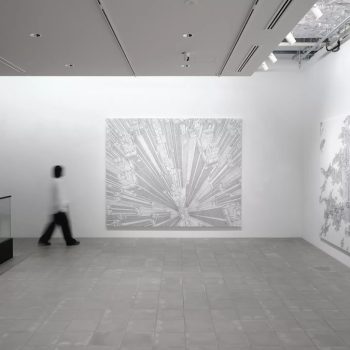
If you hurry, you may be able to catch the final week of photographer Yoshiyuki Okuyama‘s exhibition “BACON ICE CREAM” at the Parco Museum in Tokyo’s Shibuya district. Showcasing roughly 100 works from the past 5 years, this mini-retrospective show celebrates Okuyama’s prodigious entrance into the competitive Tokyo art scene. His photography features characters that seem to emerge from ruptures— ruptures that offer a glimpse into alternate realities whose environments are peppered with vibrant hues or glazed over with dreamy pastel palettes.

Continue reading

Magical Photographs of Ginzan Onsen in the Snow

ginzan onsen snow 3

Ginzan Onsen is an achingly photogenic hot spring town in the Yamagata region of Northern Japan. Literally meaning ‘silver mountain,’ the location became famous for its old-Japan look and feel after it was used for the site of the period drama Oshin. Japanese photographer Yossy, who is based in neighboring Miyagi Prefecture, happened to visit Ginzan as it was snowing last week and captured some pretty magical photos.

Continue reading

Could Tokyo Bay Host a Floating Eco-City in 30 Years?

KPF_Rendering_02_Dfocus

Next Tokyo: a vision for a floating eco-city built in the middle of Tokyo Bay | click images to enlarge

In the 2015 – 2025 Lloyd’s City Risk Index, Tokyo was identified as the 2nd most at risk city only behind Taipei. Hurricanes, earthquakes and flooding were the primary issues raised that put the metropolis at risk. And in alignment with those waterborne risks, global architecture firm KPF has proposed “Next Tokyo,” a vision for Tokyo in the year 2045 when a mile-high tower and eco-city floats on Tokyo Bay providing home for half a million citizens and simultaneously addressing city-wide vulnerability by providing coastal defense infrastructure.

Continue reading

The USIO Project: Using Design to Promote the Treasures of Ishigaki Island

USIO design project

The USIO Design Project is an initiative that pairs designers with local business on Ishigaki Island in Japan’s southwestern Okinawa Prefecture. The idea is to harness the power of design by rebranding and redesigned the treasures that the island has to offer. The first phase of the project began with redesigned a series of products and souvenirs that were made on the island.

Continue reading

A Constellation of Japanese Architecture to Shine on New York

japanese-constellation-FB

Do you ever look at an architectural work and think, “Oh that’s Japanese.”? We certainly do. And while I’d like to say it’s because we all have such keen eyes, there’s something more to it. As Portuguese architect and curator Pedro Gadanho puts it, there’s “a Japanese constellation” of shared architectural themes and sensibilities that travel across generations of architects to create a strong regional identity. It stands in stark contrast to individuality-based “star-system” often found in the West and is the subject of an upcoming exhibition at New York’s Museum of Modern Art.

Continue reading

Japanese Artist Turns Paper Cups, Food and Cigarette Ash Into Playful Works of Art

We don’t know much about Shin except that he’s Japanese, lives in Kyushu and is 23 years old. We also know that he enjoys turning everyday objects in his house – cigarettes, apples, bread – into dynamic, 3-dimensional works of art that have found an endearing home on Twitter and Instagram, where the artist posts his creations.

But more than anything, Shin’s multilayered method of storytelling using paper cups has so far proven to be his most creative use of disposable materials.

Continue reading

K8: an 8-Leveled Bar in Kyoto Wants to Reclaim its Neighborhood’s Lost Beauty

K8 Kyoto by Florian Busch (1)

All Photographs Copyright Nacasa & Partners

Kyoto’s Kiyamachi Dori is a gem of a location. The historic street was built in the early 1600s to run parallel with the new Takase River, which was opened to allow small boats to carry wood, coal and other goods to the city center. And because of this surge in economic activity, by the late 1700s, Kiyamachi Dori was lined with restaurants, inns, brothels and small watering holes all looking to cater to travelers and merchants. It’s an intricate network of night alleys, says architect Florian Busch, adding: “any walk here leads to eventual surprises.”

Continue reading

« Older posts Newer posts »

© 2026 Spoon & Tamago

Up ↑

Design by Bento Graphics