Page 25 of 406

Artisanal Ghibli Collection Blends Animation with Craftsmanship

All images courtesy of Nakagawa Masashichi Shoten

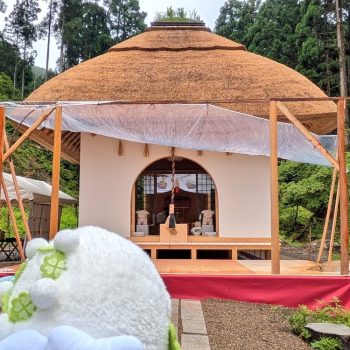
Studio Ghibli is bringing a new lineup of Totoro collectibles in collaboration with some of the best craftsmen from around Japan. The collection comprises Totoro figures, paper treasure boxes, flower vases, plates, handkerchiefs, and furoshikis (traditional wrapping cloth), teleporting children to the world of Ghibli through role playing goodies.

Continue reading

Kurkku Fields: A Sustainable Farm, Outdoor Art Museum and Underground Library in Chiba

“Kurkku Fields” | photo by Yurika Kono courtesy Fujiwalabo

Located an hour from Tokyo in the wilderness of Chiba is Kurkku Fields, a vast, 74-acre sustainable farm that combines elements of ethical farming and food, art and nature. You can visit for a day or stay for a weekend and enjoy fresh, delicious produce, admire art, and learn about sustainable living.

Continue reading

Nihonga Painter Yuki Matsuoka’s Organic Artworks are Brimming with Energy

“No beginning No end” by Yuki Matsuoka | photos courtesy the artist

Last week in Kyoto, the Eki Museum hosted an exhibition dedicated to five up-and-coming nihonga painters. Literally “Japanese painting,” the term nihonga sounds broad but actually refers to a very specific style of painting that uses only natural materials like sumi ink, mineral pigments, gofun (a white pigment made from pulverized seashells) and animal or vegetable coloring.

Continue reading

The History of Animal Escape Drills at Japanese Zoos

Zoos are home to dangerous animals and for this reason they have a moral and legal obligation to protect the community and visitors. All zoos carry out semi-annual training in response to various animal escape scenarios. But zoos in Japan often take their drills a step further, staging elaborate dry runs by using costumed zookeepers as fugitive animals. The skits can seem silly at times but are rooted in an alarming, real-life incident that took place in Tokyo almost 90 years ago.

Continue reading
Water-Activated Calligraphy Makes Shodo More Accessible

It is said that ‘Shodo’, the art of kanji calligraphy, was brought from China to Japan during the Asuka Period (538 – 710 AD). It was considered an essential part of education amongst samurai and aristocrats. And now it is an artform limited to professionals. Like painting, it also requires a bunch of tools, endless practice and is typically a messy affair. Hanakosumi’s range of ‘Water Activated Paper’ addresses some these issues, making Shodo more convenient.

Continue reading

RAKKU’s New Jacket is a Wearable Bag

Rakku’ is a project initiated to revolutionize the mundane and tiring work culture. The word ‘Rakku (楽)’ means ‘Comfort’ in Japanese and the project’s objective is to question the current way of working, contemplating what really is necessary and also delving into new possibilities of doing the very same things in a relaxed, fun yet efficient way. Hence the motto ‘Work freely, fun and easy.’ 

Continue reading

Graphic Design Kamishibai Tell Visual Fairytales

“Snow White” retold using only graphic symbols

The kamishibai (literally “paper play”) is a Japanese form of storytelling that involved a narrator using illustrated paper boards to tell stories. As the story would progress, a new board would replace the previous board, propelling the story forward. This concept served as the inspiration for graphic designer Katsuhiko Shibuya and his class of students at Joshibi University of Art and Design. The task, however, was to deconstruct fairy tales even further using only graphic symbols.

Continue reading

Interiors for ONIBUS Coffee Made From Discarded Wood and Beans

images ©Katsuhiro Aoki

Onibus Coffee has brewed up their first location outside Tokyo. Designed by Torafu Architects and located in Nasu, Tochigi, the coffee shop joins Good News Neighbors, a group of environmentally conscious businesses.The idea was to establish the coffee brand’s identity while blending in with the surrounding neighbourhood and nature. 

Continue reading

Artist Hikari Asano Experiments with Traditional Japanese Rooms By Spinning a Kotatsu

”marui chikyu no moyogae” / 丸い地球の模様替え (2023) by Hikari Asano

Artist Hikari Asano is currently a graduate student at Tokyo University of the Arts. Over the years, she’s developed a practice of experimenting with washitsu, or traditional Japanese rooms, in surreal and unexpecting ways. As part of her graduating thesis project, she’s created a tatami mat base and kotatsu that spins in the air like a child-propelled merry-go-round.

Continue reading

Marc Newson’s New Tokyo Toilet Takes Cues from Vernacular Tea Houses

images ©Satoshi Nagare courtesy Nippon Foundation

Joining the likes of Architects Tadao Ando, Fumihiko Maki, Shigeru Ban and many other renowned names,  Marc Newson’s Toilet is the latest addition to the Nippon Foundation’s Tokyo Toilet Project in the hip neighbourhood of Shibuya. It is the only one to be contributed by a designer based outside Japan.

Continue reading
« Older posts Newer posts »

© 2026 Spoon & Tamago

Up ↑

Design by Bento Graphics