all photos by Yohei Sasakura courtesy Masaru Takahashi Architectural Design Officer
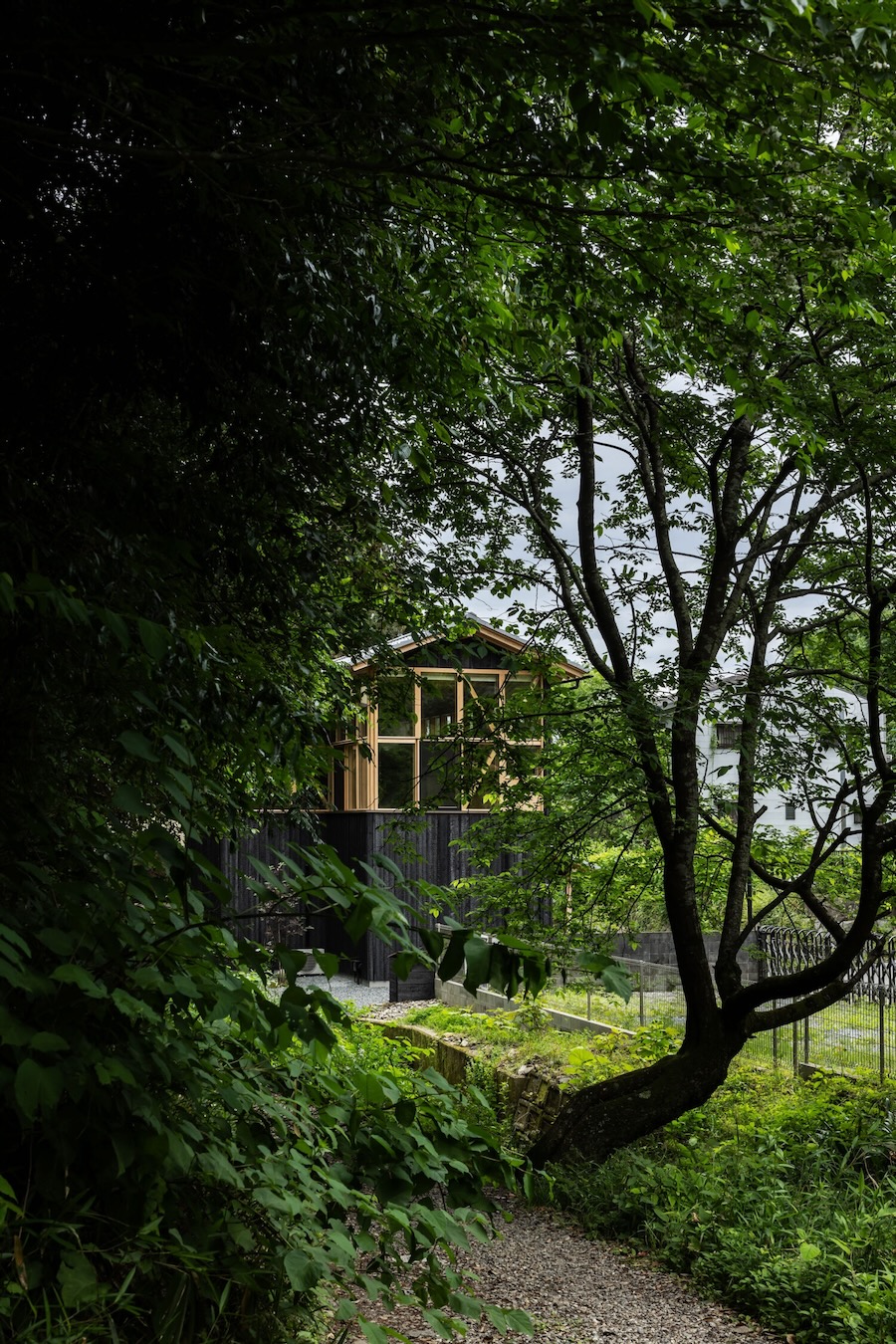
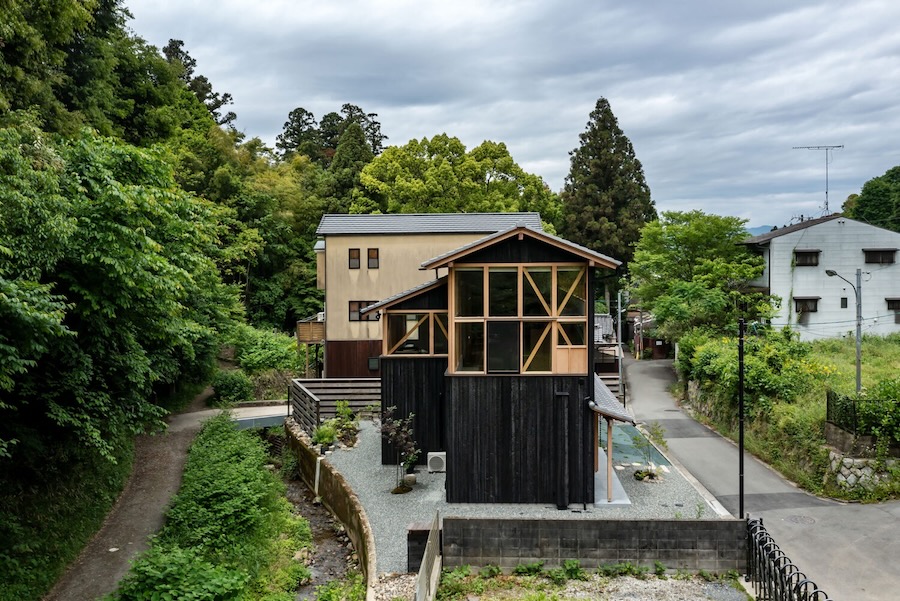
The “Imakumano House” is named after its dwelling: the Imakumano district of Kyoto. It’s a residential area where civilization meets wild mountain slopes. The site offers immersive views of deep green ridgelines, punctuated by sacred spots like Fushimi Inari Shrine and misty mountain streams. It was designed by local architect Masaru Takahashi, who balanced the wishes of his clients—a couple who wished to fully integrate the transformative vistas into their everyday life—with the challenges and hazards that come with living so close to the wilderness.
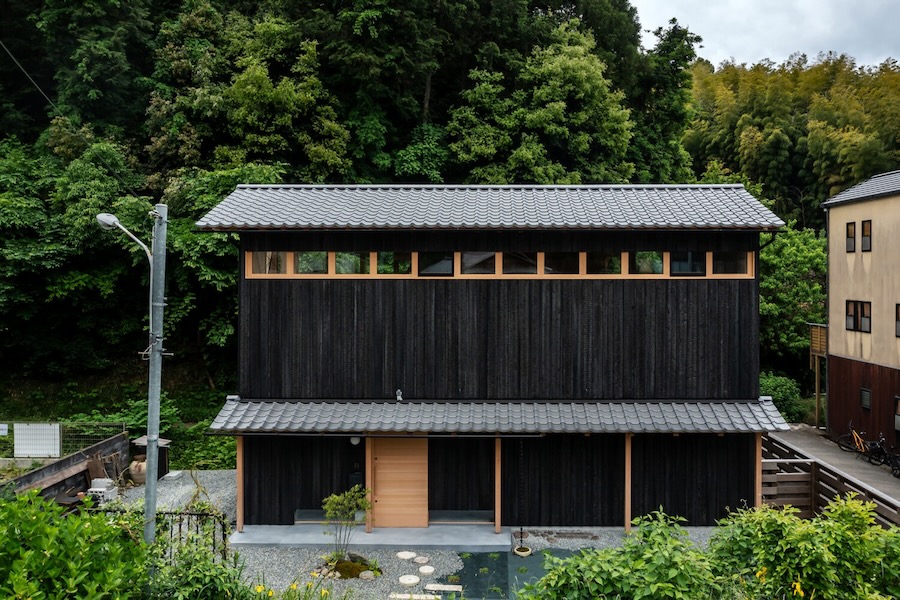
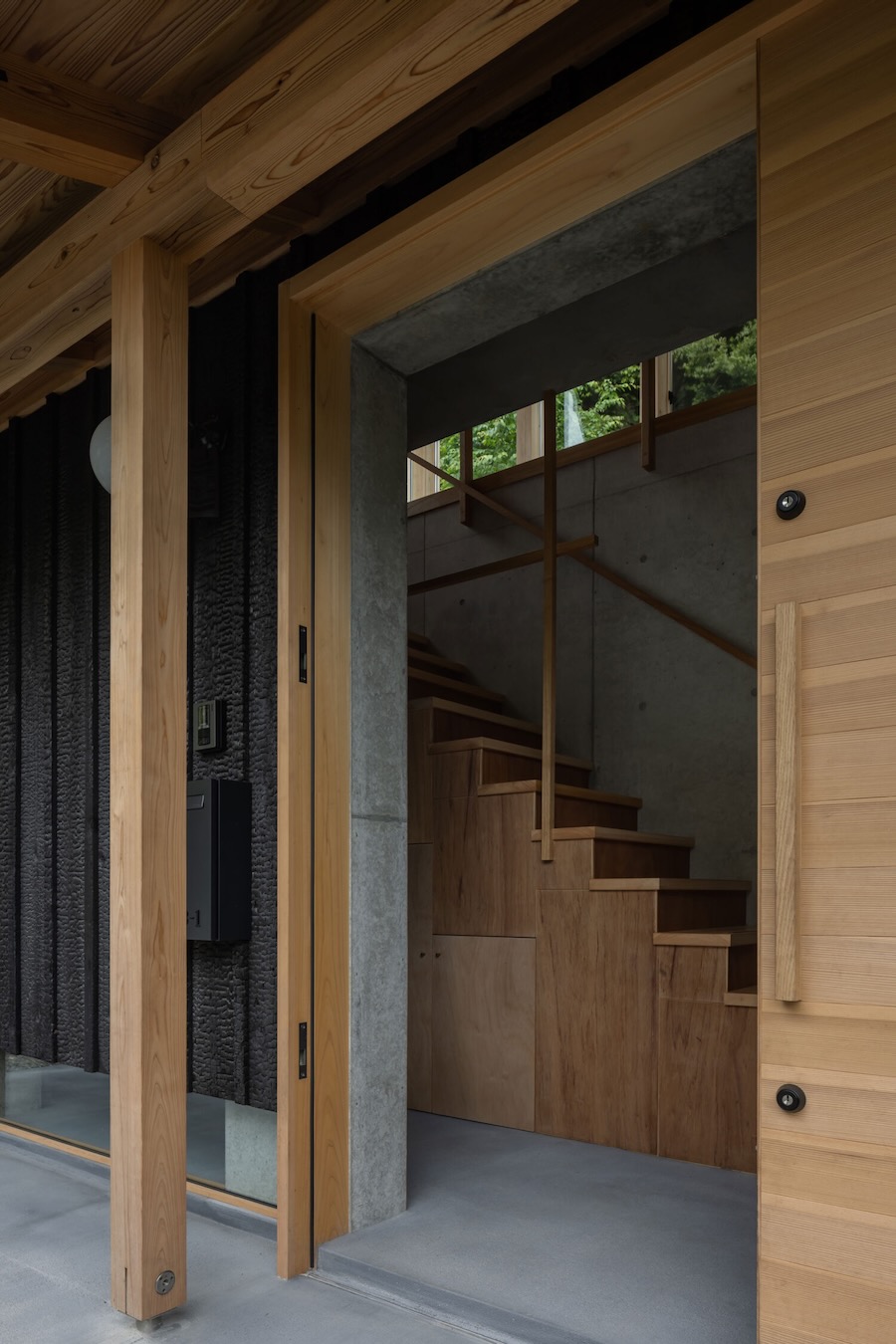
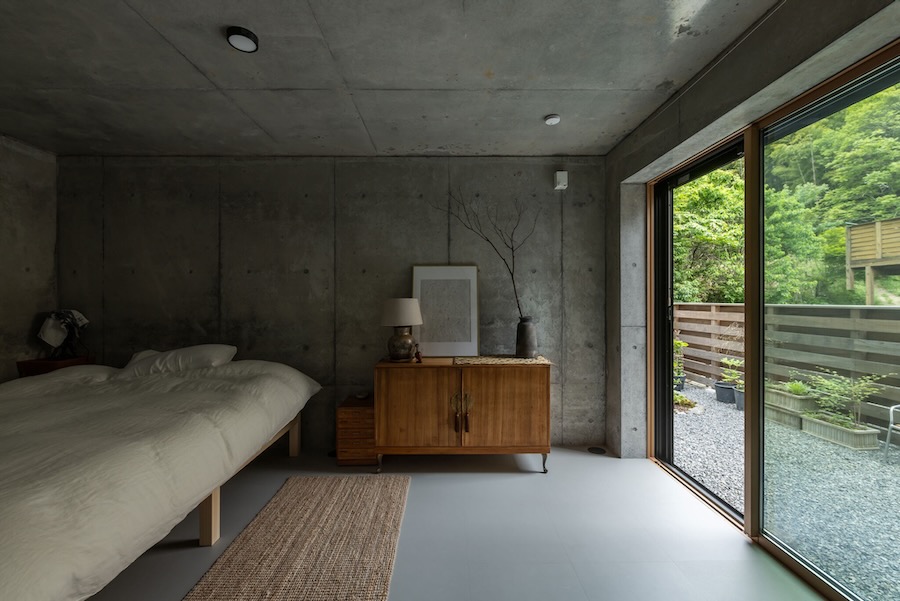
Situated within a notoriously steep and rugged landscape, the location lies in zones prone to landslides and sediment flow. To counter these risks, the first floor is built with thick, robust reinforced concrete walls—strategically window-less toward the lower terrain.
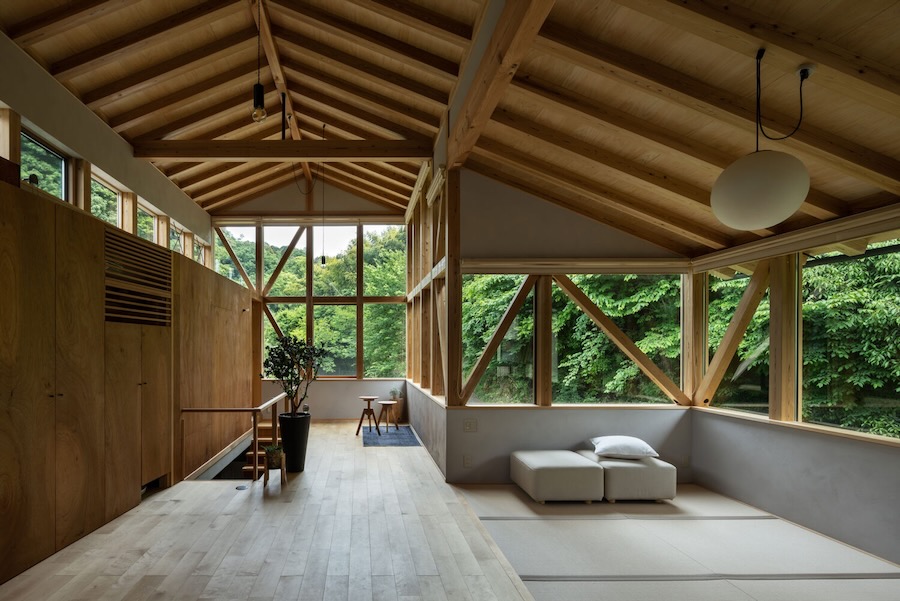
Simultaneously, the house sits within Kyoto’s highly regulated landscape protection zone. Amid such constraints, one of the rare levers the designers could exploit was building height. They raised the second floor to a generous 3.7 m, enabling the use of standard 4 m timber and ushering in a sense of spaciousness.
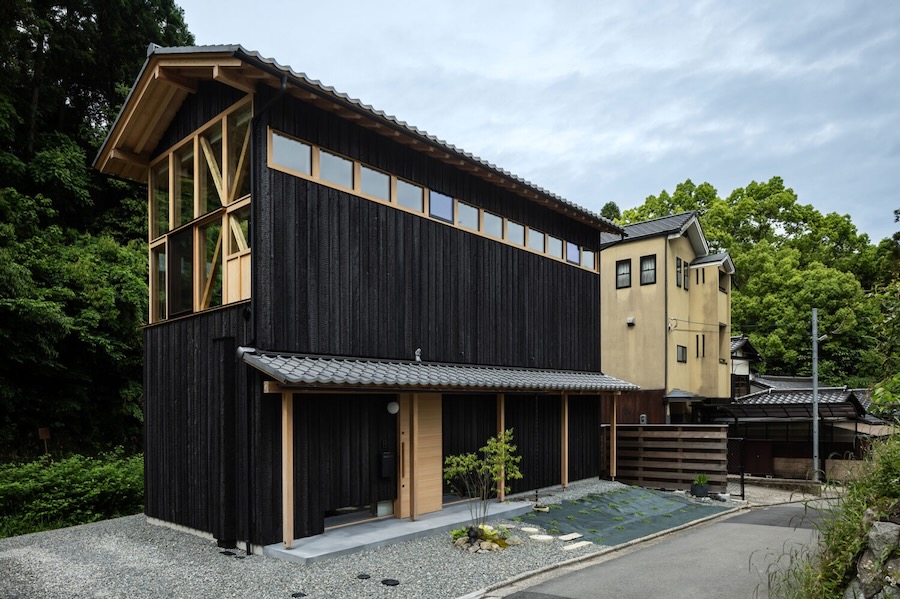
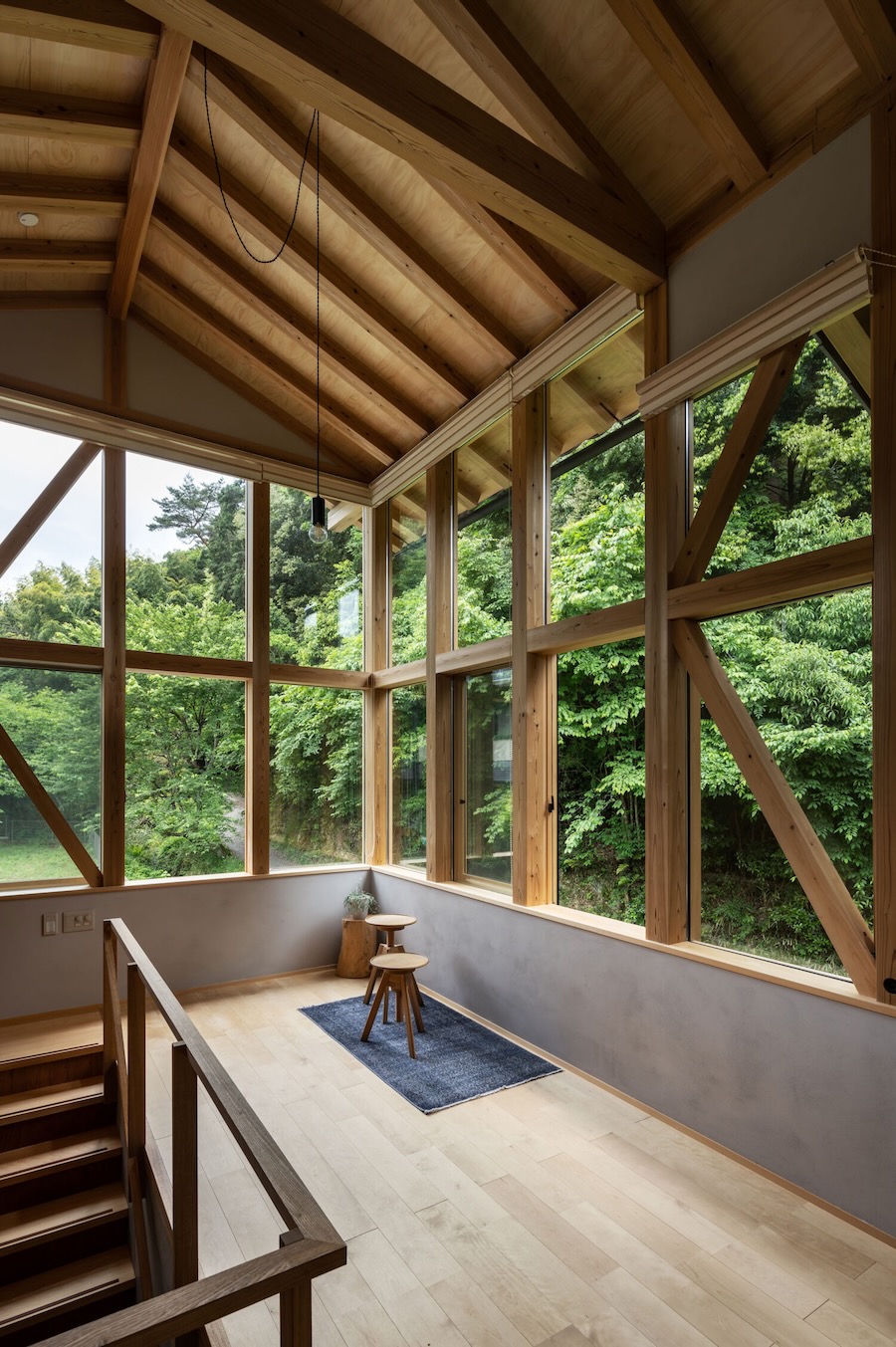
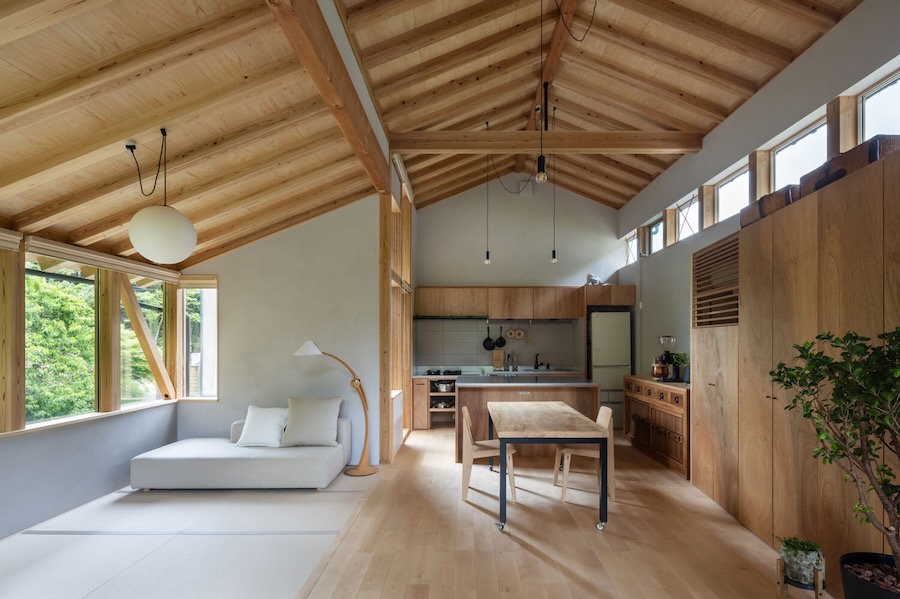
The elevated second floor is the heart of the home—an open-plan living and dining area oriented entirely to the east and south, the only directions permitted under ordinance, to fully embrace the surrounding green panorama. Opposite sides remain closed, shielding residents from urban views.
The architecture subtly embeds “margins” around the windows. As one reaches a sitting nook by the window, the landscape doesn’t merely appear—it envelops, yet gently, fostering a calming connection with nature.