all photos by Kenichi Sukegawa
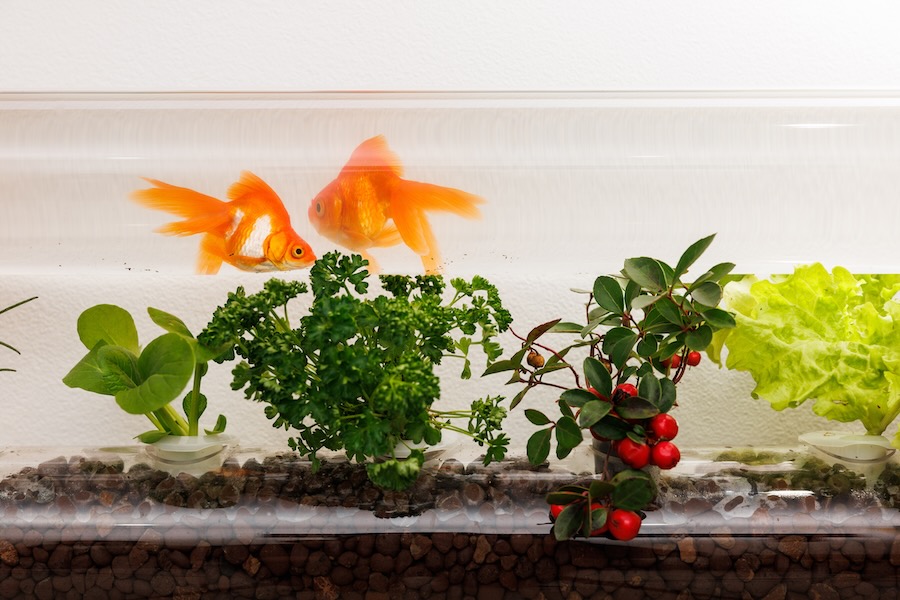
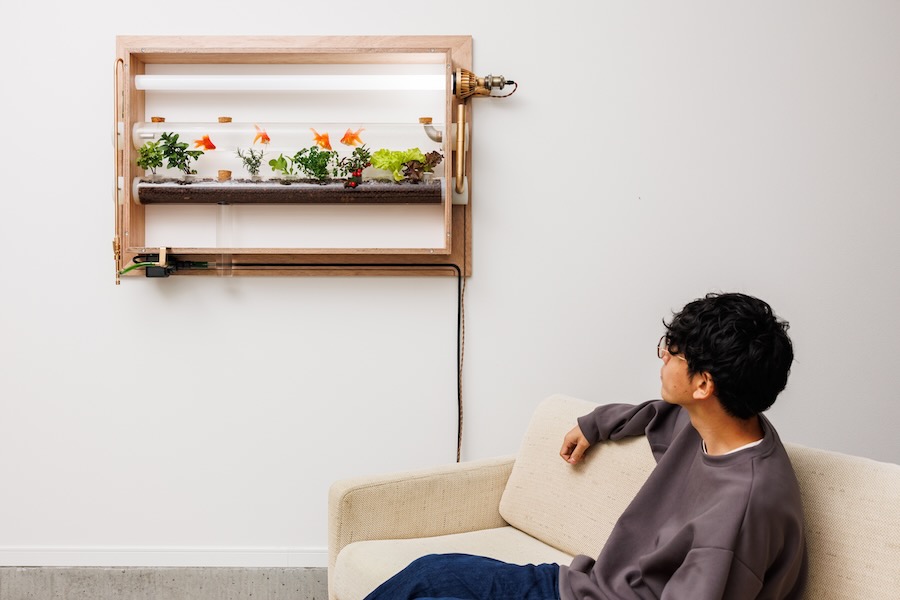
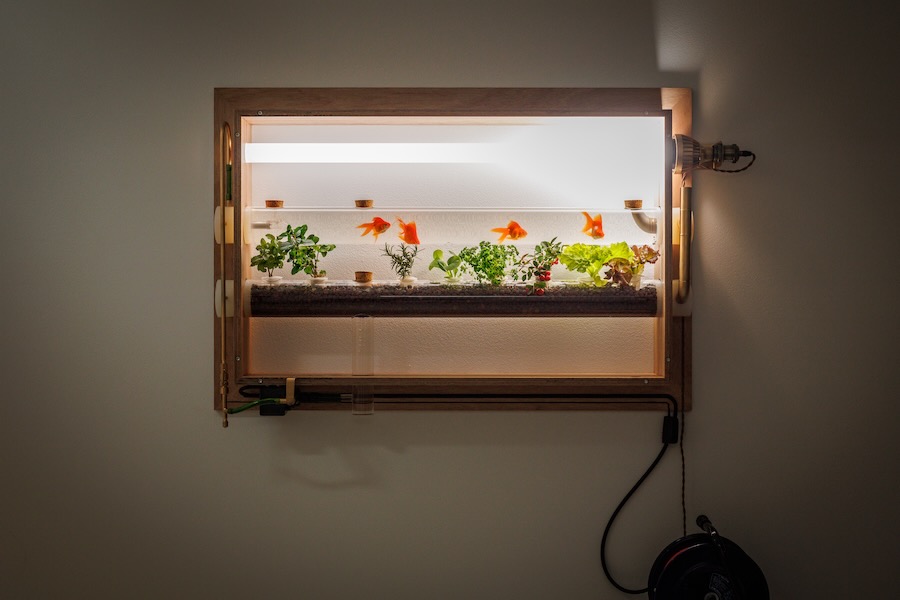
Imagine a picture frame—not hanging on the wall, but breathing with life. Fish swim lazily while plants grow lushly below, all connected in a circulating system of water, nutrients, and light. That’s Gaku-poni (額ポニ), a prototype developed by Japanese architect Keisuke Hatakenaka.
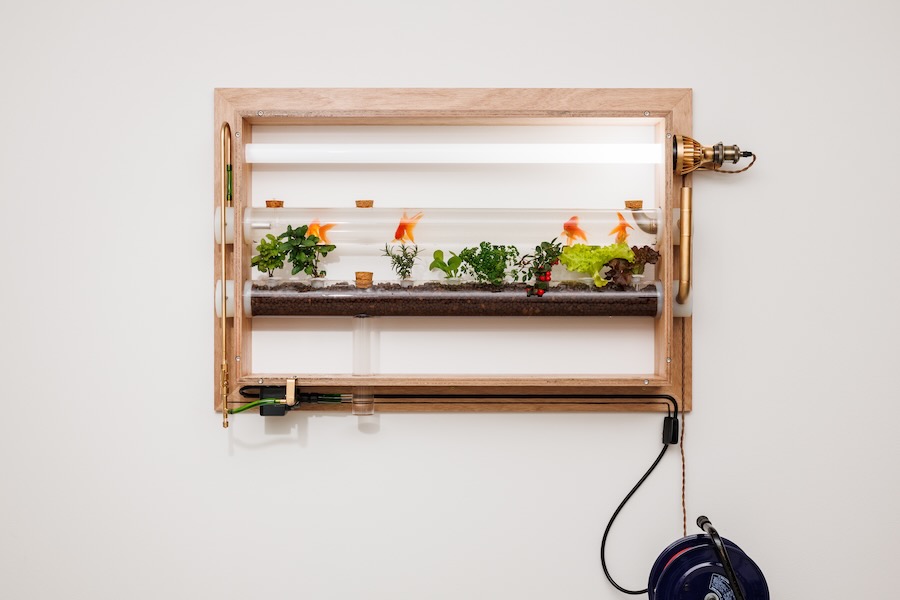
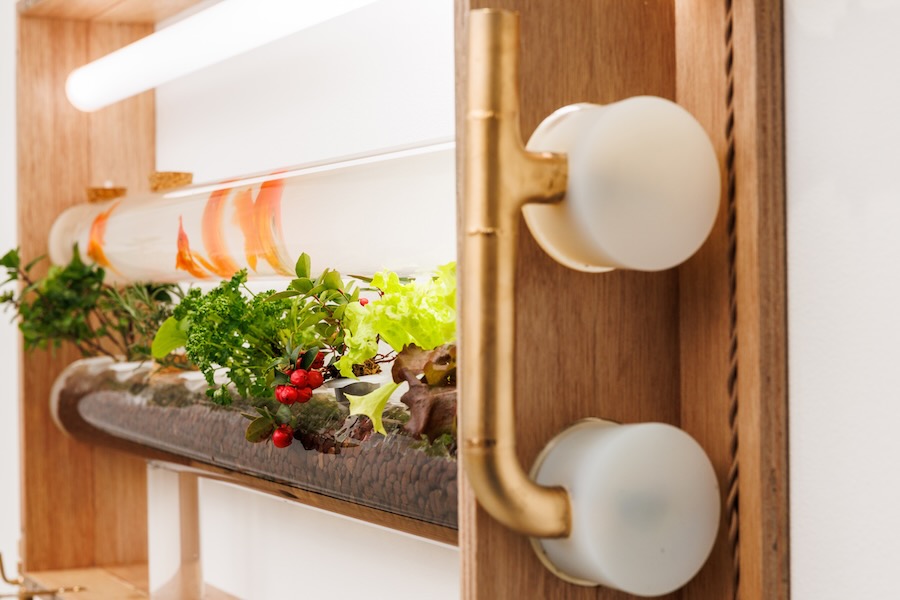
Gaku-poni, a combination of the Japanese word for frame (gaku) and aquaponics, was conceived as a piece of furniture that merges two ecosystems. A goldfish aquarium sits on top, shaped as a shallow, horizontally elongated cylinder that takes into account the fish’s preference for horizontal movement.
Below is a plant bed filled with hydro-balls that host microorganisms. The two are connected, both physically and symbiotically, as fish waste flows from the aquarium into the plants, which uptake the nutrients and then return purified water to the aquarium in a self-sustaining loop. A gallery-style spotlight above supports visibility and photosynthesis.
“Gaku-poni is not just an aquaponics system but a piece of furniture designed to visually enjoy the symbiosis of plants, fish, and microorganisms,” says the architect, who adds that he hopes his creation will help familiarize people with aquaponics.
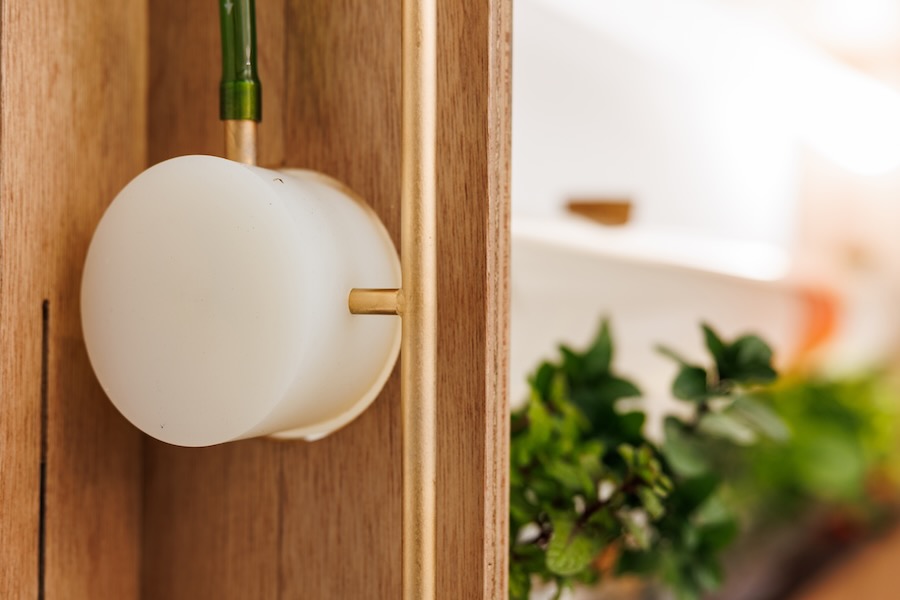
Details of the return pipe section
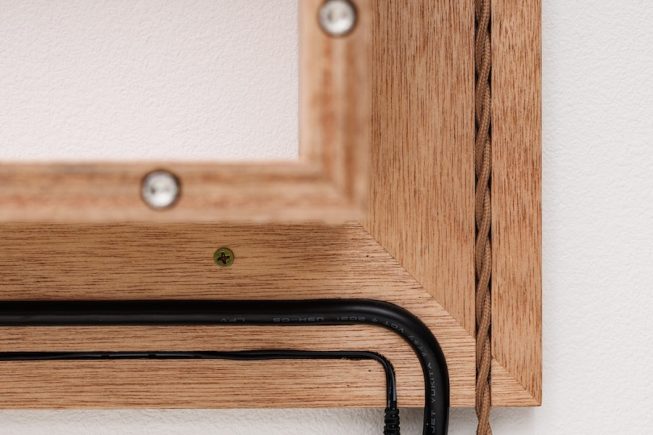
each power cord is inserted into and secured by the grooves carved into the frame
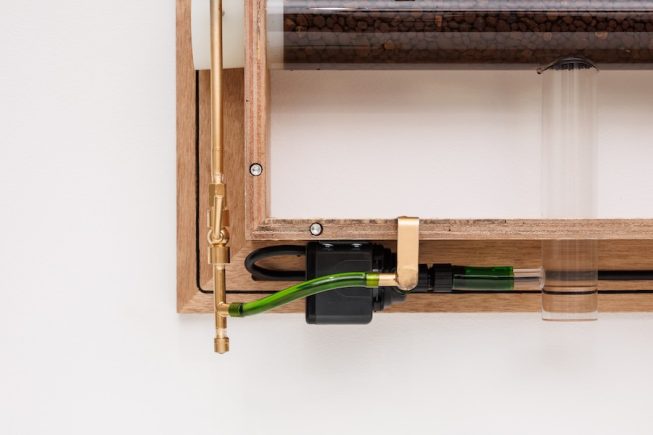
Drain pipe connecting the aquarium and plant bed