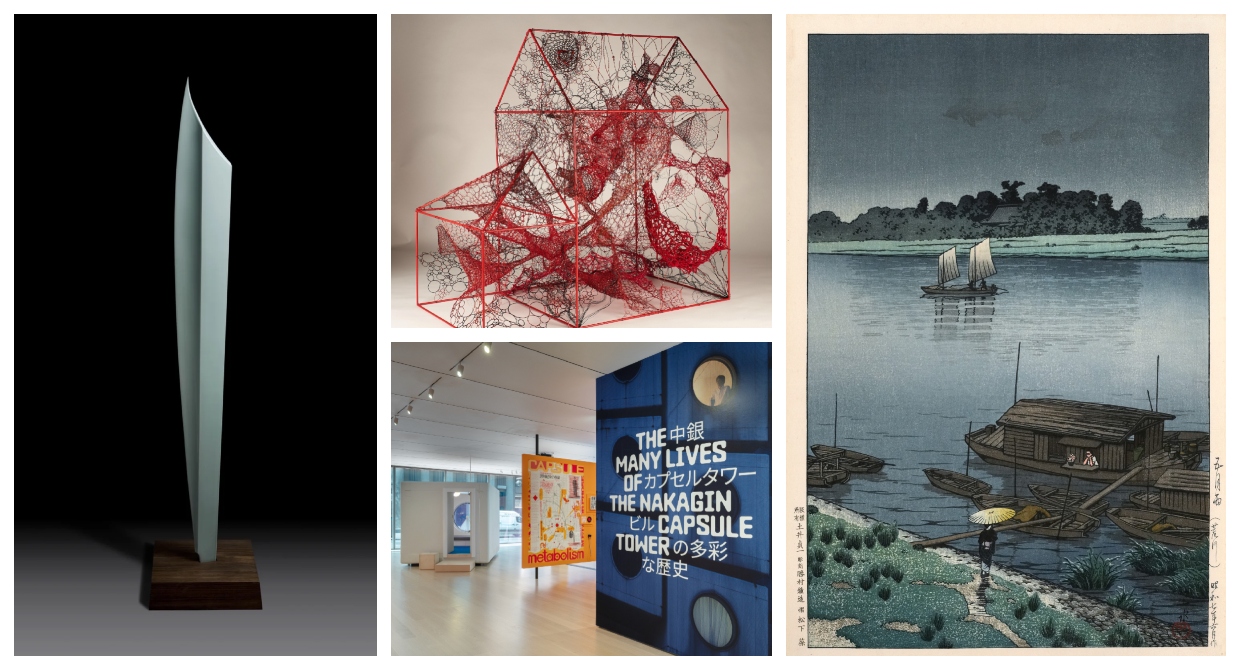
From site-specific installations and architectural retrospectives to woodblock prints, New York is buzzing with Japanese art. There’s a whole lot to see so here are our top picks for the Fall 2025 season. Did we miss any? Let us know in the comments!
In her very first New York solo museum exhibition, artist Chiharu Shiota has created a site-specific installation that commemorates the 80th anniversary of the end of World War II. Placing the original installation in dialogue with other works from Shiota’s oeuvre, the exhibition creates parallels between the humanitarian tragedy of war and the artist’s personal struggles, including confronting her mortality and her bicultural identity living between two home countries. By drawing connections between collective and personal experience and memory, the exhibition contemplates universal issues such as history, humanity, loss, time, space, the body, and national identity.
“This building is not an apartment house.” With this declaration, Japanese architect Kisho Kurokawa introduced the Nakagin Capsule Tower as a radically new vision for urban living. Completed in 1972, the structure consisted of 140 single-occupancy capsules, prefabricated offsite and attached to two concrete-and-steel cores in Tokyo’s Ginza district.
At the heart of this exhibition is a fully restored unit from the Tower’s top floor. The exhibition also brings together original drawings and models with ephemera, photographs, and films to explore how this unconventional structure became a hive of creativity, debate, and community.
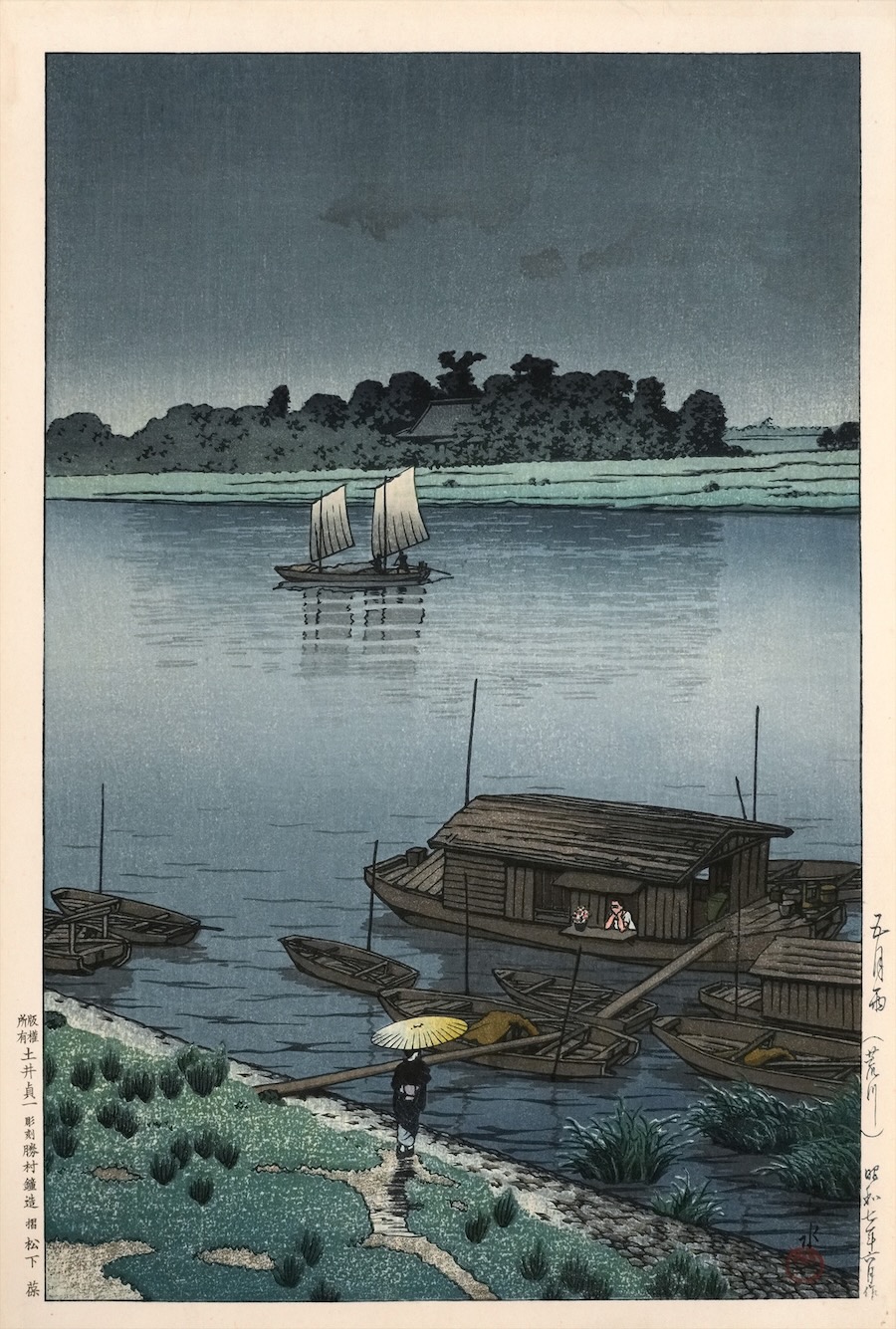
Modern Perspectives: Woodblock Prints of the 20th Century
Modern Perspectives is the fourth installment in a yearlong exploration of Japanese printmaking. Featuring major artists from the Shin Hanga (new print) and Sosaku Hanga (creative print) movements, experience this vibrant century of Japanese woodblock prints.
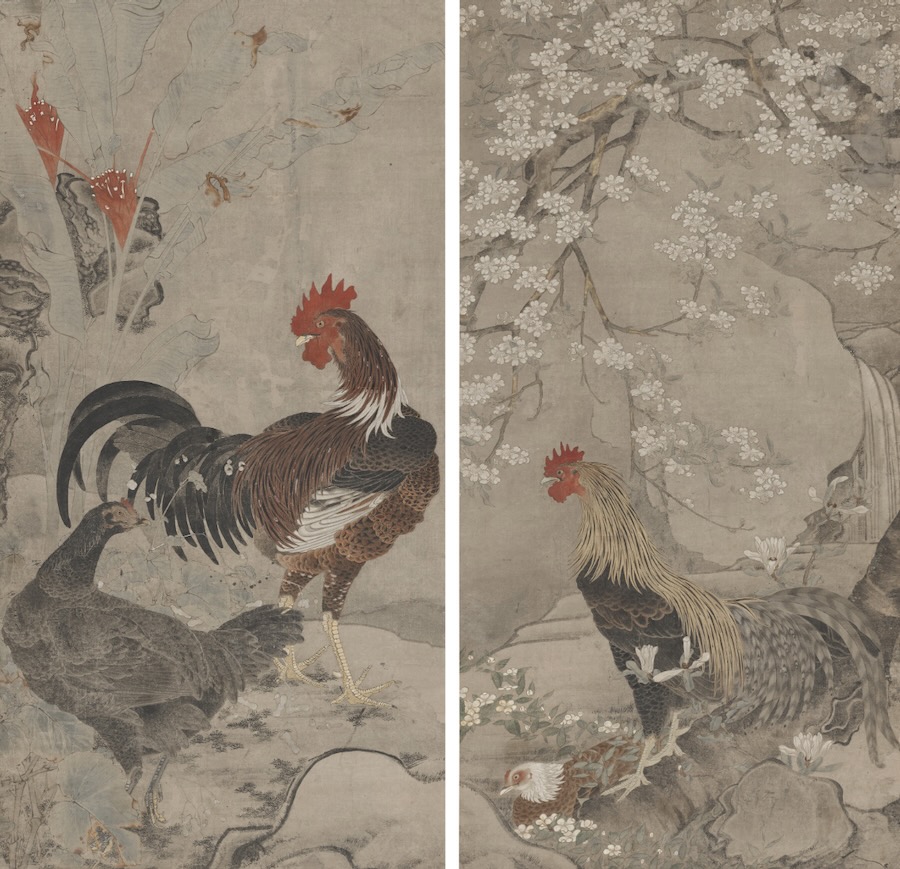
Japanese Art at Christie’s (as part of Asian Art Week)
On view at Christie’s NY (on view through Sept 17, 2025)
Five distinct auctions spanning centuries of Japanese and Asian history. Highlights include a rare classic Hokusai beauty painting and prints by Hasui and Sharaku. The exhibition is free and open to the public.
Born into a family of potters in Kyoto in 1947, Fukami mastered the medium of clay from a young age and strove to go beyond traditional pottery, moving on to cultivate, as his work and techniques testify, his own signature style. Making innovative use of a technique involving injecting liquid porcelain into a plaster mold at high pressure, Fukami creates sublime sculptures with lustrous surfaces and soaring forms. Finished using a bluish- white glaze, also known as seihakuji, originating from 11th century China, the resulting pieces have an ethereal quality which this show serves to illuminate.
For her largest solo exhibition in New York, the Japanese artist presents more than thirty new oil paintings and papier-mâché sculptures created over the past two years. Many of the new works are informed by the passing of Tabata’s mother last year, marking a period of heightened reflection on mortality and her own eventual death.
A central painting, Waiting for Bones (2025), arose from her experience at the crematorium following her mother’s funeral. In Japan, family members traditionally wait for the cremation to finish and then, with chopsticks, transfer the bones of the deceased into an urn. In the painting, a spectral figure dissolves within the cremation fire on the left, while on the right, a few figures rendered in translucent brushstrokes extend their hands to receive the remains. Both figures represent the artist herself.
When I become bones, how sad it would be if no one were waiting for me. As I painted, I wondered—do the living wait for the bones, or do those who have passed on wait for us? In the end, I felt it didn’t matter. So I decided that I could wait for myself.