
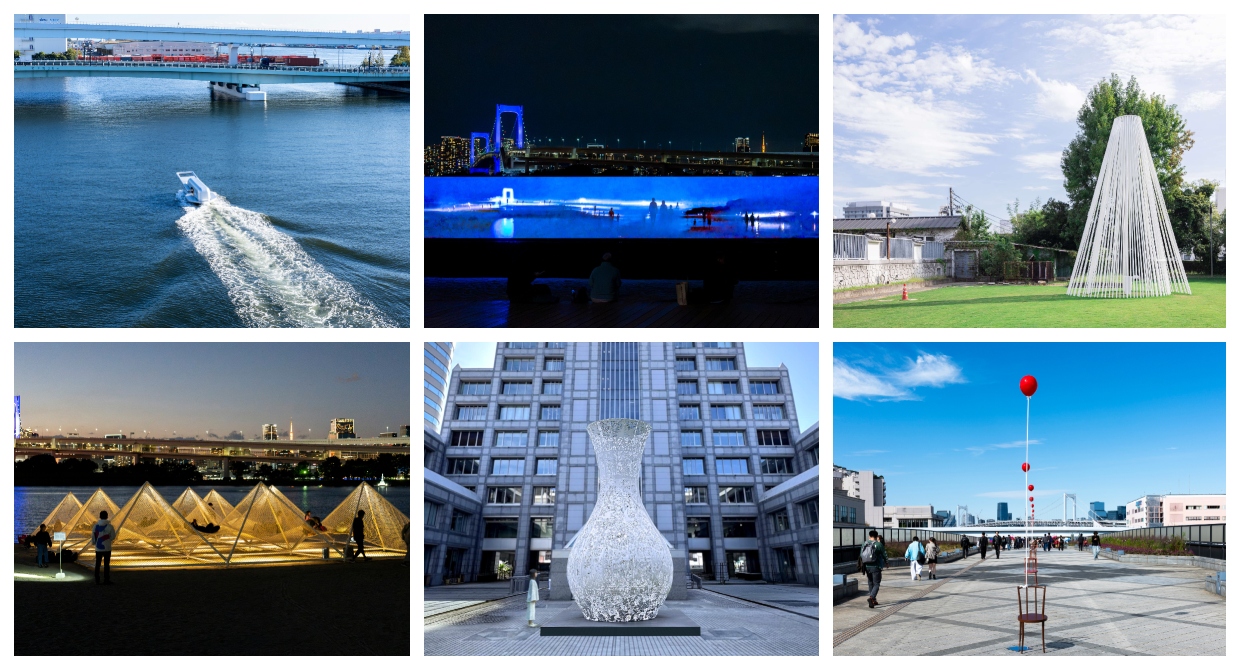
ARTE TOKYO is a new citywide festival of arts and culture that transforms public spaces across the Japanese capital into an expansive outdoor gallery, bringing together artists, architects, designers, and creative technologists. Running through December 31, the festival centers on three major areas: the waterfront district around Odaiba, the business and cultural hub of Hibiya and Marunouchi, and the creative neighborhoods of Yoyogi and Shibuya.
Although the festival opened on October 10, many of our must-see picks don’t open until December, which makes this the perfect time for this mini-guide to help you encounter unexpected installations while walking through parks, crossing bridges, or exploring the city’s waterfront. And the best part is it’s all free.
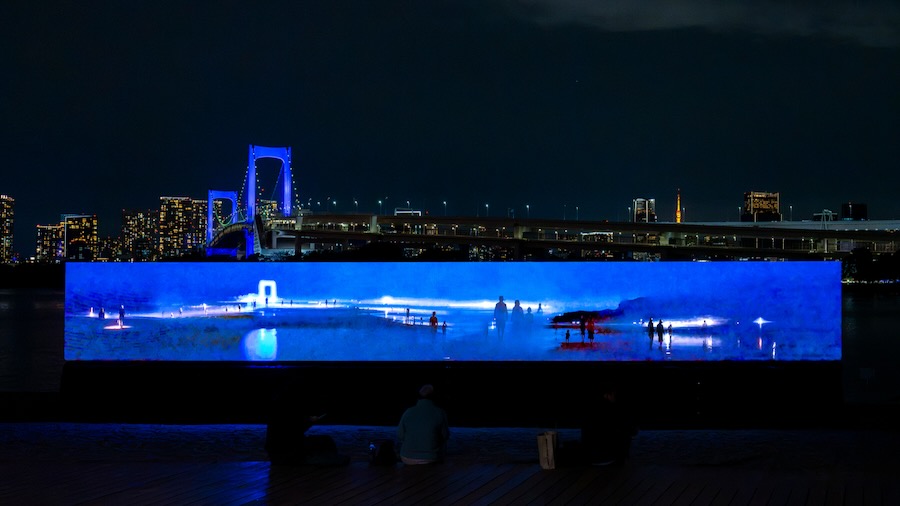
Daito Manabe: Alloscape
At Odaiba Beach, artist and creative technologist Daito Manabe, working with Kyle McDonald and produced by Rhizomatiks, presents Alloscape. The installation takes inspiration from the constantly changing waterfront environment, incorporating elements such as waves, wind, clouds, light, and the movements of people to create an alternative landscape somewhere between reality and imagination.
Known for his experimental work at the intersection of technology, music, and the human body, Manabe has spent much of his career exploring how digital systems can reshape our perception of the physical world. Here, the natural environment of Tokyo Bay becomes the starting point for another kind of experience.
Now on view.
Yuko Nagayama: Sea Hammock
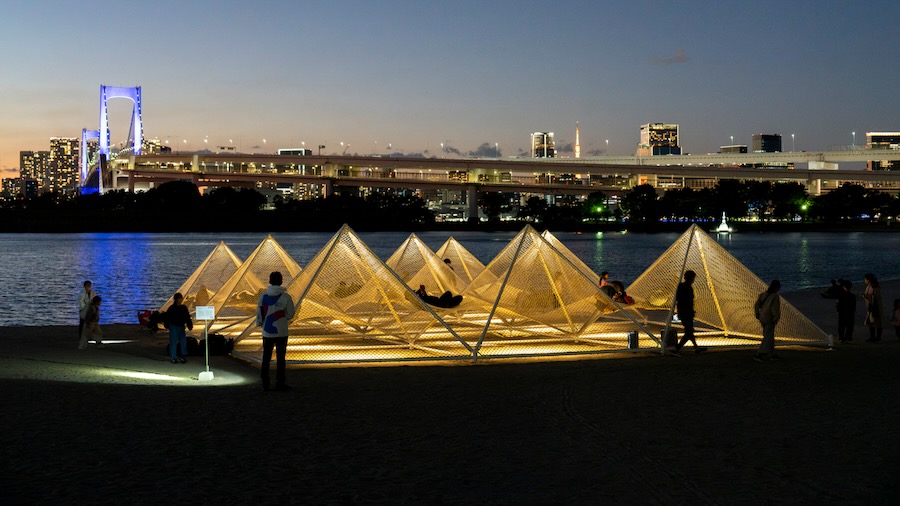
Also along Odaiba’s waterfront, architect Yuko Nagayama presents Sea Hammock, a large-scale hammock made from discarded fishing nets recovered from Tokyo Bay.
The work transforms an environmental problem into an inviting public space where visitors are encouraged to interact with the installation: resting and playing on the hammock while reflecting on the environmental impact of abandoned fishing equipment and marine waste.
It’s a characteristically thoughtful approach from Nagayama, whose architectural practice often explores the relationship between people, materials, and their surroundings. The installation also offers a more relaxed way to experience the waterfront, turning a stretch of beach into a place for both contemplation and play.
Now on view.
Ryosuke Yuasa: Balloons and Chairs
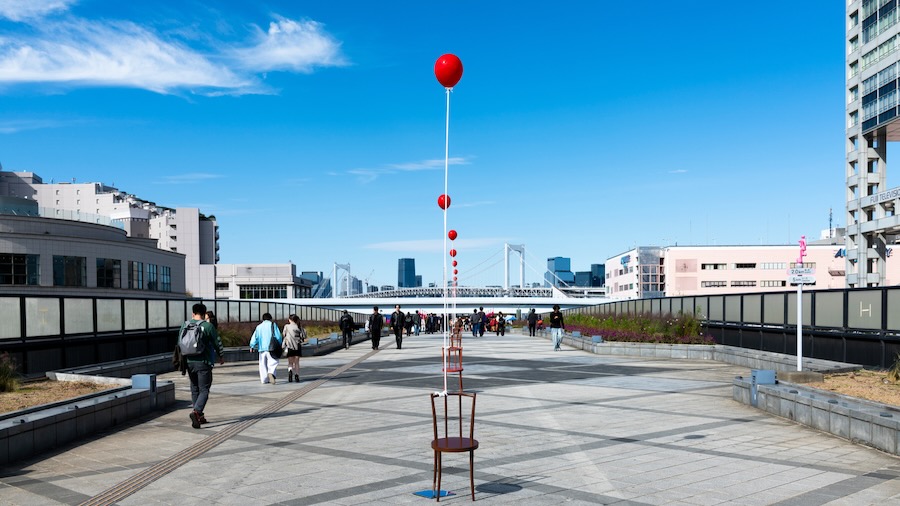
At Odaiba’s West Promenade, architect Ryosuke Yuasa collaborates with architectural collective GROUP on Balloons and Chairs, an installation consisting of 11 arrangements of chairs paired with large balloons. Rather than functioning as traditional sculptures, the installations transform the expansive public promenade into an informal gathering place, inviting visitors to stop, sit, play, and interact with the surrounding landscape. The simple combination of everyday furniture and oversized balloons creates an almost whimsical scene against Odaiba’s sweeping waterfront backdrop. It’s an exploration of how small architectural interventions can change the way people occupy and experience public space.
Now on view.
Yasuhiro Suzuki: Zipper Ship
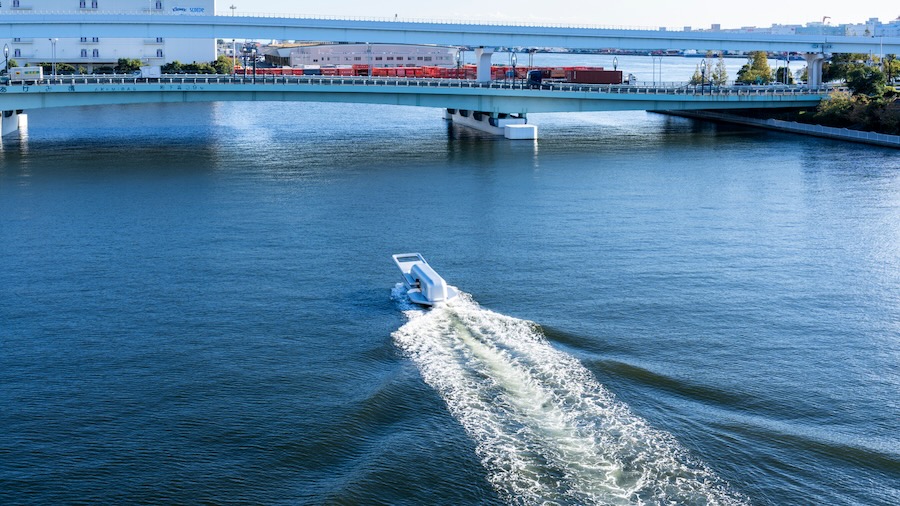
Artist Yasuhiro Suzuki is known for finding unexpected visual metaphors in everyday objects and phenomena. For Zipper Ship, he takes the wake created by a boat moving across the water and transforms it into an enormous zipper seemingly opening up the surface of the earth.
The playful concept turns an otherwise ordinary boat journey into a surreal intervention in the urban landscape. As the vessel moves through Tokyo’s waterways, its wake appears to unzip the water, offering a new perspective on the city’s relationship with its rivers and bays.
The work can be viewed from several locations around the waterfront, including Yume-no-Ohashi Bridge and Nozomi Bridge.
Upcoming dates are November 21 & 22, and December 5. Exact times and locations can be found here.
Sou Fujimoto: Pavilion of the Sky
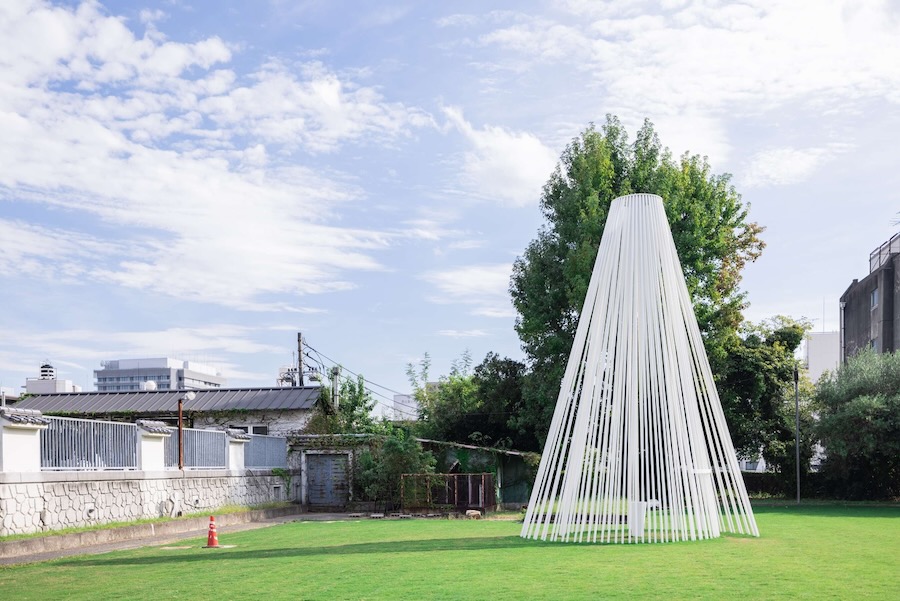
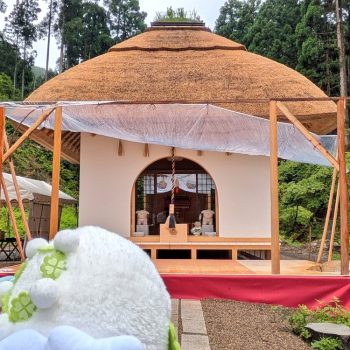
At Yoyogi Park, architect Sou Fujimoto presents Pavilion of the Sky, a small architectural intervention that invites visitors to pause and look upward.
The structure is a relocated and reconstructed version of a smoking shelter originally created for Okayama Art Summit 2022. Reimagined as a pavilion, it offers a new purpose: creating a quiet space for observing the sky.
Fujimoto has long explored the boundaries between architecture and nature, often creating structures that blur the distinction between inside and outside. This modest pavilion continues that exploration, encouraging visitors to reconsider something as simple as looking up.
Opening December 4.
Shinji Ohmaki: Gravity and Grace
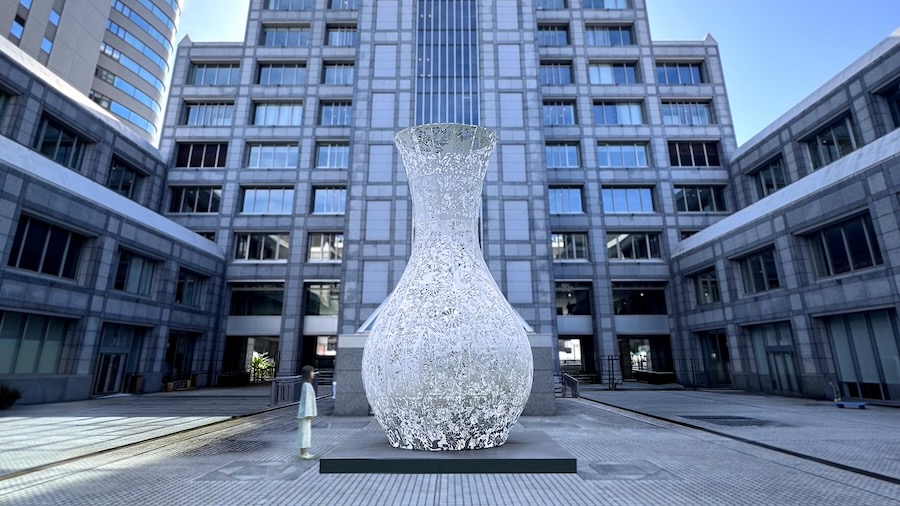
Also part of the Yoyogi-Shibuya program is Gravity and Grace, a large-scale installation by artist Shinji Ohmaki, presented at the United Nations University in Aoyama.
Ohmaki’s work frequently explores the relationship between the natural world, human perception, and the passage of time. His installations often transform familiar spaces through delicate materials and immersive visual experiences, inviting viewers to slow down and become more attentive to their surroundings.
For ARTE TOKYO, his monumental work brings another dimension to the festival’s exploration of public space, demonstrating how contemporary art can change the way we experience even the most familiar urban environments.
Opening December 1.







Leave a Reply