This article originally appeared in PingMag. All text and photos © PingMag.
Have you heard of train station stamps? These stamps can often be seen at major sightseeing spots as a way for people to commemorate their visit — but it’s not just tourist sites, you know. Regular stations also have these stamps.
Even though you may use a station every day as part of your commute to work or school, it’s likely you have no idea where the stamp is located. But go and take a look at the stamp in your local station and you’ll likely find it more interesting than you might think.
On the 400th anniversary of the Edo Shogunate in 2003, the stamps were expanded to all seventy-seven stations in the Tokyo metropolitan area. Not surprisingly, the theme for a lot of them is Edo-era Tokyo and the stamps often depict places connected to the station’s locale from that period in history.
Well, it’s also the fiftieth anniversary of the JR Yamanote Line this year and, given that PingMag’s offices are only a stone’s throw from Uguisudani Station, we decided to take a trip on the line, doing a complete loop and collecting the stamps at every stop.
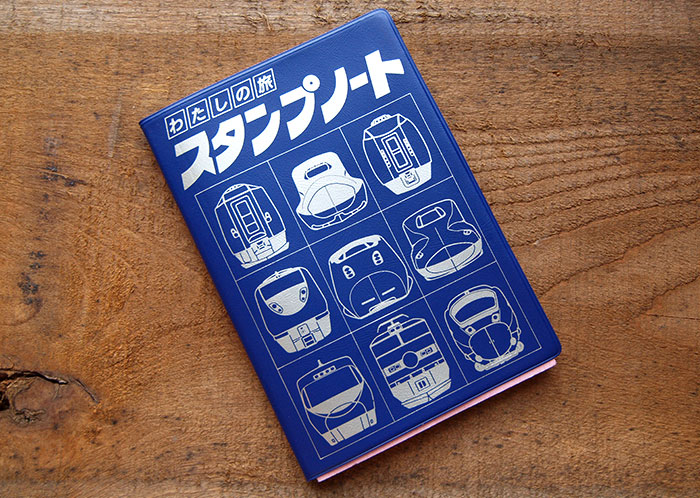
We first got our hands on this rather retro and cute “My Trip Stamp Notebook” to record our stamp rally. 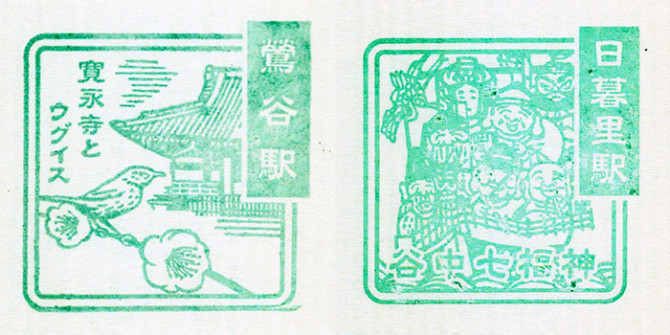
Uguisudani
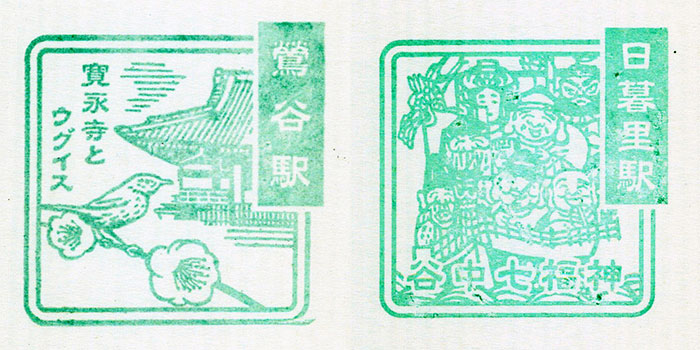
The name for this station derives from the nightingales (uguisu) that were brought here from Kyoto. Unfortunately you won’t be able to hear any nightingales in Uguisudani today, though the rather gaudy decoration on the table with the stamp at the station is pretty striking.
Nippori
The stamp shows the Seven Gods of Fortune, which isn’t so surprising when we consider that Nippori lies between Tabata and Ueno, where there are seven temples enshrined with the gods. Give your stamp a firm press to make the gods’ jolly features really stand out.
Nishi-Nippori
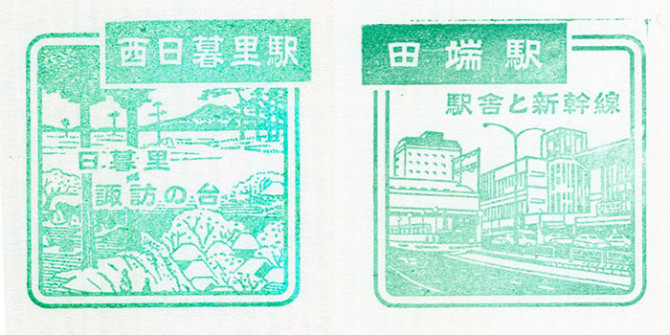
Nishi-Nippori is the newest station on the Yamanote Line. The stamp shows the view from Suwa promontory, as featured in Utagawa Hiroshige’s famed ukiyoe woodblock print series, ‘One Hundred Famous Views of Edo’. Apparently you could have seen the distant Mt. Tsukuba from the precincts of Suwa Shrine.
Tabata
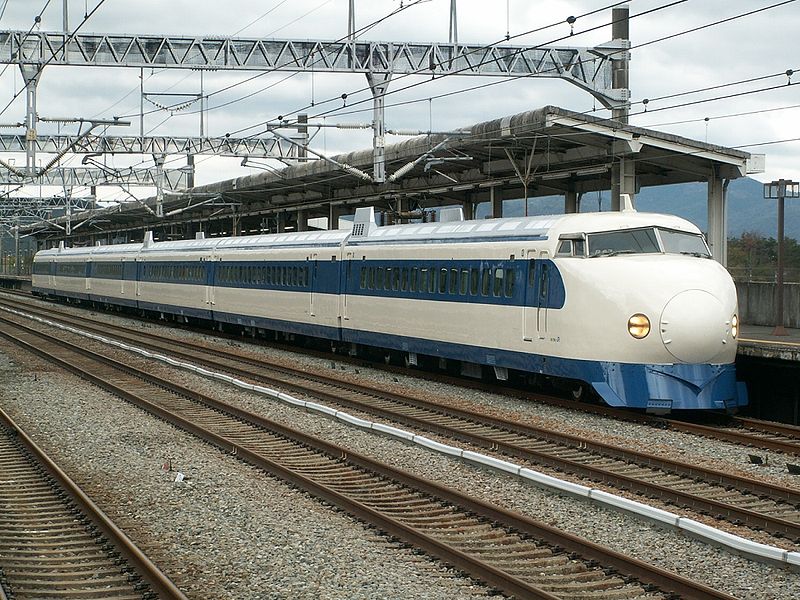
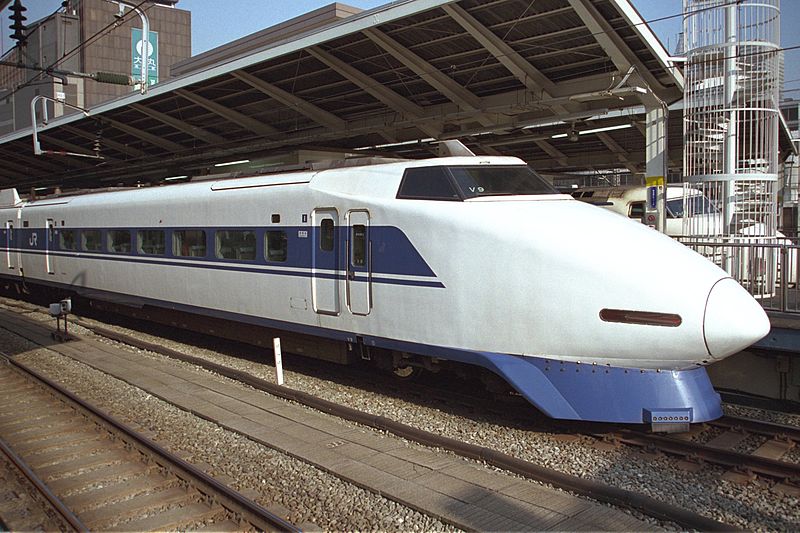
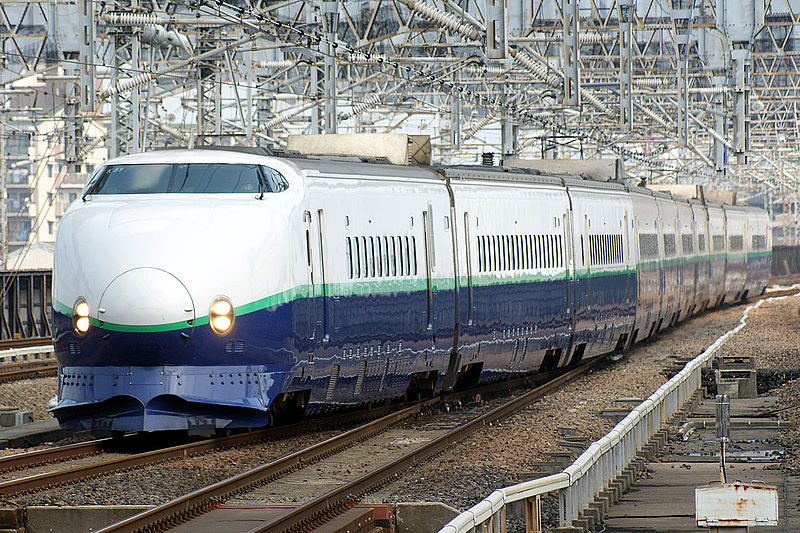
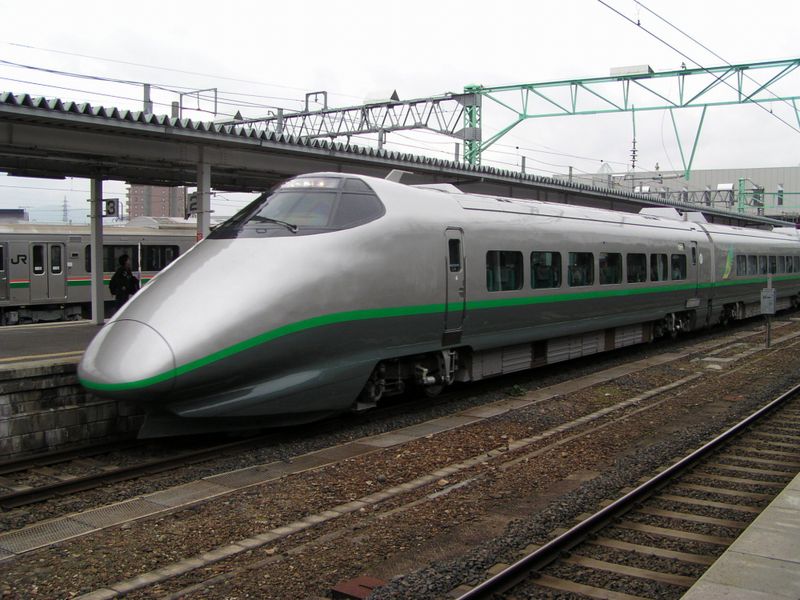
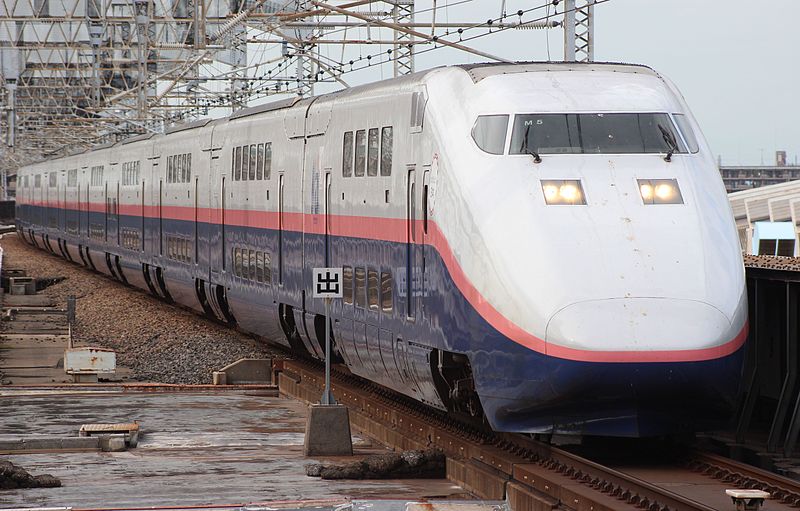
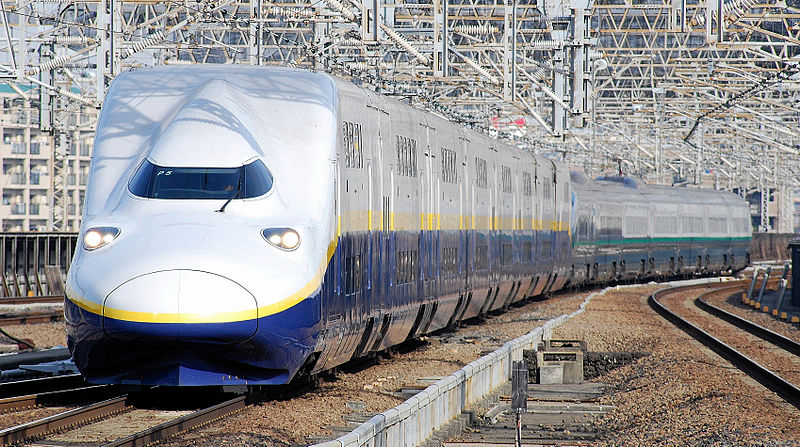
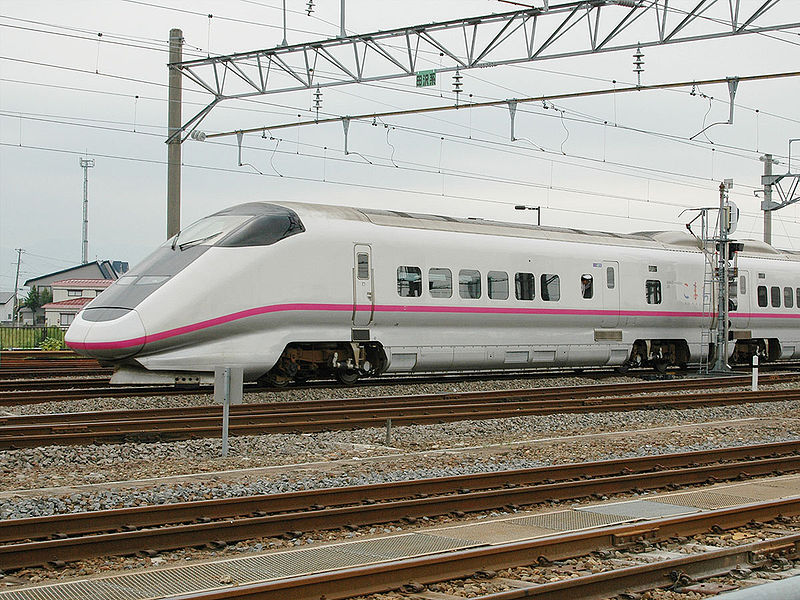
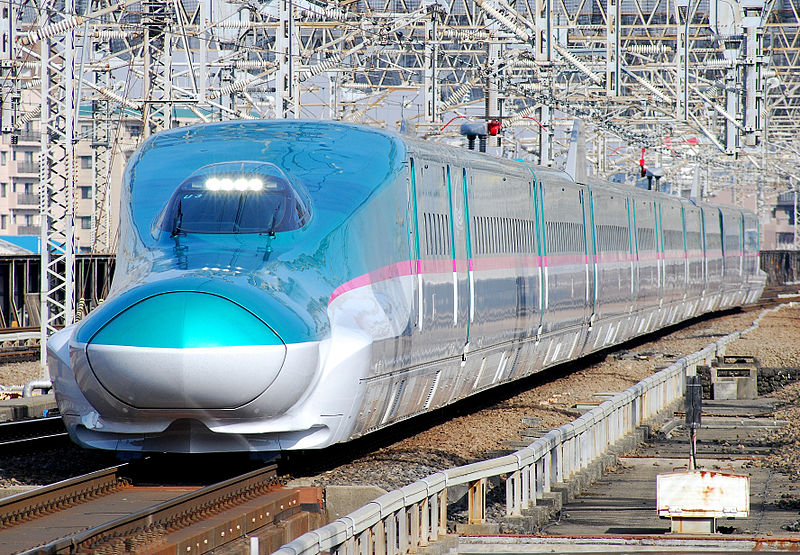
Tabata is where the Shinkansen trains “live” and from station you can take a look at the carriages being loaded and unloaded from the yard. The stamp shows the station building at the north entrance, which opened in 2008. It’s fun to spot the details to — look at how the station sign in the bottom right is perfectly rendered.
Komagome
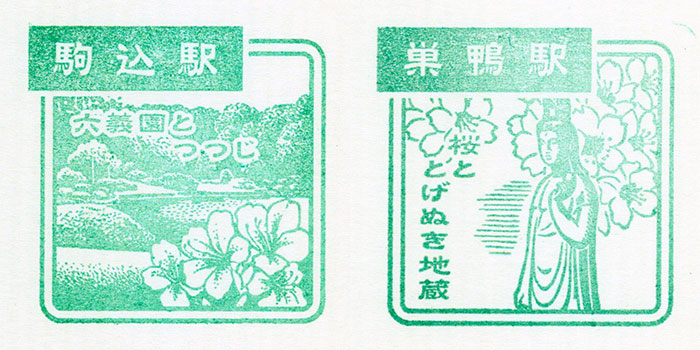
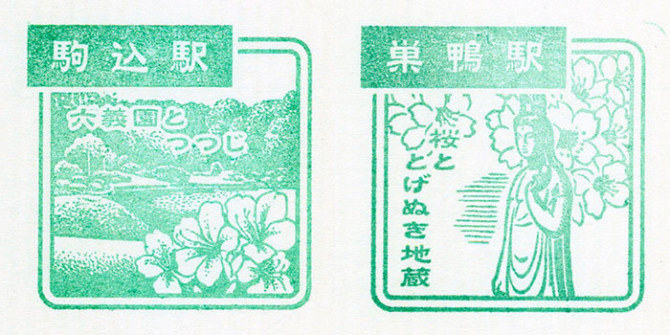
The azaleas at Rikugi-en (the gardens located at Komagome) are just like the ones that were popular in the Edo era, and are at their best from the second half of April to late May. Oh, and the station “melody” (all JR Yamanote Line stations have different melodies to announce that trains are about to depart) is a famous nursery rhyme.
Sugamo
Sugamo, the Harajuku for grannies. The stamp shows a special statue of the Kannon Buddhist deity that if you wipe with a wet towel in a place that needs curing, it might just yield results.
Otsuka
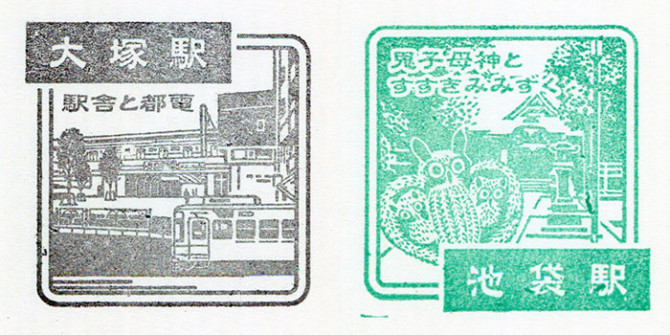
The stamp shows the Toden Arakawa Line, the only streetcar that runs in Tokyo. The Otsuka Station building was also a rare example of a wooden structure on the Yamanote Line but sadly was dismantled in 2008, and the stamp shows the new Otsuka Station. For some reason or other Otsuka was also the only station on the line with black ink for the stamps. Perhaps this has some sort of meaning…
Ikebukuro
Susuki Mimizuku was an old folk toy from Toshima ward, an owl made from pampas grass. The stamp is detailed, even showing the workmanship on the toy.
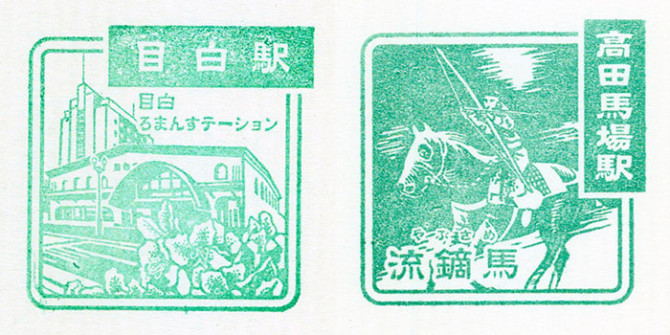
Mejiro
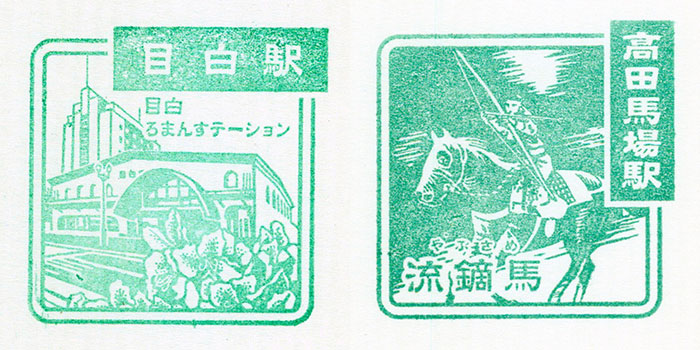
Here you can see the station building on the stamp, Mejiro’s third. The stained glass tower was designed to match the graceful feel of the area. Also, the table with the stamp tells you where to find the corresponding stamps in the next two stations (Ikebukuro and Takadanobaba).
Takadanobaba
The characters in the stamp spell “Yabusame“, the traditional form of Japanese mounted archery, where the rider has to shoot a series of targets some five meters away. During the Edo period the Takadanobaba area was a training ground for equestrianism and Yabusame, hence its name (baba means “hippodrome”).
The stamp gives a real sense of the impressive horsemanship in the station’s history.
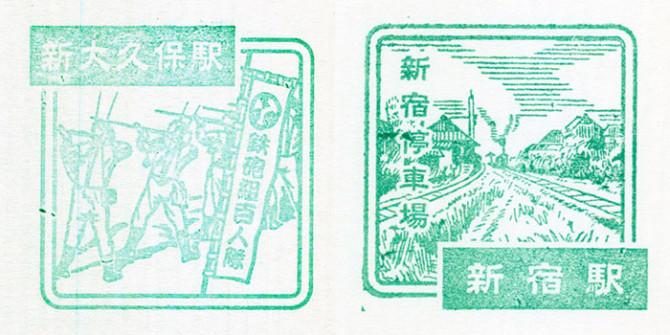
Shin-Okubo
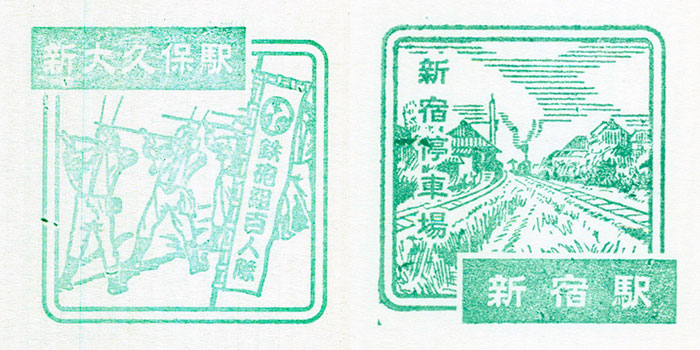
The scene here is of a Edo Bakufu riflemen regiment festival that happens every two years at the Kaichu Inari Shrine, west of Shin-Okubo Station. The festival uses arquebus with actual gunpowder and takes place every year in late September.
Shinjuku
Shinjuku — used daily by 3.26 million passengers, recognized by the Guinness World Records as the busiest station on the globe. Covering an area so vast it is at times more like a fortress than a railway terminus, the image of the station on the stamp is utterly unrecognizable to Shinjuku today.
The station was completed in 1885, when initially it saw a much more modest fifty passengers per day.
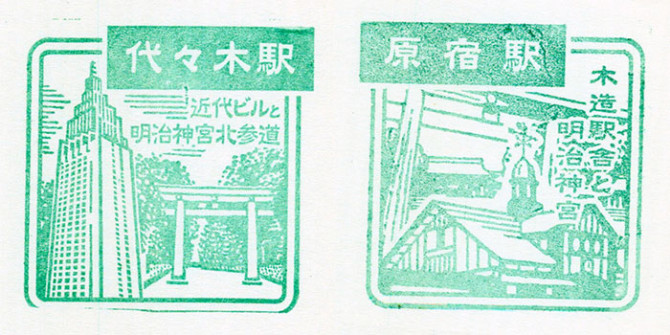
Yoyogi
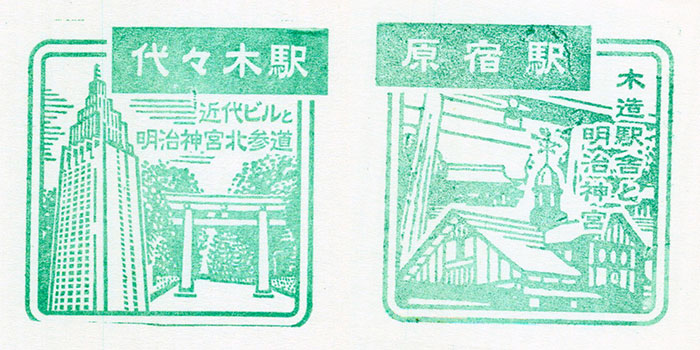
The tower defining the stamp design here is the NTT Docomo Yoyogi Building. Yoyogi Station is the closest station to Meiji Shrine’s Jingukitasando, but Meiji Shrine in fact is so large there are two other stations (Harajuku, Sangubashi) closer to different parts.
Harajuku
This district is the center of youth fashion in Tokyo. The motif on the stamp is the wooden station building, but unlike Otsuka, Harajuku’s structure still stands. It was completed in 1924 and it the oldest station building in Tokyo.
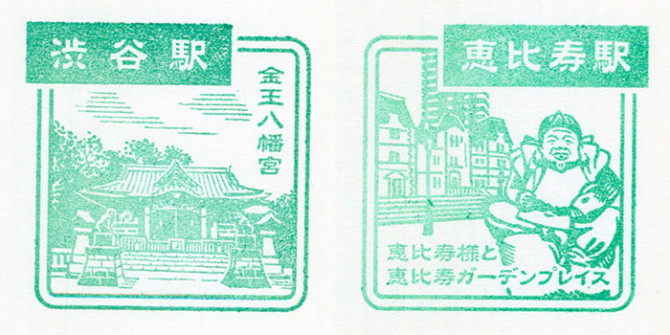
Shibuya
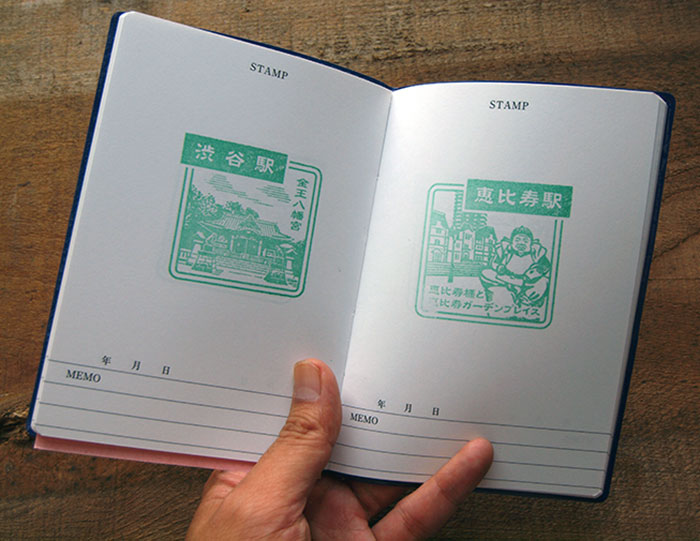
Here we can see Konno Hachimangu Shrine, five minutes’ walk from Shibuya Station’s east exit and the oldest wooden building in Shibuya ward.
Ebisu
The station name comes from Yebisu Beer, made and sold by Japan Beer Brewery Company (now merged with Sapporo Beer), and the stamp shows the statue of the god Ebisu that you can find just outside the station’s west entrance. Be sure to stamp your pass properly so Ebisu looks nice and dignified!
Gotanda
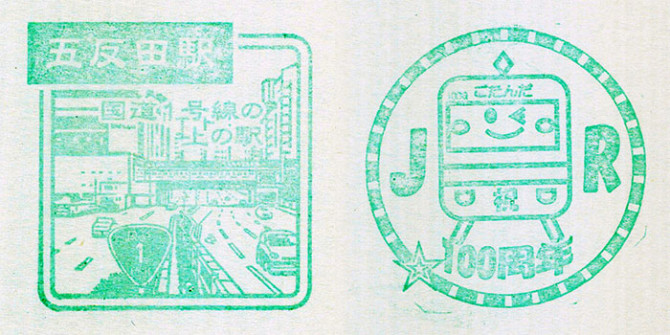
Gotanda’s stamp changed in 2011 to mark the station’s centenary. The cars on the roads look like Microcars! There was also a special centenary stamp so we stamped both!
Ozaki
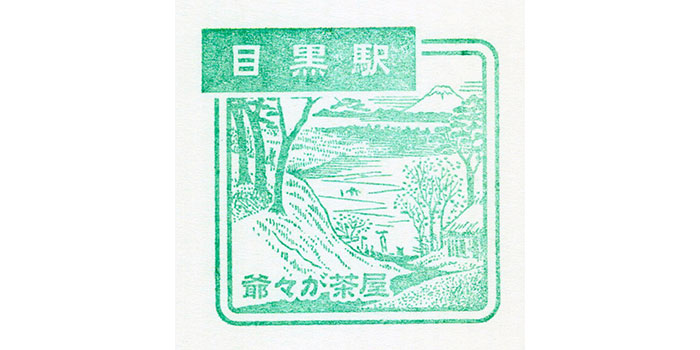
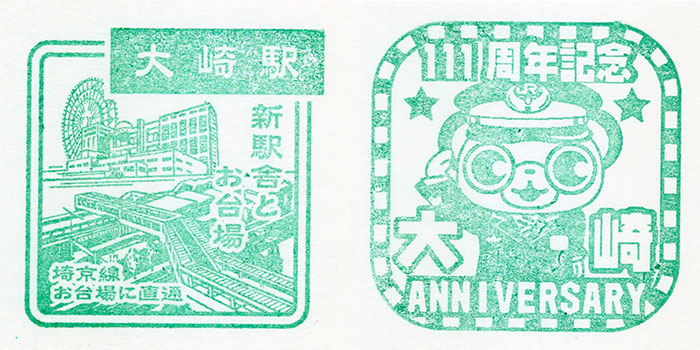
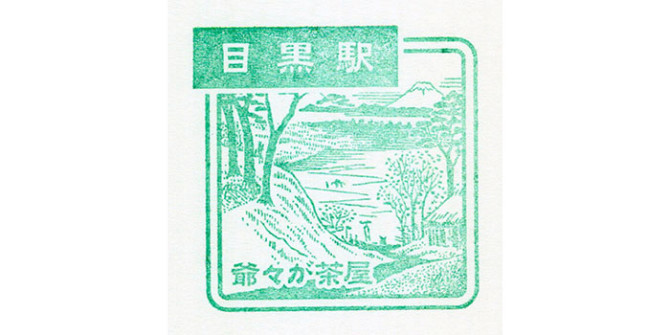
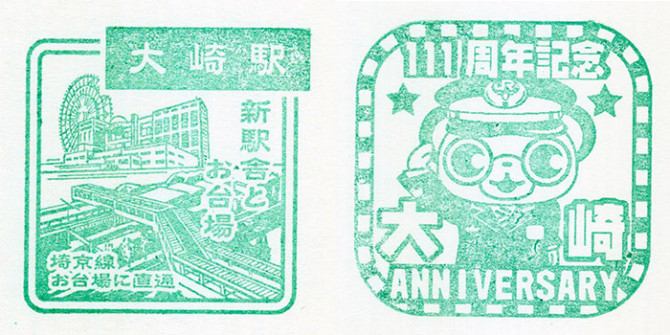
In contrast to Meguro’s pastoral scene, Ozaki’s stamp is super modern. Wow, you can see how the times change. You won’t find this at Ozaki itself, though, since it’s actually Palette Town in Odaiba, the Tokyo Bay development that you can get to from Ozaki.
Oh, and Ozaki Station also had a special 111th anniversary stamp so we included that too.
Shingawa
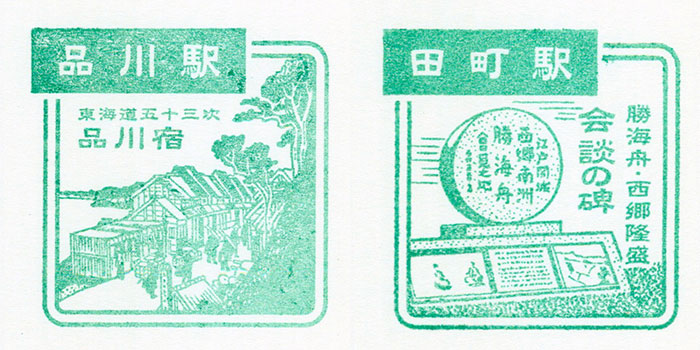
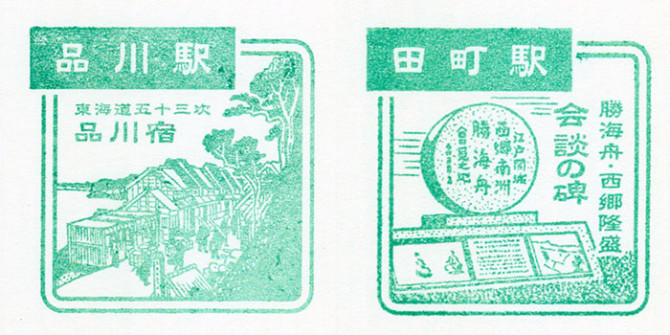
Shingawa is again not, as you might think, in Shinagawa ward, but actually lies in Minato ward. Shinagawa-juku was one of the stopping points on the fifty-three stations of the Tokaido Highway, so the stamp features a scene from the famous Hiroshige woodcut print series.
Tamachi
It was here that Kaishu Katsu and Saigo Takamori met and agreed on the unconditional (and bloodless) surrender of Edo during the Meiji Restoration. The stamp shows the monument to this epoch-making event.
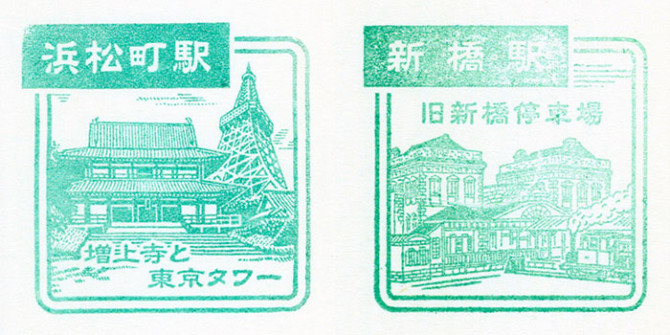
Hamamatsucho
Tower Tokyo may well these days be languishing in the shadow of the newer Tokyo Sky Tree, but in this stamp at least the symbol of the city still looks very impressive.
Shimbashi
Japan’s first railway started running from here back in 1872. And you can’t think of Shimbashi without thinking of the locomotive that sits in the plaza in front of the station.
Yurakucho
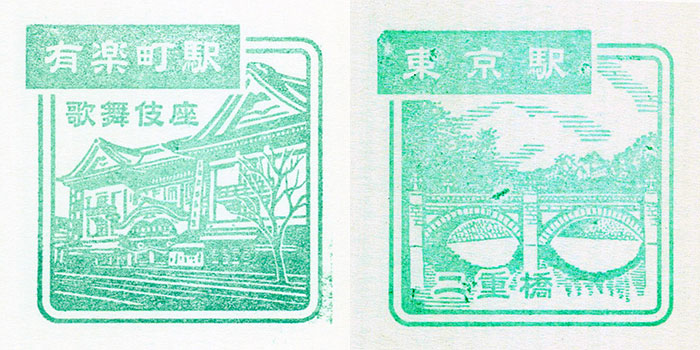
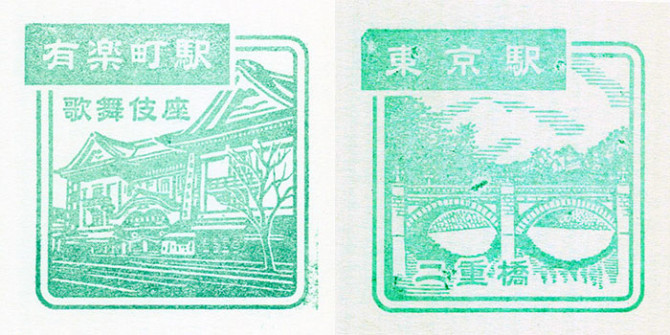
Here we have not the station but the Kabuki-za theatre, which was re-built for the fifth time and opened again this spring. Unlike the new architecture with its office complex integrated into the theatre, this image nostalgically indulges us with the older version.
Tokyo
This is the famous Nijubashi bridge at the Imperial Palace, near to Tokyo Station. See how it is reflected picturesquely in the water of the moat. If you apply in advance you can go across the bridge.
Kanda
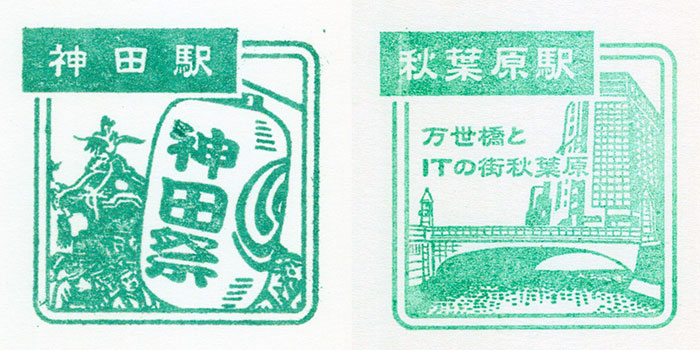
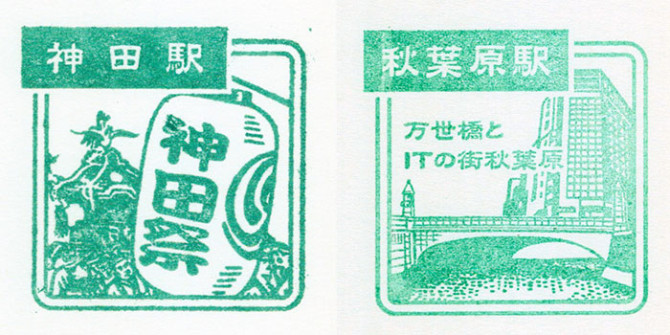
The Kanda Matsuri is one of the three great festivals of Tokyo and also one for the three greatest matsuri in all Japan. In the stamp you can feel the energy of the festival crowds.
Akihabara
Akihabara is a place that attracts many visitors for its unique culture. Some people might find it a bit of a mess, but we think there’s some nice symmetry here, with the parapets of the bridge lighting up the Denki-gai electronics market.
Okachimachi
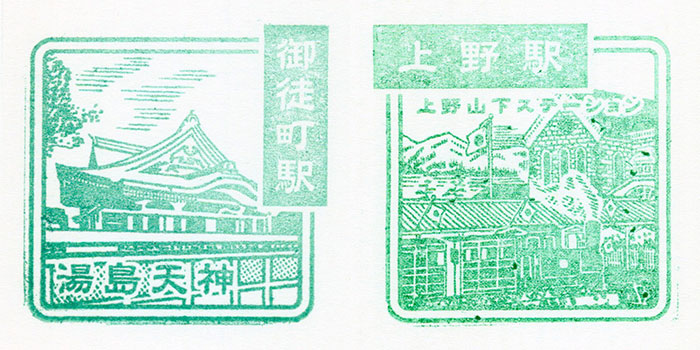
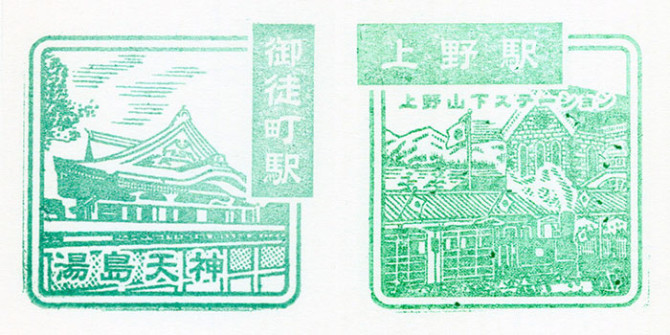
Walk eight minutes from the north exit of this station and you come to Yushima Tenjin, the shrine we see here. It is dedicated to the god of scholarship, the poet and courtier Michizane Sugawara. It gets packed with students during the exams season.
Ueno
Our last stop. We wondered if the stamp would be cherry blossoms (Ueno Park is famous for cherry blossom viewing) or a panda (Ueno Zoo, natch). Actually the stamp is rather detailed and shows how the station looked when it first opened in 1883. We’re curious about all the flags and think it makes an interesting comparison with the Shimbashi stamp.
Journey’s end. This year it’s the fiftieth anniversary of the Yamanote Line so while you do your own circuit to collect the stamps, you might also be lucky enough to see one of the special anniversary trains running along the tracks.
This post is part of week-long series on trains in Japan. The complete series can be found here.