Page 287 of 406

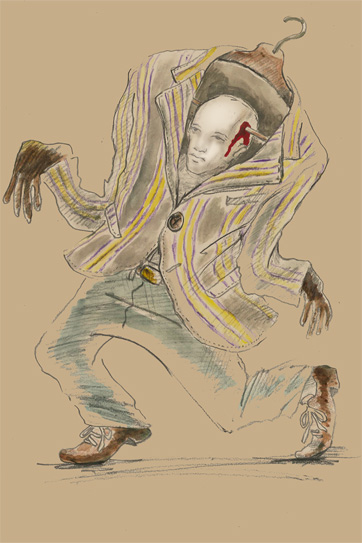
Halloween Costume by Mihara Yasuhiro

mihara yasuhiro halloween costume

Haven’t figured out what to be for Halloween yet? Take a cue from Japanese fashion designer Mihara Yasuhiro. Although best known for his footwear, Mihara is also an avid kaiju collector. Taking his obsession with the occult a step further, Mihara presents a preppie ghost costume that incorporates a clothes hanger through the head.

“The ghost of preppy style can usually be found in the back of the closet, in the darkest corner, where things are forgotten,” says the designer.

Source: NYT Style Magazine

Japan’s Zombie Outbreak Preparedness

(originally published on October 23, 2011)

Each year, around this time, it’s highly recommended that you review your zombie outbreak preparedness plan – experts say it’s not a matter of if, but when. With a cremation rate of 99.85% (2008 data), Japan and their corpse count, or lack thereof, would seem an ideal place to to ride out a plague of the undead. In the text that follows I would like to analyze the pros and cons of the East vs. the West, so that each of us can make informed decisions regarding our own contingency plans for the impending zombie pandemic.

Japan’s Safety Profile

First, when we model out the spread of a zombie pandemic the most essential question is its origination. If the zombie outbreak first originates outside of Japan, and there are no signs of lengthy incubation periods, an initial assessment of the situation may justly lead many to flee to Japan as soon as possible. With very few corpses lying around in the ground, and an ocean surrounding the country, Japan seems to be ideally positioned as a place to not get your brains chewed out.

However, in an entirely different scenario, where the outbreak occurs in Japan, one can easily imagine the devastating consequences of being in the land of the rising dead. In a previous essay, Jim Hawe makes some excellent assertions that question the core of Japan’s safety profile.  First of all, the geographic make-up of Japan could be tragically disadvantageous. Densely populated urban areas serve as ideal feeding grounds. And very little land to actually run to, coupled with the likely probability that other countries would deny you entry due to fear of contamination, certainly raises questions about Japan’s zombie outbreak preparedness.

The lack of guns and other heavy artillery has served Japan well in maintaing a safe, civil and peaceful society over the years. But, just a equally, this will be a crippling weakness as the unaffected desperately search for means to fend off their attackers. Although popularized as an ideal weapon in the Max Brooks novel “World War Z,” in reality any type of samurai sword would prove much more problematic than one might imagine. “Bladed weapons in general are not ideal because they will inevitably get stuck in things and become dull,” said Matt Mogk, founder and head researcher of Zombie Research Society (ZRS).

Culture Matters: Asian Zombie vs. Western Zombie

the zombie’s asian counterpart, the kyonshi

There is an important component that often gets overlooked when analyzing the fundamental zombie preparedness of Japan. And that is the cultural, and I would argue, genetic, differences between eastern and western zombies. For those who are not familiar, allow me to introduce the kyonshi (殭屍), the Asian zombie. Claiming ancestry in China, the kyonshi (which terrified the sh*t out of me as a child) have several noteworthy characteristics that, I would argue, make them less competitive compared to their Western counterparts.

a priest having successfully sedated and captured kyonshi

Currently the only known way to quiet a zombie is to bash their brains in. This is a task that is as difficult as it is gruesome, and only slightly easier if aided by a shotgun. However, kyonshi  can be sedated by tactically placing a small scroll with buddhist inscriptions on the forehead (as pictured above). Also, (and this helps in assisting the first objective) kyonshi are legally blind. They detect human presence from the smell of our breath, making a cornered escape realistically possible by simply holding your breath.

Kyonshi are also known to have hardened joints, rendering their arms and legs inflexible. They mobilize their bodies by hopping, extending their arms in front of them to maintain balance. While this can serve as an initial disadvantage, it is worth pointing out that, over time, their joints are known to soften, allowing them to walk and in some cases even run.

the typical stance of a kyonshi

There is scientific literature that backs up the claim that Kyonshi hate mirrors and being pissed on. So as long as you have your vanity and stay hydrated you have several choices for defense, without resorting to shotguns and crowbars. Which leads me to my final point. Despite their obvious non-competitive traits, kyonshi should not be taken lightly. As Sun Tzu famously wrote in Art of War, “know thy enemy.” So store this information in an accessible location. It will undoubtedly serve you well as you seek survival.


Have a happy halloween

(Note: Although Spoon & Tamago considers the above information to be accurate and correct, it should not be relied upon as a sole means for evaluating personal zombie preparedness plans.  Evolution and/or mutation of the zombie virus will always be a variable in said situations. Spoon & Tamago cannot be held liable for any of the said tactics proving ineffective or unimplementable.)

Heat Pad Pencil by Chihiro Konno and Kenjo Ohashi

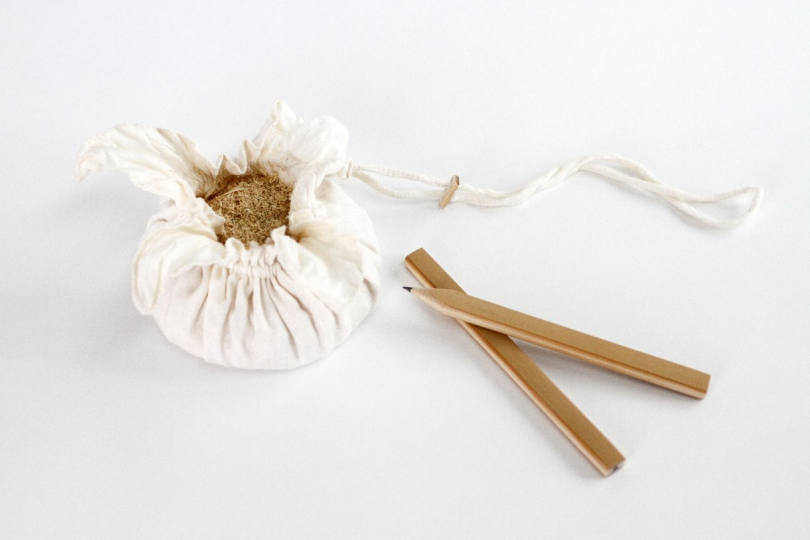
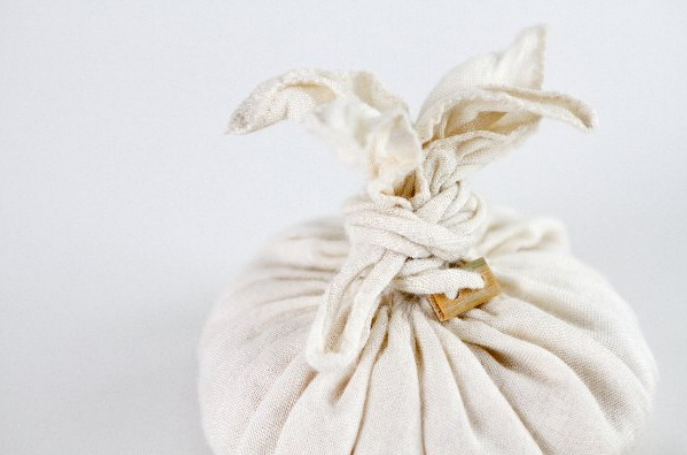
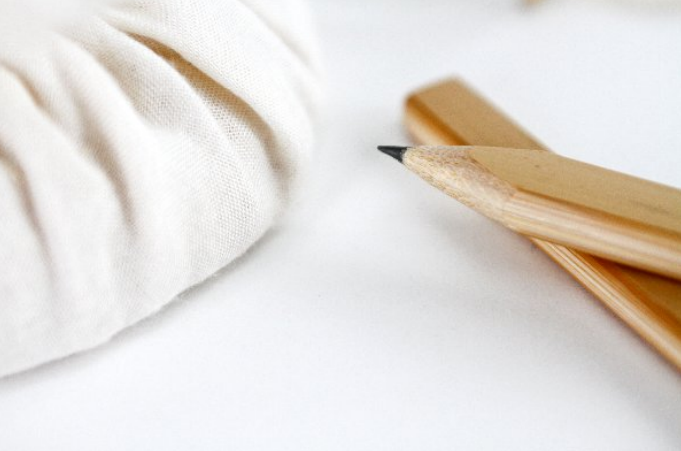
Talk about being resourceful! Crafted from bamboo, this pencil comes with a small recycled sachet designed to receive its shavings, after it has been sharpened. When the sachet is sealed, it becomes a heat pad thanks to the composting process of the bamboo.

Professor Hirakazu Seki of Kanazawa University has shown that bamboo shavings generate temperatures of up to 50°C (JP) during fermentation. Based on his findings, two young Japanese designers – Tokyo-based Kenjo Ohashi and London-based Chihiro Konno (previously) – have collaborated to create the Heat Pad Pencil. Simply place the shavings in the sachet and seal to initiate the fermentation process. Not only does it serve is a source of warmth but once the heat has dissipated the shavings have been converted to fully biodegradable compost.

The Heat Pad Pencil was a finalist in the Prix Emile Hermes award. Now in it’s second year, the award is offered primarily to young, up-and-coming designers. Sponsored by the Hermes Foundation, each year a specific theme is provided as a starting point. This year it’s “Heat, Me-Heat, Re-Heat.”

source: @masakawa

Sweet Stool by Caro Inc


click to enlarge

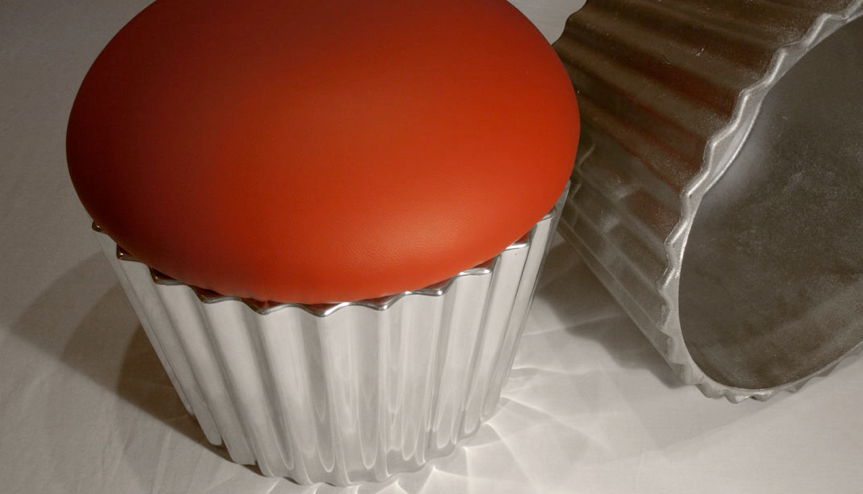
A cupcake stool?? Yes please!

This sweet creation is the work of product design firm Caro Inc, headed up by Hidebumi Yamaguchi (previously). I consistently enjoy their fun and playful take on product design. They are going to be presenting new work at TDW next month. Certainly one to keep my eyes on.

Oh, and the “Sweet Stool” was just a prototype that unfortunately never made it out of the studio. But I think we should all petition have it brought to stores!

source: Caro Inc website

Kyusu and Yunomi by Koji Yano


click images to enlarge

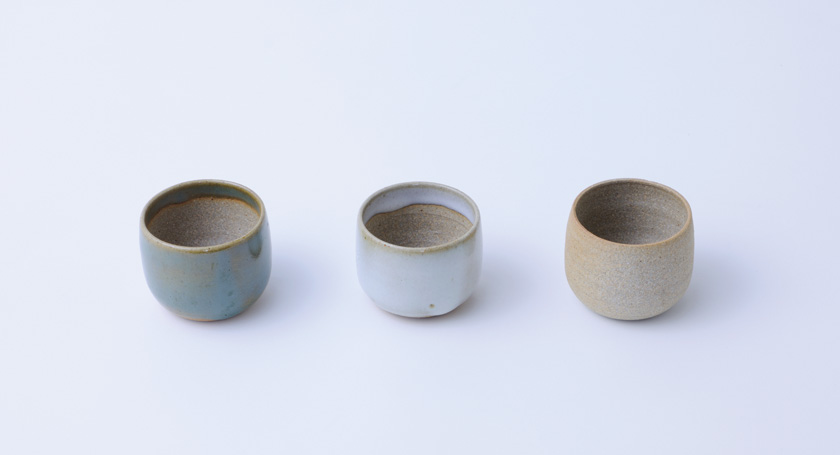
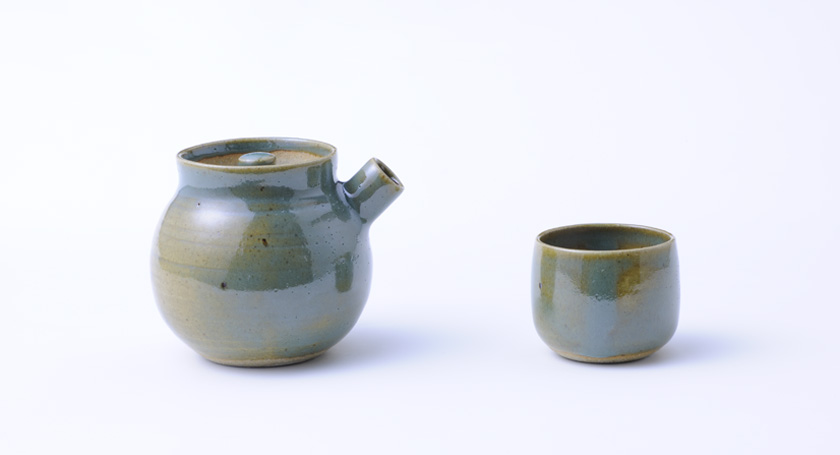
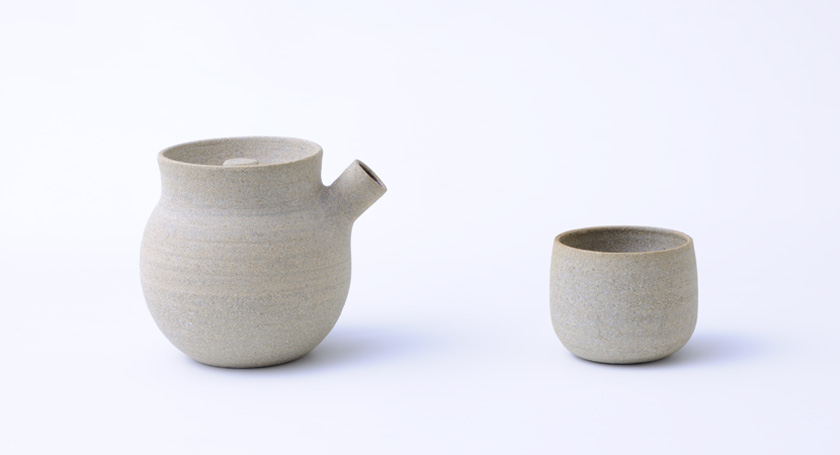
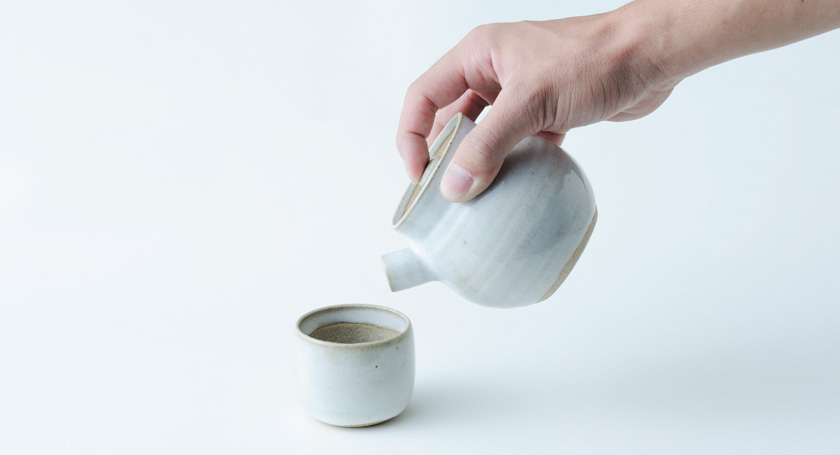
Koji Yano of 83 Design (previously) has recently created this adorable and utterly elegant teapot (kyusu) and teacup (yunomi) combo. And, is if it wasn’t enough, as a maker of ceramics myself I have a soft spot for all things clay.

Free from extraneous ornamentation,  these pieces, which were co-developed with potters working in the sansuke-yaki style – indigenous to the Toyama region of Japan – are quite perfect if you ask me. Although modern and contemporary, the subtle and rich color is made from traditional techniques using only clay and glaze produced from local nature.

The pieces were on display at Tent London last month.

source: 83 Design’s blog

Coil Sculptures by Yuji Nishijima


click images to enlarge

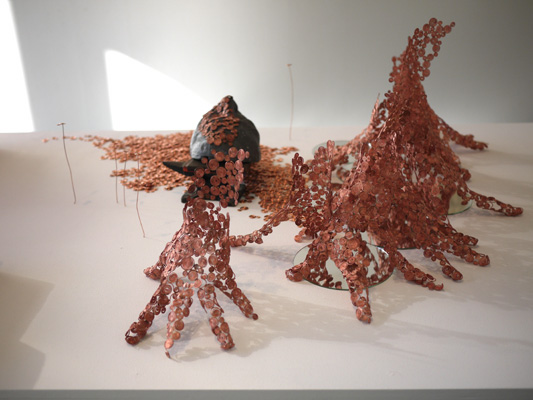
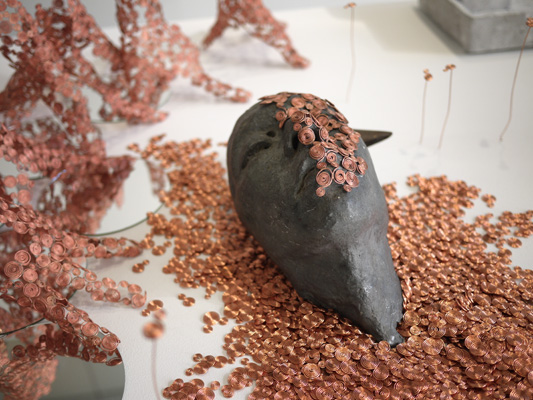
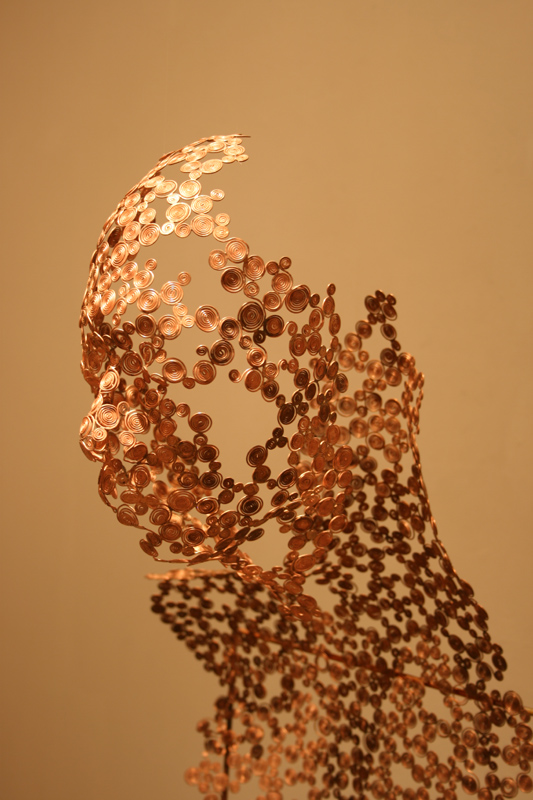
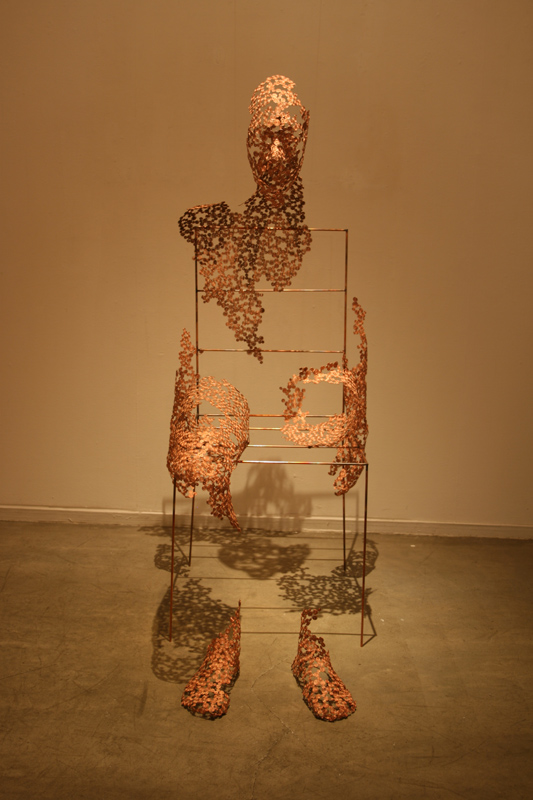
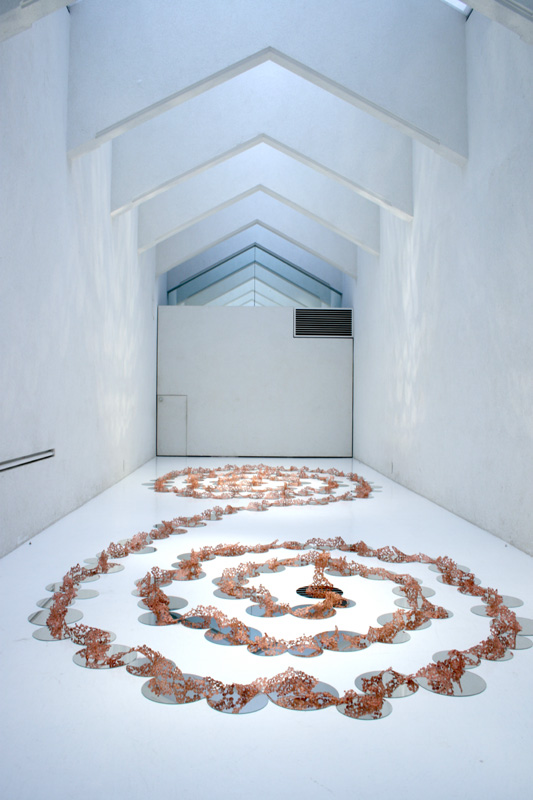
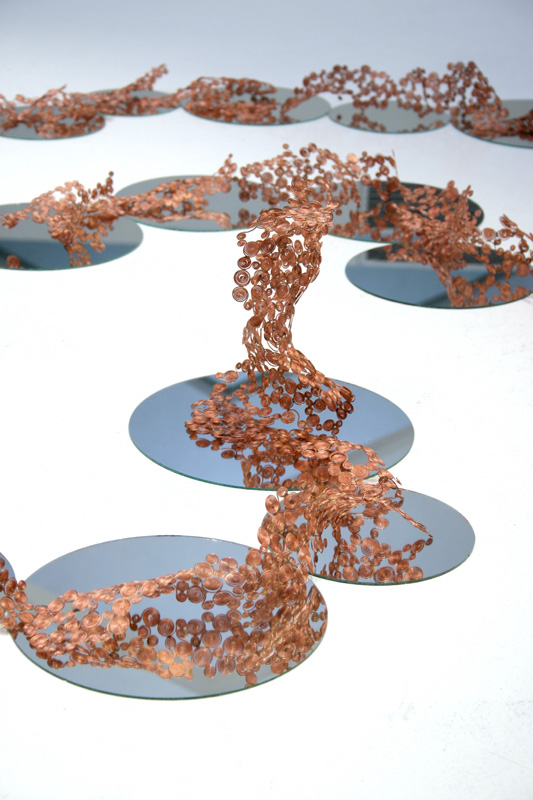
Japanese sculptor Yuji Nishijima creates visually tantalizing sculptures primarily out of copper wire, which he twists and bends to create repetitive swirls that take the form of the human body.These first images are his most recent work – a collection titled Going Back to Process.

Below are images from Nishijima’s 2009 work titled Connecting the Evidence, in which the artist constructs the human form in the same way paleontologists explore life that existed before their time.

Below are images of Light and Existence, which was installed at the Metal Art Museum in Chiba.

I cam across Yuji Nishijima’s work while researching artists for my coverage on the Nakanojo Biennale.


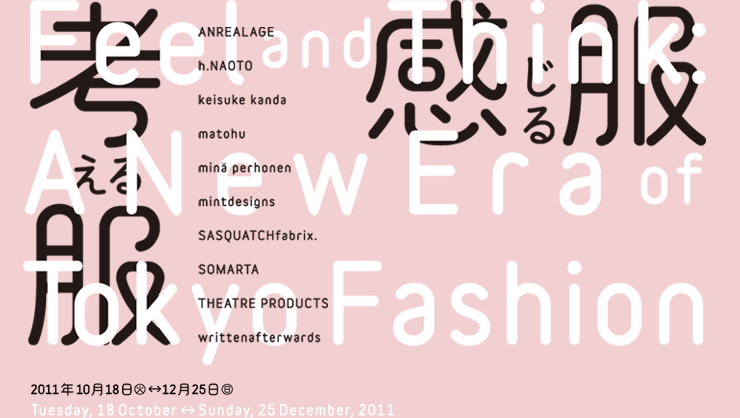
Feel and Think: A New Era of Tokyo Fashion

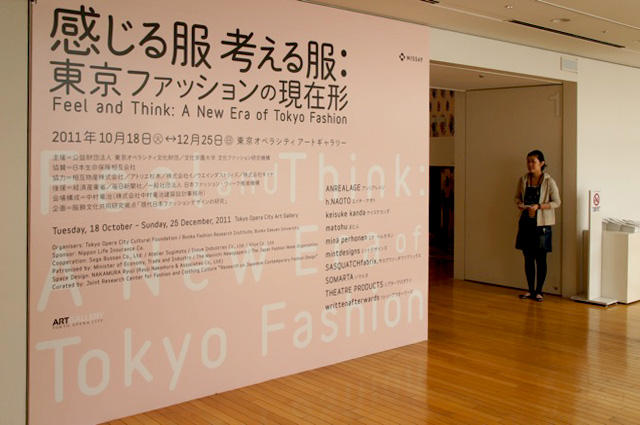
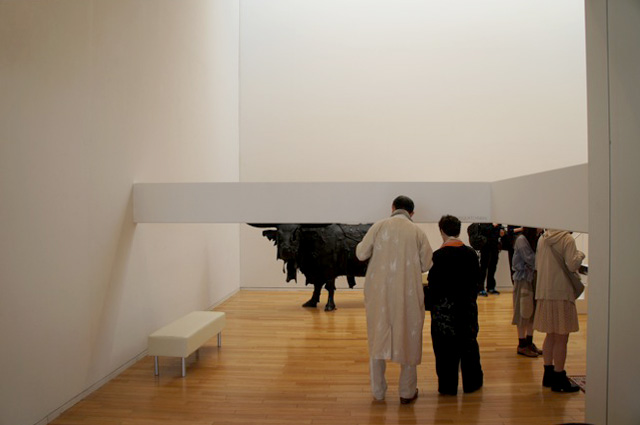
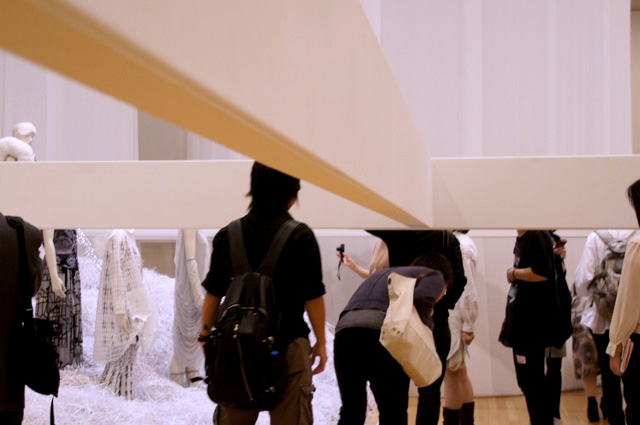
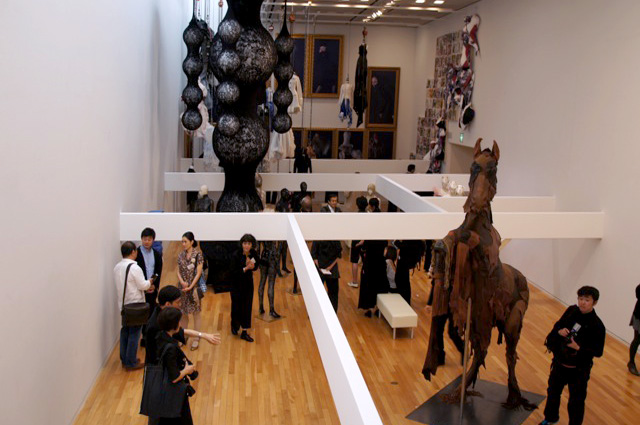
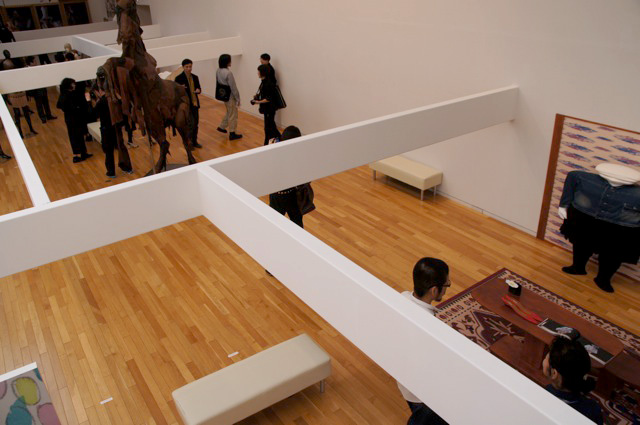
Featuring 10 of Japan’s most cutting-edge fashion designers, a new exhibition in Tokyo has just opened. “Feel and Think: A New Era of Tokyo Fashion,” now on display through Christmas (details below), is a dynamic investigation into the contemporary Tokyo fashion scene through the unique lens of an equally unique group of designers.


images courtesy japan-architects

The exhibition space was designed by architect Ryuji Nakamura, who decided to compartmentalize the different works not by walls but by steel pillars strategically placed at eye-level. The thick white lines create an almost artificial boundary between the different spaces and also force visitors to exert a certain amount of physicality in order to proceed through the exhibit.

(read our previous stories on Ryuji Nakamura)

Participating designers

Anrealage
h.Naoto
Keisuke Kanda
matohu
mina perhonen
mintdesigns
SASQUATCHfabrix
Somarta
Theatre Products
writtenafterwards (remember Big Bra?)

source: japan-architects

—————————————————–
Feel and Think: A New Era of Tokyo Fashion
Tokyo Opera City Art Gallery
2011.10.18 ─ 12.25
11:00 ─ 19:00 (closed Mondays)
General admission: 1000 yen

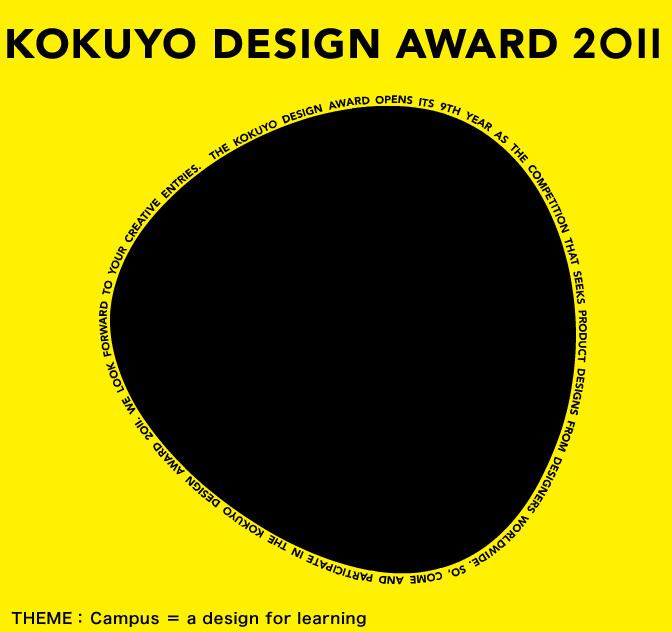
Roll Table wins the Kokuyo Design Award 2011


image courtesy Kokuyo | click images to enlarge

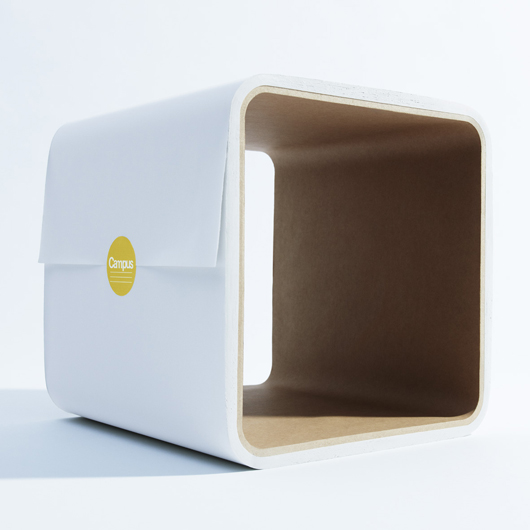
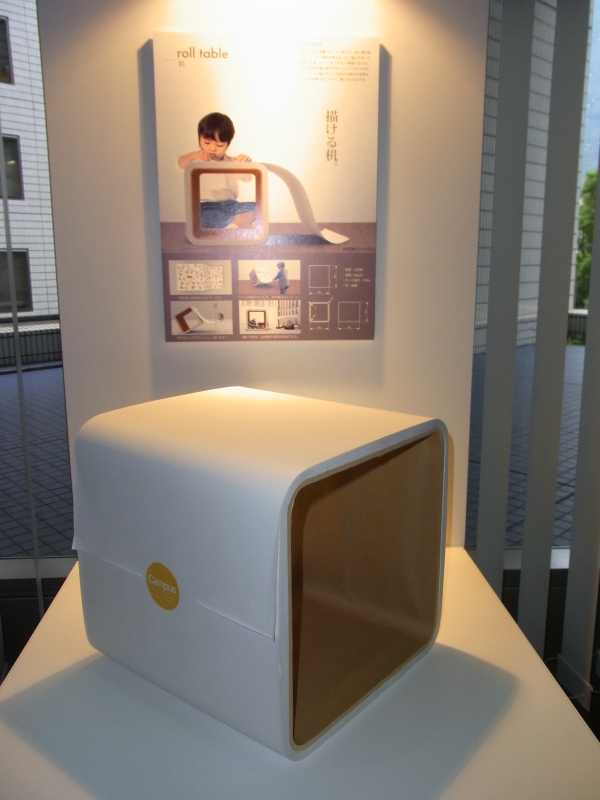
Since 2002, Kokuyo, purveyor of fine stationary supplies, has hosted an annual design award with varying themes. It’s actually one of my favorite awards in Japan and has produced some fantastic products, as well as some awesome prototypes. The awards were unfortunately postponed 2 years in a row, presumably due to the economy (the same thing happened to the MUJI awards). But Kokuyo has reignited their commitment to good design by crowd-sourcing talent from the community. The 2011 Kokuyo Design Awards were announced last week and the grand prize went to Roll Table, a clever reinterpretation of your standard children’s coloring pad.


Image courtesy Kokuyo

Inspired by memories of scribbling on tables and floors, the piece was designed by Kobe Ishou Sourenjo (神戸意匠操練所), a Kobe-based group of 3 young designers. The genius of Roll Table lies in its ability to transform a roll of paper into an actual drawing table. I know it sound simple, but indulge me. While many art easels come with a roll of paper, it’s hidden from sight. By bringing it to the foreground and making the infinite qualities of a roll of paper more salient and perceptible – not to mention interactive! – Roll Paper manages to imbed a new dynamic into the act of drawing. I want!


Image courtesy Office Magazine

Fridgezoo arctic friends

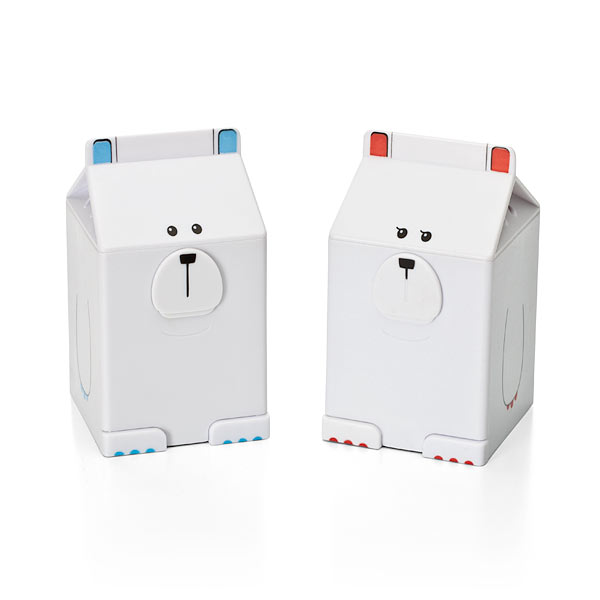
fridgezooI need this. And I wish they made one for my iron, garage, curling iron, bath water, oven… to let me know when I’m wasting or forgetful. These kawaii (cute) monsters (polar bear disguised as a milk cartons!?!) are meant to live in your fridge. The light-activated Fridgezoo animals greet you when you open the door and scold you when you leave the door open too long (careful, they can become aggressive). Perfect if you are a serial browser like me,  have little kids that play with the fridge doors or just lonely and need some interaction with the fridge.

fridgezoo in the fridge

They were designed and manufactured by Solid Alliance, a Japanese maker of gadgets and other chotchkies.

You can get this at ThinkGeek for $15.99, or HERE if you’re in Japan.

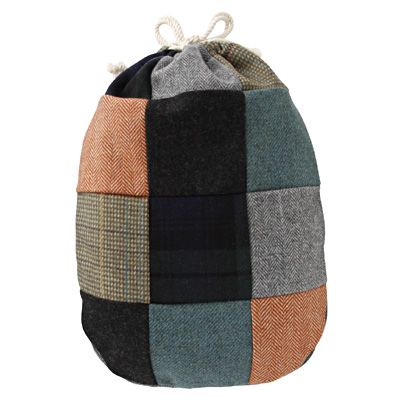
Muji Hot Water Bottle Cover


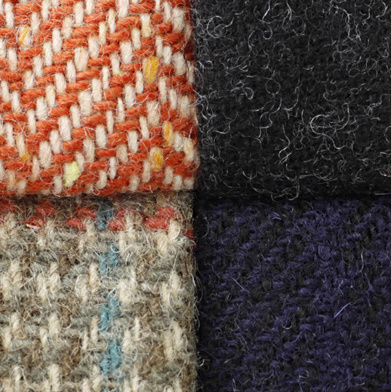
I know the stubborn summer days are still flexing the last of their muscle in Tokyo, but Fall is most certainly in the air here in NY! And this lovely MUJI patchwork cover for a hot water bottle is making me feel nice and toasty!

Not many people use hot water bottles in the States because they have central A/C but in Japan they’re still quite common. And they always remind me of this really funny night when my Dad woke up screaming because his had sprung a leak and wet his whole bed.

(I had trouble writing these short sentences because I kept laughing.)
source: @sheishine

« Older posts Newer posts »

© 2026 Spoon & Tamago

Up ↑

Design by Bento Graphics