Page 237 of 406

Milano Salone 2013: Blocco Stool by Naoto Fukasawa

Blocco stool Naoto Fukusawa (1)

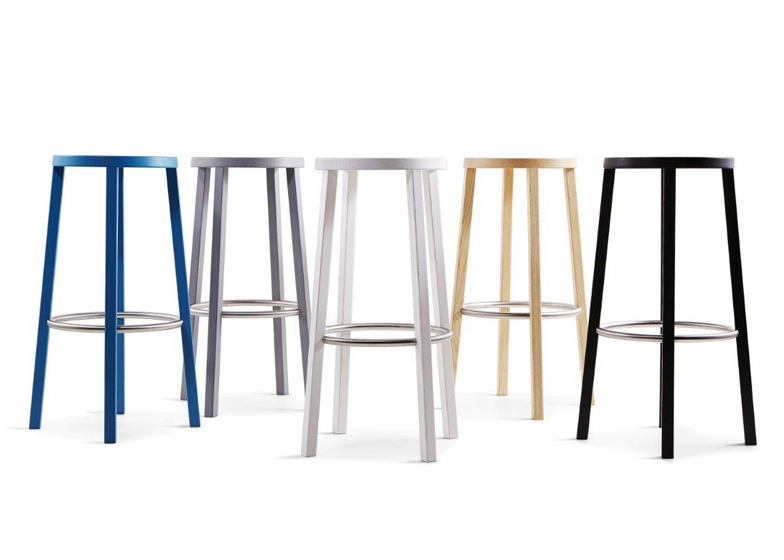
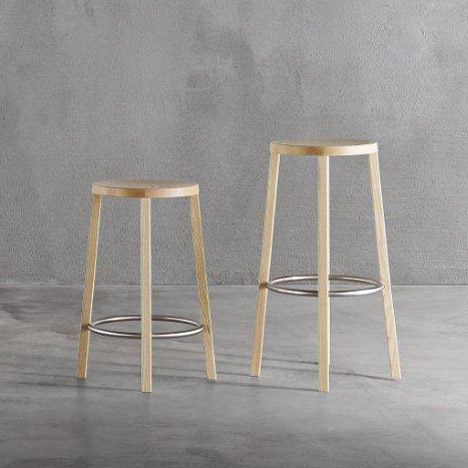
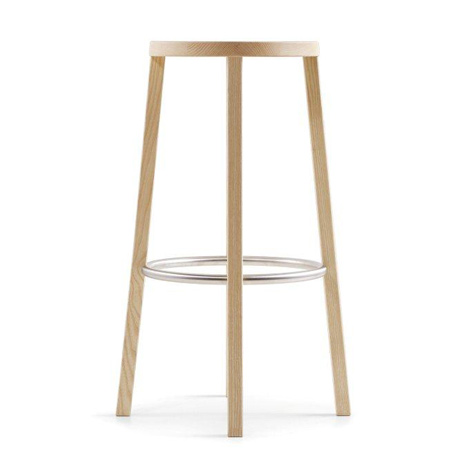
Naoto Fukasawa has designed a minimalist stacking stool for Italian furniture maker Plank, which joins a small but expanding family of chairs that Fukasawa began designing for the company last year. The simplistic design “seeks to go beyond the presentation of simple objects, suggesting more than just a “product”, rather an idea of how to enjoy your own space at best,” says the company.

The entire body of the chair is made from natural ash tree and comes in 5 different colors. And while particular attention was undoubtedly paid to the harmonious proportions of the wood, the choice to use a stainless steel foot rest serves only marginally to push this stool out of a grey category known as “boring.”

Blocco stool Naoto Fukusawa (2)Blocco stool Naoto Fukusawa (3)

Tokyo Arteria | A 3D Model of Tokyo’s Underground Metro System

Tokyo_Arteria (3)

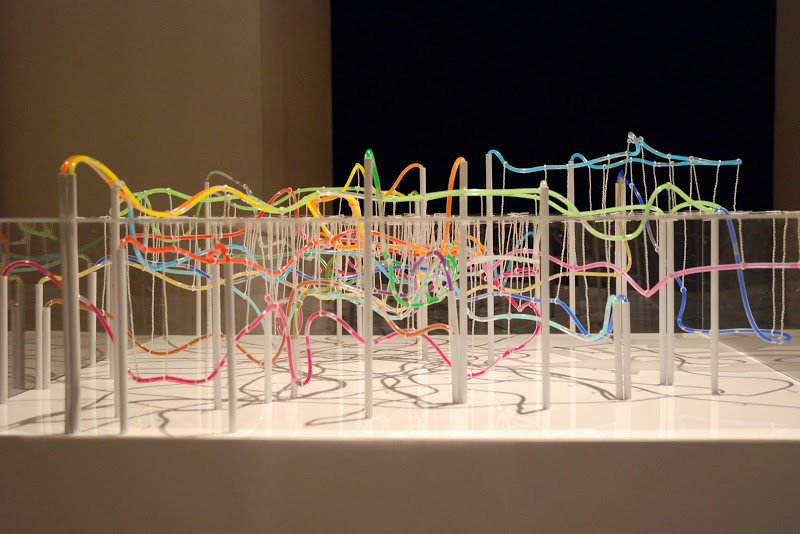
Tokyo’s subway system is arguably one of the most complex in the world. The map itself can be an immediate turn-off for any unfamiliarized straphangar. But exactly how do all these lines run underground, overlapping as they carry hundreds of thousands of passengers each day?

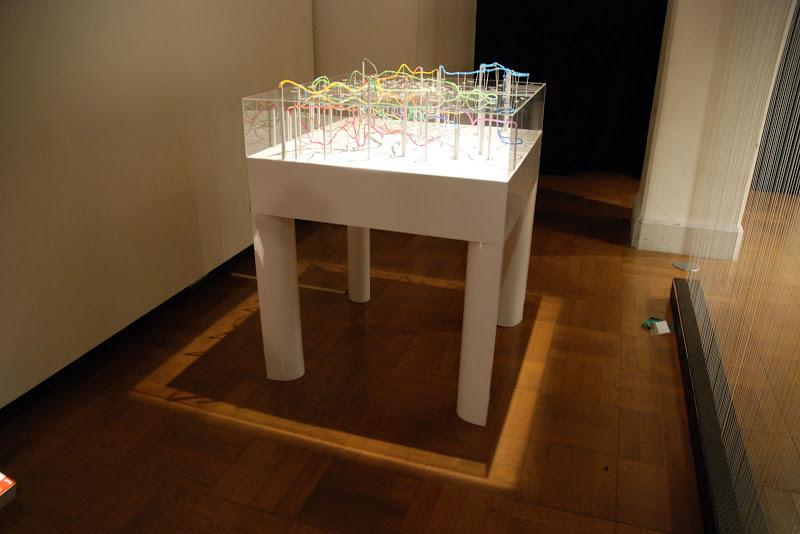
Tokyo University graduate student Takatsugu Kuriyama decided to answer that question be recreating an accurate three-dimensional model of Tokyo’s lifeline by using multi-colored tubes strung with wire. Different color liquids pulsate throughout all 18 lines, creating a staggering picture of what goes on below the streets of Tokyo every day.

tokyoart_sideview

(To be honest, I’m not sure about the accuracy of this model. some of those dips look more like roller coaster rides, rather than public transportation.)

tokyoart_main

tokyoart_overview

source: papyri.net

[Update]
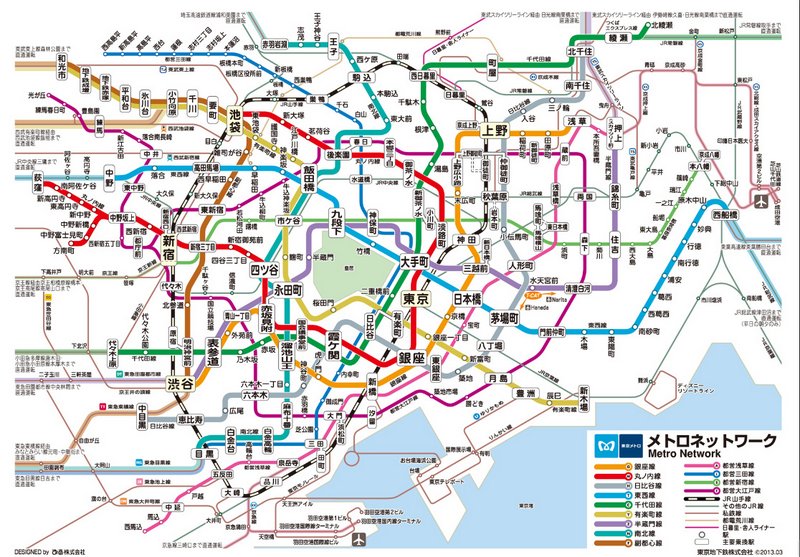
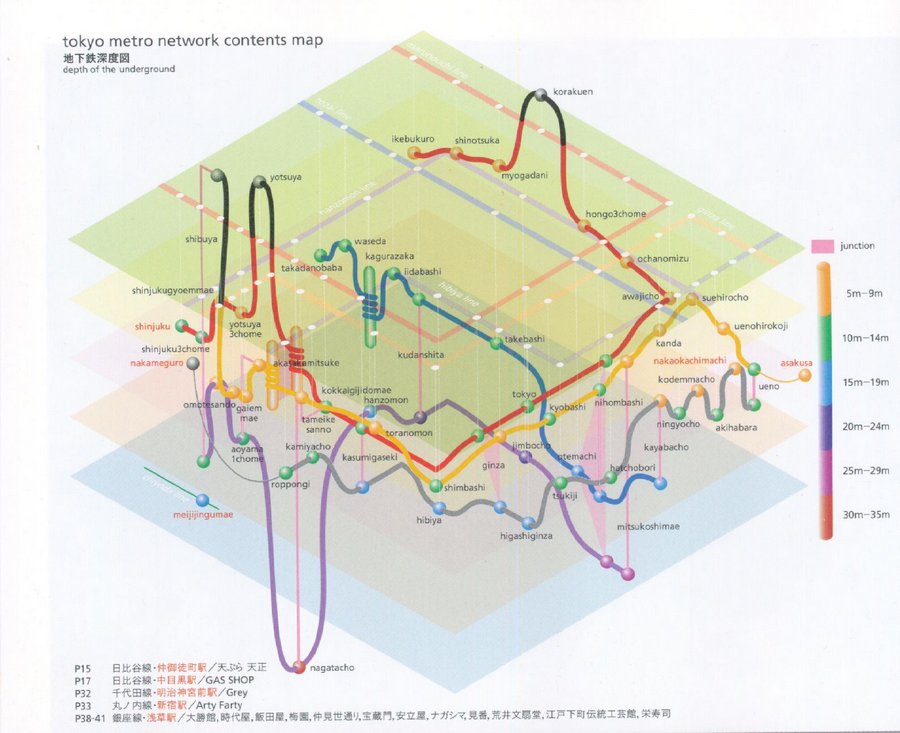
There’s been some understandable questions raised about the map’s accuracy given the volatile dips and turns. @tokyoreporter pointed me to this graphical map that was done in 2003, illustrating the depths of some of the metro lines. As you can see, the two maps share many of the roller-coaster-qualities. I think what’s happening is that the magnitude of the dips and twirls are being exacerbated when they’re compressed onto a small plane.

Tenmei, a blogger and self-described train nerd wrote a lengthy blog post (JP) about the 3D model. He seems to agree with the big-picture but has a few problems with the way the depth of the train stations were measured, which turns out to be “counting the steps leading down to the platform.”

metromap

Milano Salone 2013: Nendo designs mirror chairs, zig zagging bookshelves and lots more

mirrorchairdeepsea1

mirrorchairdeepsea11mirrorchairdeepsea02

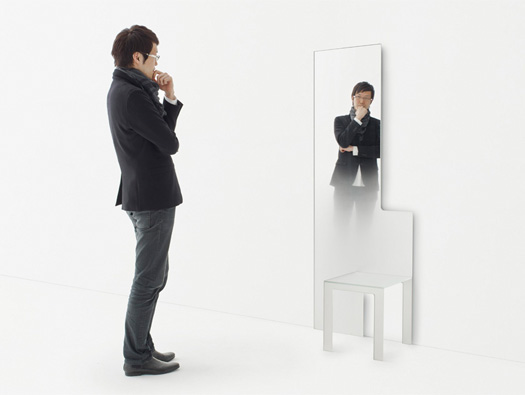
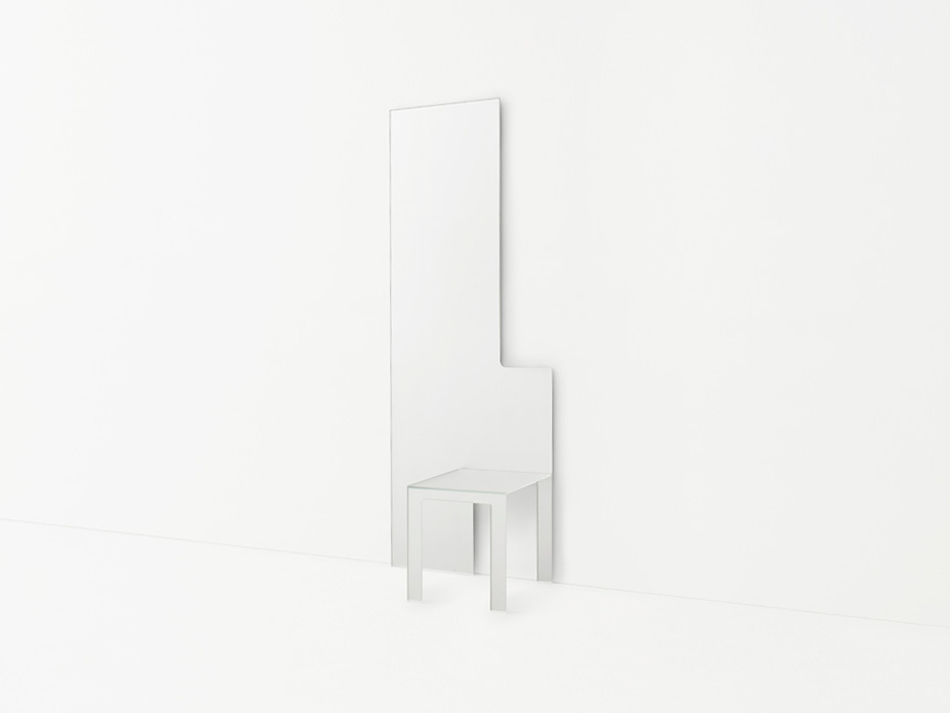
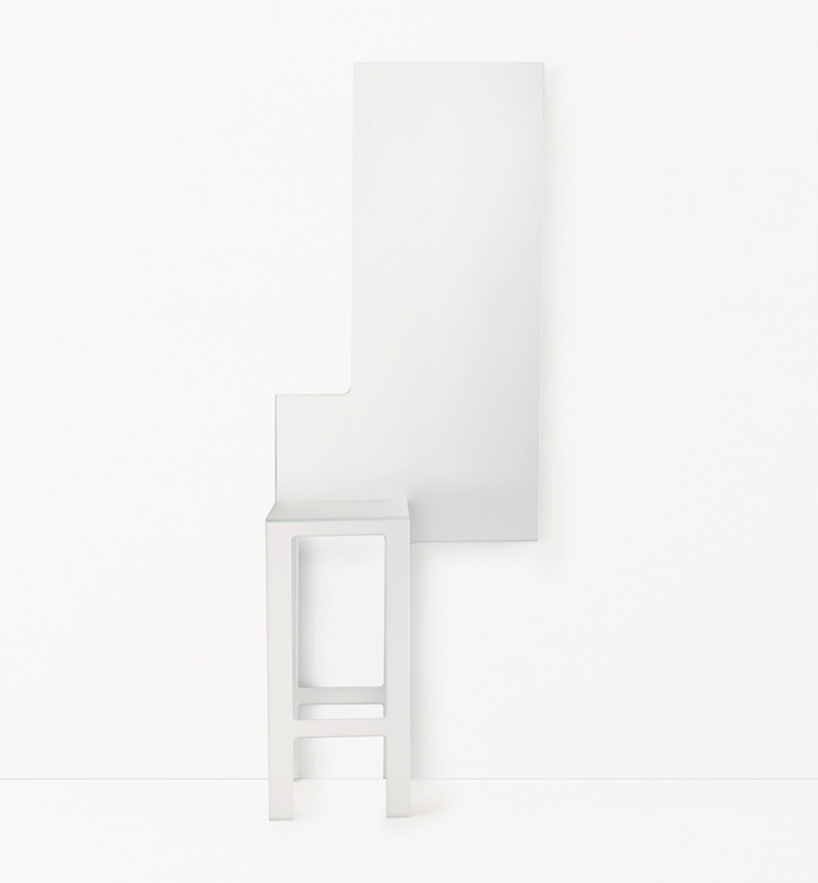
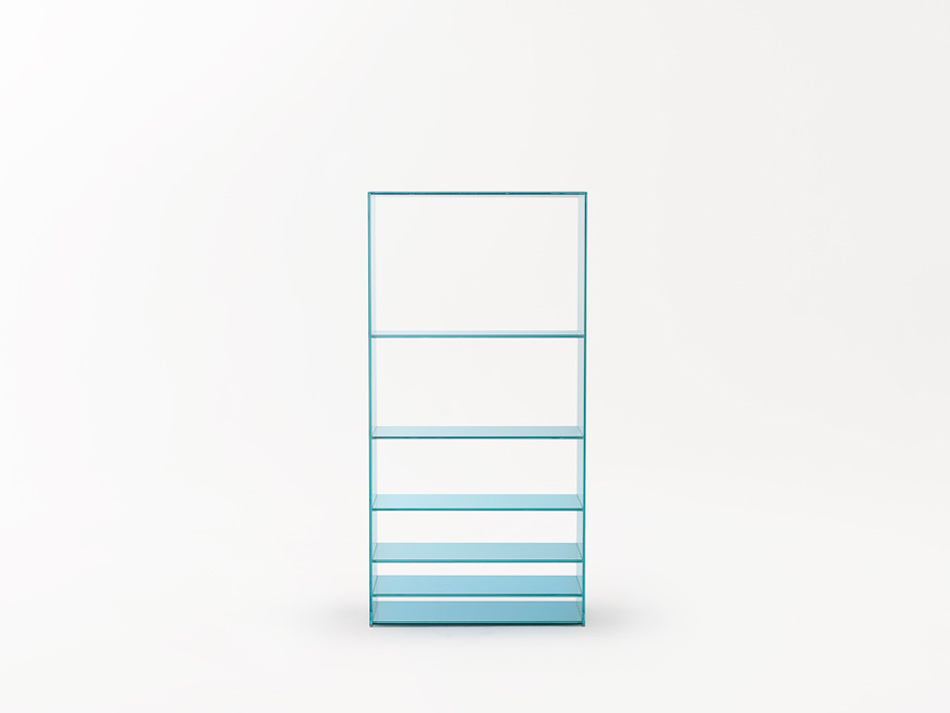
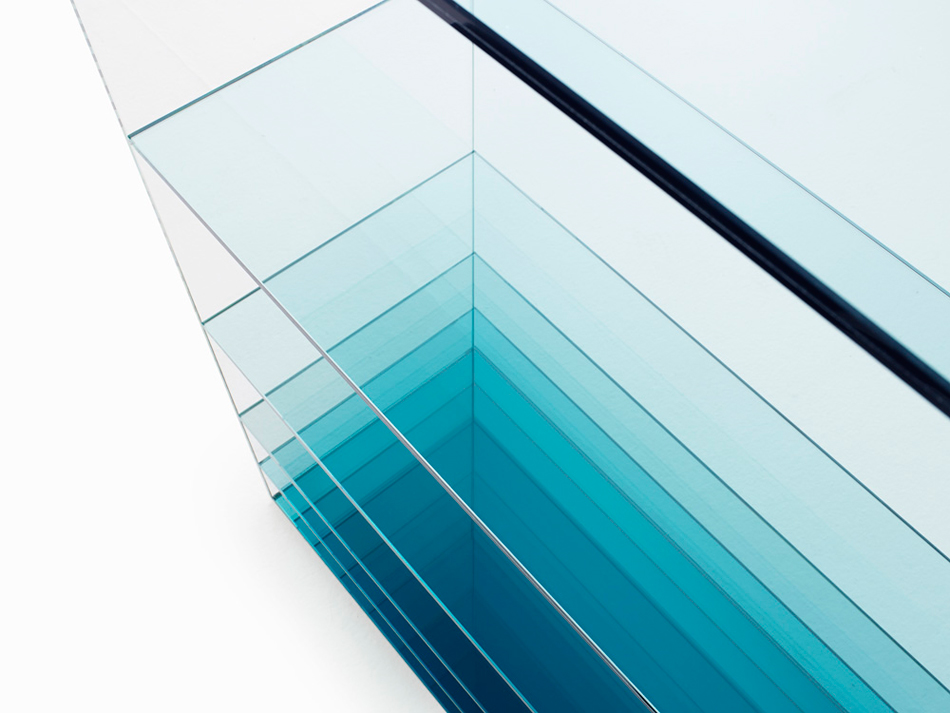
Arguably one of the busiest designers this year at Milano Salone is Nendo. They designed…. let’s just say, A LOT of products. An excessive amount. Oki Sato is debuting products with Glas Italia, the prestigious Italian glassware company who, in the past, has tapped design heavyweights like Shiro Kuramata, Naoto Fukasawa and Tokujin Yoshioka.

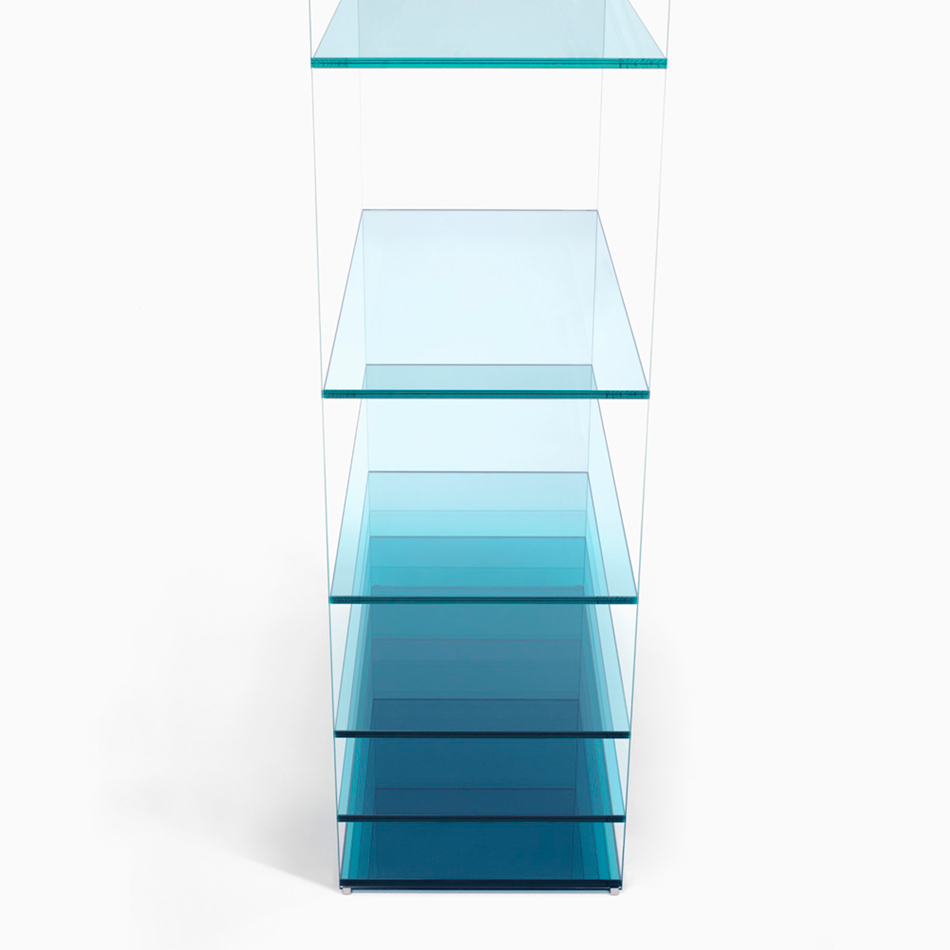
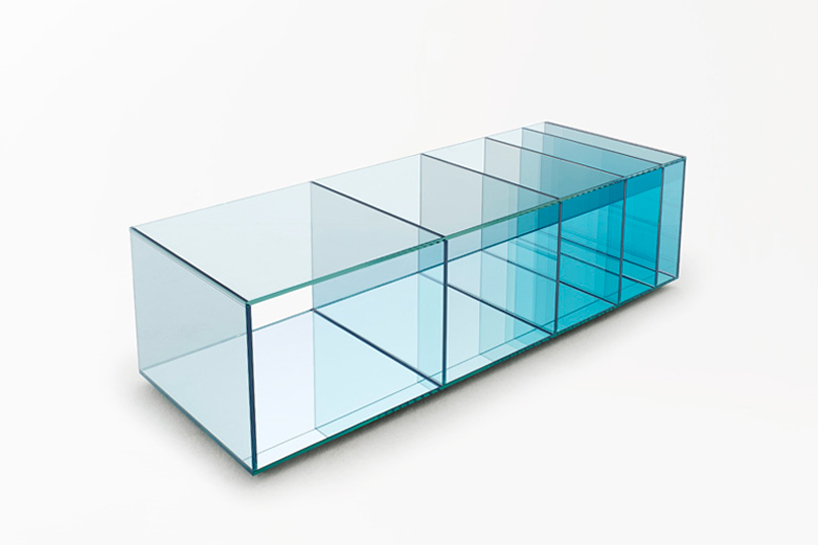
He designed 2 items: “mirror chair,” a self-explanatory piece of furniture that employs a frosted gradiation, and “deep sea,” a table and storage unit that uses blue hues to also create a gradient effect.

mirrorchairdeepsea06

mirrorchairdeepsea08mirrorchairdeepsea10

mirrorchairdeepsea03

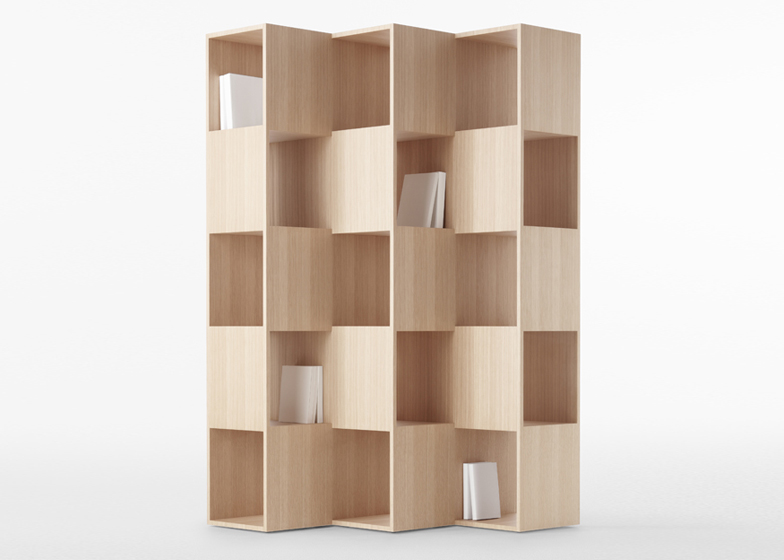
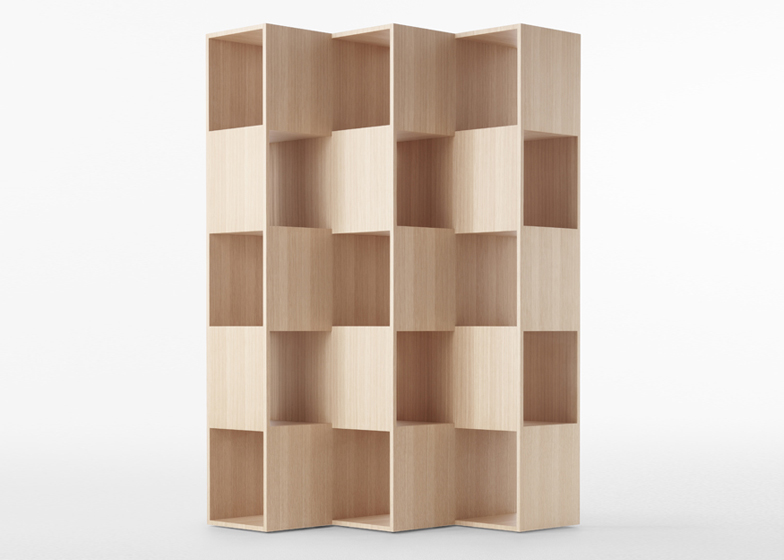
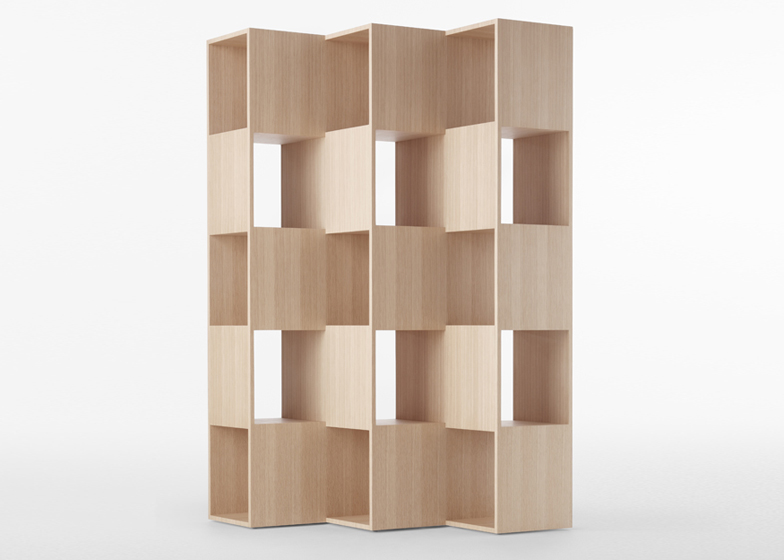
Not to leave their Japanese brethren behind, Nendo also collaborated with Conde House to design several items. “Fold” is a bookshelf made from zig-zaging interlocking wooden boards that allow books to be displayed in 2 different directions. All of Conde House’s furniture is crafted by artisans at a mill in Asahikawa, Hokkaido, and this bookshelf is no exception. “The joints appear seamless, as though single boards have been bent and interwoven like paper chains or a woven textile,” says Nendo. “It’s virtually impossible to know, looking at the shelves, how the parts are connected.”

Fold-by-Nendo-for-Conde-House-ss-2

Fold-by-Nendo-for-Conde-House-ss-1Fold-by-Nendo-for-Conde-House-ss-3

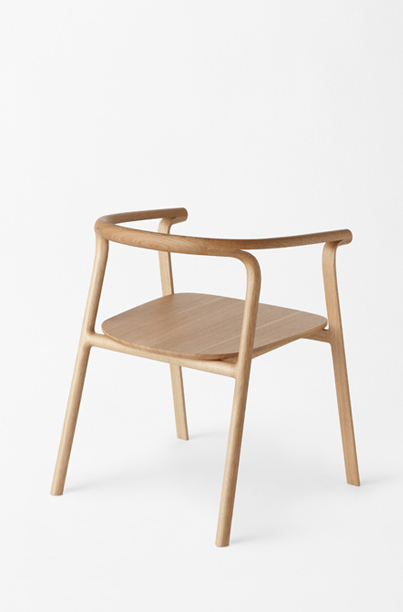
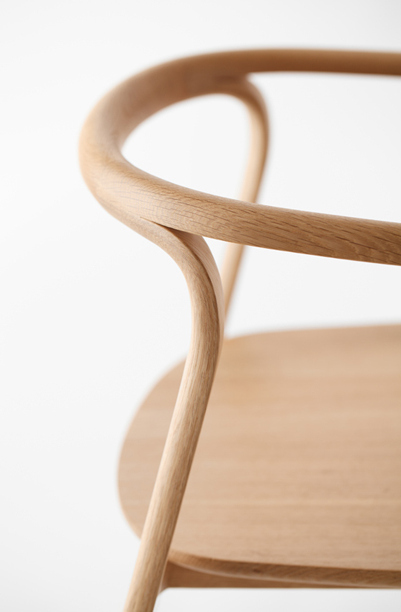
They’ve also designed “Splinter Collection,” a series of furniture that is inspired by nature; in particular, the way bark pares away from wood.

splinter01

splinter04splinter04 (1)

This post is part of our review of the 2013 Milano Salone del Mobile. All posts are cataloged right here.

Milano Salone 2013: Nendo collaborates with Luca Nichetto in poetic Japan-Italy tie-up

nichetto-nendo-collection (1)image courtesy Alexander Lagergren

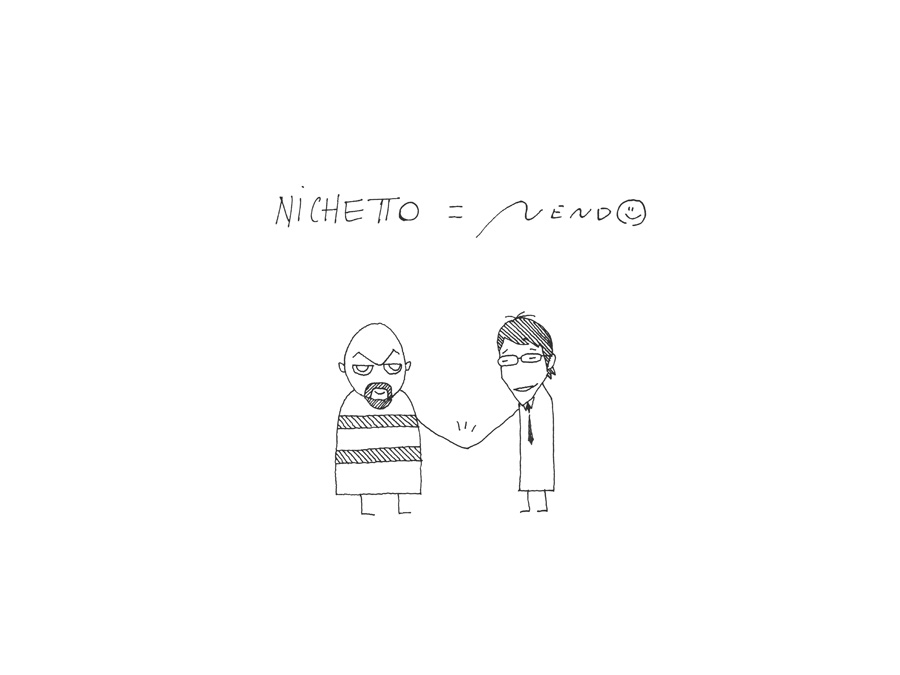
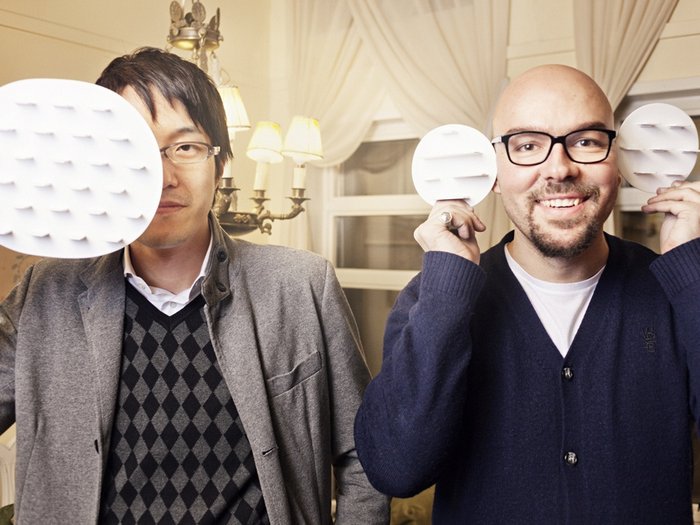
nichetto-nendo-collection (1-1)In the 1980s there was Ettore Sottsass and Shiro Kuramata. In the 2000s there was Jasper Morrison and Naoto Fukasawa. Now, the latest tie-up between Italian and Japanese designers is Luca Nichetto and Oki Sato from Nendo, representing a new generation of heavy-weight collaborations.

Nichetto always had an appreciation for Japan. “For a European guy to discover that amazing culture, and the precision with which things are done, is fantastic,” he told Dwell Magazine. And when he met Sato for coffee in Stockholm, the two hit it off and immediately decided to create a collaborative collection that they would display in Milan.

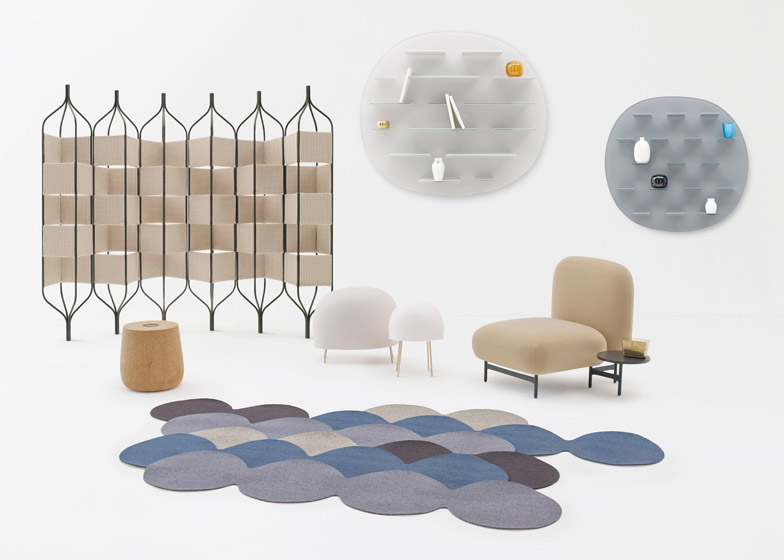
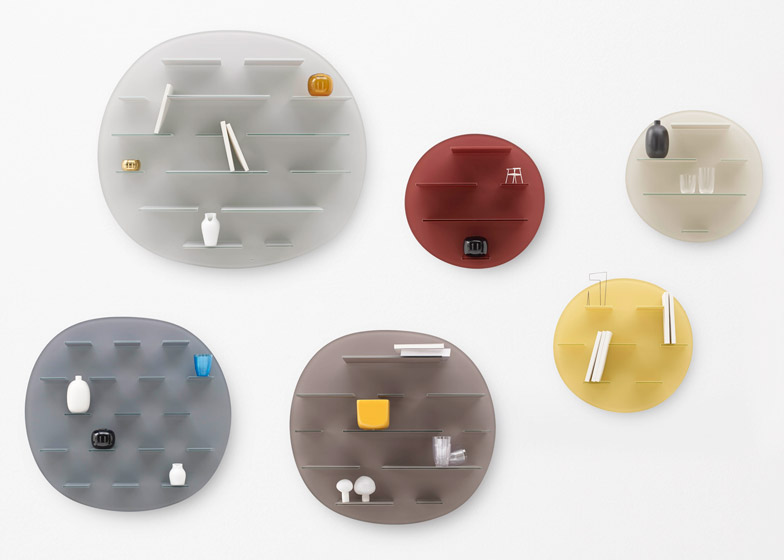
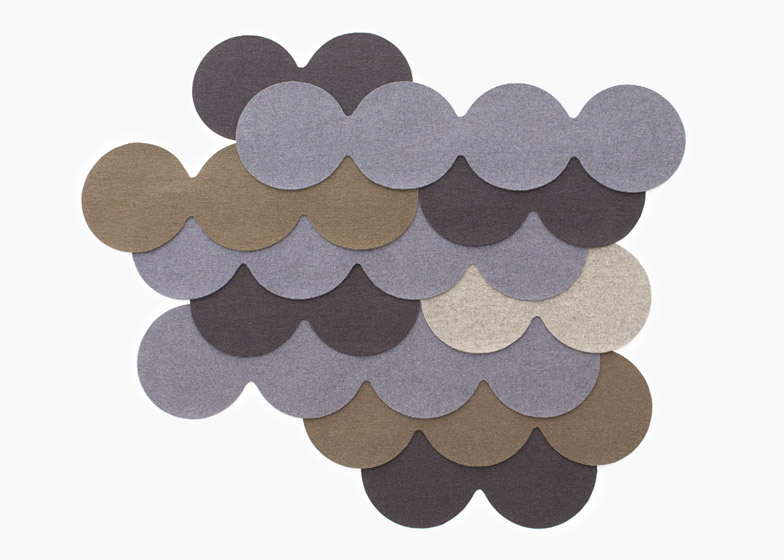
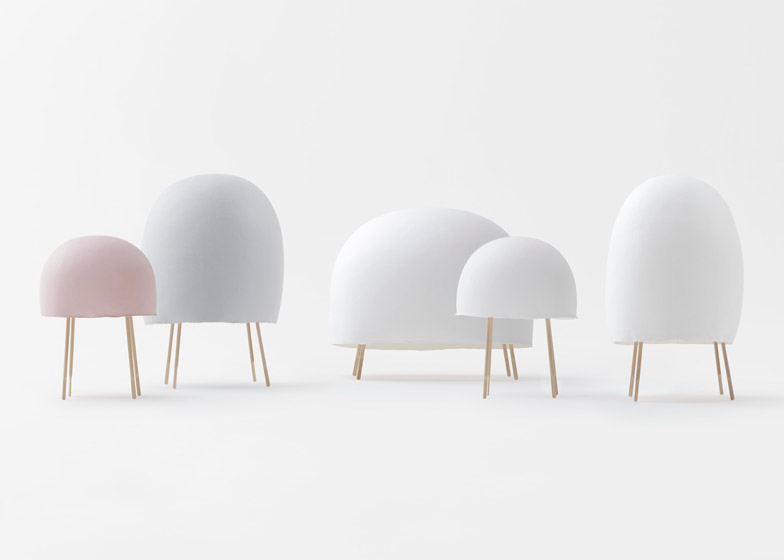
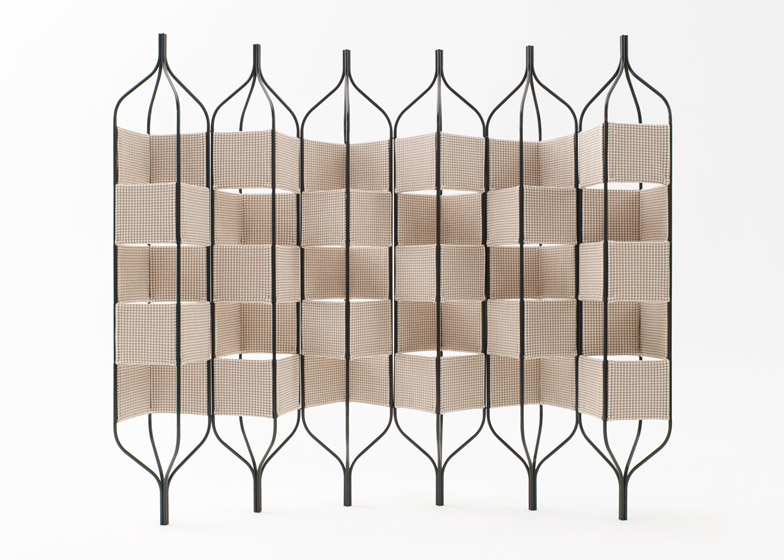
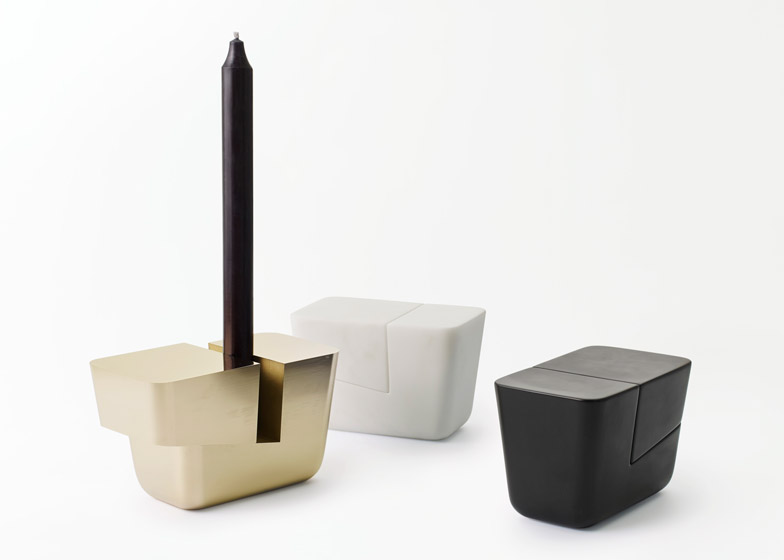
But with only 4 months until the fair, they didn’t have time on their side. “Oki told me that in Japan in the past, there was this poetry called renga,” Nichetto recalled, “where one poet would send the first three sentences to another poet. And the second one replied with the last two sentences.” And there you had it. Oki would send Nichetto some sketches and Nichetto would work on them and send them back. In just several days the two came up with seven co-conceived products that included glass shelves, a candle holder, paper lamps and a modular carpet.

nichetto-nendo-collection (2)photos by Hiroshi Iwasaki

nichetto-nendo-collection (6)Sheets of glass with a satin-finished front and coated back give the shelves the transparency and softness of a speech bubble floating in mid-air.

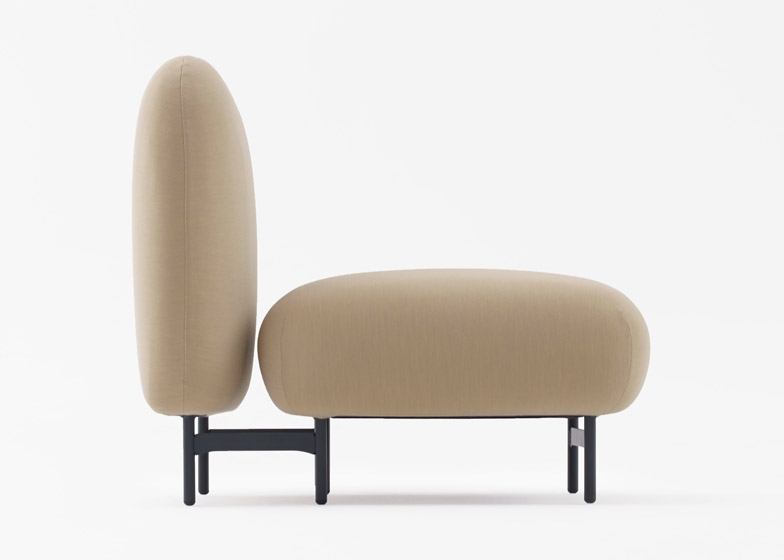
nichetto-nendo-collection (3-1)A sofa like an archipelago, divided into small parts rather than one great mass.

nichetto-nendo-collection (4)A carpet whose form, colour and size can change flexibly thanks to its parts: small overlapping pieces like fish scales or roof tiles.

nichetto-nendo-collection (5)Washi paper lamps that resemble ice cream. When lit, the lamp’s soft light makes the paper fibers stand out, and each color brings a subtly different character.

nichetto-nendo-collection (7)A trellis room divider made from highly stretchable fabric attached diagonally to the frame.

nichetto-nendo-collection (8)nichetto-nendo-collection (9)
Left: the wedge candle holder can accommodate all shapes and sizes. | Right: A stool that’s easy to pick up and carry about, thanks to its round form and

‘handle’ like a pot handle.

This post is part of our review of the 2013 Milano Salone del Mobile. All posts are cataloged right here.

Milano Salone 2013: a portable fireplace to bring people together

faro fireplace rui pereira ryosuke fukusada 1

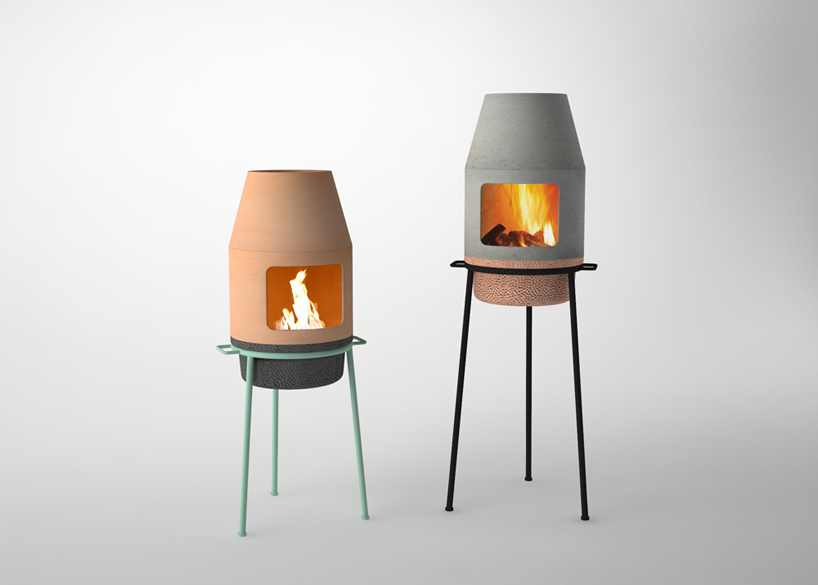
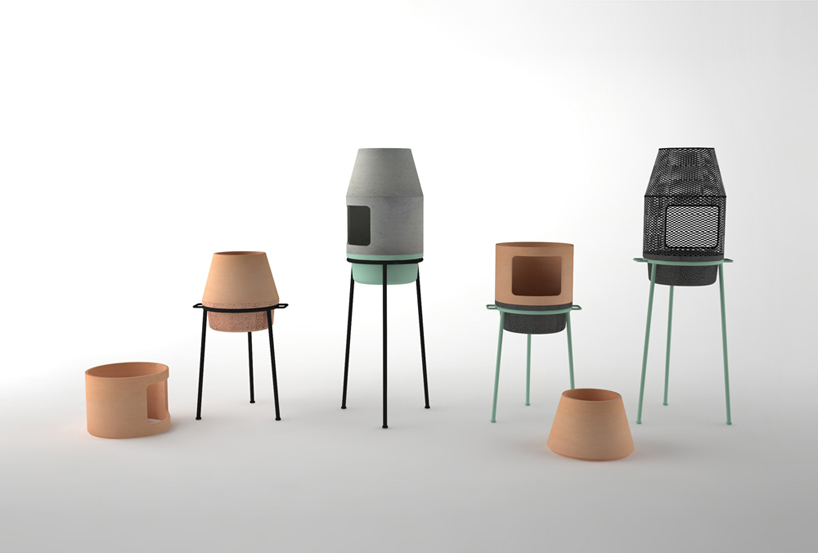
In addition to their cork bathroom fixtures, designer duo designer duo Ryosuke Fukusada and Rui Pereira have designed “faro,” a portable fireplace in response to increasingly high-tech world. “The proliferation of PCs and smartphones has created wider chasms around the individual,” says Fukusada. “Places for people to come together and communicate are becoming more and more rare.” By redesigning an object that, since the beginning of time, has brought people together, the designers hope to reignite the flame of face-to-face communication.

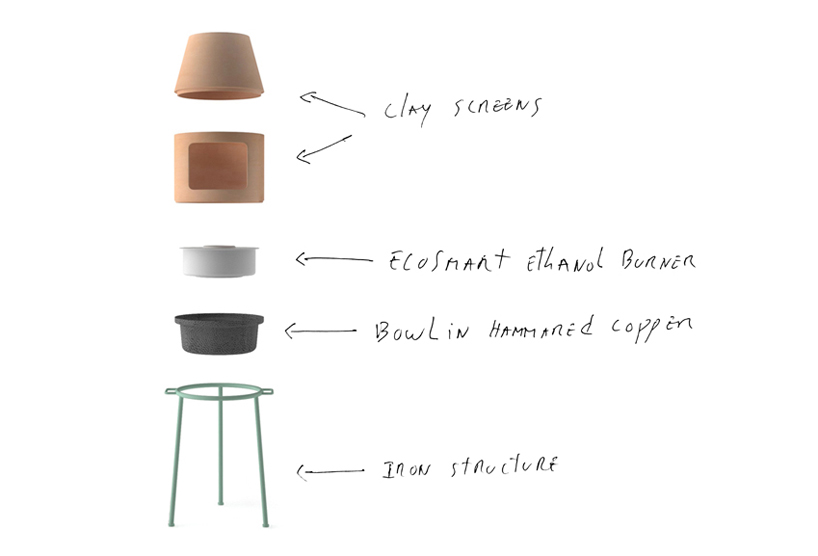
Modeled after a traditional wood-stove, the ethanol stove was developed in collaboration with Eco Smart Inc. so that it can safely be used indoors. But it also has the flexibility to be moved outdoors and loaded with firewood.

faro fireplace rui pereira ryosuke fukusada 2

faro fireplace rui pereira ryosuke fukusada 3

This post is part of our review of the 2013 Milano Salone del Mobile. All posts are cataloged right here.

Milano Salone 2013: a Portuguese take on Japanese bathing

bug collection by rui pereira ryosuke fukusada 1

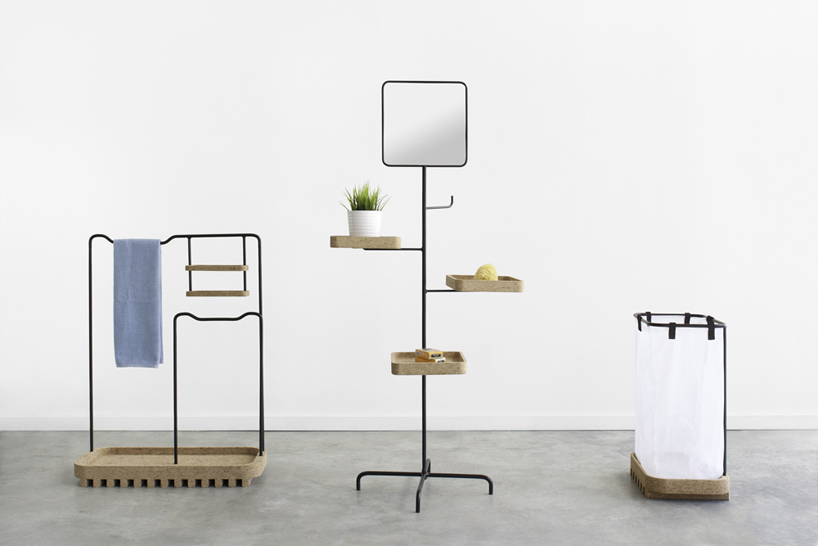
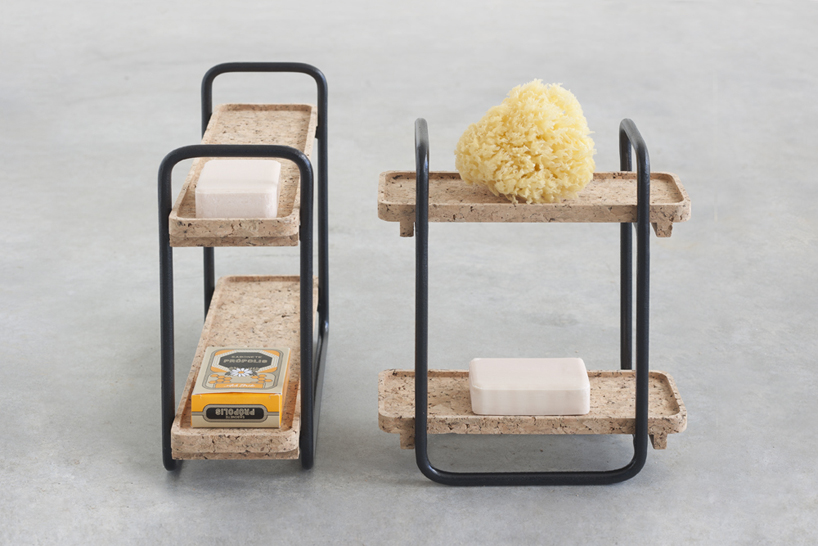
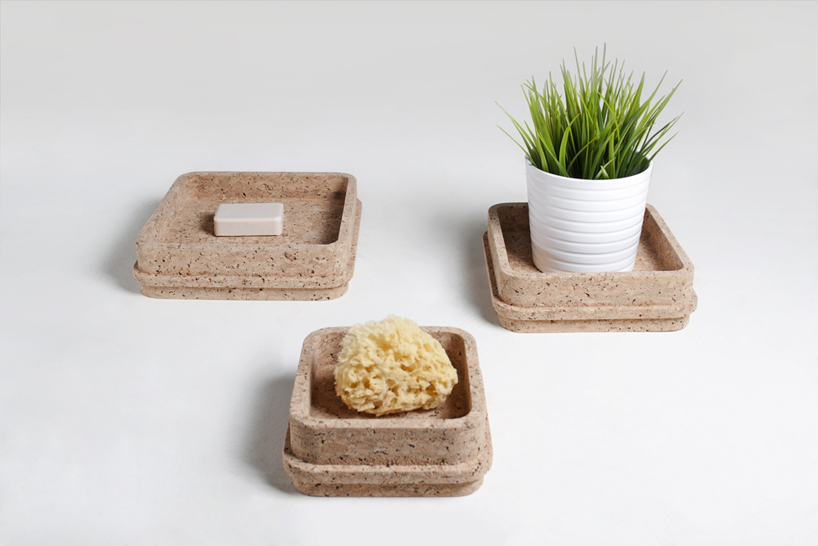
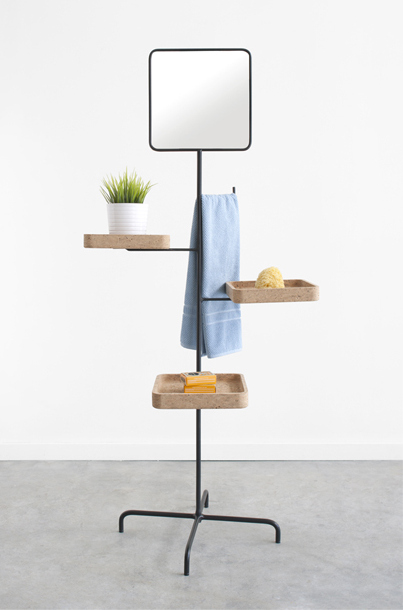
The designer duo Ryosuke Fukusada (Japanese) and Rui Pereira (Portuguese), who wowed the design world last year with their subversive yet adorable edible furniture cakes, have turned their attention from the kitchen to the bathroom. Merging Japanese and Portuguese tradition, they’ve created “bug collection,” a series of bathroom accessories that attempt to create stronger connections between the washroom and the rest of the house.

bug collection by rui pereira ryosuke fukusada 2bug collection by rui pereira ryosuke fukusada 2-1

Playing off of the fact that Portugal is one of the world’s largest cork producers, the designers incorporated this product of the cork oak tree not only for symbolism but also for its impermeability and hypoallergenic qualities. I really appreciate the attention to detail in modeling the cork trays after Japanese geta footwear.

Bug Collection will debut at ventura lambrate during salone del mobile.

bug collection by rui pereira ryosuke fukusada 3

bug collection by rui pereira ryosuke fukusada 4bug collection by rui pereira ryosuke fukusada 5

This post is part of our review of the 2013 Milano Salone del Mobile. All posts are cataloged right here.

Milano Salone 2013: Energetic Energies by Akihisa Hirata

milano salone 2013

Intro

It’s that time of year again for Milano Salone, where the world’s top designers present impeccable, minimalist works that I would probably never consider putting in my home. Now in its 52nd year, the organization refers to itself as “the global benchmark for the Home Furnishing Sector.” But not everyone agrees. In recent years an increase in commercial shindigs and promotional events staged by cash-rich banks and car-makers prompted British designer Jasper Morrison to suggest that Salone del Mobile be renamed “Salone del Marketing.”

Whatever you decide to call it, last year was a big year for Japanese design. Akihisa Hirata, a rising star in architecture and protégé of recent Pritzker prize winner Toyo Ito, took home the Elita Design Award for his installation of solar panels. And staying consistent with the high-tech theme, Nendo designed a series of 3D-printed lacquered paper objects. This year we’re already seeing glimpses of high-tech design 2.0 (more on that below), but also a return to the minimal furniture pieces that the fair is more conventionally known for.

This week we’ll be showcasing various projects by Japanese designers, all of which will be cataloged here. You can also check out our full coverage of last year’s fair right here.

130326salone_01

Energetic Energies – Akihisa Hirata’s 30-meter energy landscape

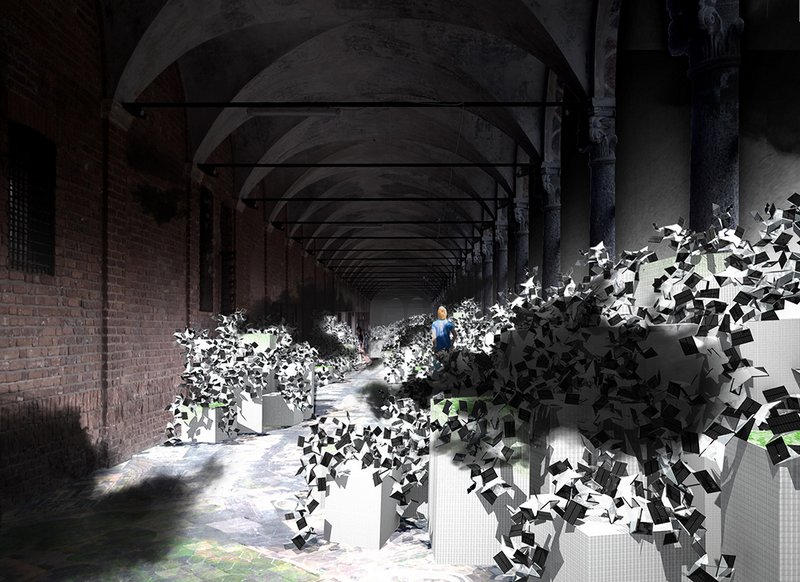
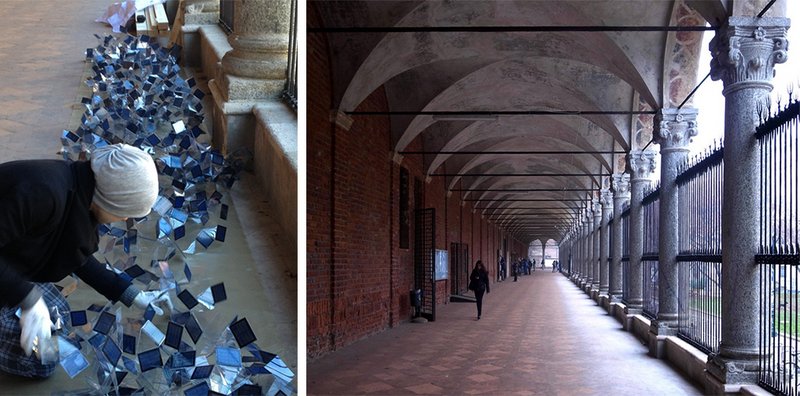
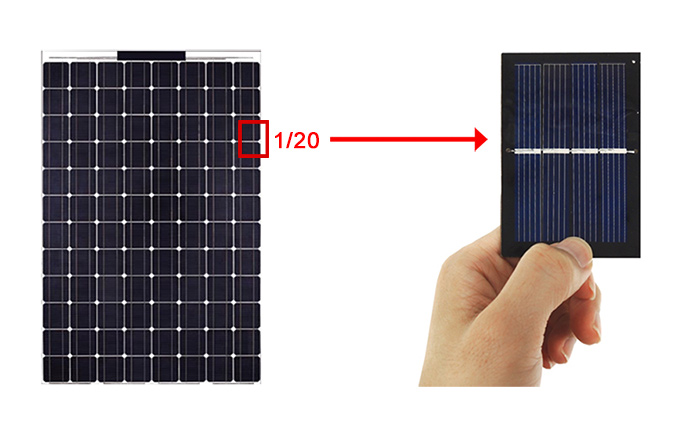
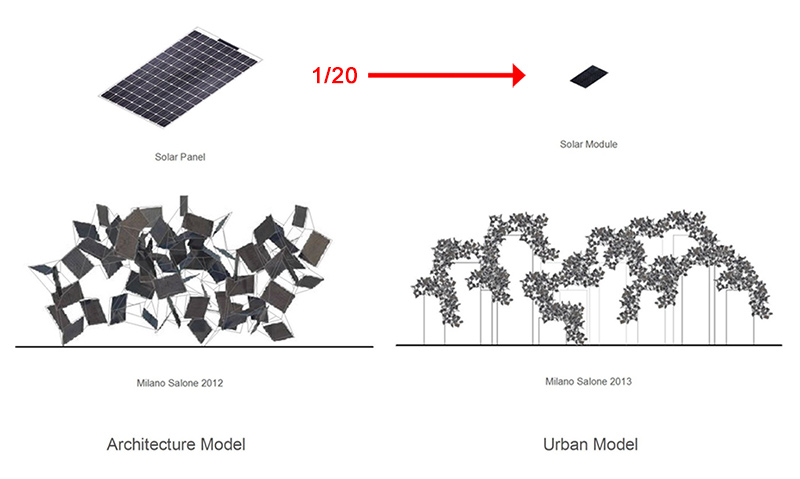
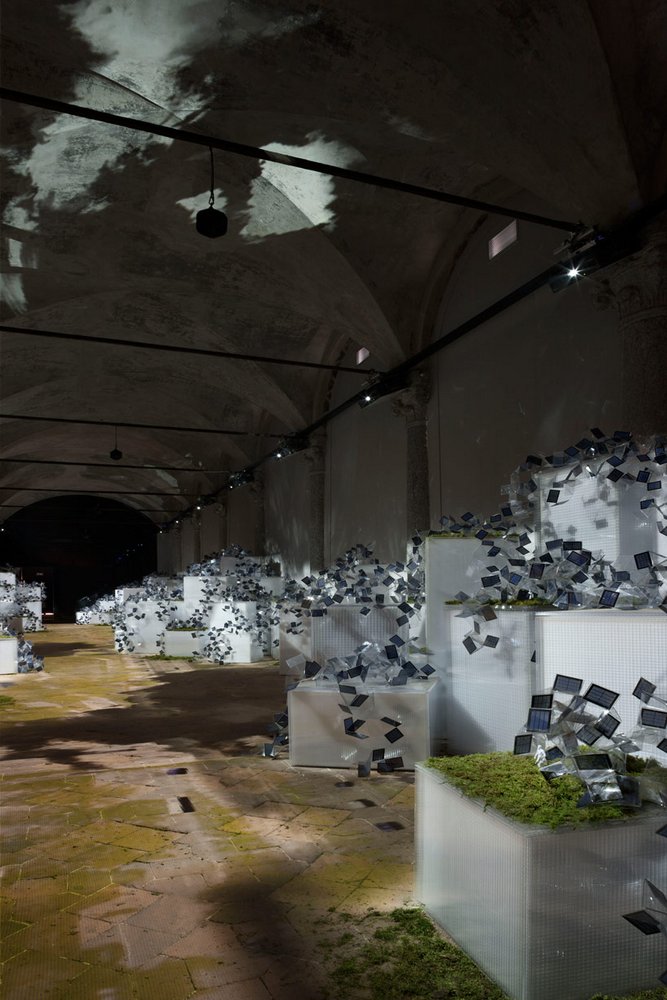
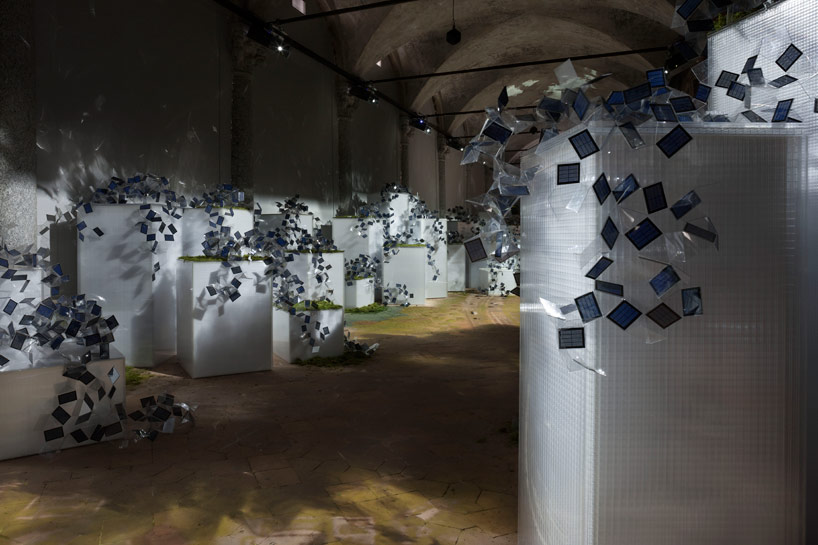
Electronic giant Panasonic has once again tapped Akihisa Hirata to design an installation that incorporates their future energy solutions. This year Hirata is staging a 30-meter “energy landscape” made from hundreds of small cubic solar panels. Improving on his design from last year, Hirata has opted for smaller solar-panel modules randomly arranged to simulate leaves on a tree, rather than in a pane. “The sun moves from east to west, with its angle relative to earth constantly changing. That’s why plants grow their branches and leaves in so many different directions,” exclaimed Hirata, arguing that we must rethink the way we deploy solar panels.

130326left_salone_05

130327con02Deploying solar-panel modules instead of an entire solar panel

130327con03On the left, Hirata’s installation from last year. On the right, a new city-wide approach that learns from nature

[Update]
Now that the piece has been installed, here are some pictures of what it looks like:

panasonice03photos by Santi Caleca | click to enlarge

panasonice02

Navigating the 2013 Setouchi Triennale

setouchi home_2013

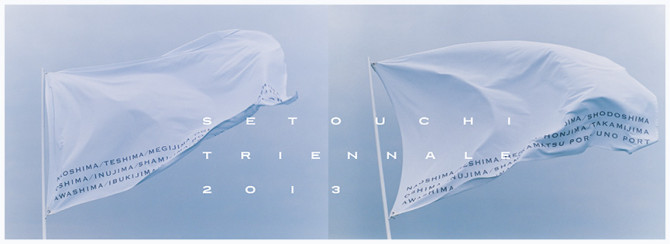
200 Artworks, 12 islands and 108 days. The 2013 Setouchi Triennale kicked off on March 20th and will run all the way through November 4, 2013. This time the festival is divided into 3 seasons – Spring, Summer and Fall, with artworks rotating on and off during different seasons. It’s the perfect getaway and a great way to experience both the great outdoors and an outdoor museum with a diverse display of environmental and site-specific work.

“The power to attract people to all of the individualistic islands lies with the art and architecture that has developed there,” says the organizers. “These aspects are an art form whose purpose lies in getting people involved with nature, amid the beautiful natural setting that is inherent to the Setouchi area.”
setouchi app screenshot

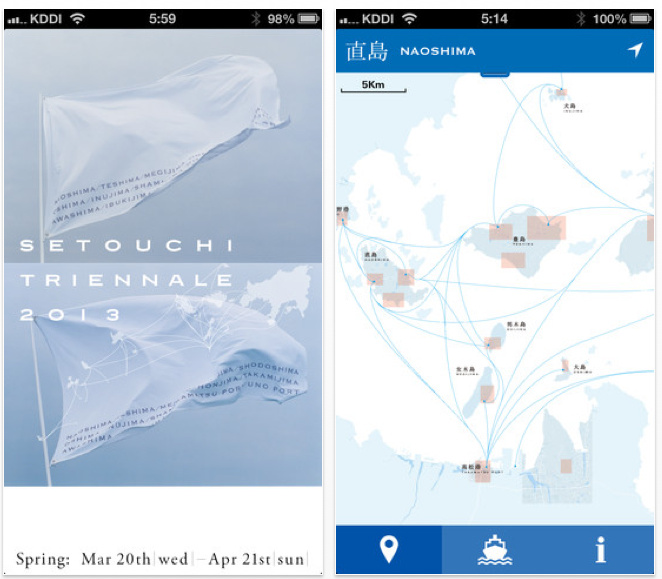
If you do go, be sure to download the new and improved app courtesy of Kenya Hara (who also designed the posters and overall look). It will help you navigate where different artworks are located and how to get to them.

Here are some of the highlights that I would like to see if I went. You can also check out some of the old articles we’ve written on the Setouchi art movement.

Particles in the Air by Noe Aoki
Rust-covered shafts of Corten (weathering) steel straddle a water tank embedded in the ground. Circular hoops hover in the air above like dancing particles.

Setouchi_Noe Aoki_Teshima

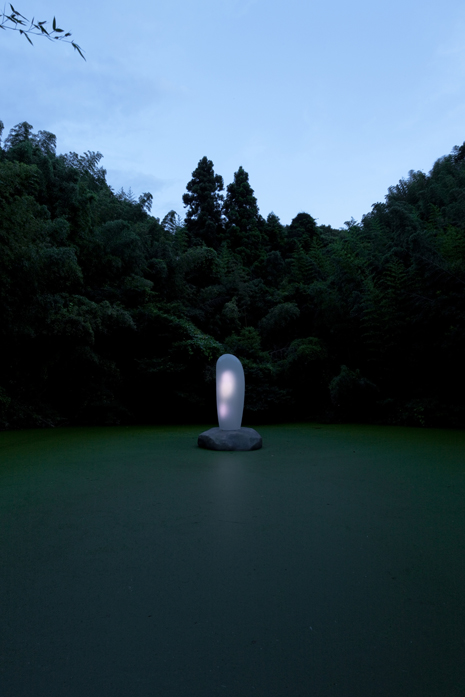
Tom Na H-iu by Mariko Mori
This contemporary monument is a symbol of life and death. The sculpture, which is connected to the Kamioka Observatory by computer, glows each time a supernova explosion is recorded, signaling the death of a star.
Setouchi_Mariko Mori_Teshima

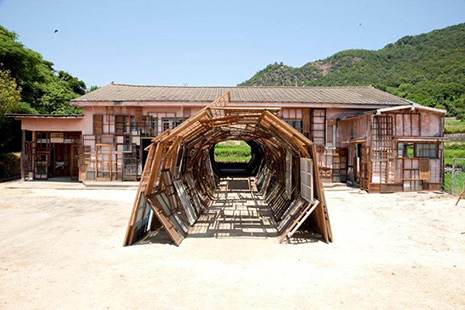
Distant Memory by Chiharu Shiota
For the first Setouchi Triennale in 2010, the artist gathered wooden fittings from various islands to build a tunnel. Three years later, weathering of the structure dictates that 2013 will be the last year the current work will be open to the public.
Setouchi_Chiharu SHiota_Teshima

Equipoise by Harumi Yukutake
More than ten thousand hand-worked mirror plates are suspended from the ceiling of a renovated storehouse. Light reflected in the mirror fragments shimmers with each passing breeze, enveloping the viewer in a vision of light.
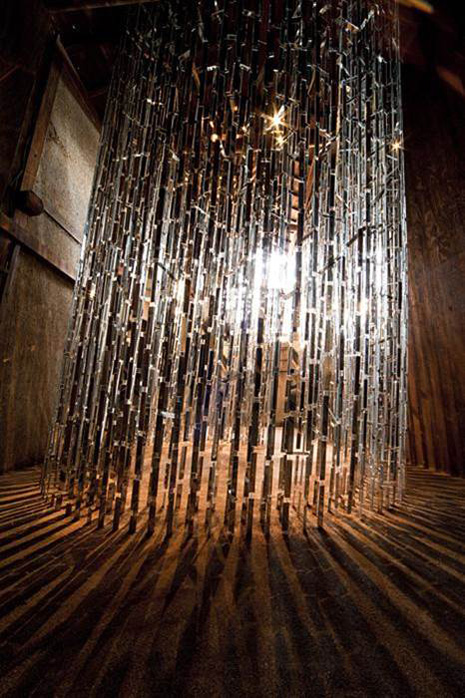
Setouchi_Harumi Yukutake_Megijima

The Light of Shodoshima by Wang Wen Chih
A giant dome constructed of 5,000 island-grown bamboo lies at the foot of a slope of terraced fields. The impressive structure alters the landscape. Visitors can enjoy wandering around the building and, at night, can see it lit up by LEDs.

Setouchi_Wang Wen Chih_Shodoshima

Tsugi-Tsugi-Kintsugi by Masayuki Kishimoto
Ceramic dishes and vessels collected from the islanders are joined together by kintsugi, a Japanese pottery restoration technique.
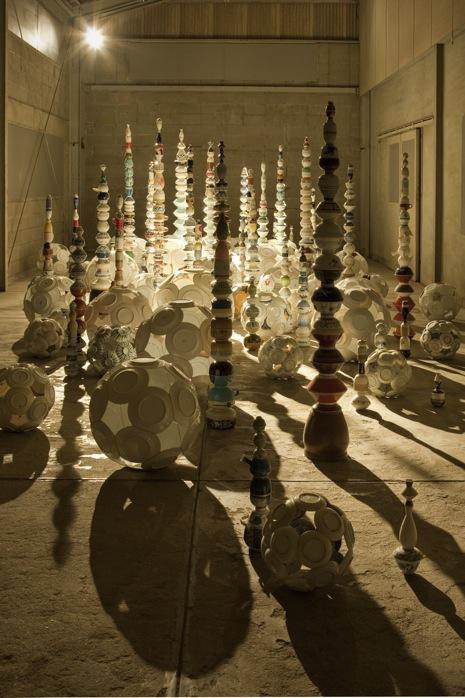
Setouchi_Masayuki Kishimoto_Shodoshima

Liminal Air -core- by Shinji Ohmaki
Two colorful 8-meter pillars stand at Takamatsu Port. Parts of the pillars mirror the scenery so that the appearance of the sculpture alters depending on the time of day and where the viewer stands.
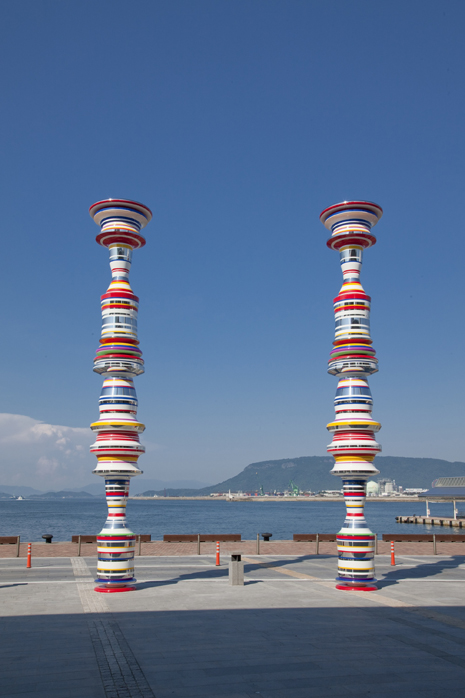
Setouchi_Shinji Ohmaki_Takamatsu port

Unsinkable Ship by Ryo Toyofuku
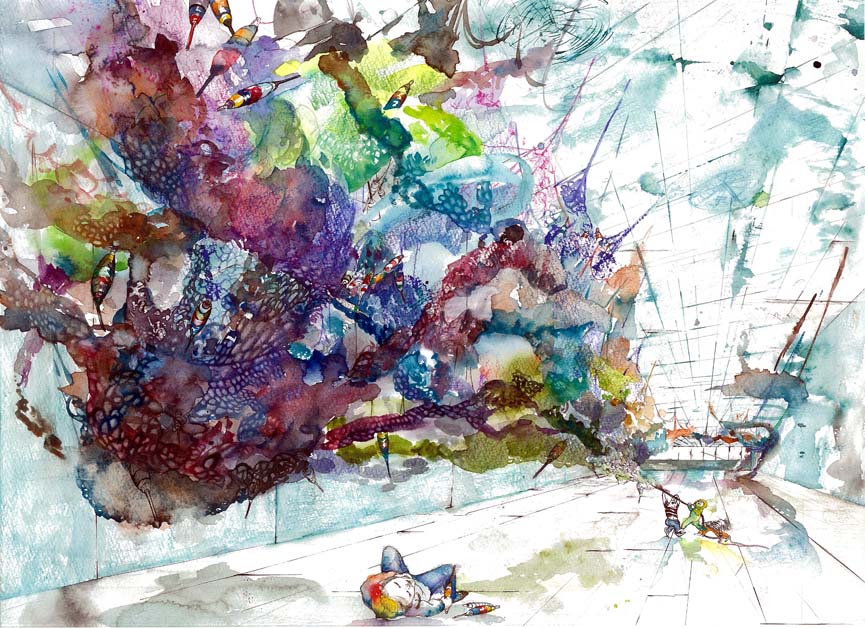
A three-dimensional work using fishing tackle and household items to create an undersea world with schools of fish. The highlight is the 50,000 floats made during workshops with the islanders as well as with children and adults from Kanonji city.
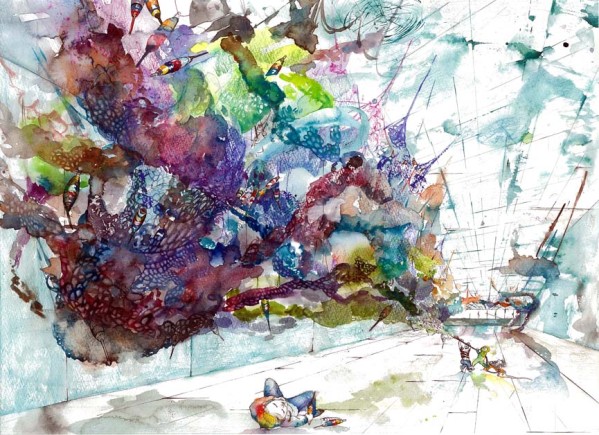

Setouchi_Ryo Toyofuku + Chiba Art School_Ibukijima

Link Roundup of April Fools Internet Pranks in Japan | 2013

While you were asleep, Japan was busy posting various internet pranks on the Internet. Japan’s new-found holiday seems to get more and more popular each year. There were simply too many to post so here is a small selection of some of my favorites.
If you’re interested, you can check out what kind of lies Japan came up with last year.

April Fools 2013 (1)

April Fools 2013 (2)
Cell phone provider AU launched a phone bed stating, “since people only use their smartphones in bed, why not turn the bed into a smartphone?” You can sleep with your favorite anime character, use it as a head-pounding alarm clock, or even jog on it while scrolling through webpages.


April Fools 2013 (3)

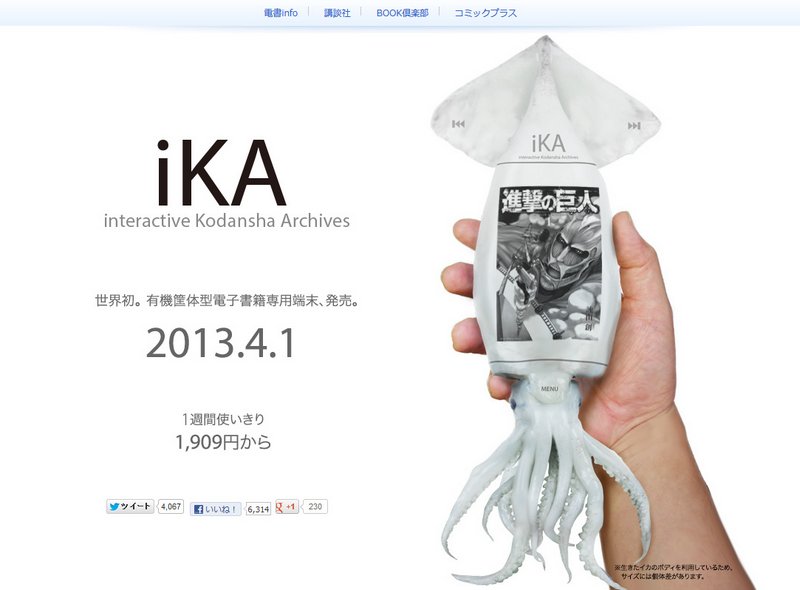
iKA, the new e-reader from major publishing house Kodansha

April Fools 2013 (4)

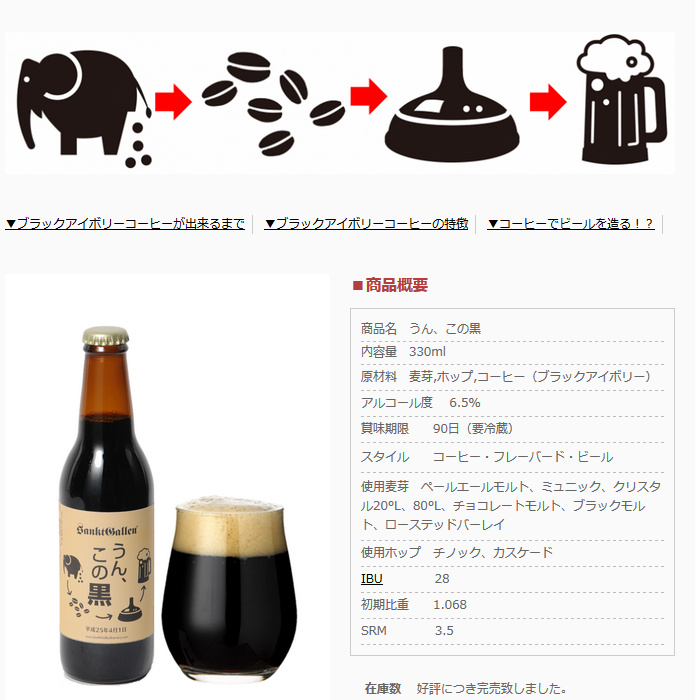
SanktGallen Brewery is selling a dark beer made from elephant poop or, “Black Ivory.”

April Fools 2013 (5)

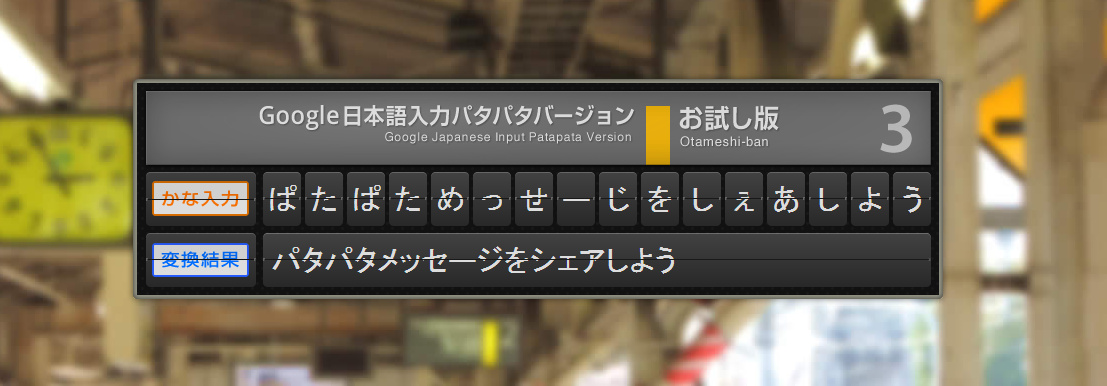
Google Japan unveiled a revolutionary new way to type Japanese using only the spacebar. It’s incredibly annoying and time-consuming.

April Fools 2013 (6)

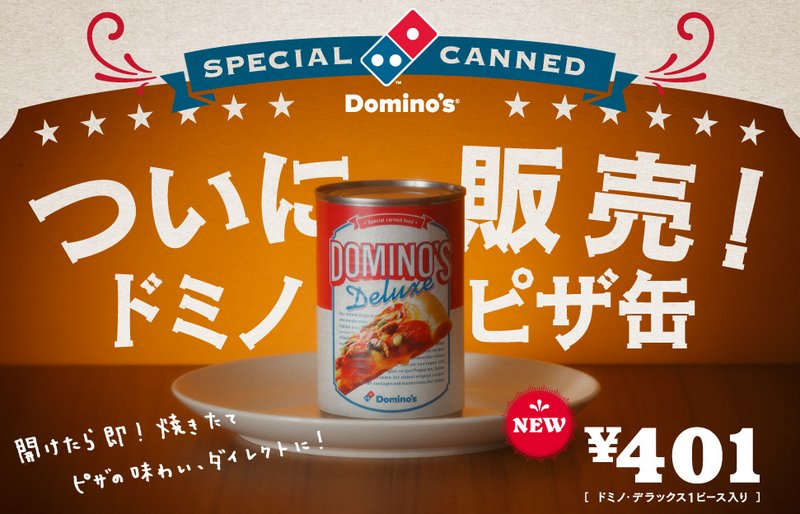
Canned pizza anyone? Only from Domino Pizza.

April Fools 2013 (7)

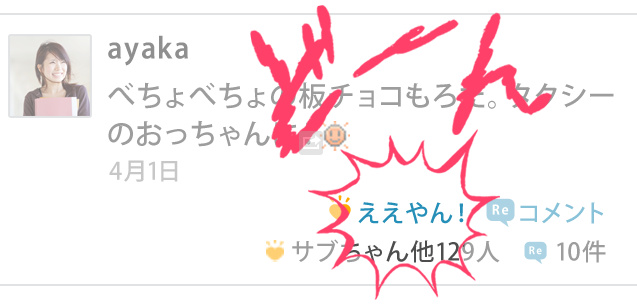
Mixi, Japan’s home-grown SNS, has launched a new “like” button that is compatible in all different dialects.

April fools 062

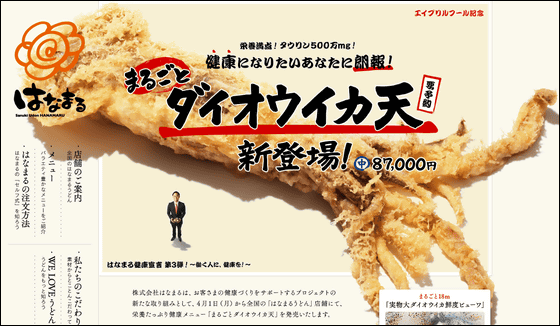
If you’ll recall, earlier this year a team of researchers from the U.K. and Japan captured footage of a 10-ft long giant squid. In other news, an udon noodle shop in Gifu is advertising giant squid tempura. Just 87,000 yen!

April Fools 2013 (8)

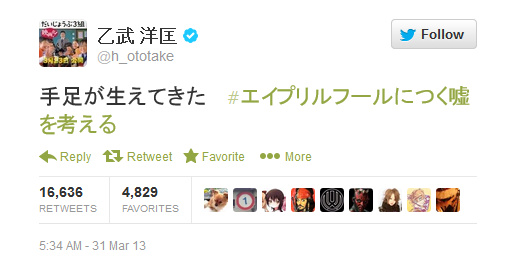
Hirotada Ototake, the famous writer born without arms and legs, tweets “I grew arms and legs.”

April Fools 2013 (9)

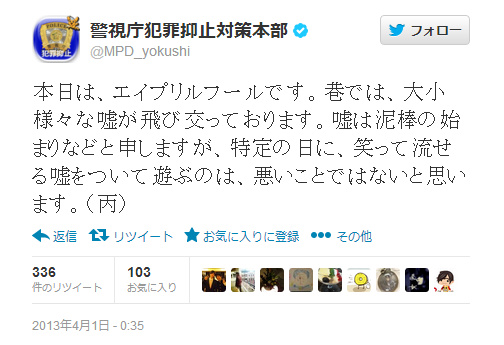
The official crime task force in Japan tweeted to remind us that “A liar is the beginning of a thief.” But then they also said that on some occasions it can be forgiven.

Eggshell Art by Nosigner

Back in 2008, fascinated by their translucency and strength, Nosigner began experimenting with egg shells in various capacities.

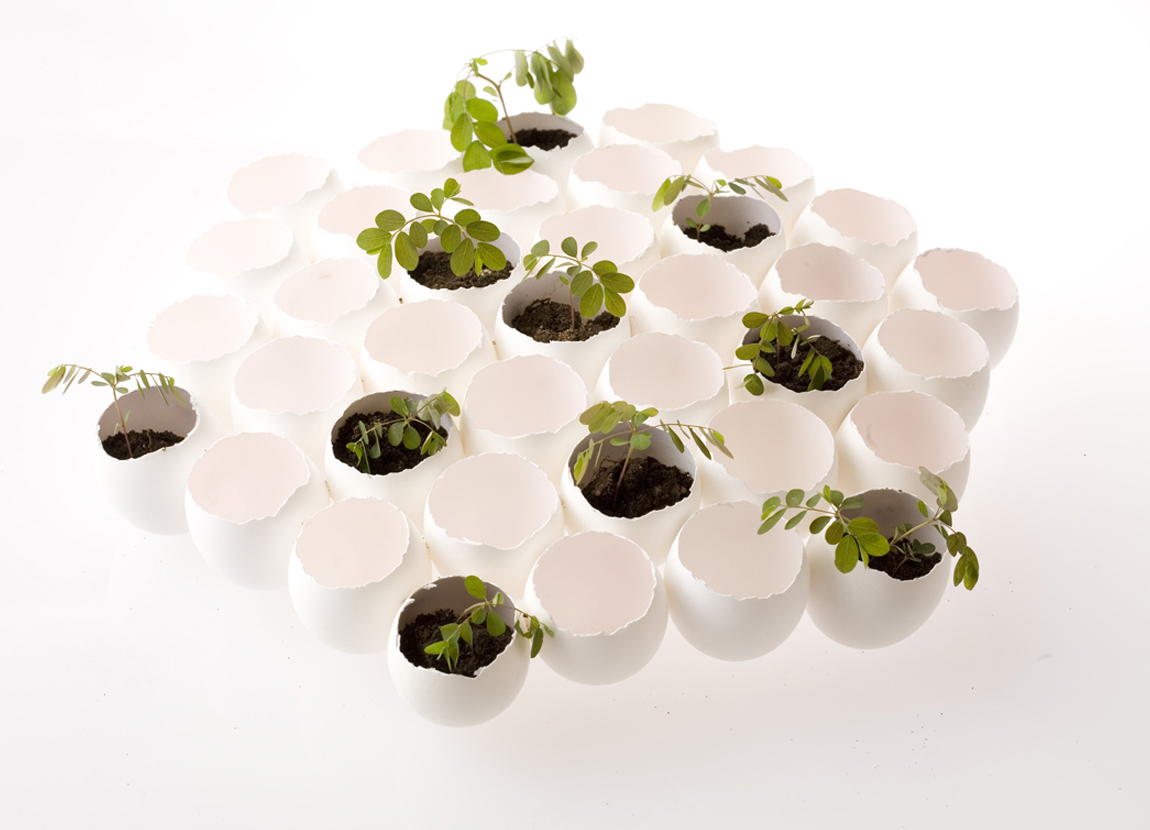
Hatch is a planter made from real egg shells. Mimicking the way eggs nurture the young, greenery feeds off of the nutrition found in egg shells. And because the egg shells are biodegradable, they can be planted in the wild once the plant outgrows its nest.

hatch_1150_02all photos by HATTA | click to enlarge

hatch_1150_03 hatch_1150_04

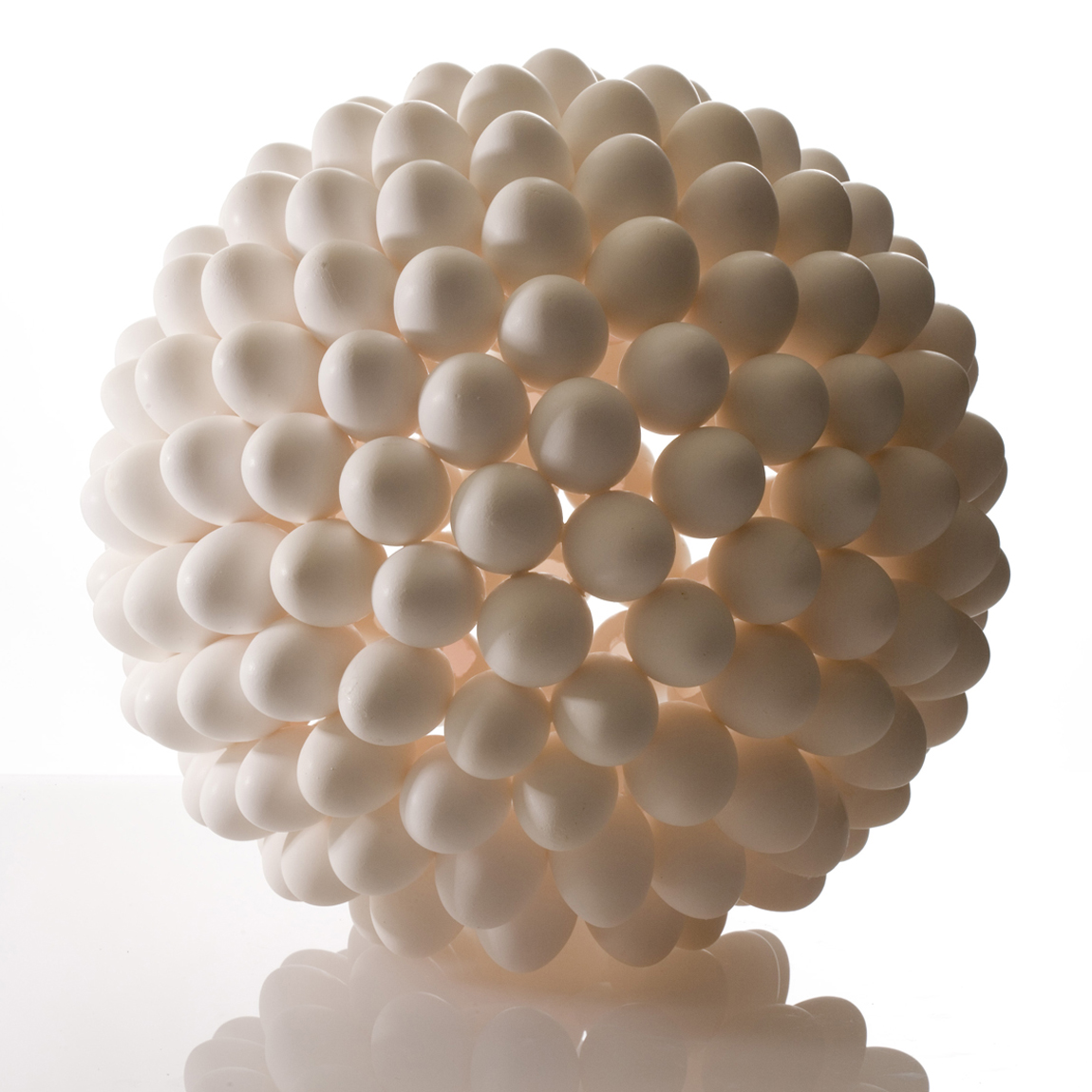
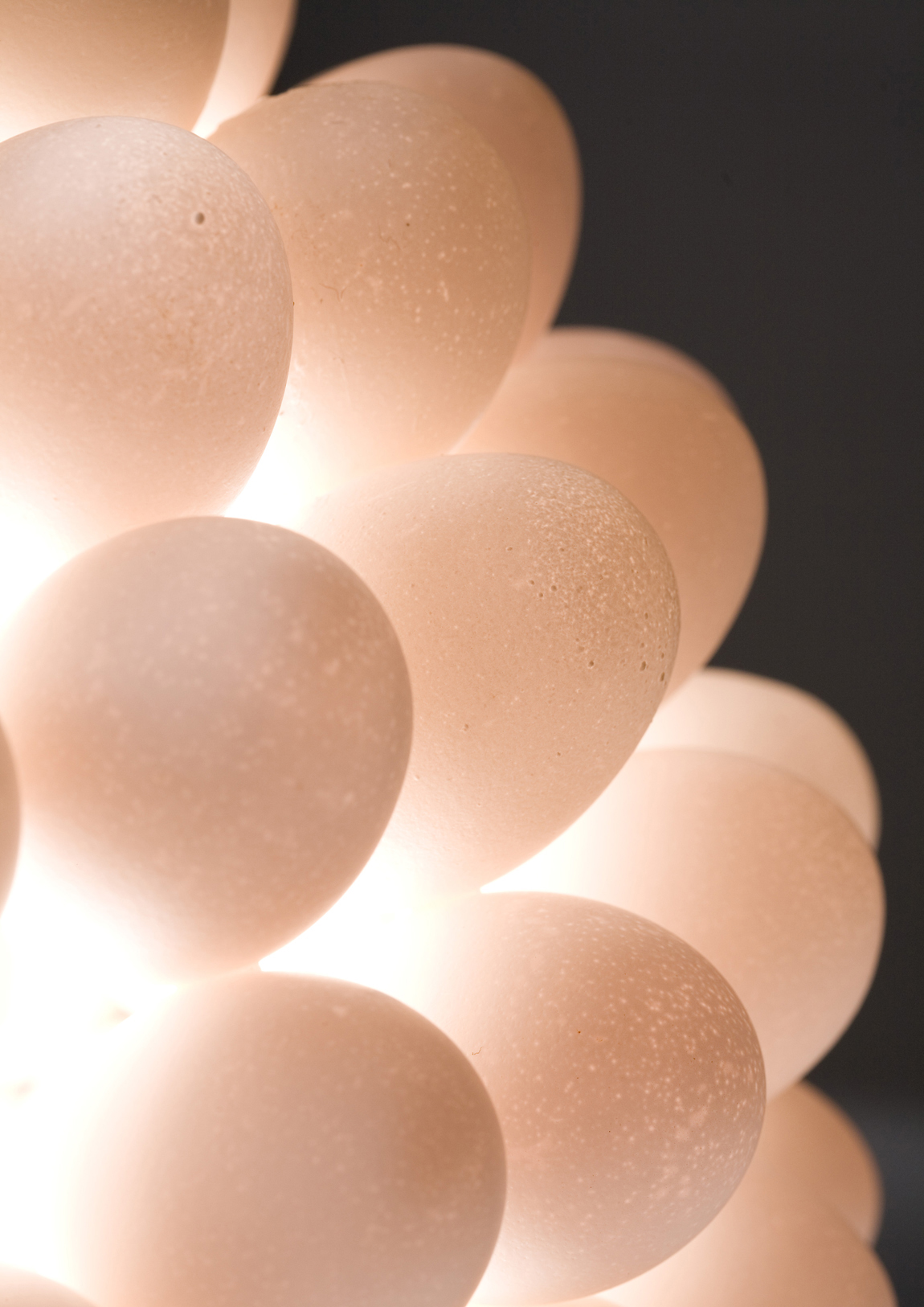
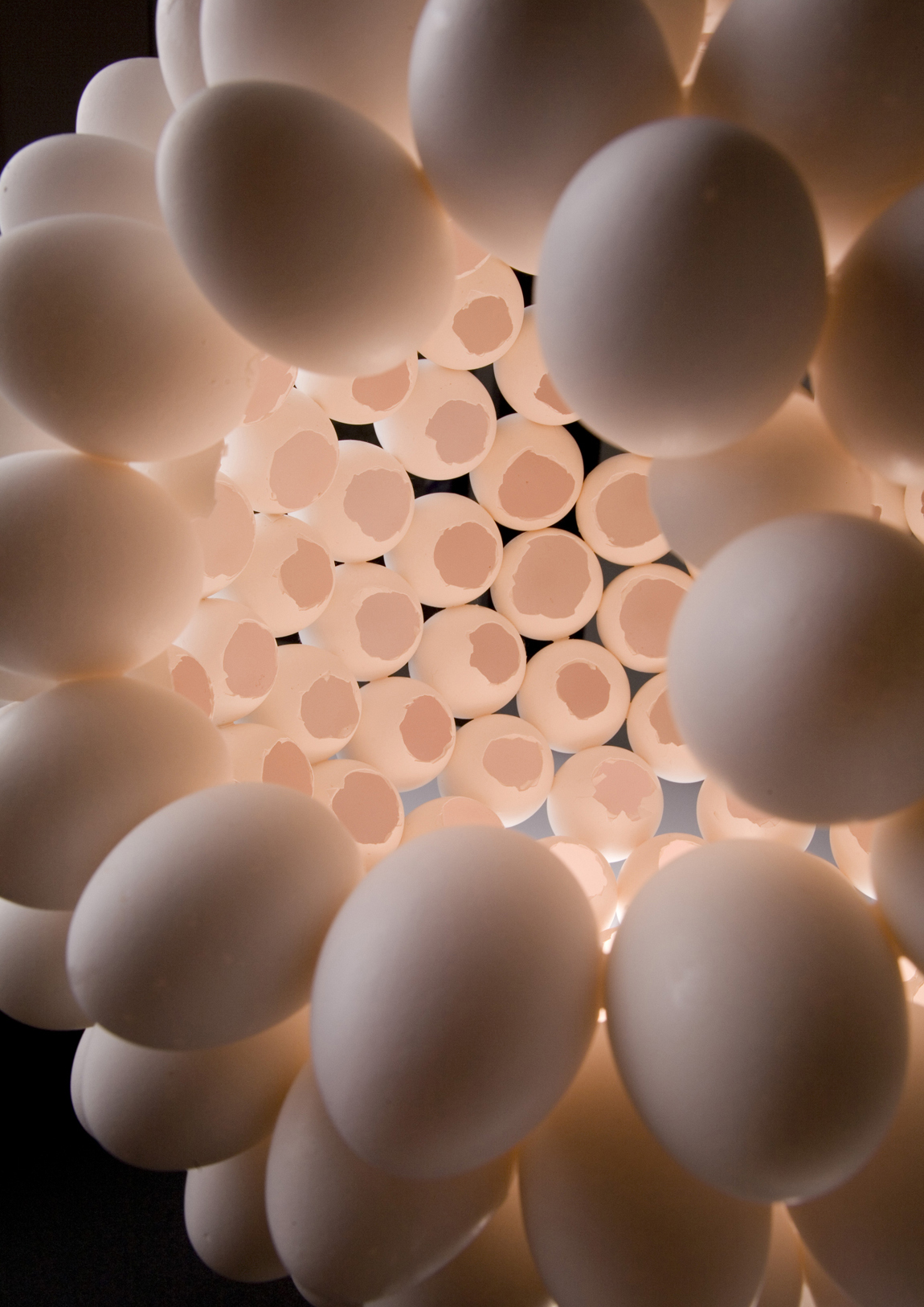
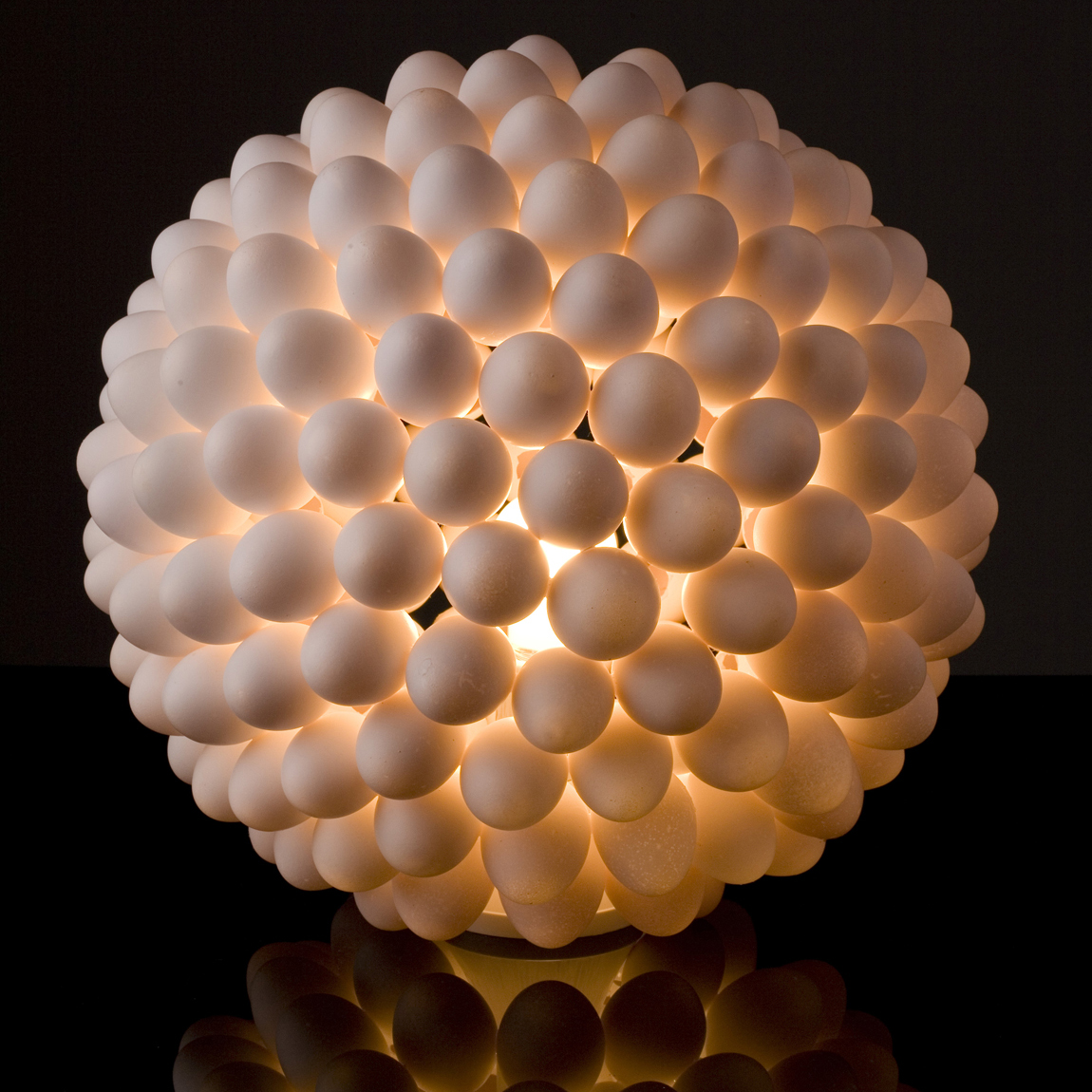
Rebirth is a lighting product made from real egg shells. Despite their inherent fragility, egg shells can disperse weight amongst themselves, allowing for large, complex structures to be built. The resulting forms appear to be autonomous in its beauty, much like the naturally-occurring shapes found in nature.


Rebirth_1150_02
Rebirth_1150_05 Rebirth_1150_07

Surrounded by artificiality in this day and age, there exists a strong desire to touch life, nature and other “real” things so as to reaffirm our existence. Titled “Rebirth,” this light was, quite literally, born from life itself. The egg shells possess remnants of life, which are sure to create a relationship that goes beyond just human and object.

Rebirth_1150_03

« Older posts Newer posts »

© 2026 Spoon & Tamago

Up ↑

Design by Bento Graphics