Page 265 of 406

Taboo Tattoo | The Current State of Ink in Japan

Hi there! You’ve landed on a members-only article. If you’re interested, Consider supporting Spoon & Tamago by becoming a member.

You can read all about our membership program here. Thanks!

Yasuaki Onishi | Reverse of Volume at Rice Gallery (redux)

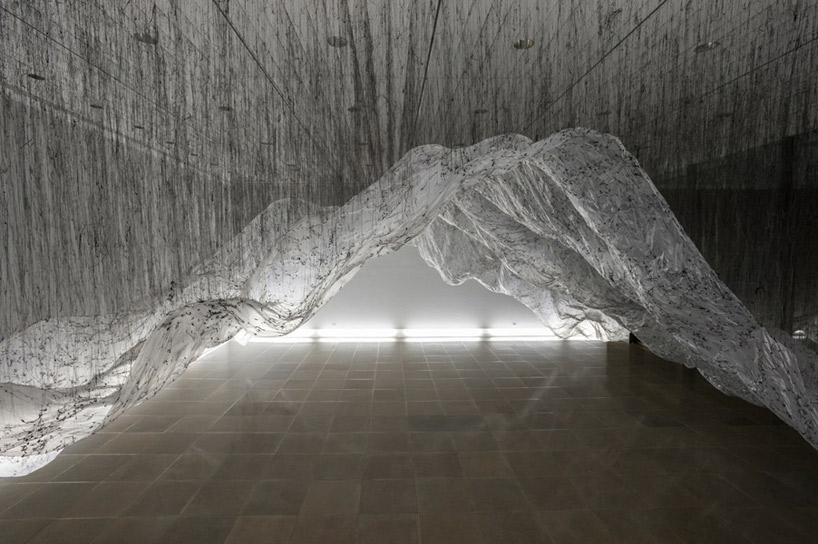
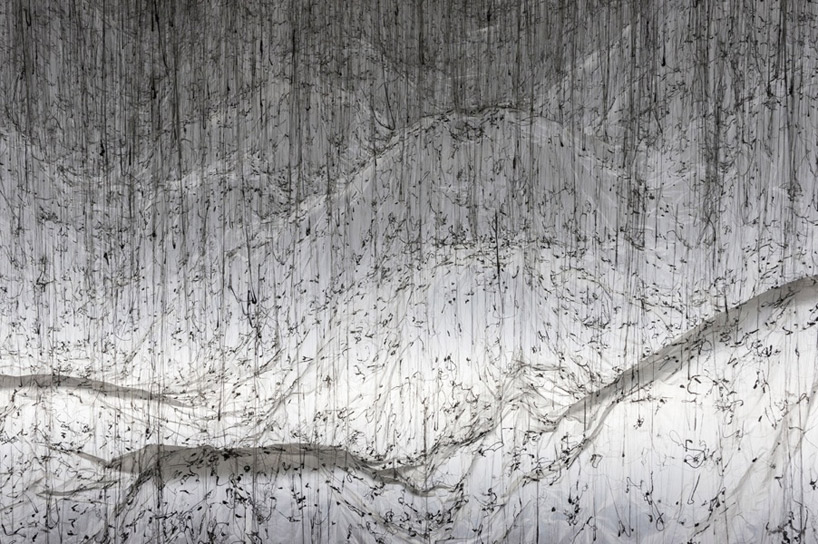
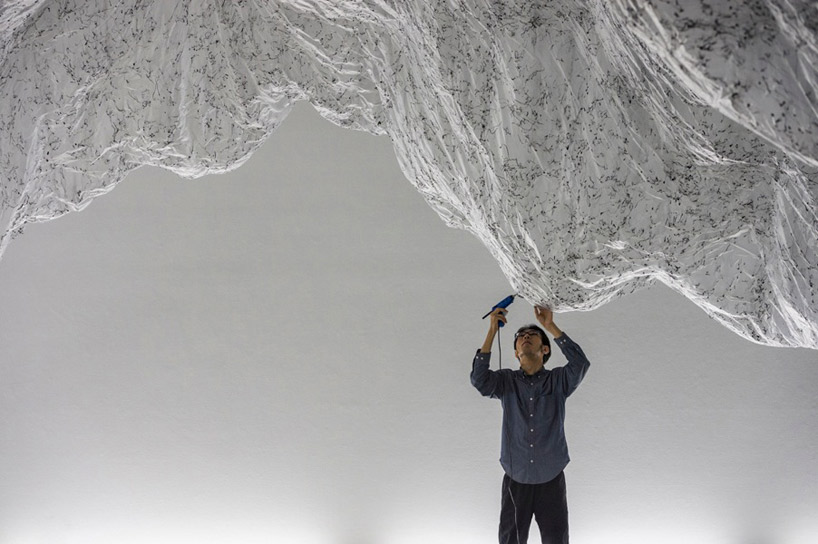
Back in April we previewed Yasuaki Onishi’s upcoming installation at Rice Gallery in which the Japanese artist uses the simplest of materials – translucent plastic sheeting, strings of black glue, fishing line – to create monumental sculptures. In a new video shot by Mark and Angela Walley, the duo capture Onishi’s spatial forms and provide a glimpse into the making-of process. Stunning!

Reverse of Volume is on display at Rice Gallery through June 24, 2012.

all images by nash baker and courtesy rice university art gallery | click to enlarge
Source: swissmiss

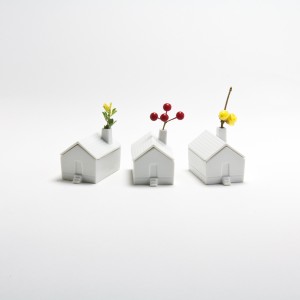
Porcelain planters by 224porcelain

a miniature house-shaped flower vase for your small saplings

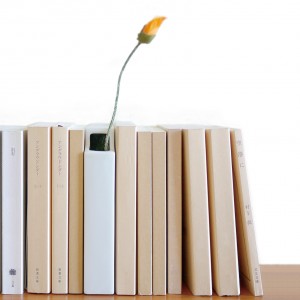
“hanabunko” – because every bookshelf needs vegetation

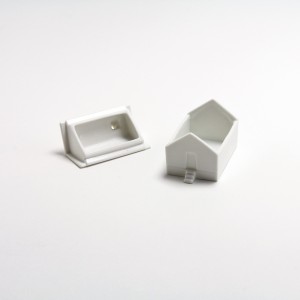
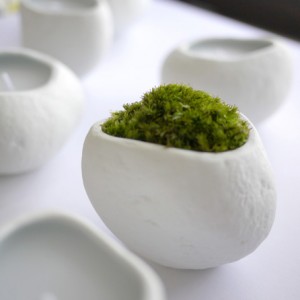
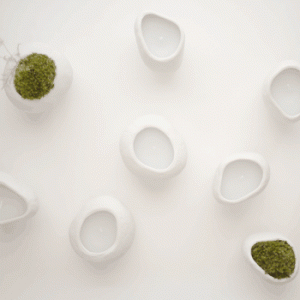
“sasso” begins as a candle but is intended to be used as a planter once the candle burns down. It even comes with moss.

I’m slightly in love with these porcelain planters by 224porcelain, a Saga prefecture-based porcelain brand. I think my favorite is the planter disguised as a book. It even comes with its own book cover!

If you’ll recall, the porcelain brand was also behind the production of these pepper shakers.

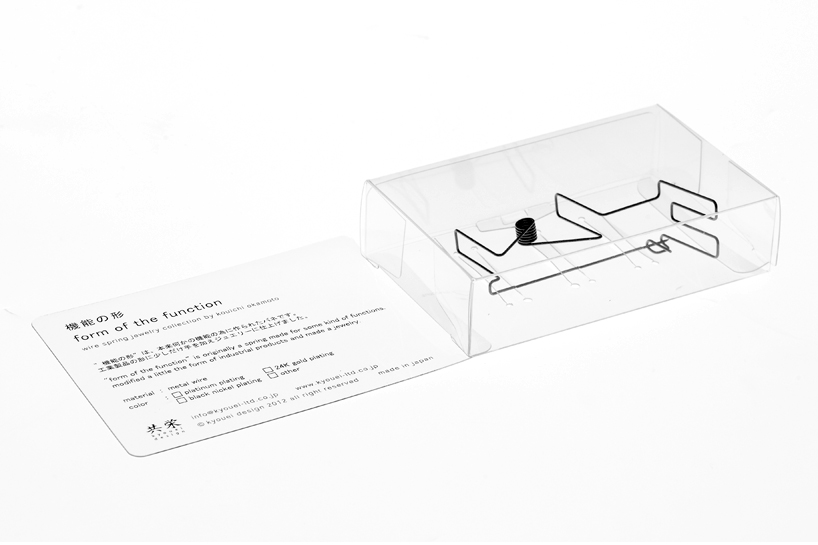
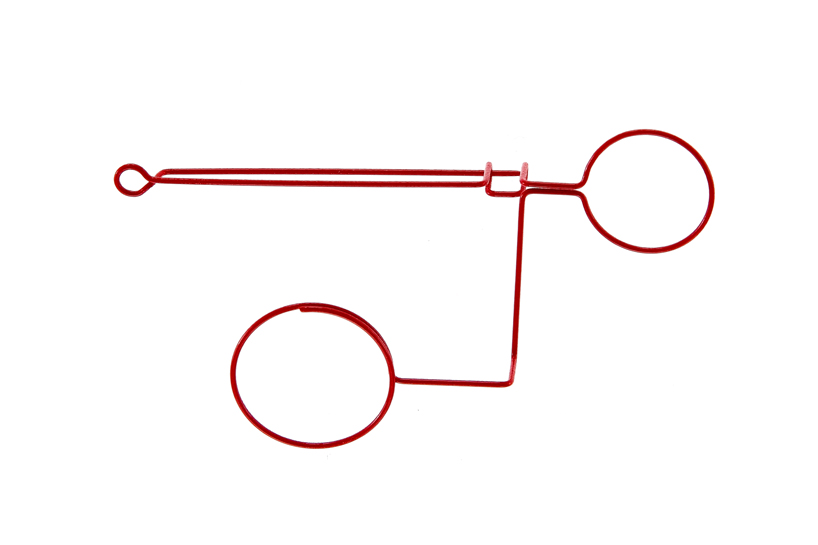
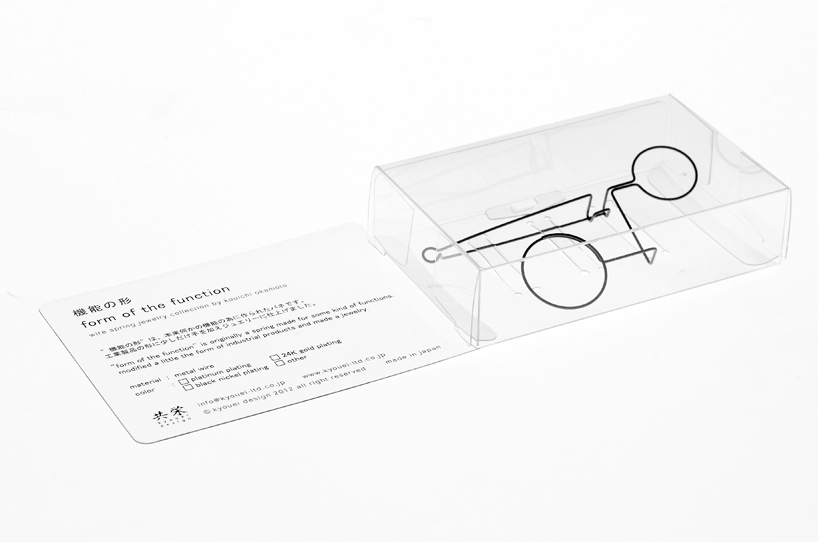
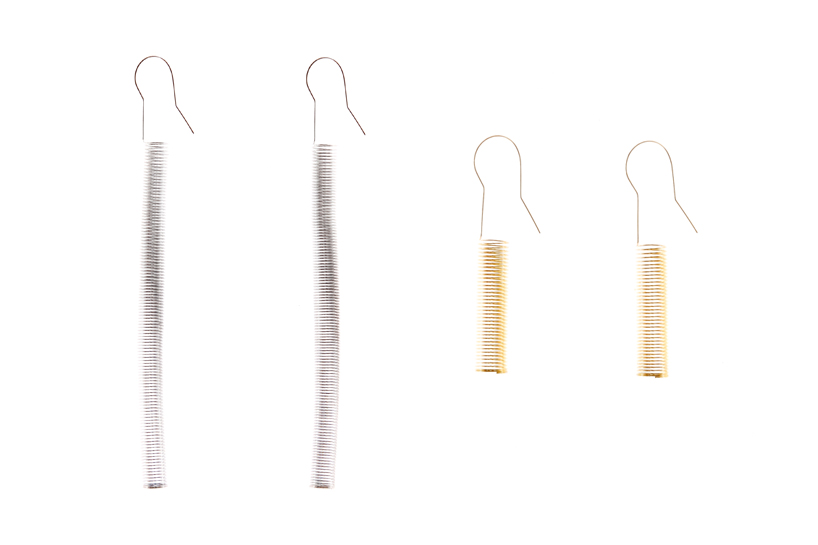
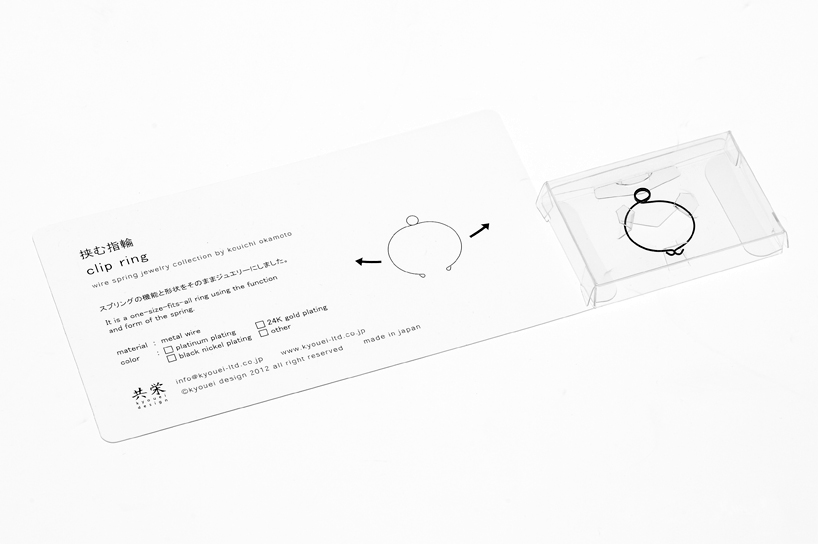
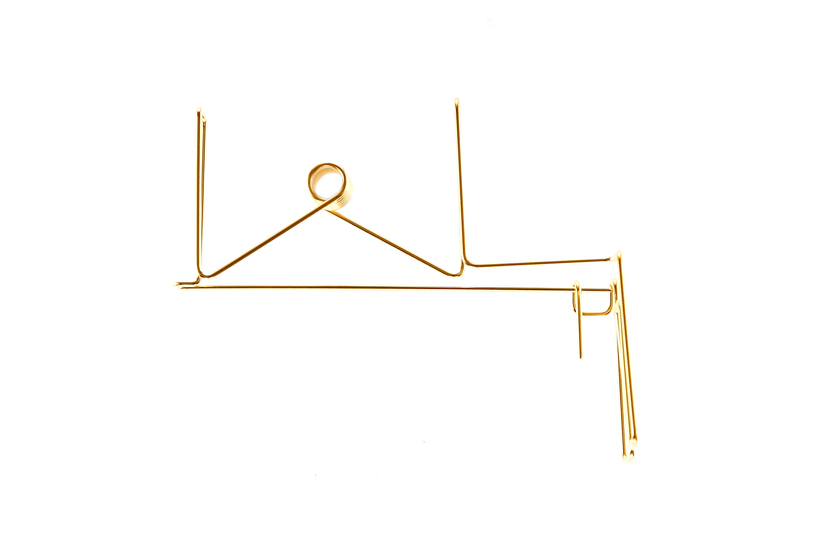
wire spring jewelry collection by kouichi okamoto


As a child, did you ever wrap springs or wire clamps around your finger, pretending they were jewelry? If so, listen up! Kouichi Okamato of Kyouei Design just announced his latest product – wire spring jewelry (1,950 – 3,550 yen) made from components of the industrial manufacturing process.

The collection – an homage to all things mechanical – include wire clamp rings and spring earrings. I love the utilitarian look and feel of these and I admire Okamoto for finding beauty in even the most industrial of things. Admittedly I would have liked to see how they look against the skin of a model.


You can check out all our other posts we’ve done on jewelry right here.

source: press release

Gold wedding ring | The art of designing time

images courtesy gallery deux poissons | click to enlarge
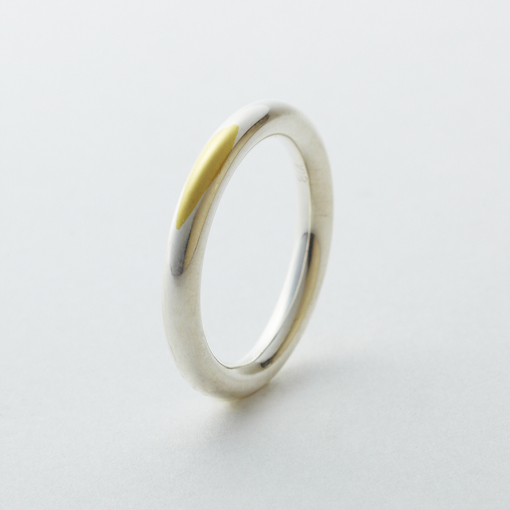
a poetic visualization of the time shared between two people

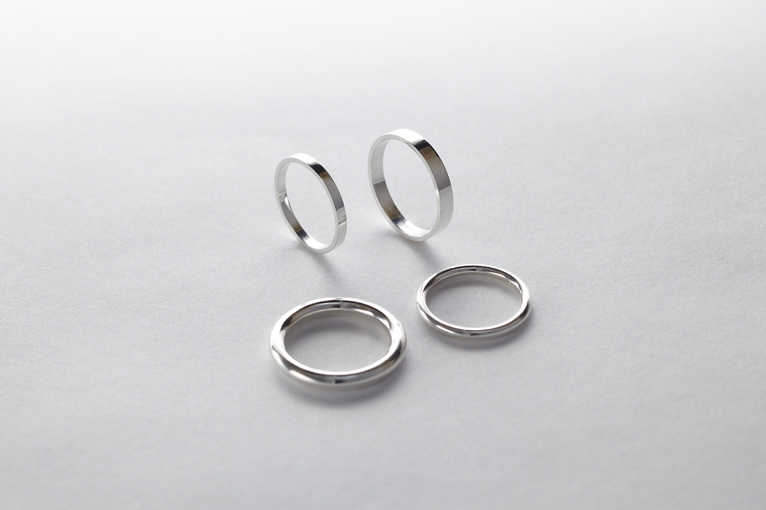
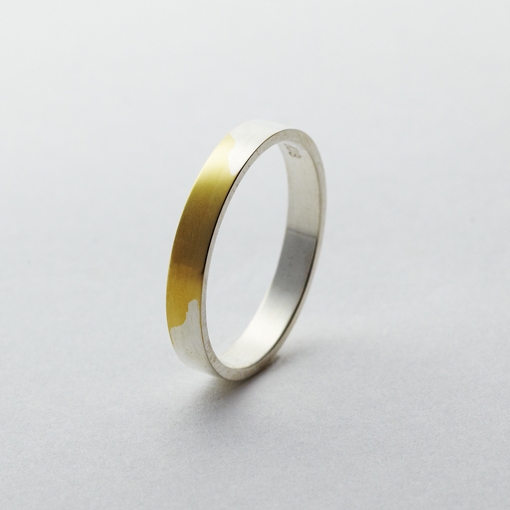
The Tokyo-based gallery deux poissons, 1 of only 3 galleries in all of Japan who specialize in jewelry, recently announced that they had enlisted Torafu Architects to design their latest piece. The young architecture duo, who have no experience designing jewelry, managed to leverage their immense knowledge of material to design a ring that poetically captures the essence of the bond that is formed between two people who decide to spend the rest of their lives together.

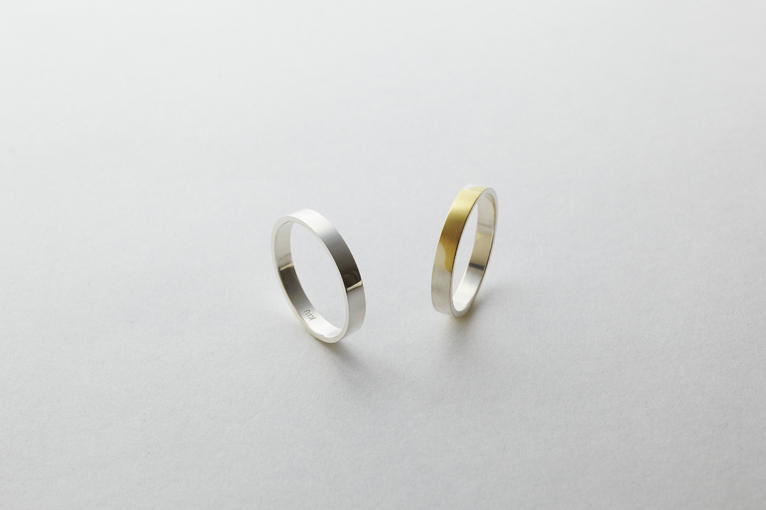
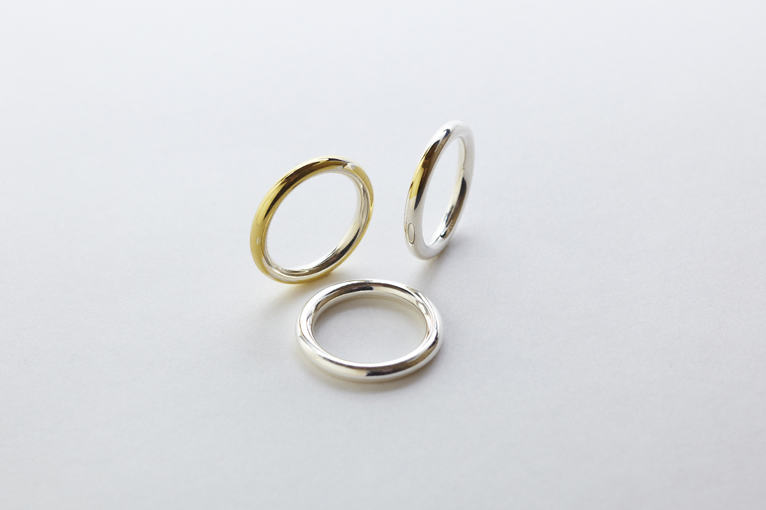
But don’t call it a timepiece. “Gold wedding ring” is crafted from 18k-gold which is then coated with a thin layer of silver. As time passes the silver wears away to reveal the gold. It’s a poetic piece that visualizes the time shared between two people.

Depending on which ring you choose – round (52,500 – 94,500) or square (47,250 – 57,750) – the gold is revealed in different ways.

Check out all our stories on Torafu.

source: @_TORAFU

Now Open: Asakusa Culture Tourist Information Center

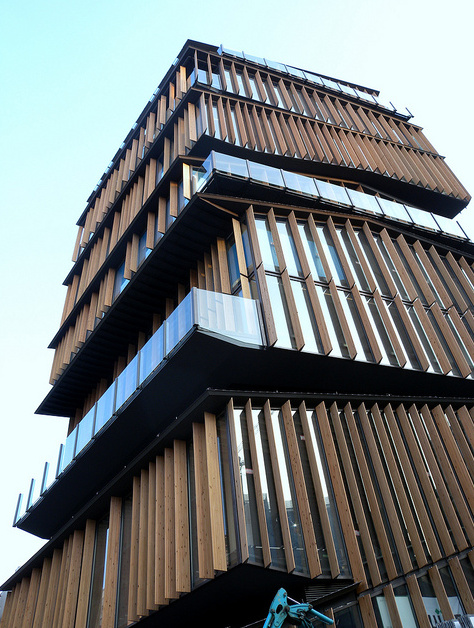
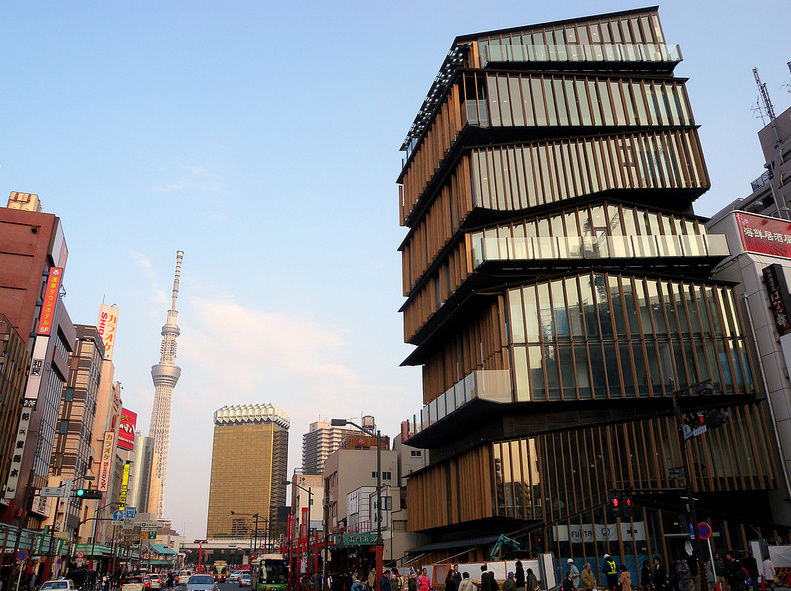
photos by guen-k

2012 is shaping up to be a year of great change for Tokyo, at least in terms of landscape. Within the last month we saw the opening of 2 new mega-retail complexes: Tokyu Plaza Omotesando Harajuku (Omohara) and Hikarie. And on May 22, Japan’s tallest structure, the Tokyo Sky Tree, will officially open.

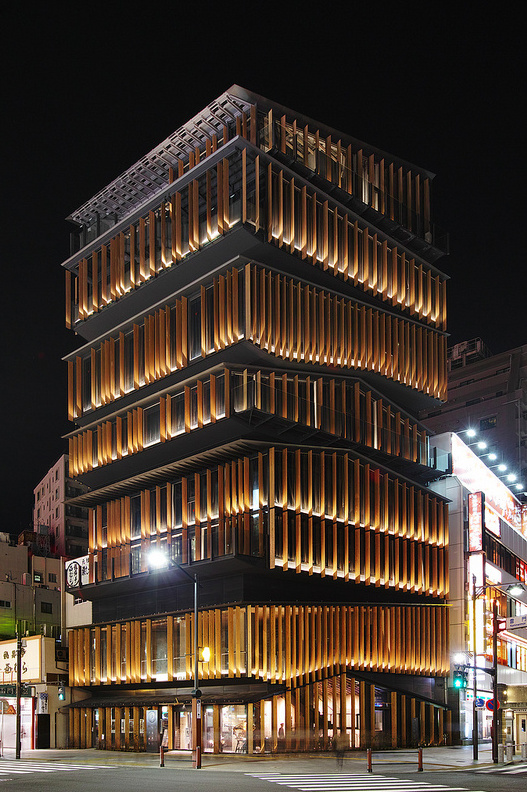
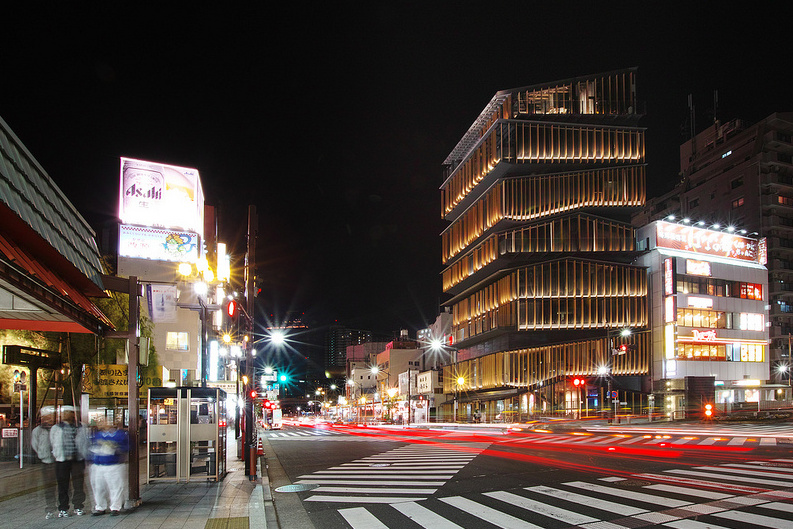
But ahead of the highly anticipated event, architect Kengo Kuma‘s equally eye-popping Asakusa Culture Tourist Information Center has opened its doors. The ambitious new 7-story structure – characterized by stacked stories, one on top of the other – features a roof deck and café, lecture rooms, exhibition spaces and a tourist information center/lounge. It actually wouldn’t look out of place as part of the Bathhouse town where most of the movie Spirited Away takes place.


photos by akasaka moon

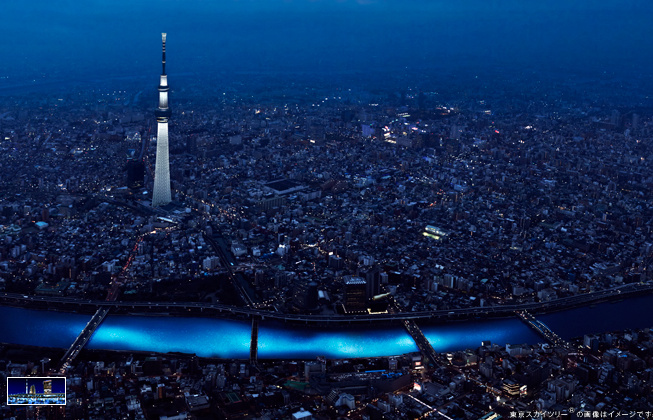
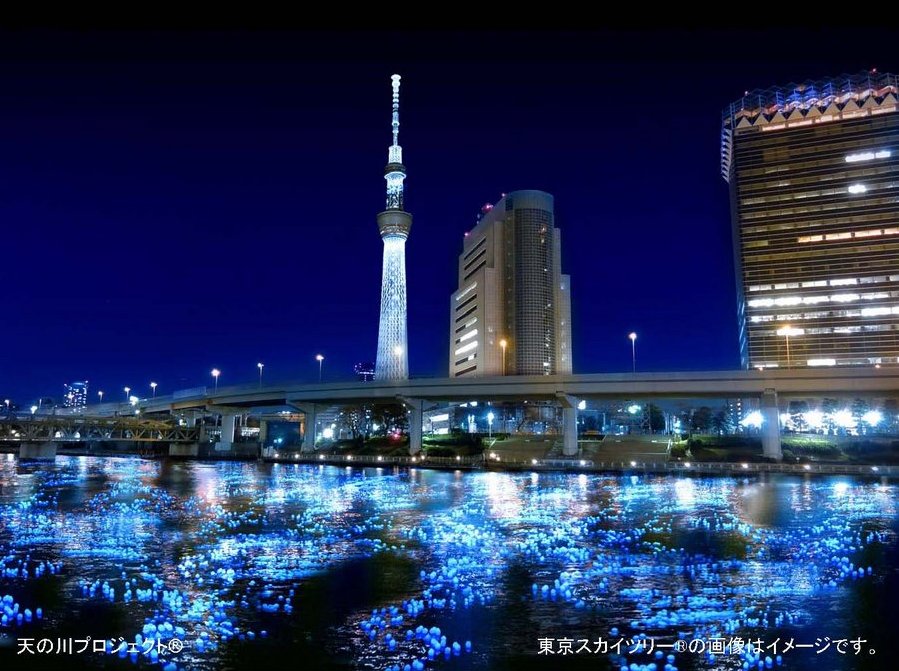
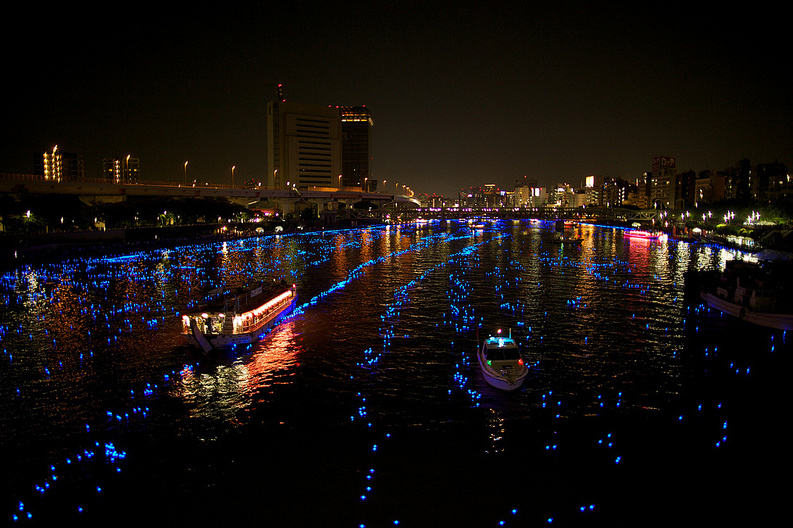
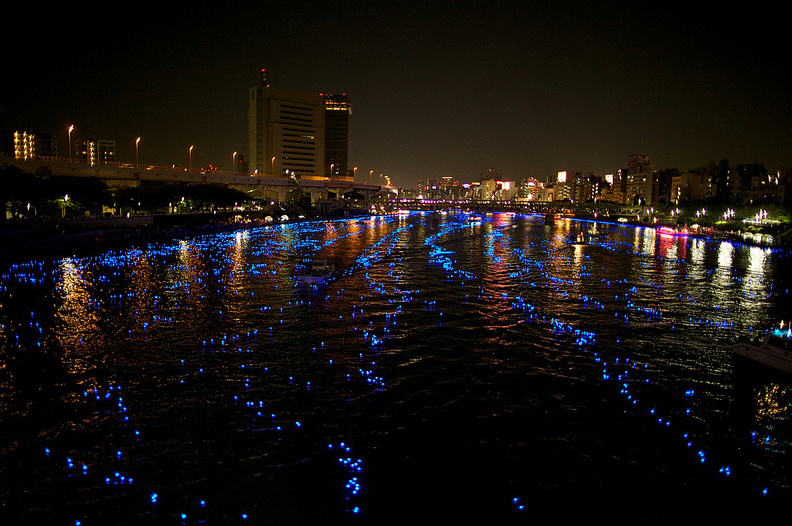
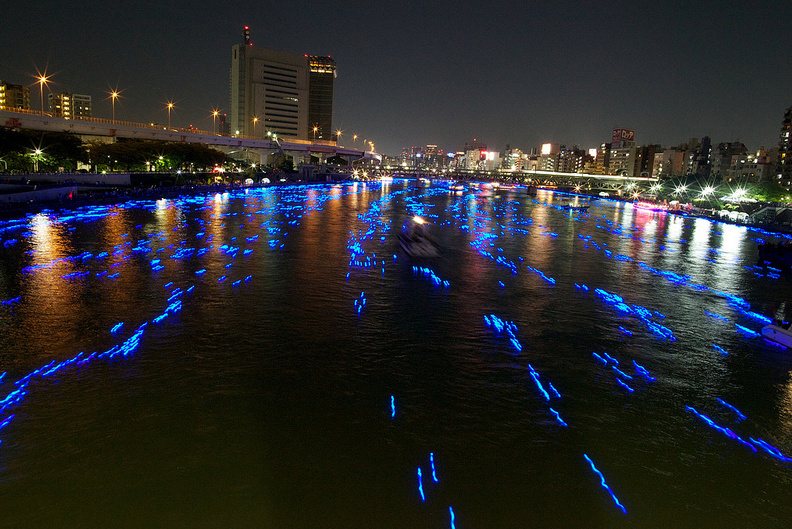
100,000 LED lights float down the Sumida River

top and bottom images courtesy tokyo-hotaru.com

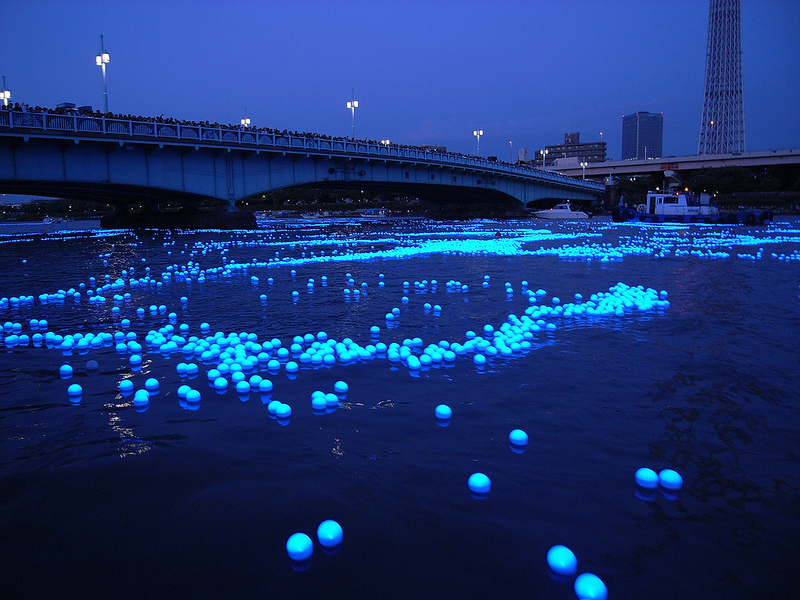
The inaugural Tokyo Hotaru festival was held last weekend. And kicking off the festivities were an impressive display of 100,000 LED lights – made to resemble hotaru (fireflies) – that floated down the Sumida River through central Tokyo. Dubbed “prayer stars,” the LEDs were provided by Panasonic, who claims that the balls, which were designed to light up upon contact with water, were 100% powered by solar energy. After illuminating a large stretch of the river, which also hosts a popular fireworks festival in the summer, the LEDs were all caught in a large net.

photo by Jeremy V. | click to enlarge

photo by Jeremy V. | click to enlarge
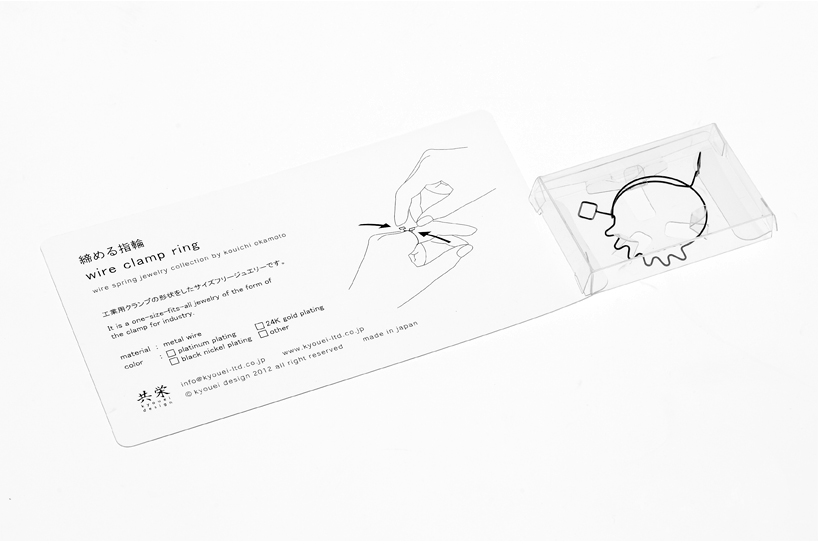
photo by Jeremy V. | click to enlarge
There are plenty of literary references indicating that the Sumida River was once home to real fireflies, which were said to gather around clean, running water. Searching for these luminous creatures on the banks was a popular activity in Tokyo (Edo, at the time) during the 18th century. For sad and obvious reasons, fireflies no longer inhabit the area. The Tokyo Hotaru festival is part of the city’s “Sumida River Renaissance” initiative.

Like fireflies? Check out these stunning long-exposure photos of fireflies by Japanese photographer Tsuneaki Hiramatsu. Then read the story about how they went viral.

photo by makure | click to enlarge
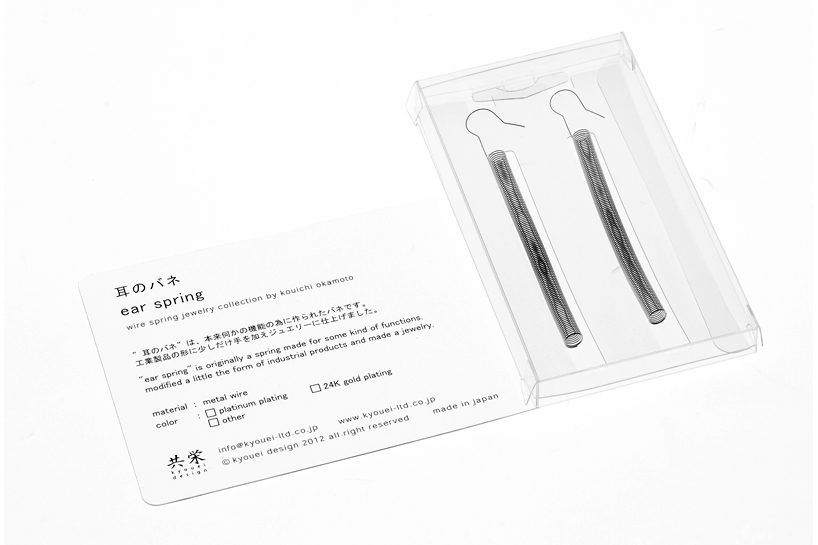
photo by ajpscs | click to enlarge
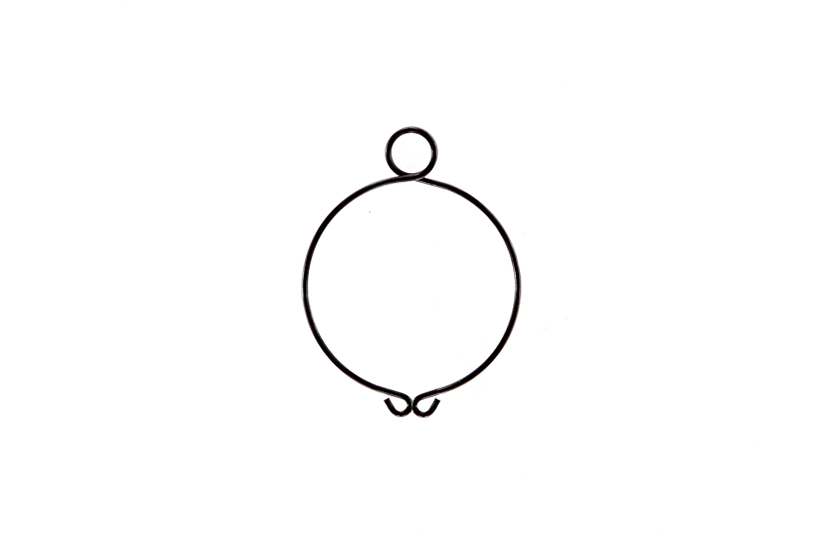
photo by Mai Suzuki | click to enlarge
source: @stevenagata


Visualizing the meals in Haruki Murakami’s 1Q84

Gilstad uses a single line to divide and connect the different elements of the meal – the ingredients, where they are stored in the kitchen, and in what order and how they are prepared

all images courtesy Dennis Gilstad | click to enlarge
A Spoon & Tamago exclusive
Japanese author Haruki Murakami’s latest novel is epic in every sense: the ambitious meta-tale of stories within stories clocks in at just under 1000 pages and was published in 3 volumes. Speaking about 1Q84, Murakami himself said, “I had a kind of premonition it’s going to be a big book. It’s going to be very ambitious.”

Like his other books, 1Q84 is chock-full of obscure references that make you wish it came with its own musical soundtrack, literary appendix and history lesson. The story, like much of Japanese culture, is also heavily garnished with meals; we learn what Aomame eats to prevent constipation, as well as what Ushikawa fixes himself while on a stakeout.

Dennis Gilstad, an art student at Cooper Union, has created an equally epic and stunning infographic for his graduation show that charts and visualizes all the meals that occur throughout Murakami’s latest opus. Dennis tells me that he was actually influenced by Japanese architecture firm SANAA (previously) and their programmatic approach to using the line to define spatial relationships. Indeed, Gilstad uses a single line to divide and connect the different elements of the meal – the ingredients, where they are stored in the kitchen, and in what order and how they are prepared.

If you’re in New York, you can still catch Dennis’ show, “Real Good Box,” which is on display in the gallery in Cooper’s new building, through May 9, 2012.


(thanks for the tip, @perke)

House in Zushi by Takeshi Hosaka

images are all courtesy japan-architects, who visited the open house in early May.

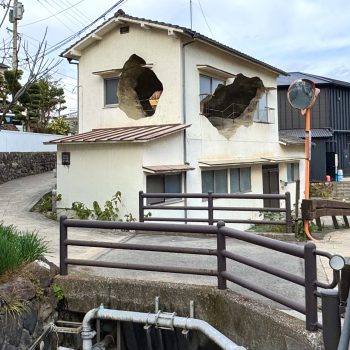
Japanese architect Takeshi Hosaka is master of the unconventional. Whether he’s designing igloo-looking noodle shops or amazing homes that flip the indoors for the outdoors, Hosaka is continually pushing architectural boundaries with his shape-shifting projects. House in Zushi is his latest home – completed just last month – and uses recessed flooring as a unique method for ensuring privacy.

Those slabs of concrete that you see in the windows are actually the ceilings of each story or, if you prefer, the floor of the above story. Confusing? Have a look at the architectural model.

The curved floors allow for sunlight to enter each room, while also creating a significant barrier between residents and neighbors. Although I have a feeling the interesting house will only attract more eyes.

I’m not convinced that this is the most efficient way to maximize space, but it certainly creates in interesting interior, which will, in turn, undoubtedly create interesting sitting positions.

source: japan-architects


Landskip Bag by fu-na

I’m going a bit crazy over this Landskip Bag designed by fu-na. What a great idea! My kids would love this.

The LandskipBag takes its name from “landscape” and “skip” – describing a person who feels so happy that he/she cannot stop skipping around. You can create your own forest scene by fastening animal badges to the bag.


“fu-na” is a Japanese creative studio comprised of  Chiduru Fukino and N. fu-na’s products are completed by users themselves, who add their unique arrangements to the items.

source: monoco

« Older posts Newer posts »

© 2026 Spoon & Tamago

Up ↑

Design by Bento Graphics