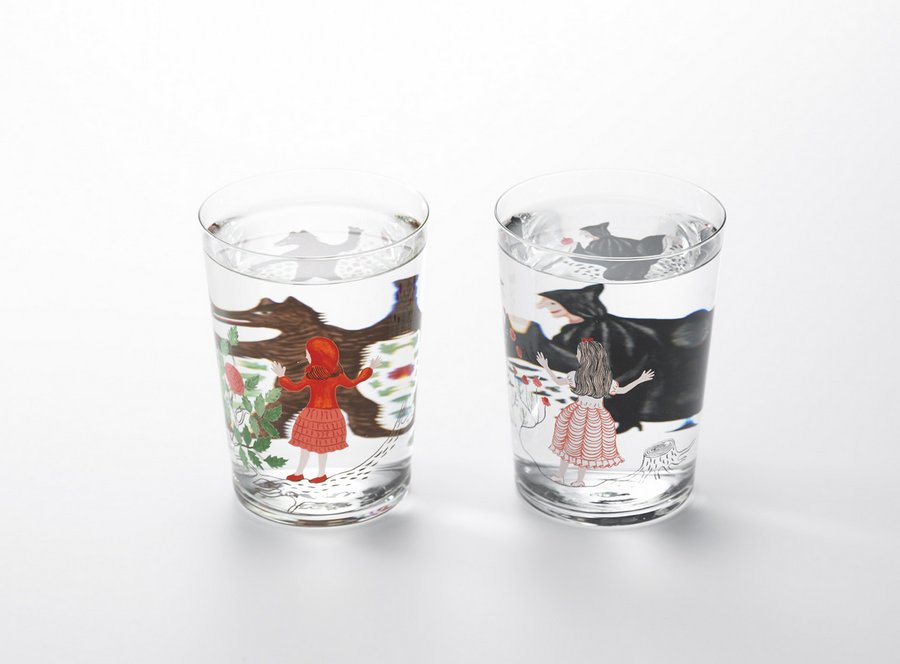
The Fairy Tale Drinking Glasses feature adorable illustrations from classic fairy tales like “Little Red Riding Hood” and “Snow White.” And not only are they fun to use but they’re educational too!
The Fairy Tale Drinking Glasses feature adorable illustrations from classic fairy tales like “Little Red Riding Hood” and “Snow White.” And not only are they fun to use but they’re educational too!
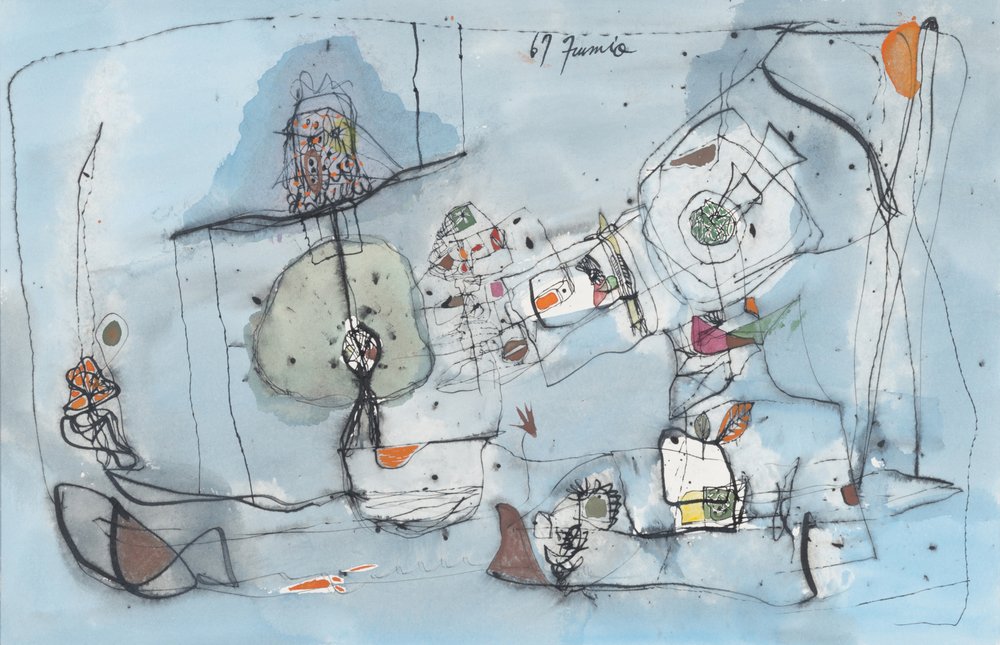
Fumio Nambata “Trombone” (1967) | click images to enlarge
When Fumio Nambata fell off a ferry in 1974 while crossing the Seto Insland Sea his life was cut short at the age of 32. His artistic career, too, met an untimely end of just about 15 years. Nambata, the son of an artists and a painter himself, lived through tumultuous times: rapid economic development and social turmoil. And for Nambata they were anything but calm. He managed to create more than 2000 paintings, an astounding number for such a young artist. About 300 of his paintings are now part of an exhibition on display at the Setagaya Art Museum in Tokyo.
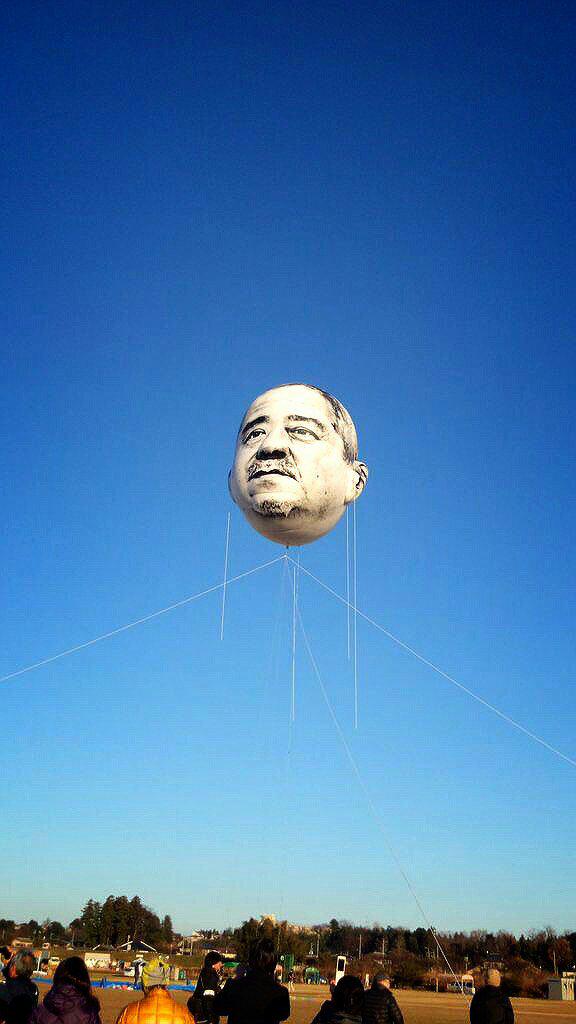
Residents of Utsunomiya, a suburb North of Tokyo, were treated to a surprise last weekend when they looked up into the sky and saw a large recognizable head of one of their neighbors. This wasn’t some Harry Potter spell. Rather, it was an art installation, 2 years in the making, by art trio Me (目) in collaboration with the Utsunomiya Museum of Art.
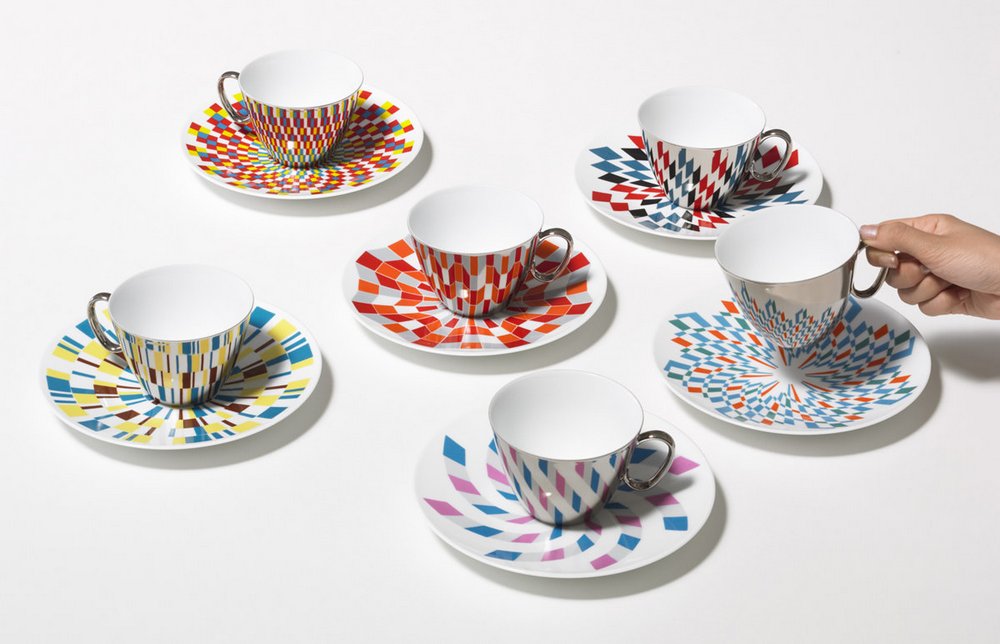
Waltz Cup & Saucer | click images to enlarge
A cup and saucer that dance together like a match made in heaven. But when separated, the music suddenly stops.
A reflective palladium surface on the cups enable this magic. The vivid colors on the saucer are reflected off the cup, producing the illusion that the cup too bears the same pattern. But when the cup is lifted off the saucer its true colors are revealed.
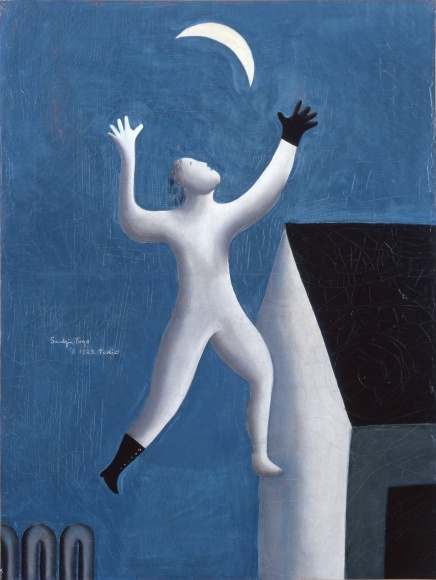
Seiji Togo “Surrealistic stroll” (1929). Permanent collection of the Sompo Japan Nipponkoa Museum of Art
At an auction in London in 1987 a mystery buyer paid a record $39.9 million for Vincent van Gogh’s “Sunflowers.” And a week later it was revealed that a Japanese insurance company, little-known at the time, had made the expensive purchase. Apparently, Yasuda Fire and Marine Insurance, who was celebrating its centennial the next year, saw the painting as an appropriate birthday present to itself. The purchase not only made the company famous but it also set off an art-buying craze amongst Japanese companies who were at the top of the world thanks to an overheated economy and rapid acceleration of asset process. No one saw the cracks that would burst Japan’s bubble just 4 years later.

The Masters in Branding Program at The School of Visual Arts is a one-year graduate degree program that examines the relationship between design and strategy, and the power of design thinking as a way to combine creative skills with the problem-solving and decision-making processes of design and business.
Students graduating from this program will be able to take advantage of new market opportunities, and to deliver innovative, successful and sustainable project outcomes in the worlds of design, advertising, marketing and business.
The required coursework for this degree program is organized into five progressive segments: culture, behavior, business, commerce and creative. Each discipline will work both independently and cohesively with the others, but rigorous attention will be paid to each field to determine and define the modern practice of branding.
The Masters in Branding Program at The School of Visual Arts is currently accepting application for the class of 2016.
Visit sva.edu to learn more and apply. 
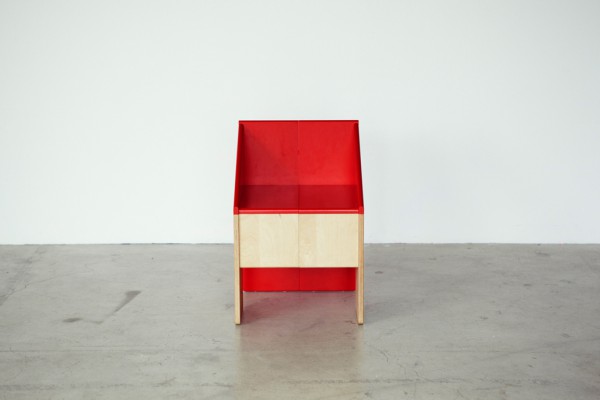
all photos by Akihiro Ito courtesy Torafu Architects
Large children’s toys almost always pose the same problem: space. And the issue is magnified for those living in dense cities or small areas. But every once in a while a product comes along that aims to solve, or mitigate to some extent, the burden placed on parents to maintain sanity within an increasingly crowded play pen. The Dollhouse Chair, by Tokyo-based Torafu Architects, appears to be simply a chair. It’s much more.
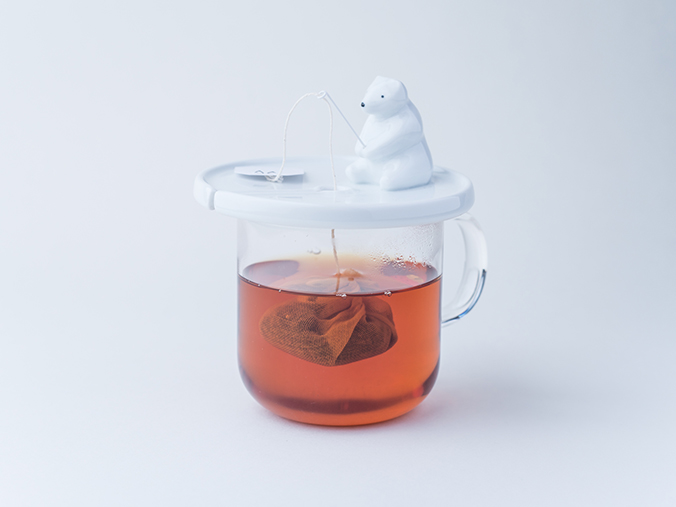
It can be a dull 3 minutes waiting for your tea to steep. But not anymore, thanks to the shirokuma tea bag holder. The porcelain mug lid not only keeps your tea warm but it’s also adorned with an adorable polar bear (shirokuma, in Japanese) who sits patiently with a fishing pole waiting for something to bite.
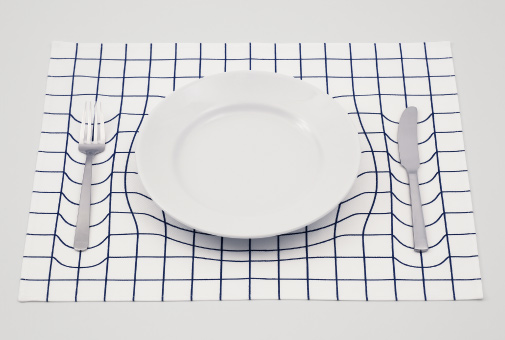
When Albert Einstein proposed his theory of relativity and described space-time as a smooth “fabric” that can be bent and manipulated, I’m pretty sure he wasn’t thinking it would be applied to placemats. But sure enough, Japanese design studio A.P. WORKS has turned that “fabric” into a fantastic optical illusion.
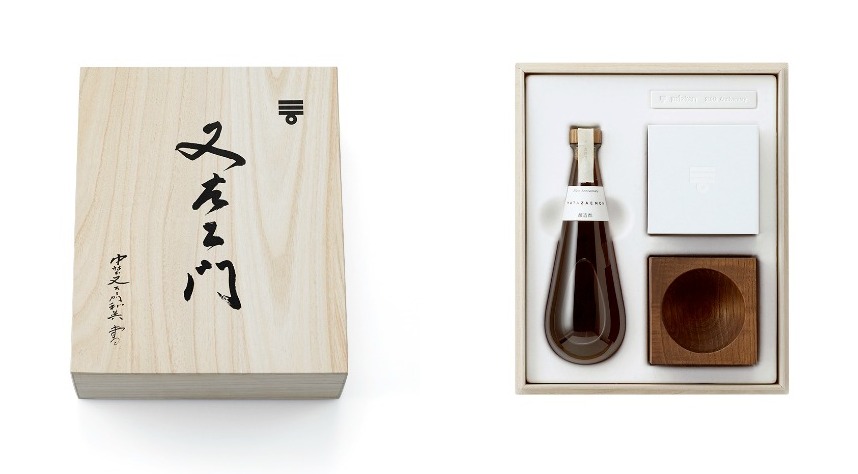
Exactly 210 years ago a man named Matazaemon Nakano branched out from the sake brewing business and began a career in rice vinegar. And for more than 2 centuries The Mizkan Group has been producing vinegar, one of the key ingredients to sushi, and other condiments. Indeed, the company’s success is due, in part, to the popularity of Japanese cuisine. And to commemorate 210 years of vinegar making the company asked designer Taku Satoh to create a commemorative vinegar box.





 Japanese Aquarium Drops 2026 Version of Flowchart Illustrating Their Penguin Relationships. This Year There’s an English Version.
 Shizuoka Aims to Reclaim Top Tea Status With New Branding Project
 Kirie Artist Carves Playful Narratives Into Tree Leaves
 Yoko Tada Began Painting in her 80s. At 100 She’s Publishing Her First Book
 Isometric Drawings of Sento, Kissaten and other Japanese Establishments by Honami Enya