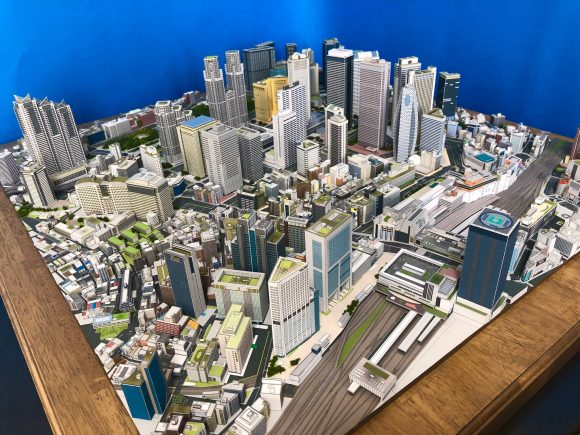
Toshi is a Japanese office worker in his 20s who has a unique hobby: building miniature paper models of cities at a 1/2200 scale. He’s been posting his creations to his twitter account, but he just recently completed his most ambitious project to date: a miniature model of Shinjuku that was 4 years in the making.
January 2, 2020 / Johnny / Comments Off on Japanese Designer New Year’s Cards of 2020
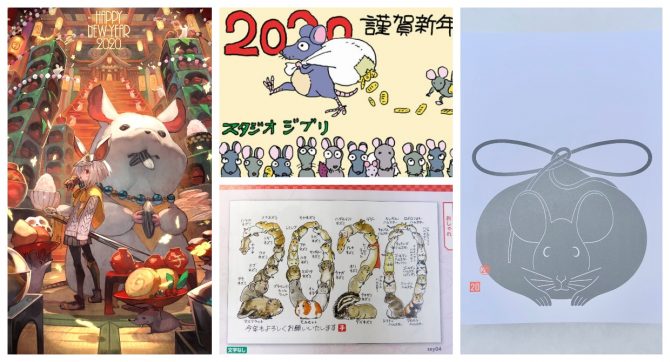
Happy New Year of the rat! It’s the first zodiac animal in the cycle of twelve that happens to be kicking off the new decade so in many senses it feels like a new beginning. The rat is known for its ability to perpetuate offspring, so perhaps this will be the year that Japan’s low birthrate reverses. It was also known has a helper to the god of 5 grains, and is therefore associated with bountiful harvests.
It’s become a tradition here at Spoon & Tamago to share some of our favorite New Year’s cards and wishes from artists and designers, so prepare for an onslaught of rats, both big and small, cute and creepy. (and of course you can find our archives right here)
December 31, 2019 / Johnny / Comments Off on Women and Cats: Contemporary Bijinga Paintings by Kazuho Imaoka
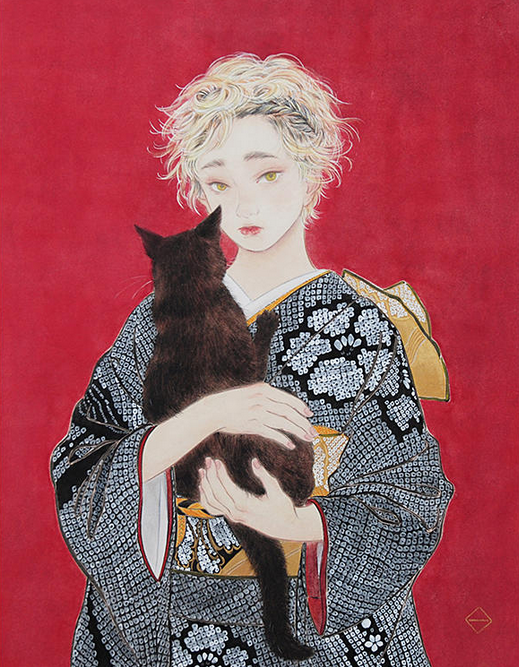
The tradition of bijinga (美人画, “beautiful person picture”) is said to have originated in Kyoto around the mid-Edo period as an art form that portrayed not only external beauty, but inner beauty. The style continued to evolve through the Meiji and Taisho periods of Japanese modernity but now, a group of young Kyoto-based painters are taking the genre and adding a fresh coat of paint. One of those is Kazuho Imaoka.
As we wind down our 12th (!) year of blogging, we embark on the annual exercise of ranking our most popular posts based on viewership. Ironically, these most-popular roundups are never very popular. But we enjoy reflecting on the past 12 months, if only for ourselves, so if you’ll indulge us again in this tradition of reviewing the stories that captivated our readers the most. Hopefully we’ve been able add a little bit of beauty and intrigue to your daily lives by delivering stories about Japan through an art & design lens.
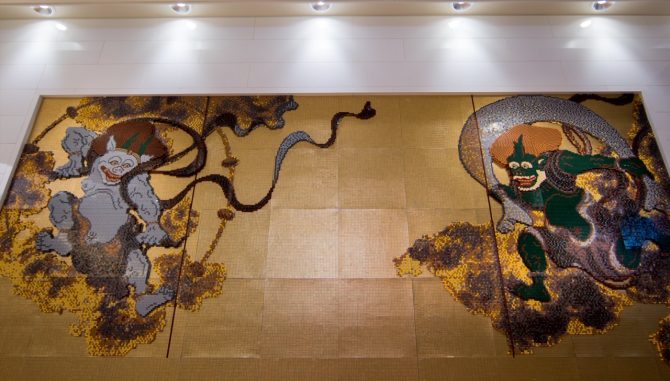
December 18, 2019 / Johnny / Comments Off on 18th Century ‘Wind God and Thunder God’ Painting Recreated in LEGO
all photos by Jumpei Mitsui
If you have some time to kill at Narita Airport (I mean, who doesn’t?) head up to the 4th floor of Terminal 1 where you’ll find a newly opened LEGO store. And not only will you find a toy to entertain little ones on the long flight to come but you’ll also find a specially-commissioned mural, made entirely of LEGO, that replicates a famous 18th-century Japanese painting.
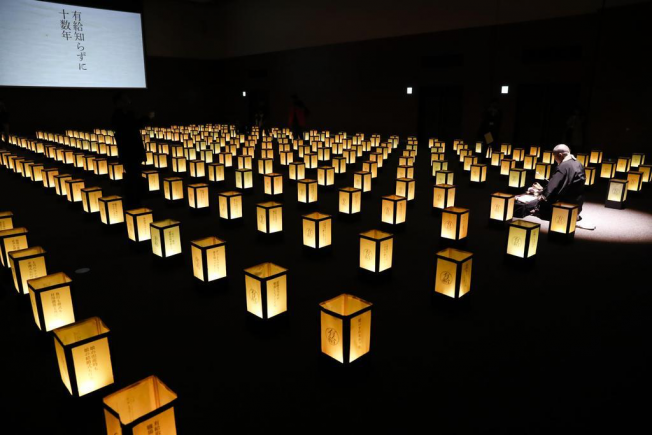
At a dimly lit ceremony hall in Osaka this week, a Buddhist monk sat at the front of a large room chanting, surrounded by 300 lanterns. The chants, however, were not Buddhist scriptures. They were the regrets and remorse of individuals who had been unable to take their paid-time-off.
As the sun set on Taketa City last month, tourists and locals alike gathered together near the Oka Castle ruins. And as darkness took hold, a stream of lights gradually faded into focus, twisting and turning as they appeared to extend towards the sky. This is Taketa City’s Chikuraku Festival.
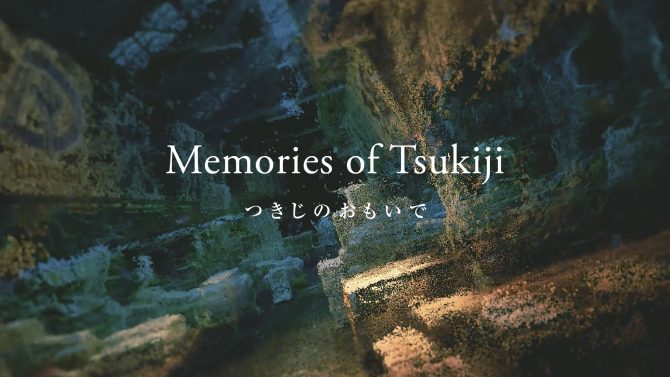
December 6, 2019 / Johnny / Comments Off on Recreating Memories of Tsukiji Through Photogrammetry
It’s been a little over a year now since the Tsukiji Fish Market relocated to Toyosu and officially closed their doors forever. The site has since been demolished and the only thing that now remains are photographs and other documentation of the iconic fish market. Using thousands of those archival photographs, a team of designers have created an immersive artwork that explores what was once the world’s largest fish market.
December 5, 2019 / Johnny / Comments Off on Looking Back on 2019 Through Japan’s Photojournalism Awards
top prize went to Kan Emori for his photograph of a fleet of shinkansen trains engulfed in glimmering muddy waters after Typhoon Hagibis
As the year comes to an end, we’re afforded several opportunities to reflect on the past 12 months. One of those opportunities is the Kansai Photojournalism Awards, which were announced this week. Exceptional photojournalism and videography from 2019 were recognized by the Kansai Photojournalism Association, which is made up of 76 news organizations with offices in the Kansai region.
December 3, 2019 / Johnny / Comments Off on Atsushi Adachi Explores Memories Through Sculptures Made From Old Newspaper
The Japanese visual artist Atsushi Adachi creates miniature replicas of objects from the past using old newspaper clippings and articles sourced from the same period. Artifacts from history like battleships and Neil Armstrong’s space suit come alive in what Adachi describes as a meditation on memories of our collective memory.