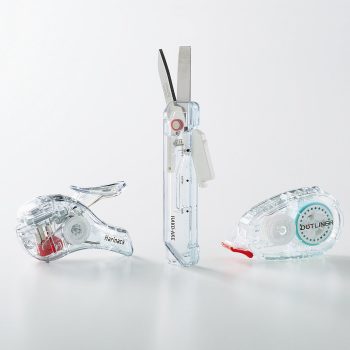
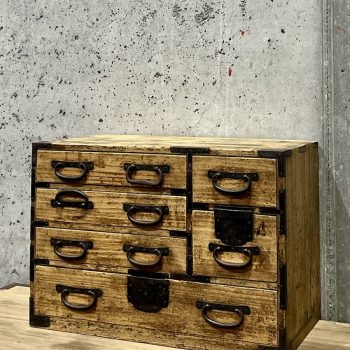
Bonito flakes are a popular garnish on many well-known dishes in Japan like okonomiyaki and takoyaki. But those coming across it for the first time often mistake them for pencil shavings. Thanks to the imagination of one product designer, the two have become intertwined in a single, perfect pencil sharpener.
December 14, 2021 / Johnny / Comments Off on Bread Bugs: Intriguing and Adorable Four-Legged Felt Pastries by Atelier Hatena
all images courtesy atelier hatena
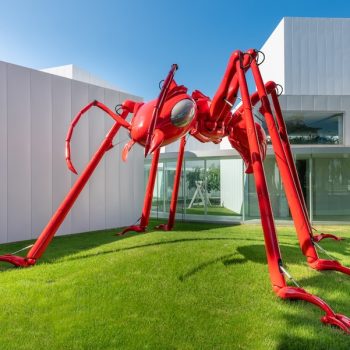
Usually we would not want bugs around the house. But we’ll make an exception for these incredibly adorable bread bugs created by felt artist Atelier Hatena. Based in Hiroshima, the artist knits together one-of-a-kind, whimsical creatures out of felt.
December 13, 2021 / Johnny / Comments Off on Edo’s Eco Life for Today: Part 2 – Food Culture in the Edo Era
this post is sponsored by The Japan Foundation, Center for Global Partnership
On Friday December 17 at 8pm ET, join a free online event with two experts to discuss food culture in the Edo era through the lens of mottainai.
Mottainai, a Japanese word encompassing the spirit of getting the most out of everything, took root in Edo period Japan (1603-1868). Edo period experts Professor Kamatani Kaoru and Professor Azby Brown will discuss food culture in the Edo era through the lens of mottainai, a grassroots mentality that was pervasive throughout the Edo period and discuss the inspiration we can take way for today’s global community.
One of Japan’s most-rowdiest festivals is the Kishiwada Danjiri Festival, which takes place in Osaka during the month of September. The 300-year old festival features thirty four large, elaborate floats known as danjiri. Each float represents a different neighborhood and teams of hundreds compete to pull their floats at high speeds through the narrow streets of Kishiwada.
But for one individual, spectating the event was not enough. Armed with carving tools, they are on a mission to carve miniature replicas of every single danjiri.
December 10, 2021 / Johnny / Comments Off on Viscous Slime Covers the Faces of Portraits Painted by Kotao Tomozawa
Kotao Tomozawa with her large paintings | all images courtesy the artist
Kotao Tomozawa is a Tokyo-based painter currently attending Tokyo University of the Arts. Using her masterful grasp of texture, translucency and softness, she creates large, unique portraits that feature highly viscous slime-like substances covering the faces of her models. They are simultaneously disturbing yet gentle.
December 9, 2021 / Johnny / Comments Off on Kotatsu Have Been Around Longer Than We Imagine. And Art History Has the Proof.
As temperatures continue to drop, households around Japan will begin setting up their kotatsu: low tables covered with a heavy blanket whose underbelly holds an electric heater. Central heating is uncommon in Japan, where the preferred method of keeping warm are site-specific heating solutions like this one. And we often think of the kotatsu as a modern-day luxury but they’ve actually been around for hundreds of years, way before electricity was harnessed for household usage.
The Chef of South Polar (2009). Directed by Shûichi Okita (all images courtesy Japan Society and the Agency for Cultural Affairs in association with VIPO)
this article is sponsored by Japan Society
Highlighting the early efforts of now-established contemporary filmmakers, Flash Forward: Debut Works and Recent Films by Notable Japanese Directors — the second ACA Cinema Project series — takes an intimate look at six of Japan’s most well-known directors: Naomi Kawase, Miwa Nishikawa, Shuichi Okita, Junji Sakamoto, Akihiko Shiota, and Masayuki Suo. Brought to you by Japan Society and the Agency for Cultural Affairs, Government of Japan (ACA), in collaboration with the Visual Industry Promotion Organization (VIPO), this hybrid program will feature 18 films streaming throughout the US on Japan Society’s Virtual Cinema from December 3–23, 2021, and two in-person screenings in Japan Society’s auditorium at 333 E 47th Street in Manhattan on December 11 and 17.
December 4, 2021 / Johnny / Comments Off on Nature and Engineering Intertwine in Toshio Shibata’s Photographs of Japan’s Landscape
Kitashiobara Village, Fukushima, 2016
Depending on where you stand on the spectrum of environmental engineering, Japan’s monolithic yet ubiquitous cement structures are either pork-barrel politics suffocating the landscape, or engineering marvels that sustain life. The photographer Toshio Shibata offers a third, more neutral stance. A poetic and abstract look at nature being intertwined with man-made structures.
Join us next weekend on December 11, 2021 (EST) as we virtually step inside a traditional Kyoto machiya to experience the refined world of matcha. The Camellia Tea House will guide us through an intimate and authentic tea ceremony!
In the tea world, this time of year is very much considered the new year of tea. Two exciting things happen: the tea that was picked, processed, and put into storage to settle in the spring is unveiled and turned into Matcha. Also, the hearth upon which the water is boiled for making tea in the Japanese tearoom goes from resting above ground for the warmer months, to being in the ground for the winter, a tradition known as robiraki (炉開き), or the unveiling of the sunken hearth.
The online event will be available to Spoon & Tamago members. Already a member? Awesome! Members will automatically be receiving a link by email to join. Not a member? Consider joining us and getting access to this talk, as well as many other perks!
Online Member Lecture Series with Camellia Tea House WHEN: December 11, 2021 (EST) | 8:00 – 9:00 PM WHERE: Zoom Meeting HOW TO JOIN: All members will be receiving an email with a link to join the meeting.
Archived footage is now available. Members who are signed in can view the video below:
December 1, 2021 / Johnny / Comments Off on An Undulating Glass Facade Defines this Renovated Kimono Showroom in Kyoto
all photographs: RuRi Photo Studio
For the last several decades the market for kimono, Japan’s traditionally worn garments, has been in decline. Recently, thanks to the the efforts of many, kimono have been undergoing a renaissance but kimono makers still need to stay relevant in order to survive. For Kyoto-based kimono maker Souhee, that meant creating their latest showroom in a renovated machiya that blends elements of tradition and modernity.