Page 341 of 406

MM Apartment by Nakae Architects

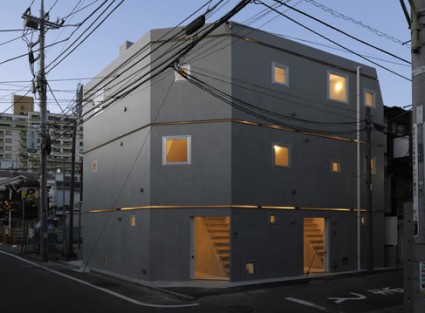
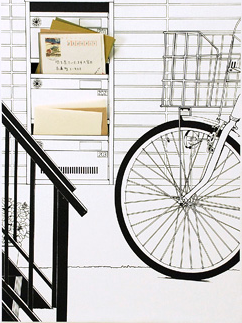
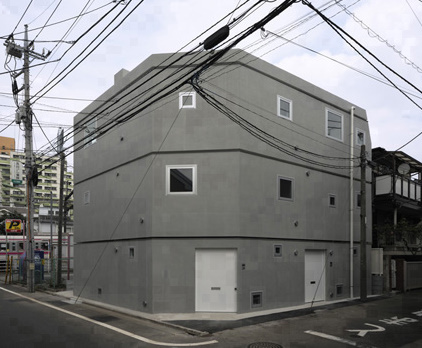
Yuji Nakae of Nakae Architects, along with the help from Hirofumi Ohno and Yamada Hiroyuki, created MM Apartment in Tokyo. Approximately 2 years since the completion of their last building, the highly acclaimed NE Apartment, the 8 unit structure comes with Nakae’s signature style of incorporating indoor parking for your bicycle or motorcycle, which I am sure there are plenty of people in Tokyo who can appreciate.

MM Apartment was completed back in September of 2009 but the architects just recently released photos of their work.
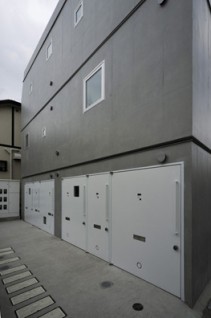
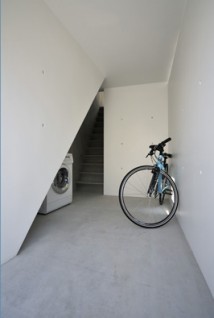
Each unit has 3 floors but with different layouts. Some have the bathrooms located on the first floor while others have them on the 3rd. Here is a walk-through of some of the units. Above is a shot of the entrance and ground level bike parking.
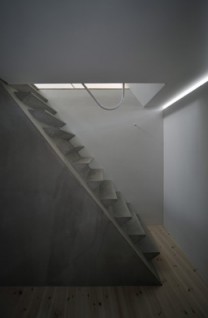
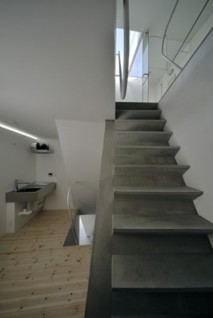
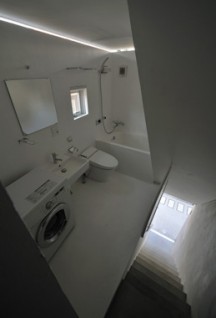
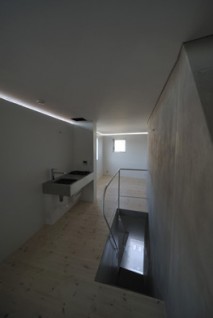
Above are 2 shots of room A – the stairs leading from the 2nd floor to the 3rd floor, and the dining room/kitchen located on the 2nd floor. Below we have 2 shots from room B – the 2nd floor bathroom and 3rd floor kitchen.
Below are 2 shots of room C – the ground level entrance and bathroom, and the 2nd floor bedroom.
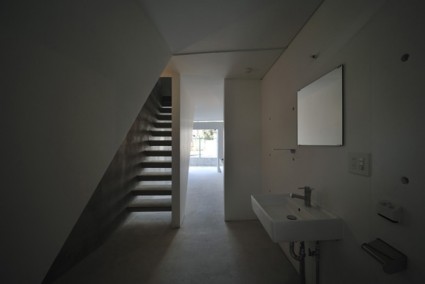
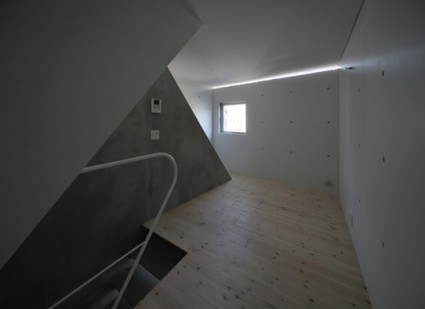
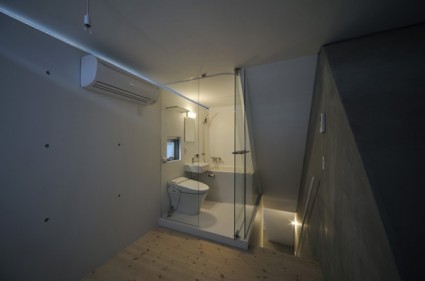
Below is a shot of room F’s 2nd floor bathroom.
All photographs © Hiroyasu Sakaguchi

johnny x the considered ensemble

just in case you were wondering….
via the considered ensemble

Noto Fusai | CanvasWorks

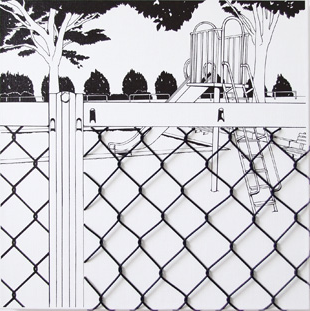
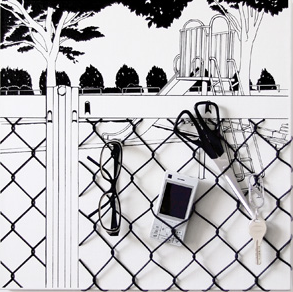
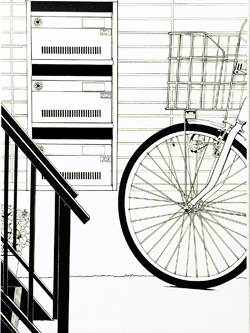
During the summer of ’09 we featured these awesome canvasworks by husband-and-wife design duo Noto Fusai. Well they have recently added 2 new pieces to their collection of functional wall-art. A rack/holder for odds and ends like glasses and cellphones, and this letter rack, which I am totally getting my hands on as soon as they come out of production.

Object holder

Letter rack

Related:

Yukio Hatoyama has a blog

In order to counteract his plummeting popularity, as of January 1, 2010, Yukio Hatoyama – the prime minister of Japan – has set up a blog and twitter account in order to reach out to the general public. It was all done under the creative direction of Yuji Tokuda (I wouldn’t be doing my job if I didn’t include that tid-bit of design intel), who incorporated the pigeon into the design. Hatoyama literally means pigeon mountain.

Tokuda has added a disclaimer on his website saying he is not affiliated with, nor does he necessarily support, the Democratic Party of Japan.

Related:

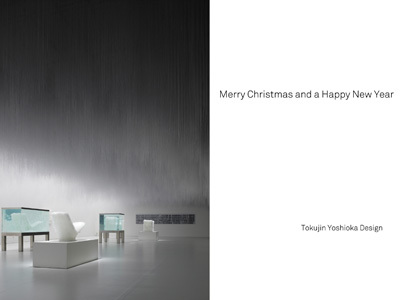
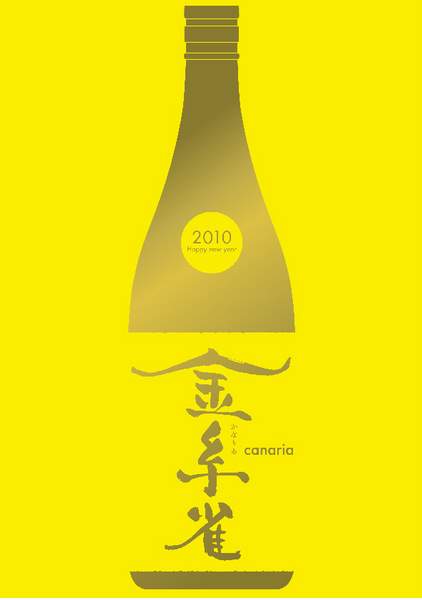
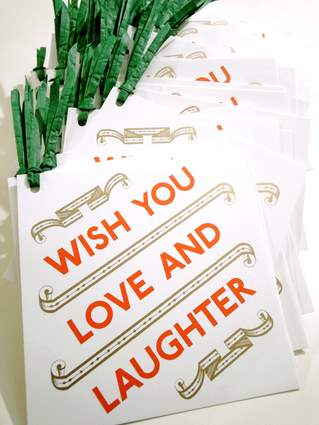
Japanese Designer New Year Cards of 2010

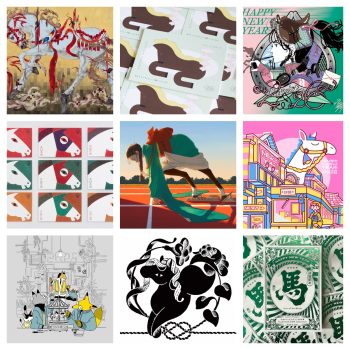
Despite Christmas’ commercial success in Japan, the New Year is really the holiday that takes the cake in Japan. So with that ever-so-brief introduction I give you, designer new year cards: Japan Edition.


Tokujin Yoshioka


Yuji Tokuda


Bob Foundation


Masahiro Minami


TNA Design Studio


CASE-REAL

Asakusa Culture and Tourist Information Center by Kengo Kuma

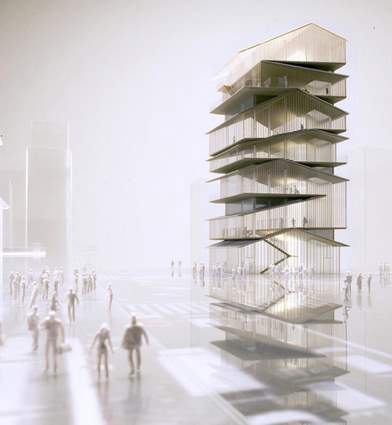
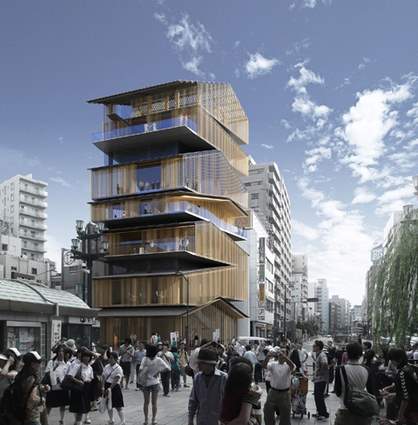
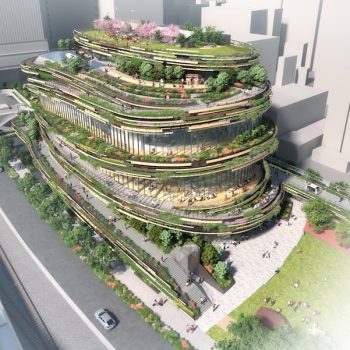
Speaking of Kengo Kuma, and of 2010, I am immensely looking forward to the completion of his Asakusa Culture and Tourist Information Center this year. Taito Ward held a competition in 2008 and received over 300 proposals to design a tourist hotspot that would eventually complement the Tokyo Sky Tree, set for completion in 2011. In the end, Kengu Kuma beat out Inui Kumiko with his design of stacking 7 units on top of each other.

The structure is an example of “losing,” one of Kuma’s primary architectural principles which he articulates and disseminates in his 2004 book, Losing Architecture (負ける建築).  In his book Kuma emphasizes the need for site-specific work that takes into consideration, and heads to, the surrounding environment. It’s the antithesis of a considerable number of structures, both in Tokyo and New York, that “wins” out over the surrounding environment because of a complete disregard for it.

The 7th floor will be a café, the 4th – 6th floors will be multipurpose gallery/activity spaces, the 3rd floor will be devoted to admin and the 1st and 2nd floor with be tourist information center/lounge.

Hoto Fudo by Takeshi Hosaka Architects
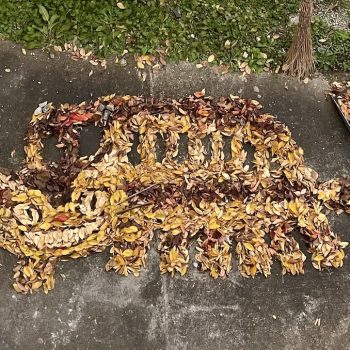

click to enlarge | photos by Koji Fujii / Nacasa&Partners Inc

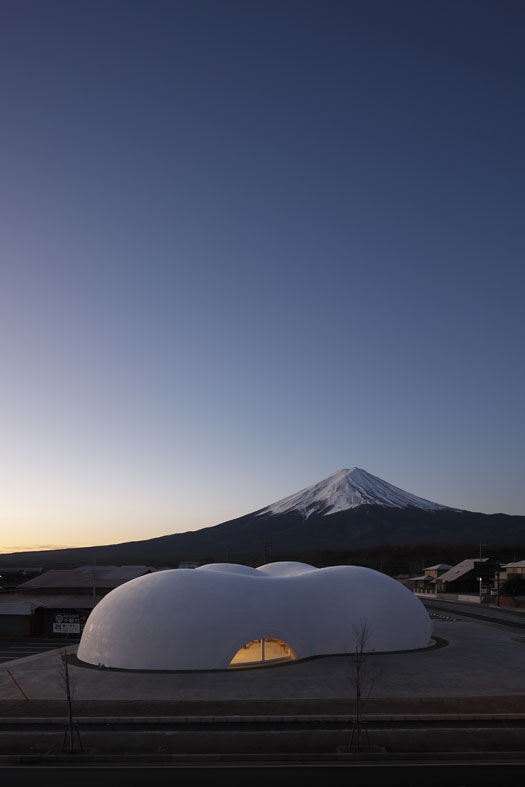
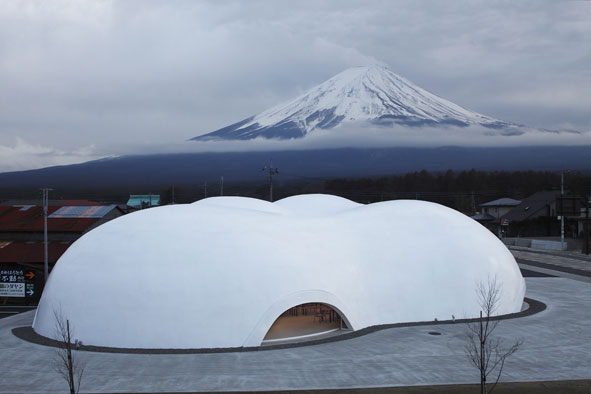
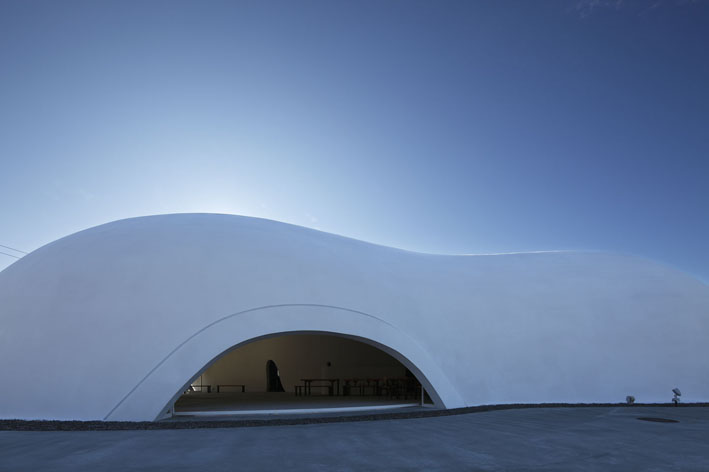
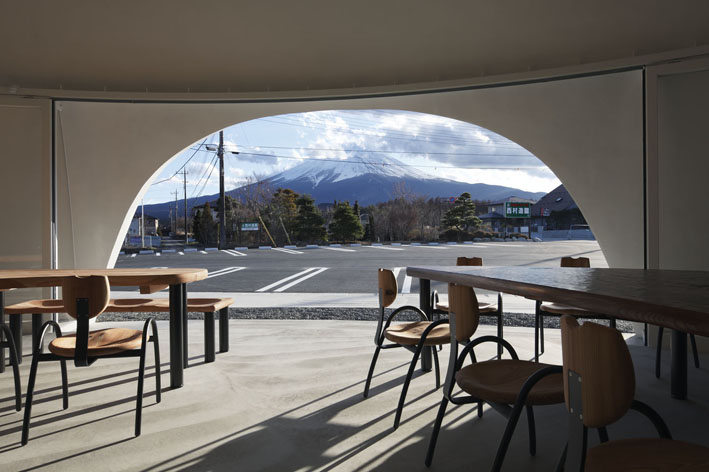
Last month a popular noodle restaurant, Hoto Fudo, opened its 4th store to what I can only imagine must have been a delightful surprise. Delightful because of its beautiful, organic form that sits near the foot of Mt. Fuji. Surprising because it bears no similarity to its 3 predecessors. Hoto is the name of their main dish, a characteristically flat noodle that is served with vegetables in a miso broth.

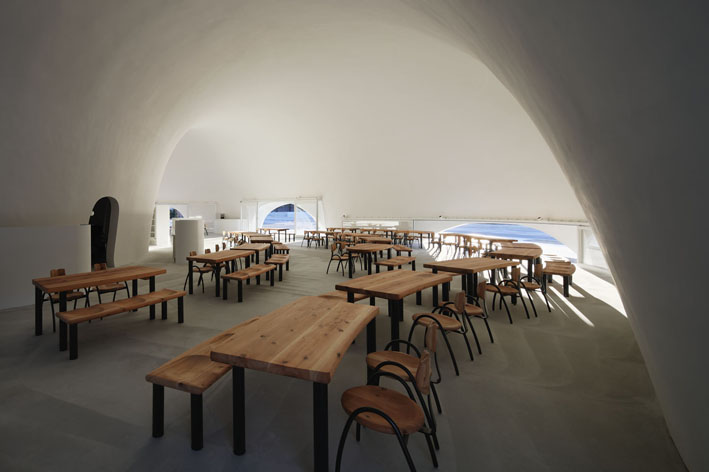
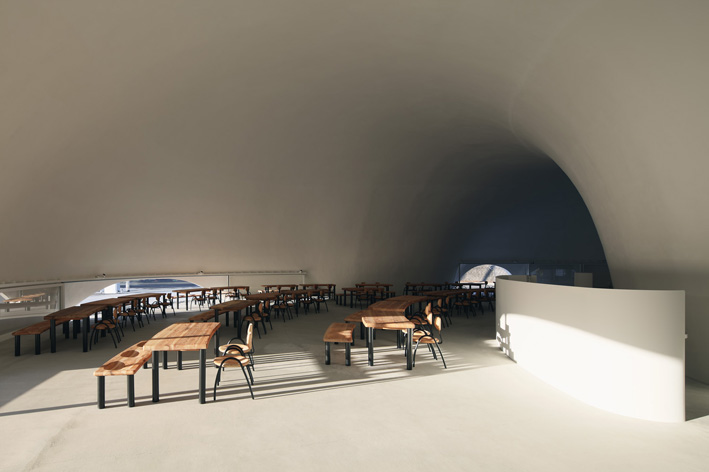
The structure, designed by Takeshi Hosaka Architects, is an organic, bulbous form that, in winter, could easily be mistaken for a large igloo. In the spirit of the igloo the restaurant also has no air-conditioning. And, except during the coldest times of the year, the entrances remain open to the outdoors allowing natural elements like wind, fog and sometimes rain, to enter the interior.

——————————

Hoto Fudo
Higashi Koiji store (Gmap)
11:00 – 20:00
open year-round

Fuan Teahouse by Kengo Kuma

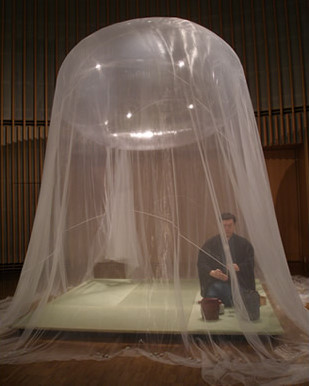
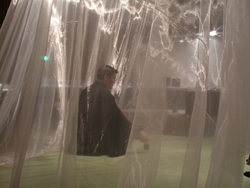
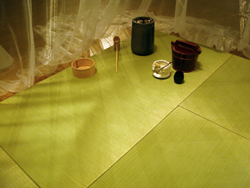
Not sure what to do for your first design event of the new decade? On January 3, 2010, make a trip to IMS Plaza in Fukuoka for a traditional tea ceremony in a not so traditional setting. Fuan (literally, floating hermitage) is a floating tea room comprised of a helium balloon veiled with an ultra-light material called super organza. Weighing in at a mere 11 grams per square meter, the weight of the material counteracts the upward pressure of the helium, creating a perfectly balanced structure without walls or pillars.

On a side-note, the material was first introduced into the design community in 2007 during TOKYO FIBER’07――SENSEWARE curated by Kenya Hara.  It was used extensively by artists and designers like Yasuhiro  Suzuki, Naoto Fukasawa and Taku Sato. Kengo Kuma also participated in the exhibition.

The architect Kengo Kuma talks about his creation, which was originally developed in 2007, as being a space of virtual reality where a state of conciousness in the form of a  floating body can exist. Unfortunately tickets to enter the actual floating tea house are already sold out but you can still (get there early enough to) grab one of the 20 seats surrounding the structure.

Related:

a haPPy new year

Top posts of 2009 – No. 1 | Vine Cell Charger or AC Adapter Midori

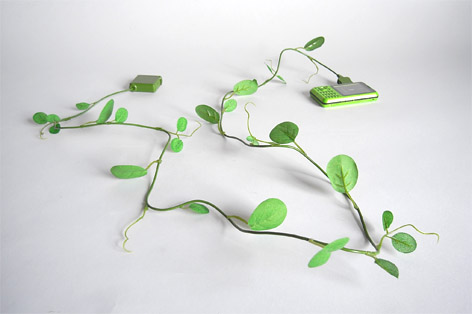
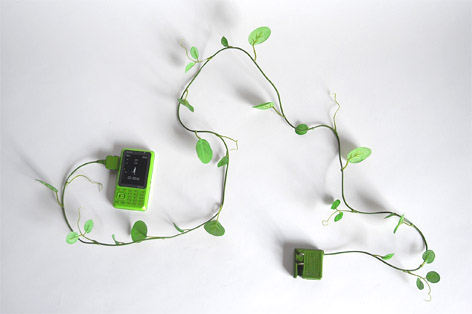
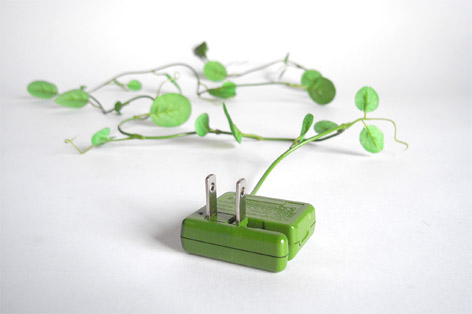
And without further ado, we give you the most popular post of 2009 on Spoon & Tamago – Vine cell charger. Published all the way back on February 4, 2009, we featured the latest creation by Shunsuke Umiyama of Microworks. We are huge fans of Mr. Umiyama’s work and as a result he is no stranger on this site. We also like checking out his wardrobe, which often stands out more than his designs. (photo courtesy of nosigner).

Anyway, at the time “Vine” was only a conceptual piece with no plans for commercialization. But 2 months later in April KDDI announced that they were renaming it AC Adapter Midori and releasing it as part of an accessory kit. We followed up with a post HERE. What we really loved about this design was that it proposes a very simple solution to a modern-day interior design problem. People are always trying to hide their electrical cords and there is no shortage of chotchkies to aid us in this quest. But in the end, we are just buying more junk we don’t need. The notion that all we have to do is beautify the ugly was so novel and so nonexistent, it was truly a splash of water in the face for us and hopefully for our generation.

« Older posts Newer posts »

© 2026 Spoon & Tamago

Up ↑

Design by Bento Graphics