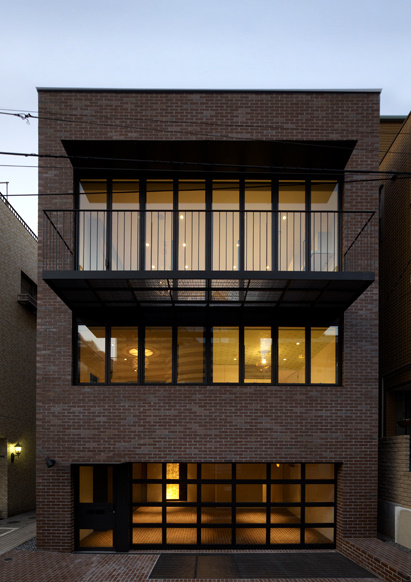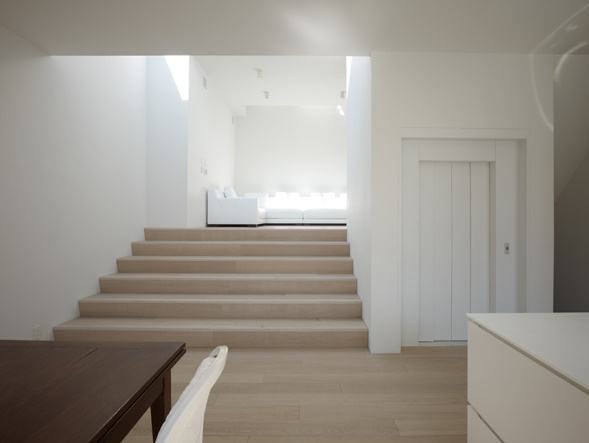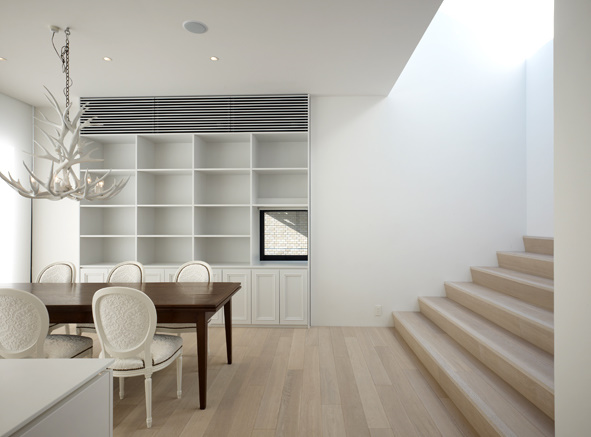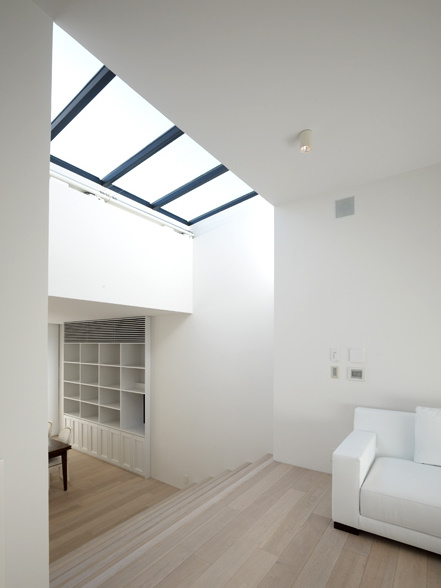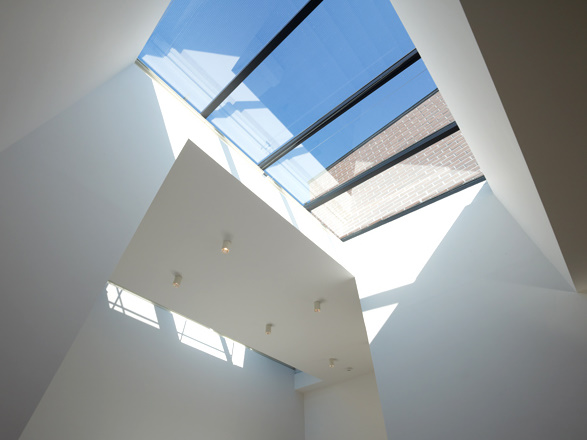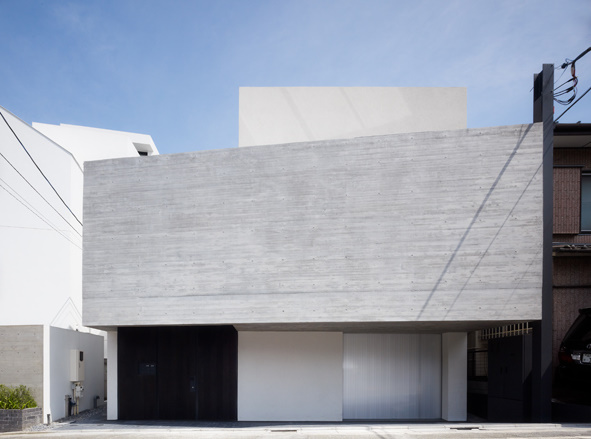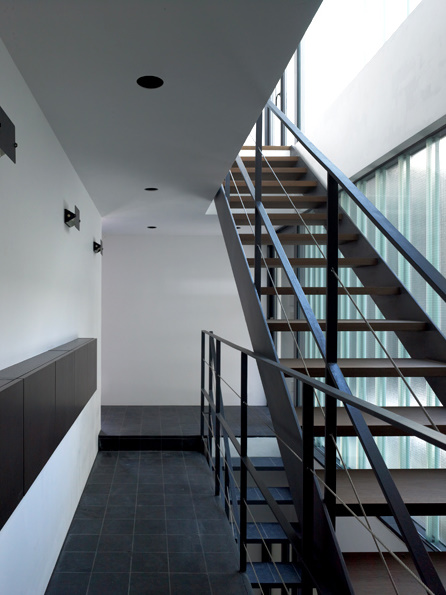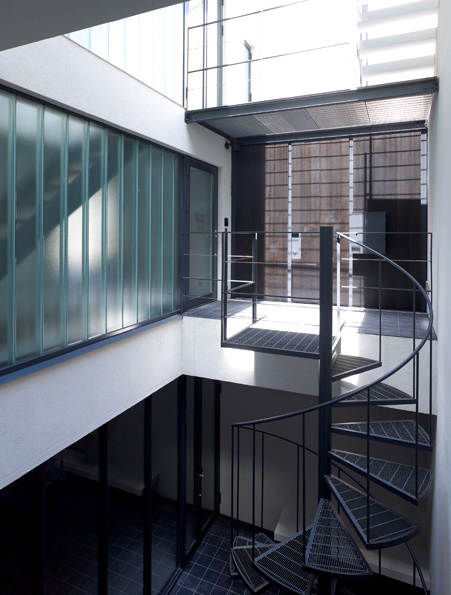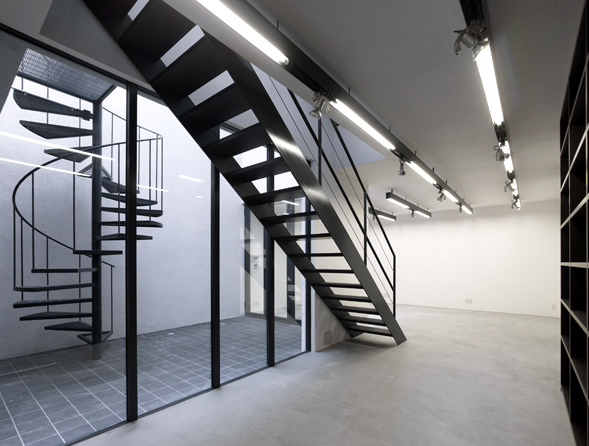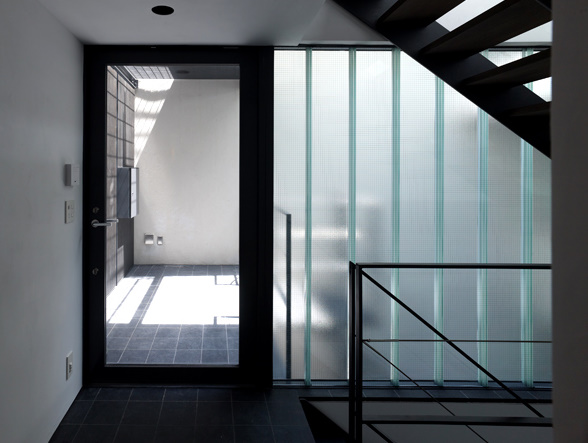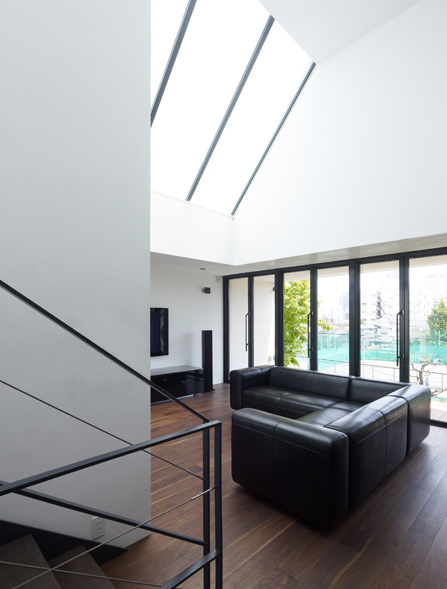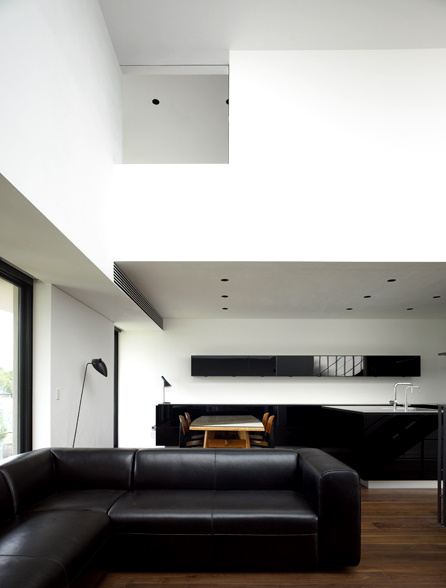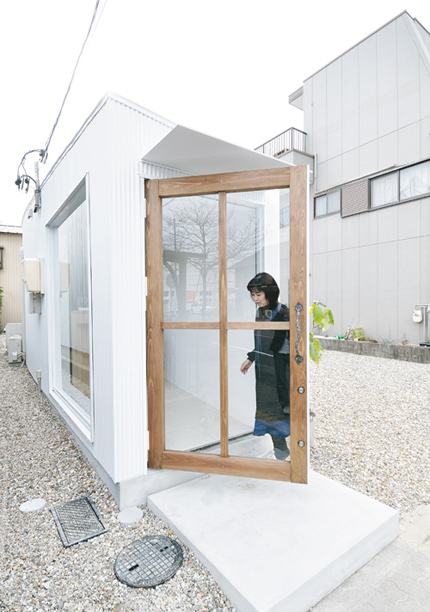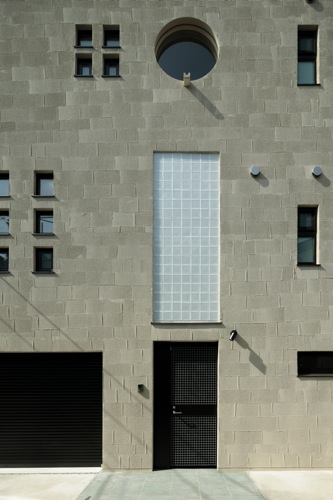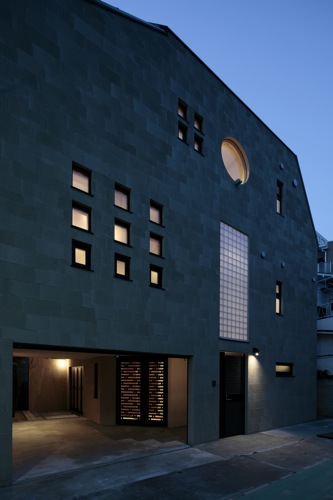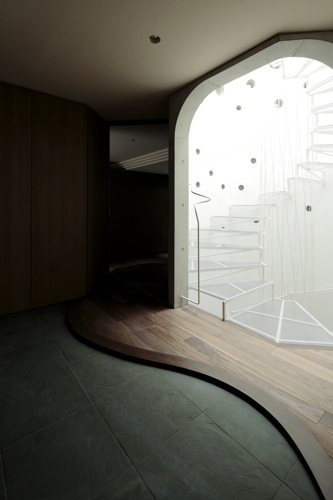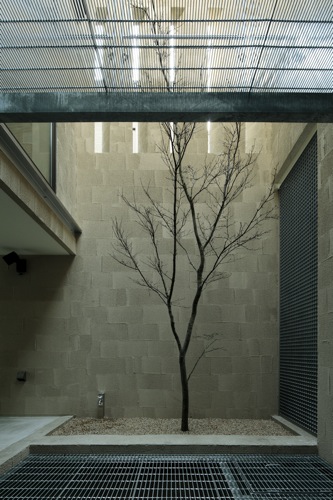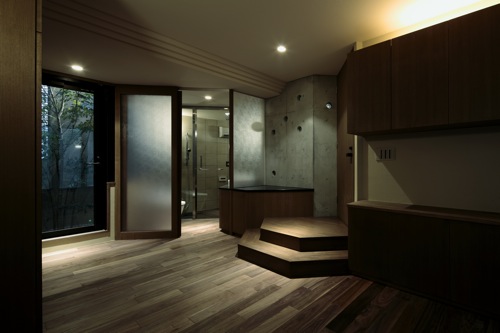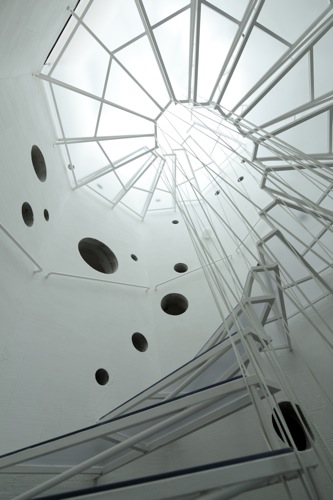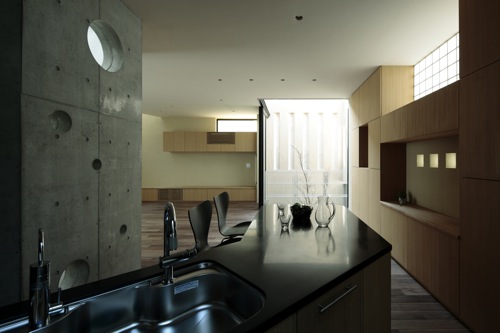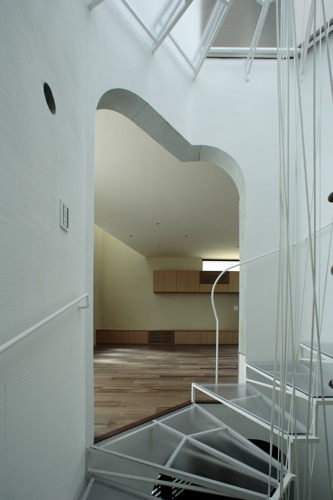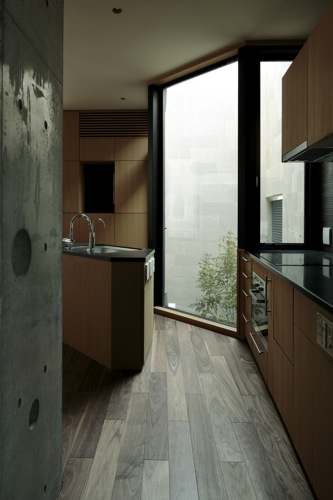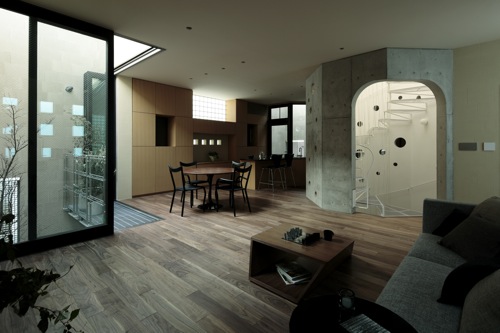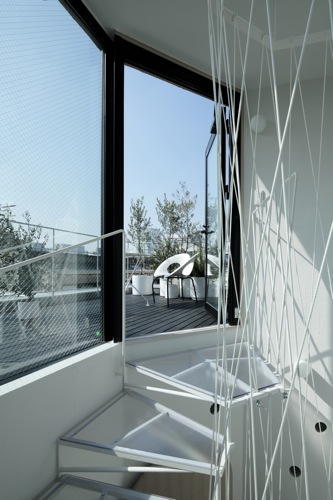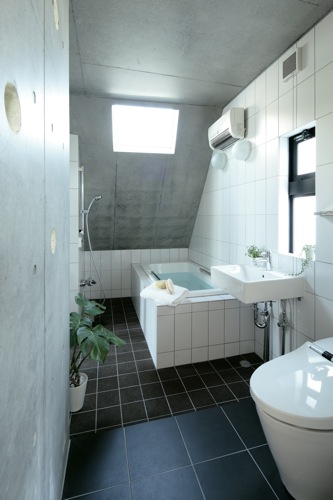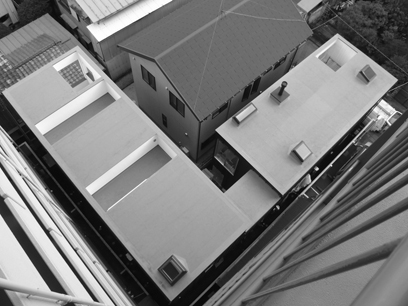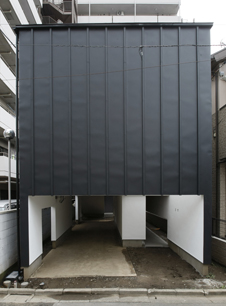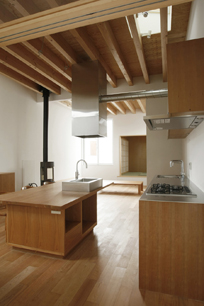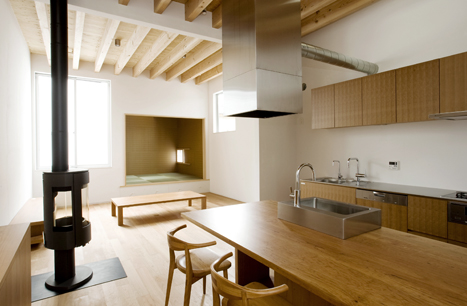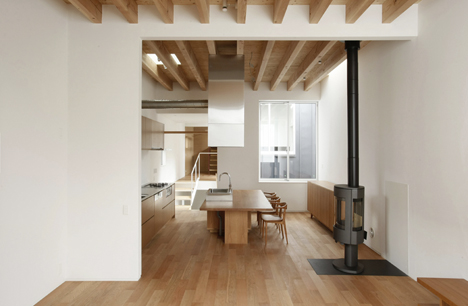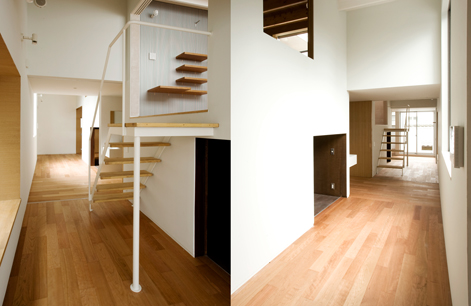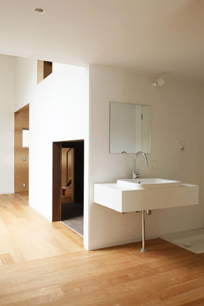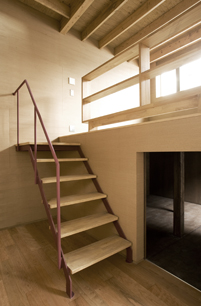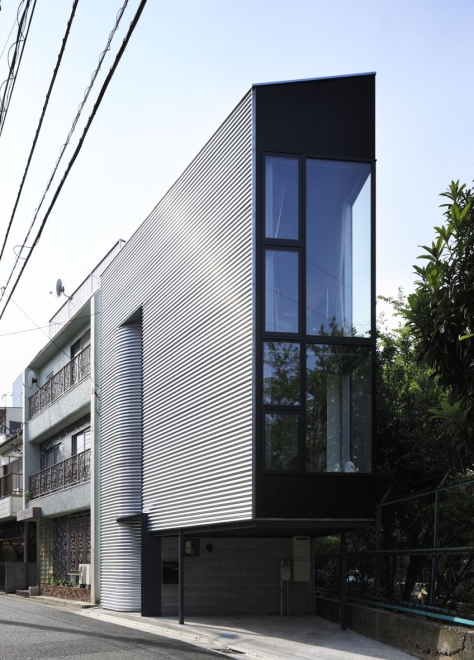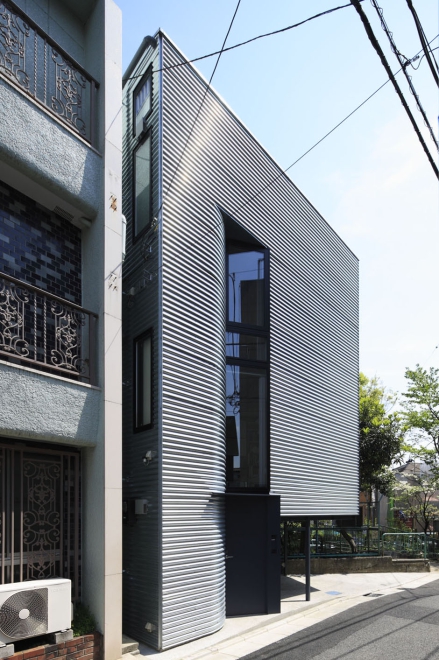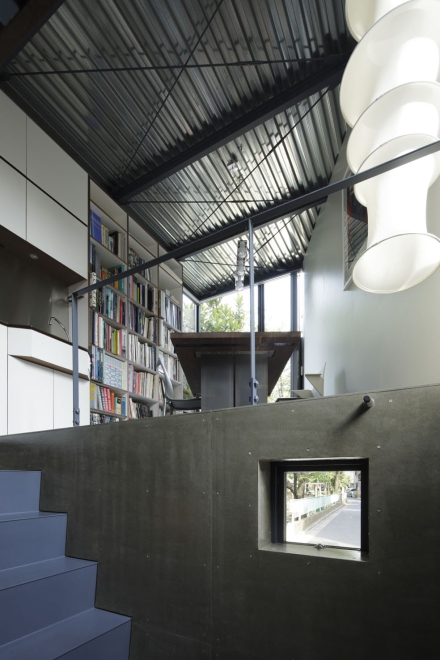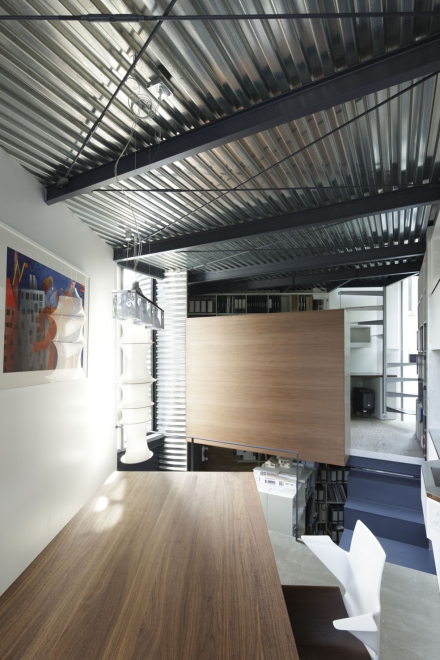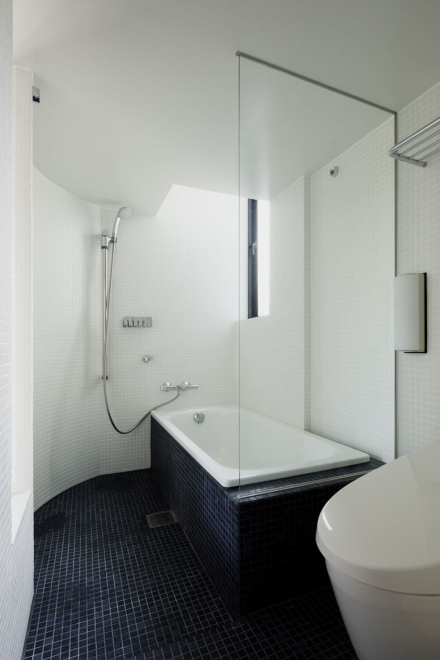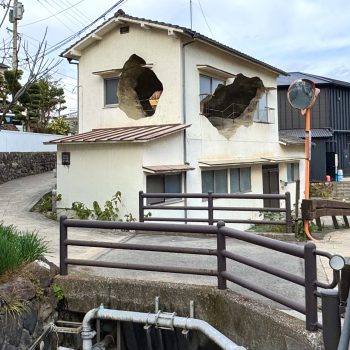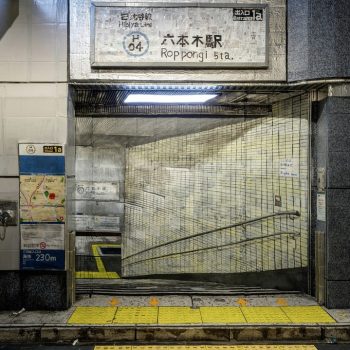
General Design recently completed House in Higashiyama. The stark metallic and concrete home is accompanied by little text so I will let the pictures do the talking.
Related:
General Design recently completed House in Higashiyama. The stark metallic and concrete home is accompanied by little text so I will let the pictures do the talking.
Related:

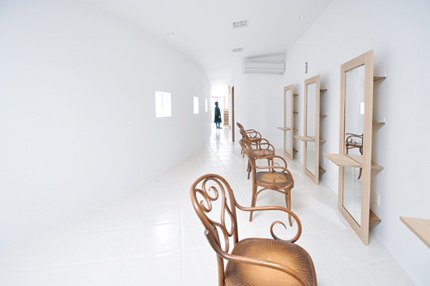
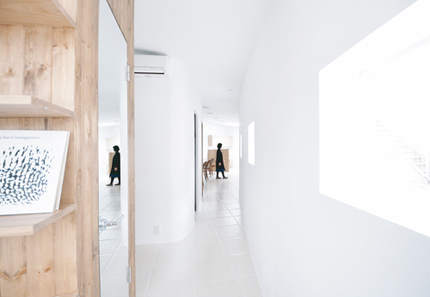
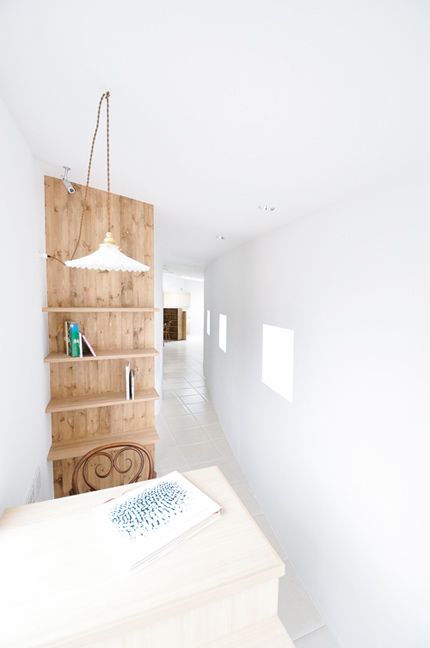
Nagoya-based architecture firm Studio Velocity completed a house, much rather a beauty salon, with curved walls that expand in volume as the structure retreats.
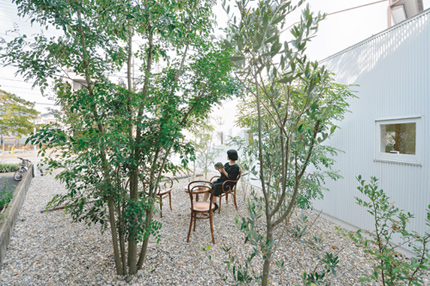
Completed earlier this year, the beauty salon is the result of an extensive study on curvature, and how it can apply to the creative use of indoor and outdoor space. Specifically, the need for an outdoor garden, cloth-drying and parking space, were part of the requirements.
Kentaro Kurihara and Miho Iwatsuki, the duo behind Studio Velocity, write that the initial idea came from a desire to create a structure that doesn’t blend in with its intimate retail and residential surroundings. They wanted a lasting impression to be imprinted on people who would walk or drive by on the relatively high-traffic street.
via @archiphoto
Ten high profile Japanese architects are currently participating in an exhibition at architekturzentrum wien (architecture museum vienna) titled JapanLisztRaiding.
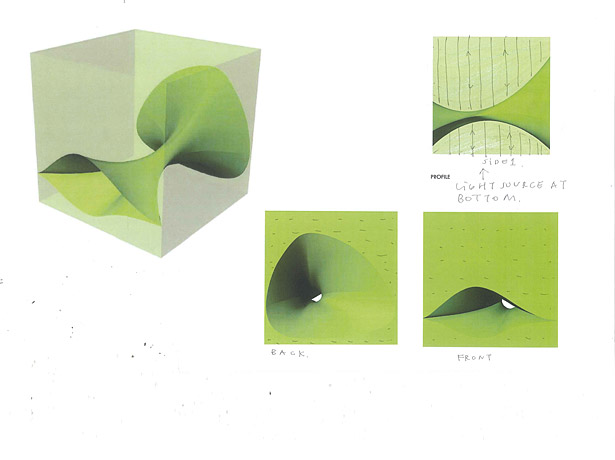
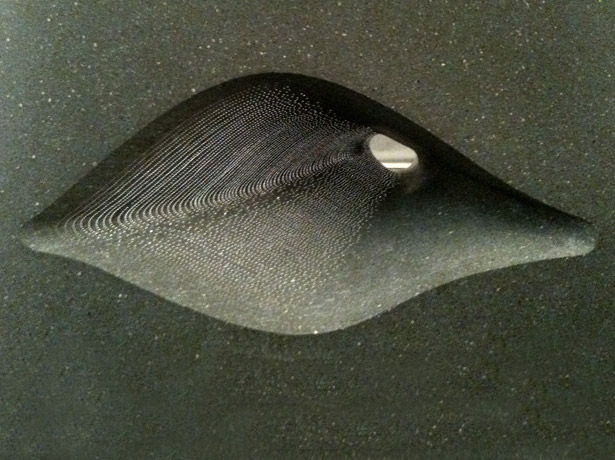
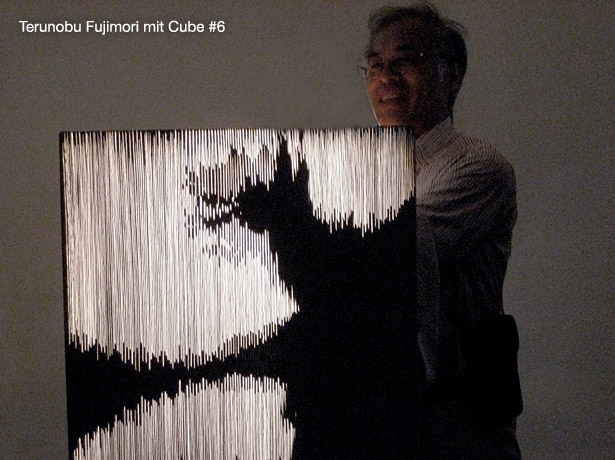
The most eye-catching piece for me was Kengo Kuma’s mit Cube #6, which utilized a translucent concrete known as LUCCON. Straight from the company’s website: “LUCCON translucent concrete is manufactured in large volume top layer concrete blocks with embedded webbed fiber optic cables, making the stone appear comparably massive as well as transparent.”
Continue reading to learn more about the exhibition and see all the work
Continue reading

click images to enlarge | photos by Koichi Torimura
Completed in 2010 by Takeshi Hirobe Architects, M House, located in the Minami Aoyama district of Tokyo, looks like a fortress but within is actually an enchanting structure of light, geometry and economics.

left: at the entryway, visitors are greeted by a flood of light from the octagonal staircase. | right: the courtyard

the 1st floor bedroom opens up to the courtyard and spot garden
translucent stairs help disperse light that enters in through a skylight
City living, from an architectural perspective, is constantly imposed by 2 propositions. First is working, and proposing solutions, within the confines of a strict environment that is city space. Second, which is perhaps on the forefront of the minds of clients, is the economics of taking full advantage of the given site considering how expensive land in the city is.
The diagonal walls, the windows & skylights and the courtyards, all comply with the needs of city life. While maintaining privacy and extracting the full potential of the given site, the home also invites the outdoors, in. Residents are clearly reminded of rain falling from the sky, and of the changes in sunlight from dawn till dusk.

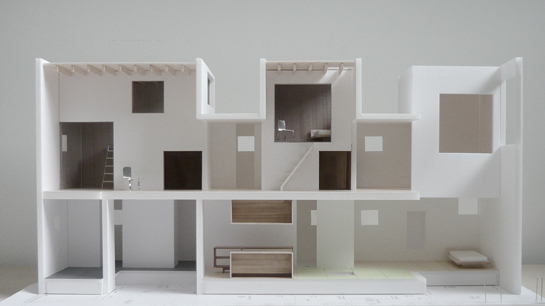
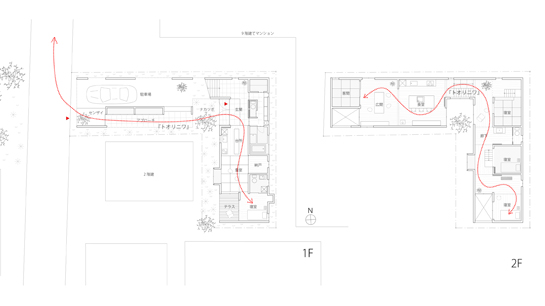
Hidetaka Shirako Architects recently completed Koedo House, a private residence for a family of 4; a husband, wife, mother and aunt. The land was originally a flagpole site, but additional land was purchased in order to create the distinct L-shaped home.

The challenge was to create a uniform space for 4 individuals who have distinct lifestyles and values.
The solution proposed by the architects was to not simply demarcate space using walls, but to create a long continuous hallway throughout the uniform space, that was not uniform at all. Ceiling height and width evolve as you move through the hallway, which acts as common space but also connects a courtyard with private rooms.


images courtesy sanpei mitsumasa
Completed in March of 2010, Architects House by Sanpei Mitsumasa is a good case study for maximizing small space. Located in Tokyo, it belongs to husband-and-wife artists who use the space a a residence, a studio and also a meeting place for clients.
The structure itself takes full advantage of the oddly-shaped 10-tsubo (355 sq ft) plot of land. The architects then proceeded to pull out all the tricks of the trade to create a sense of spaciousness such as vaulted ceilings and variations in floor heights. Luckily the land had considerable greenery around it so by including various large and small windows they were able to provide different views of scenery as well.
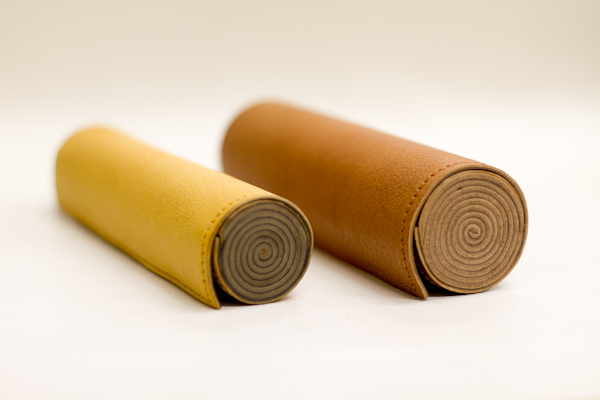
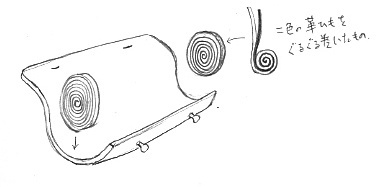
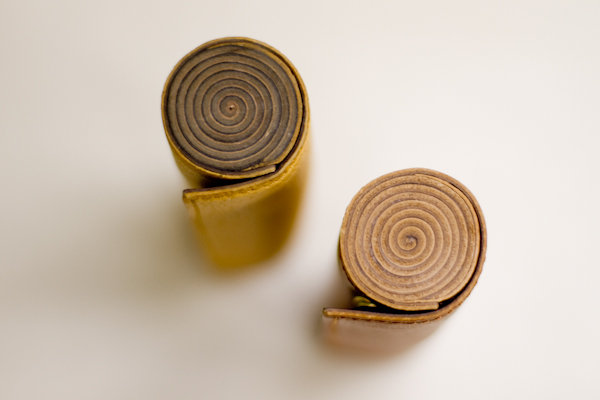
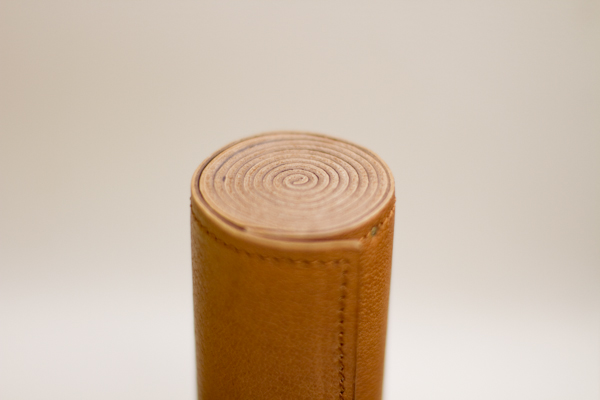
Inspired by the growth rings of trees, Masahiro Minami has designed a leather pencil case named LOG that, well, looks exactly like a log. The inside is hollow and a hatch flips open, allowing you to store pencils, pens and other small stationary.
It was manufactured by Heath Japan and depending on the size, will retail for between 7,100 yen and 7,600 yen. That feels like a lot for a pencil case. But apparently the leather rings are very hard to make.
First it was tukkun and then den-den. This period of Minami-san’s life will likely be referred to by historians as his “round period.”
Related:
To commemorate the 400th anniversary of Dutch-Japan relations, the Lloyd Hotel & Cultural Embassy is sponsoring Llove Hotel, a hotel space exhibition created by Japanese and Netherlands designers.
Part of Designtide Tokyo, several designer rooms will be available for actual stay between October 22 – November 23.

a sneak peak of what the designer rooms look like
Participating designers from the Japanese side include Jo Nagasaka, Ryuji Nakamura, Yuko Nagayama and Hideyuki Nakayama. From the Dutch side: Richard Hutten, Joep van Lieshout, Pieke Bergmans, Thonik and Scholten & Baijings.

Toyo Ito in his Studio. Photo © Sankei Shinbun
Earlier this week, The Japan Art Association announced that they had come to a final decision on a selection for their 2010 Praemium Imperiale Laureate prize. Toyo Ito won the prize for architecture and was joined by other luminaries including Sophia Loren (Theater/Film), Enrico Castellani (Painting), Rebecca Horn (Sculpture), and Maurizio Pollini (Music).

Tama Art University Library by Toyo Ito. Photograph by Iwan Baan.
Toyo Ito joins previous Japanese recipients including Hiroshi Sugimoto (2009), Yayoi Kusama (2006), Ando Tadao (1996), and Akira Kurosawa (1992). Nominees are slected by an international advisory panel who propose candidates in each of the 5 fields. The final selection is then made by the Japan Art Association.

White O by Toyo Ito. Photograph by Nicolas Saieh.
Your tid-bit of trivia for today: Toyo Ito is the one who got Klein Dytham Architecture started in Japan. According to The Japan Times, Klein Dytham sent their portfolio to Toyo Ito before even coming to Japan. “Klein and Dytham’s portfolios were so ‘beautifully presented’ that he decided to recommend them to a friend who had asked him to design a hair salon.”

Za Koenji Public Theater by Toyo Ito. Photograph by Iwan Baan.
via archdaily
(thanks paulene!)
Related:
Perhaps the most aesthetically pleasing amplifier ever designed, it was just announced (PDF) that Koichi Futatsumata’s (of Case-Real) vacuum tube amplifier will go on sale later this year.
Originally named ELEKIT TUBE AMP, the prototype made its way around the blogosphere earlier this year, perhaps serving as the impetus for the piece to go into commercial production. It was renamed “22 [tu: tu:]” and will retail for 73,500 yen. They even created a special website [www.22tutu.com] which launches September 17th. There, they will begin taking orders for the amp around the end of October.
Related: