Page 307 of 406

Matter in the Floating World

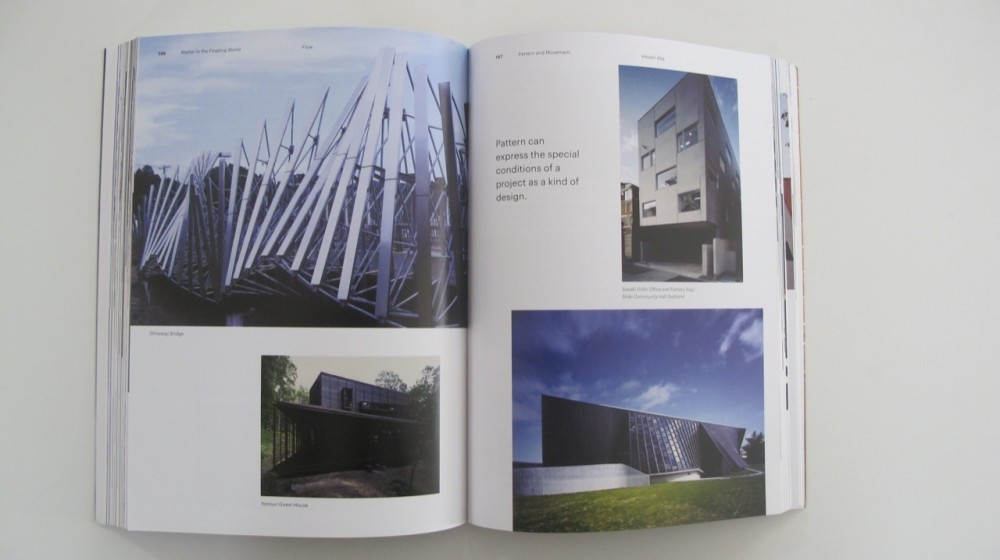
Blaine Brownell, an architect and material expert, has recently put together a book featuring 20 of Japans leading architects and designers called “Matter in the Floating World.”

The book features works and interviews of : Hitoshi Abe · Tadao Ando · Jun Aoki · Masayo Ave · Shigeru Ban · Shuhei Endo · Terunobu Fujimori · Kenya Hara · Eriko Horiki · Sachiko Kodama · Kengo Kuma · Toyo Ito · Oki Sato · Kazuyo Sejima · Reiko Sudo · Takaharu Tezuka · Akira Wakita · Makoto Sei Watanabe · Yasuhiro Yamashita · Tokujin Yoshioka
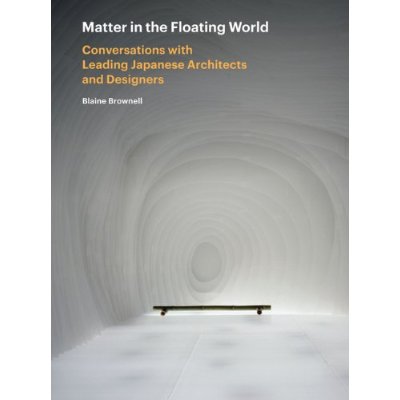
Matter in the Floating World

Japan contains a higher number of internationally significant architects and designers relative to its geographic size than anywhere else in the world. Japanese designers regularly implement radical experiments in new materials and building systems that successfully address imminent energy and resource challenges. These technological achievements are combined with an acute awareness of the impermanence of existence, creating a rich dialogue between the concrete and the abstract.
– Blaine Brownell
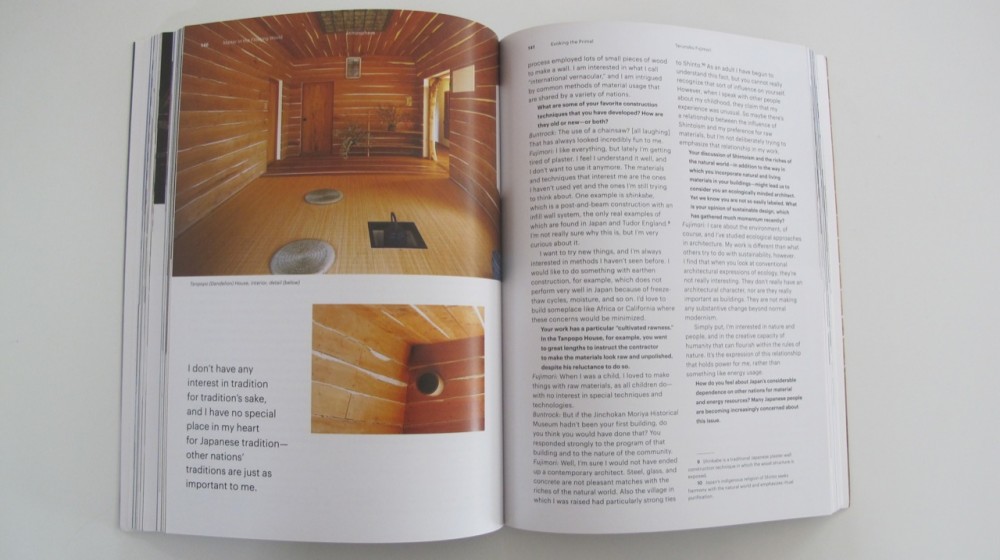
Matter in the Floating World

Matter in the Floating World

[photos courtesy arch daily]

also visit Matter in the Floating World Website
© TransstudioPrinceton Architectural Press
Pages: 256 | ISBN-10: 1568989962

The book is available at Amazon

Global PechaKucha Night | New York


click to enlarge

This Saturday (April 16) is Global PechaKucha Night, in which many of the 400 PechaKucha cities around the world will come together and hold events, broadcasting out to the world and Japan over multiple Ustreams.

I will be speaking at the New York event so if you are nearby come out to support Japan (and to say hi!)

*Update:
This event has reached full capacity! If you RSVP’d come early to get in. If not, you can view it on Ustream! Viewing also taking place at Wood Auditorium @Avery Hall of Columbia University!

Date: Sat, APRIL 16, 2011
Time: 7-9pm
Location: TOTO Gallery (in SOHO)
25 Mercer St.
New York, NY 10013

Please join us on April 16 and be a part of Global PechaKucha Day – Inspire Japan. Let’s all come together and show Japan that the creative world is thinking of them, that all is not lost, and that it is possible to stand up and rebuild, even in villages and towns which have been completely destroyed. With creativity and passion, anything is possible.

Isn’t this rad? SET Japan designed this beautiful (and functional) QR code that points to the Global PechaKucha Day – Inspire Japan site.

DIY: “Kokedama”

Kokedama

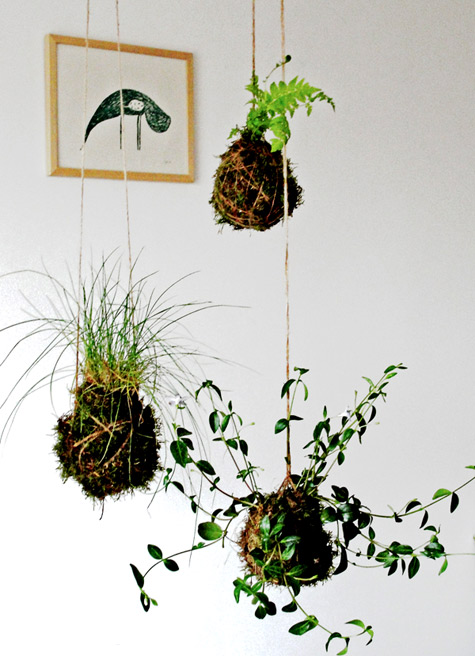
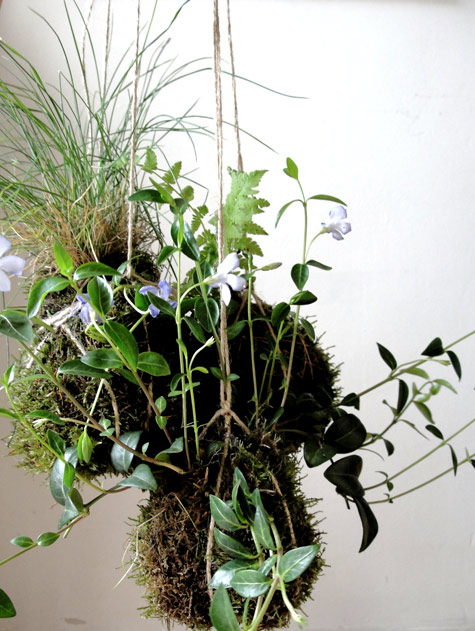
Spring is here! While I don’t have a green thumb, I love having plants and flowers around the house. Kokedama, literally meaning “moss ball,” is a type of bonsai – traditionally a little garden that fits in a shallow flower pot.

I found these instructions by Netherlands-based designer and all-around super-creative Aura Scaringi via Design*Sponge to be simple, relatively easy to maintain and stylish way to add greenery inside or outside!

*I haven’t done my own yet but when I do, I plan to repost some updates!

Materials
– a tiny plant; moss can’t stand direct sunlight, so choose a shadow-loving plant.
– a 7:3 ratio of peat soil and akedama, or bonsai soil
– dry sphagnum moss (you can buy a whole bag at most plant shops)
– scissors
– cotton thread
– nice packing string like twine, hemp or sisal.
– gloves. Yes, it WILL get messy.
– a jar of water
– moss, which you can either buy in a large box or pick yourself in the woods

Instructions
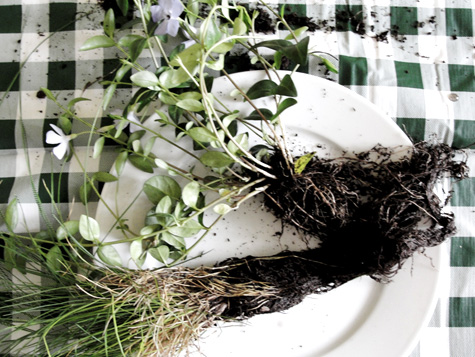
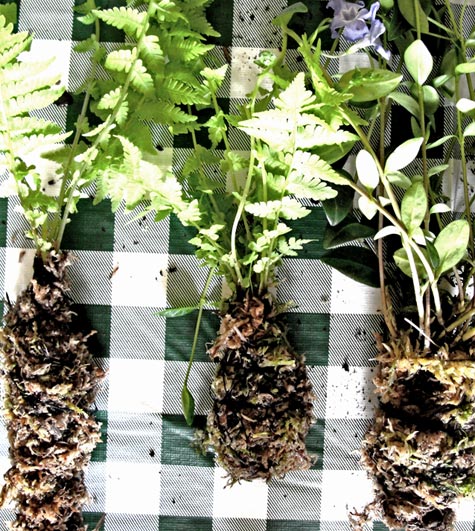
1. Remove as much soil as possible from your tiny plant so that its roots are exposed. Be very thorough but gentle!

kokedama step1

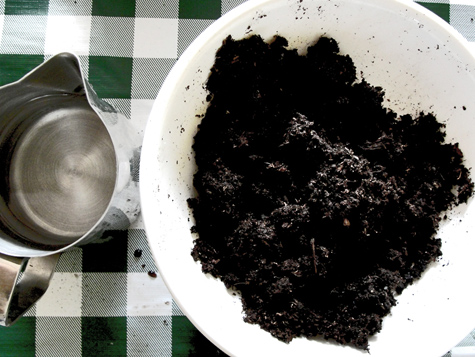
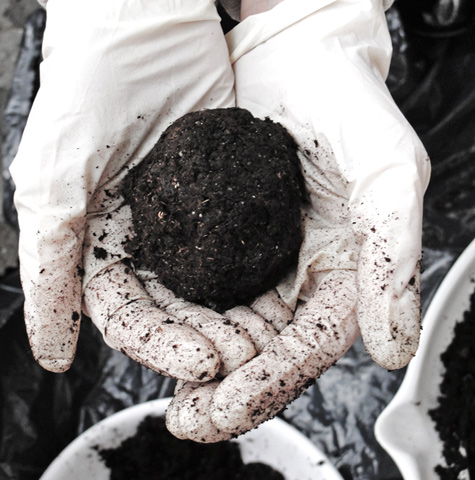
2. Mix your peat and akedama soil together. You know the consistency is right when you are able to make a small ball from the earth without it breaking apart.

kokedama step2

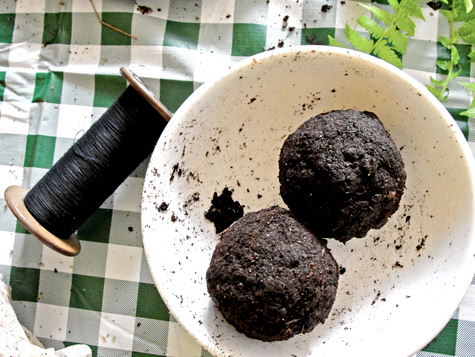
3. Now that your soil is mixed, start shaping it into a small, orange-sized ball. Use a little bit of water if needed. Think clay or pizza dough.

kokedama step3

4. Make sure each ball has enough room to accommodate the roots of your plant.

kokedama step4

5. Take a bunch of dry sphagnum moss and wrap it carefully around the roots, making a circular and compact shape. Then tie the cotton string around it several times. This will eventually dissolve.

kokedama step5

6. Make a small hole in your soil ball, and gently press the plant inside it. Be careful to “close” the shape back to a sphere

kokedama step6

7. Now it’s time for the fun part: take small sheets of moss (any kind of moss) and press them firmly into the soil. Don’t leave any open spaces. Wrap the twine string around the ball as if you are packing a present, and leave the sides as long as needed.

8. Choose a nice, shady place, install a hook and hang your wonderful planet of moss.

kokedama step7

9. YOU’RE DONE!

{Editor’s Note:  To maintain, water the kokedama with a mist spray bottle once a day. Try to do this early in the morning, to mimic the ‘dew’ effect. }

[via Design*Sponge]

LWLies X Japanese Cinema Print

Little White Lies, a UK-based blog and bimonthly magazine dedicated to cinema, has designed their own special edition print to help raise money for the Japan relief efforts. Sticking to what they know best, LWLies creative director Paul Willoughby illustrated and designed the print featuring characters from 21 iconic Japanese films.

From Yasujirô Ozu’s classic Tokyo Story to several decades spanning J-Horror hits such as RinguAudition and House, right through to the stars of Studio Ghibli in Spirited Away and other anime gems like Perfect Blue, the print has been designed to capture the beauty and creativity in Japanese film.

Although the beautiful print is already sold out, we can still participate in our own little guessing game. Cane you name all 21 films? Scroll down to the bottom of their post for the answers!

Update: Due to overwhelming demand they are making available another 50 prints as a second edition.


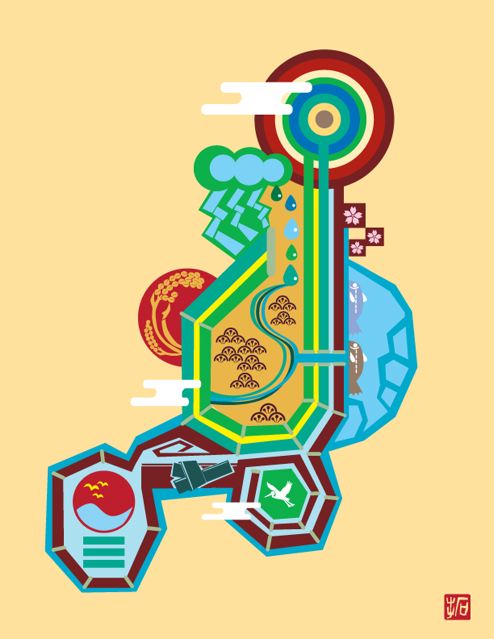
Japan Affluence Circulation System by Seitaku Aoyama


Seitaku “Tak” Aoyama, Co-founder and in-house designer of Studio Aiuto, has created this piece out of his emotions watching the situation in Japan.

I was inspired to create this piece when I was struggling with my emotions watching the NHK news featuring the nuclear plant cooling system, worrying about my family and friends in Japan. This piece represents the “Japan Affluency Circulation System.”
I hope and pray that lives of people in Japan will be affluent as soon as possible and safe without worries. This piece’s proactive Japanese statement proclaims, “Let’s pull through(Ganbaru)” instead of the more common “Pull through (Ganbare).”

We love Tak’s work and his unique style where he overlays his own Japanese perspective with the indigenous culture of Leucadia, a tiny coastal town in San Diego where he is based.

Bikes for Japan

We’ve featured numerous ways you can help Japan in this time of dire need. But if books, food, music, tables, shelter, bikinis or art is not your thing, don’t worry; the internet has something for everybody! Bikes for Japan is a project by Craig Mod and Henry Osborne, who are collecting donations to help send bicycles to the thousands of people in the Tohoku region.

The funds will actually go towards supporting Daiki Mochizuki, who owns a bicycle repair shop. Daiki is not only collecting bikes but he is also fixing old bikes and making them usable once again. The team has already trucked 60-plus bikes up to the region but they need more! If you would like to donate, you can do so here. If you are in Japan and would like to help, get in touch because there are numerous ways to help including storing bikes and coordinating pick-up efforts.

Commonplace objects such as bicycles are often taken for granted but they have the potential for huge impact. Not only do they provide a sense of normalcy to a population who has lost every sense of the word, they also allow for expansion of transportation. And it goes without saying, but one of the major advantages of the bicycle is that it doesn’t require fuel – something that has always been, and continues to be, scarce.

2:46: Aftershocks | Stories from the Japan Earthquake

quakebook

More commonly referred to on twitter as #Quakebook, 2:46: Aftershocks: Stories from the Japan Earthquake has just gone on sale. And within hours the downloadable book had been catapulted to #7 (and climbing) on Amazon’s bestsellers in the Non-fiction category.

The crowd-sourced book came together under the wings of a British teacher living in Abiko, Chiba just Northeast of Tokyo who blogs under the pseudonym Our Man In Abiko. The 98-page book was completed in just 9 days after the original proposal on twitter.

At its core, the book is a documentation of the raw, unpolished reactions of those – both in Japan and abroad – who bared witness to the awe-inspiring forces of nature that left so many, at best, on their knees, at worst, homeless and perhaps lifeless. But it’s also a display of how people increasingly turn to the Internet – in this case, Twitter – rather than the mass-media as a means of coping and making sense of tumultuous situations.

Contributors include a large cross-section of amateur writers as well as a few names whom many will recognize, such as Yoko Ono, William Gibson and Barry Eisler.

For this occasion Amazon has waived their fee so all proceeds will truly go the Japan Red Cross. Purchase your copy here.
*Note: you don’t have to own a kindle to download the book but you do have to download the FREE kindle app for whatever device you are using whether it’s an iPhone, Mac, PC, android or blackberry.

Yusuhara Wooden Bridge Museum

Yusuhara Wooden Bridge Museum

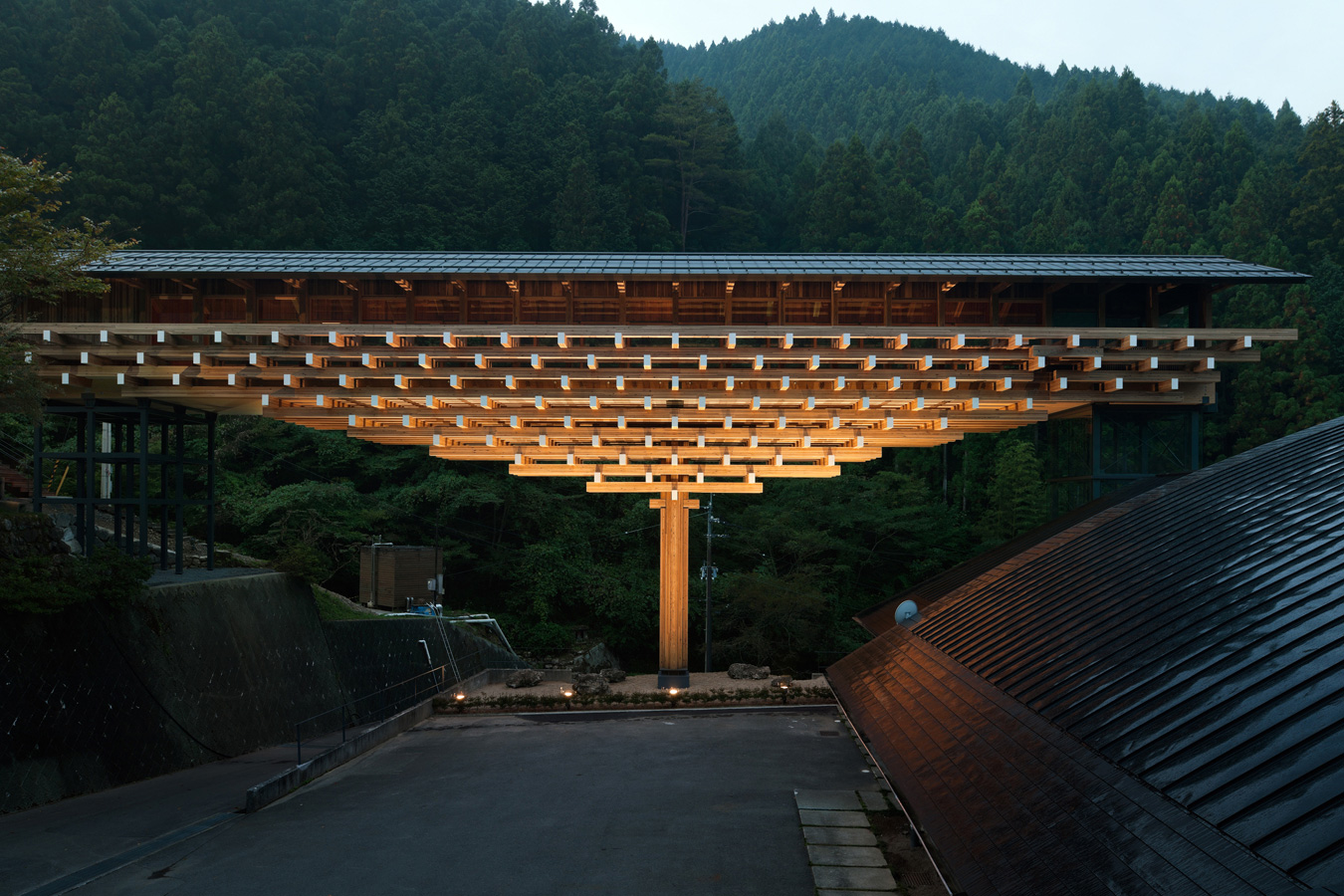
Located in Kochi Prefecture, Japan (Shikoku region in Southern Japan) is the Yusuhara Wooden Bridge Museum completed by Kengo Kuma & Associates in September 2010. The museum is a beautiful blend of classic Japanese and contemporary architecture in harmony with it’s natural wooded surroundings.

Yusuhara Wooden Bridge Museum

Yusuhara Wooden Bridge Museum

Yusuhara Wooden Bridge Museum

For a more in-depth look in to the museum watch this video: Yusuhara Wooden Bridge Museum

Recipes for Recovery

Another creative (and delicious) way to help donate for relief and recovery efforts of the earthquake that hit Japan a month ago.

KeepRecipes [ twitterwebsite ] has put together 21 Japanese inspired recipes in a cookbook with contributions from amateur and pro chefs including Iron Chef Masaharu Morimoto, Anita Lo, Eric Gower, Mayumi Nishimura and many more. The cookbook is available as a digital download for donations starting at $10, and KeepRecipes will donate 86 cents for every dollar of revenue to the American Red Cross.

Wakame Soup with Snow Peas and Ginger

Wakame Soup with Snow Peas and Ginger by Mayumi Nishimura

Braised Black Cod

Braised Black Cod by Chef Morimoto

“This unique cookbook includes 21 recipes including Japanese classics, fusions, haute cuisine and more. From Braised Black Cod to Miso Ramen to Japanese Tai Snapper Taco, you’ll get a great selection of recipes.” – KeepRecipes

Udon Salad with Seitan and Sweet Mustard Sauce

Udon Salad with Seitan and Sweet Mustard Sauce

Sea Bass with Green Lentils, Fresh Corn and Parsley

Sea Bass with Green Lentils, Fresh Corn and Parsley

Get your copy at KeepRecipes

Kazuyoshi Saito’s anti-nuclear cover song “It was always a lie”

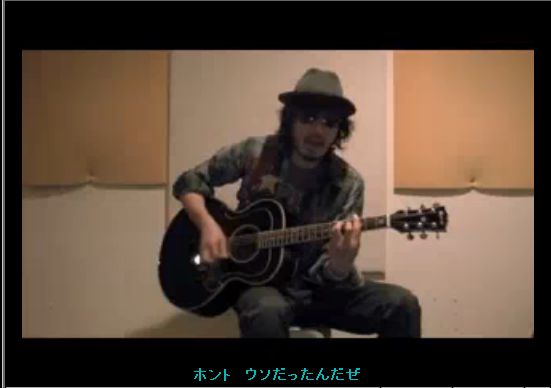
Making the rounds on the internet in Japan this weekend is singer-songwriter Kazuyoshi Saito, who has released “It was always a lie” (ずっとウソだった), a cover song based on his single from last year, “I always loved you” (ずっと好きだった).

The song is anything but ambiguous. With strong anti-nuclear and anti-government lyrics the singer even goes as far as to use the actual names of some of the utilities who have increasingly become the target of public anger. Partial lyrics translated by Spoon & Tamago:

If you walk this country there are 54 nuclear plants
all the text books and commercials told us they were safe
they tricked us and their excuse is, it was “unexpected”…

our government. how many victims will it take for you to realize?
nuclear power is safe. really, it was always a lie
toden, hokuden chuden, kyuden. they were always shit

My personal take on this is that I understand that the artist is angry and this is his reaction to a series of disastrous, terrible and tragic events. However – and I’ve expressed this on twitter (here and here) – I feel there are more constructive things we can do rather than blame the utilities and make reactive claims like banning nuclear energy. Every time there is a disaster or accident such as this one there are groups who jump to extreme conclusions. To denounce nuclear power is to denounce a lifestyle that all of us have actively participated in and benefited from. It’s a good song. I’ll give you that. But I ask you Mr. Saito: are you prepared to live without the electricity that has powered your large-scale performances, as well as this very video you deliver your message on?

With that said, it is nice to see some subversive voices emerging in a country that appeared to be cursed by eternal complacency and obedience.

The original song:

« Older posts Newer posts »

© 2026 Spoon & Tamago

Up ↑

Design by Bento Graphics