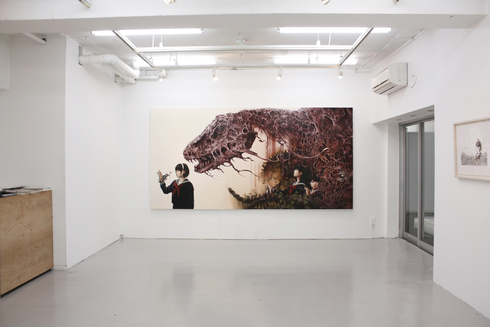
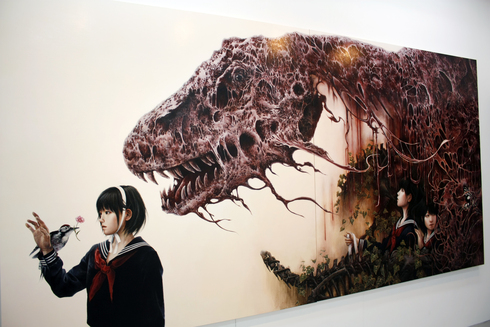
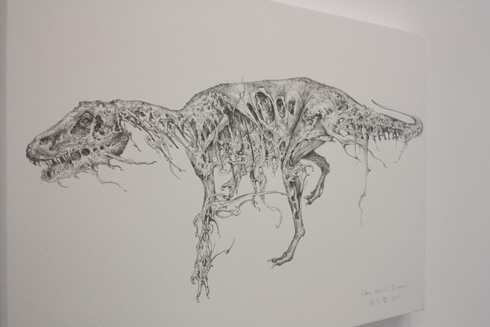
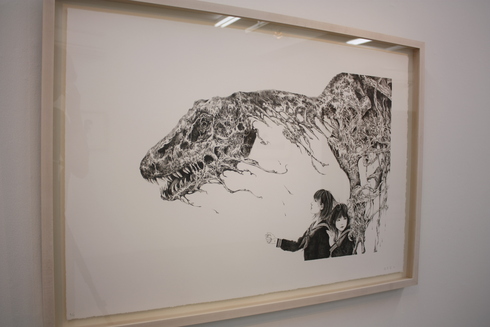
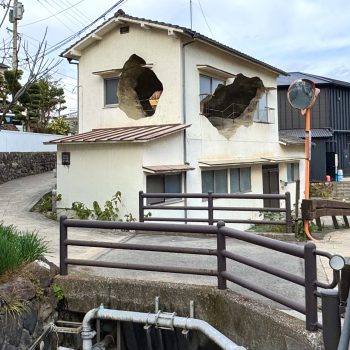
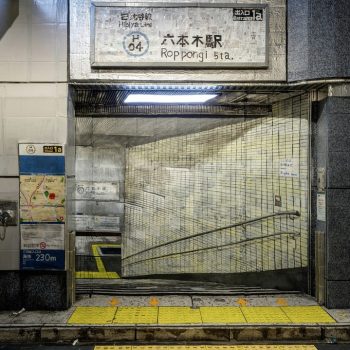
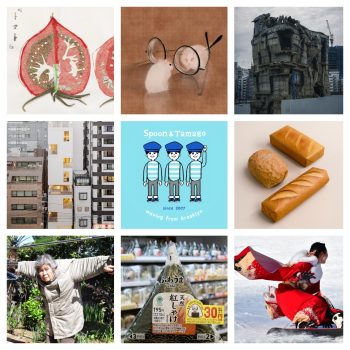
Woah. I just stumbled across the slightly destructive, slightly ephemeral work of artist Ai Shinohara (her website has been down for a while, and remains down as of the writing of this post). She recently wrapped up a solo show at Gallery MoMo in Roppongi titled, “from the cradle to the grave.” Here are some photos that have been uploaded from her show, which include one obvious tour de force, accompanied by a number of smaller drawings and lithographs. Her work reminds me of bit of the work of manga illustrator Yoshihiro Togashi, early in his career when his illustrations tended to be more dark and grotesque.
Ai Shinohara is a ’07 gradaute of Tama Art University. She has shown primarily in Japan, except for a showing at the now-defunct Mehr Gallery in New York.
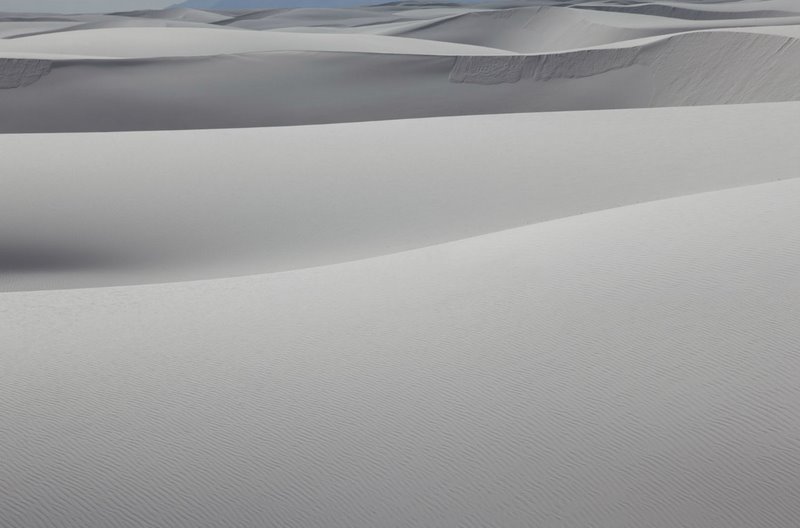
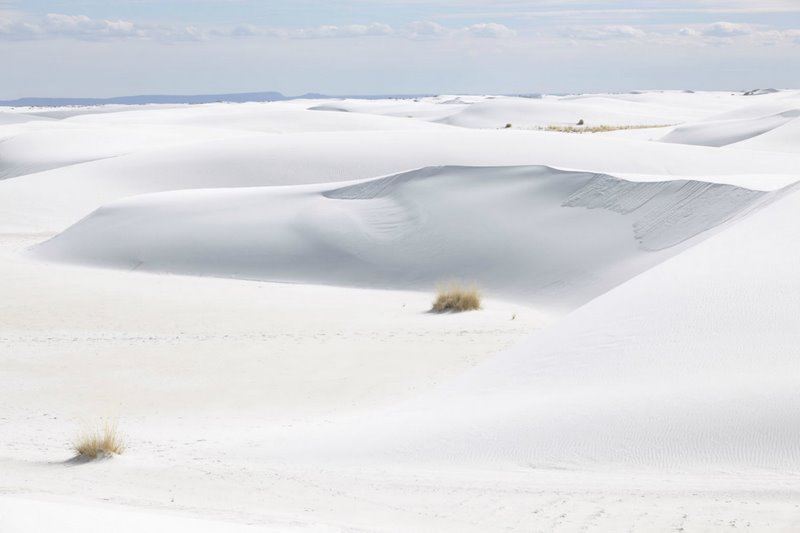
Photographer Shoji Uchida, known for his fantastical work in the commercial and advertising field, has stepped out of his comfort zone and released a series of landscape photos. Simply titled Whitebook, the new body of work comprises shots of desert sand dunes. At once mundane and repetitive, the series, to me, is all about the lines and forms created naturally in the wild. I love the sense of depth and the starkness of these photos. I wish I could frame on in my room!
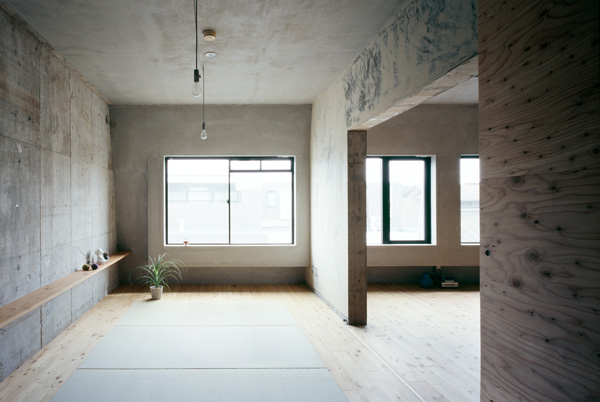
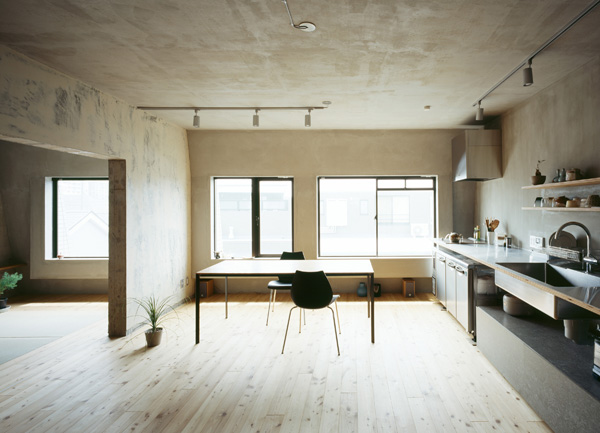
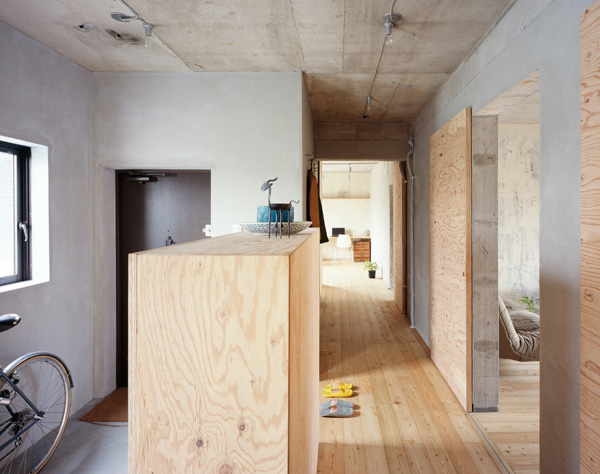
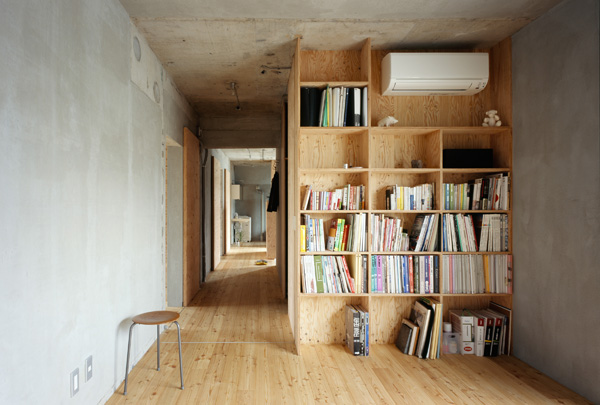
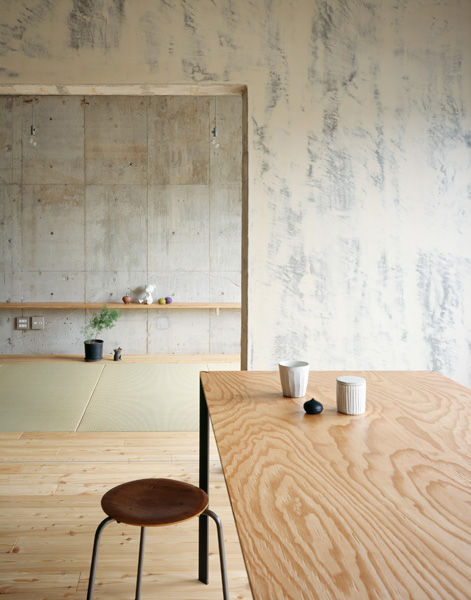
The working title of this post was, ‘what happens when an architect designs his own home?’ Naruse Inokuma Architects (the geniuses behind ie-tag) have collaborated with Hiroko Karibe Architects on the renovation of their own personal residence in Tokyo. Faced with a box frame structure without the ability to alter any of the walls, the architects, instead, relied on novel finishing techniques to revive their old space into one that is fresh and dynamic.
Specifically, the architects used spackling past, commonly reserved for touch-ups like filling cracks and small holes, as an accent on the mortar walls and then finished it with polyurethane finish. I love the results, which somehow manages to create a sweet spot between new and old.
I also really love the styling of this house – everything from the ceramics to those great chairs by the table. And I think it’s safe to say (at least in Japan’s architecture industry): exposed plywood is the new paint!
StillforJapan is a new campaign launching today at 1 PM in New York’s Times Square in front of the Spectracolor Board, envisioned by students and friends of VCU Brandcenter. An effort to encourage people to observe a “moment of stillness” and once again reflect and remember the devastating earthquake and tsunami that hit Northern Japan four months ago.
“[W]hile the rest of the world may have stopped running breaking news broadcasts and resumed life as normal, there are millions there who cannot.”
Even if you can’t make it to the public event, people can visit the StillforJapan website and observe their moment of stillness virtually. [more info from IHAVEANIDEA]
July 11, 2011 / Johnny / Comments Off on Japanese public service announcements supporting nuclear energy
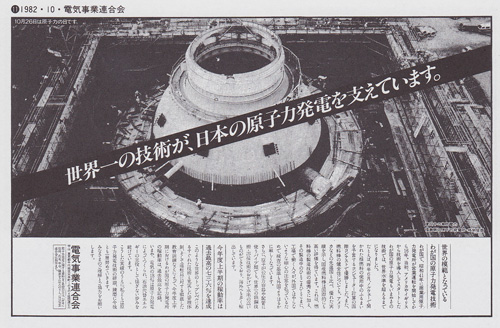
In the early 80s the Japanese government payed for a series of PSAs to run in Japanese newspapers and magazines. The objective: to drum up support for nuclear power in the wake of the Three Mile Island incident and during a time construction of new plants continued to be strong.
In a modern-day context the ads appear more as propaganda than anything else.
October 1982 | “the world’s most advanced technology is being used to support Japanese nuclear power”
March 1982 | “Above all else we are prioritizing safety in generating nuclear power”
October 1983 | “autumn evening – reading a book by the light of nuclear power” (top) “welcome to Japan. This winter your home will be warmed by nuclear-generated electricity” (bottom)
October 1986 | “Walking towards a brighter future, by nuclear energy”
June 1981 | We are learning from our mistakes from the Tsuraga Power Station incident and renewing our commitment to safety.
(In March 1981, drainage from unit 1 caused a release of radioactivity. The forty-day cover-up of a spill of 16 tons of radioactive primary cooling water was revealed only in April)
I wonder if soon we will see similar ads running again, except “Tsuruga” will be replaced by “Fukushima?”
It’s a well know fact that food and art often come hand-in-hand in Japan. However, nowhere is it more salient yet transient than in the character bentos, or more colloquially kyara-ben. The relatively recent phenomenon is often traced back to 2003 when Mari Miyazawa began a blog documenting the cute character bento lunches she had prepared.
Brooklyn-based writer and print designer Christopher Salyers has been documenting the movement, as well as actively participating in it, for quite some time now. For his latest project The Face Food Bento Book, Salyers has begun a kickstarter campaign to raise funds for a delicious new book. One of the incentives for a top pledge is bento made to resemble yourself! Love it!
Be sure to check out this video that was done for wired, as well as this segment shot for NHK.
huey would simply explode if he saw this spiderman bento!
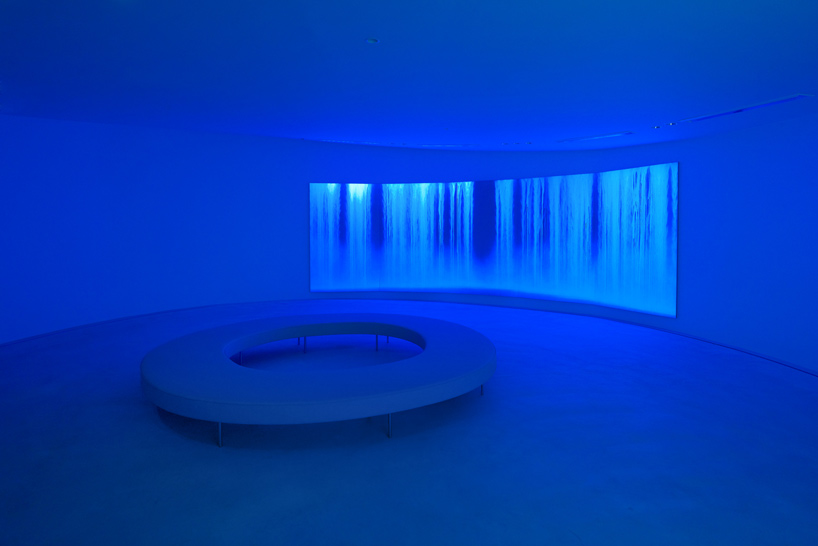
Hiroshi Senju became a famous artist in the same way Ernest Hemingway described a man going broke: “Two ways, gradually and then suddenly.” After being catapulted into fame in 1995 as the first Asian to win an award at the Venice Biennial, Senju went on to fulfill roles in various facets of the art community, including Art Director for the new Haneda Airport Terminal 2 (2004) and being named President of Kyoto University of Art and Design in 2007. More recently, Senju was asked to curate the Gucci 90th anniversary exhibition, which began on June 24th in Kyoto.
Hiroshi Senju, Waterfall (1996).
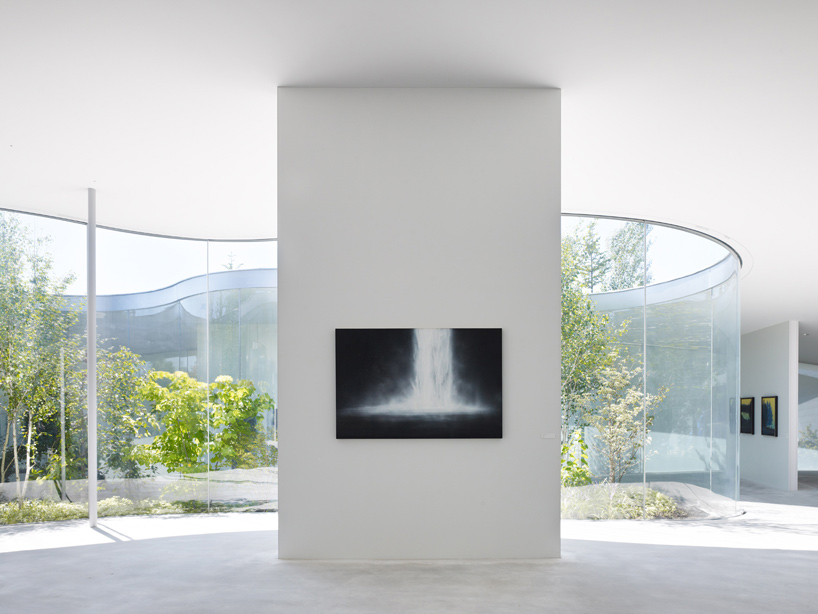
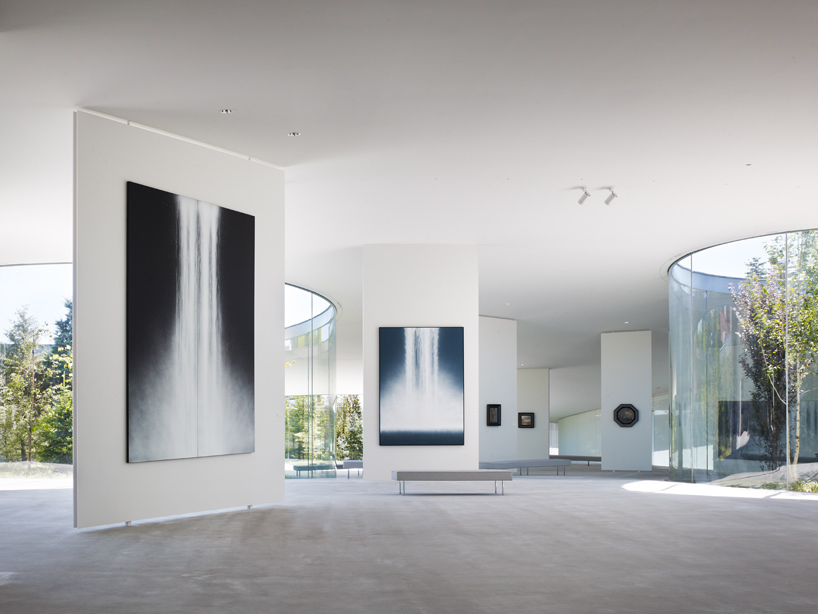
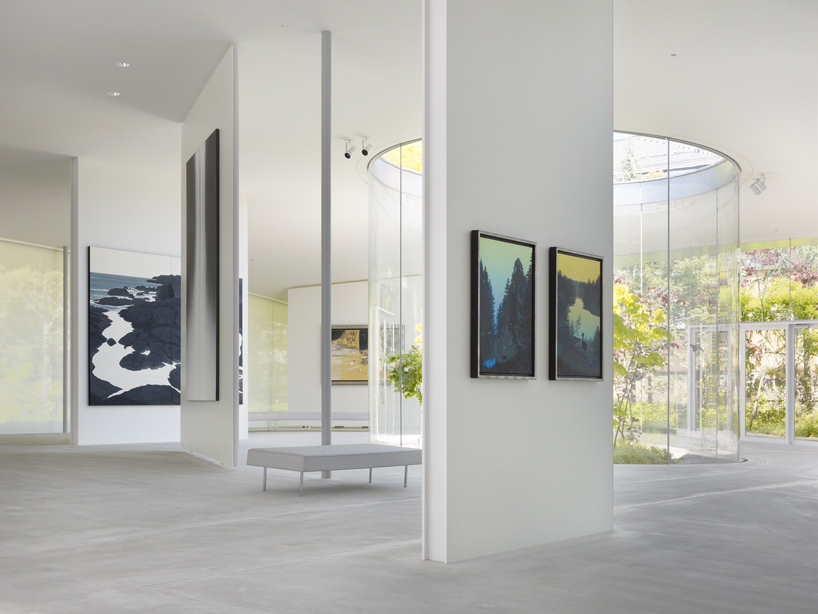
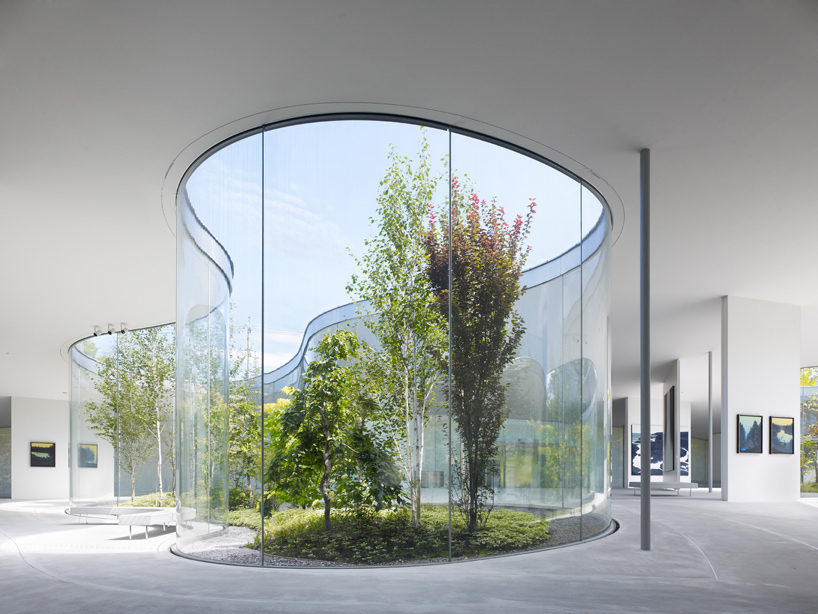
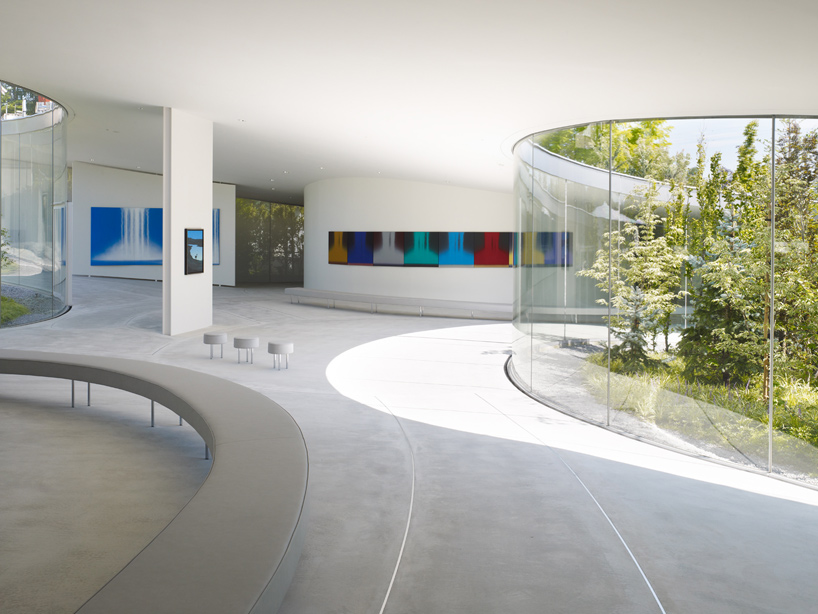
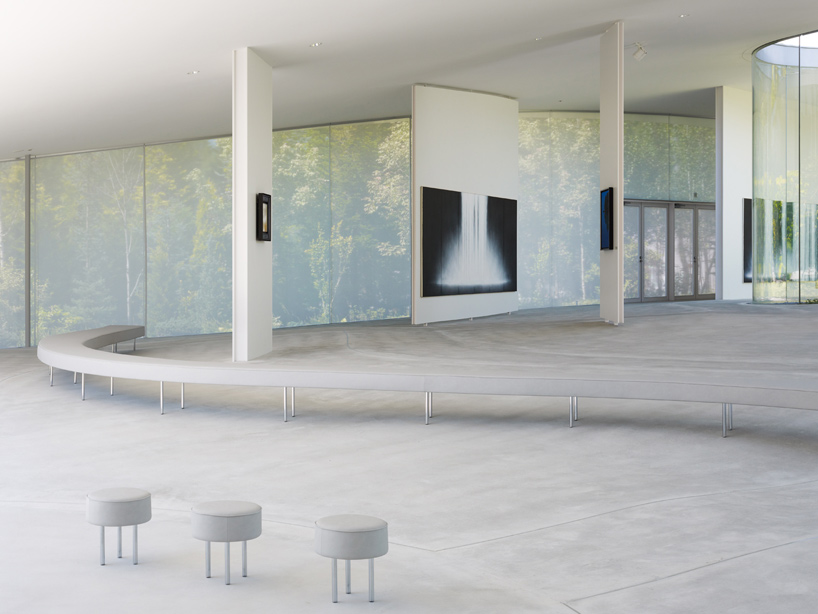
For fans of Hiroshi Senju, a new museum is about to open in Karuizawa – the Hamptons of Tokyo – that will be dedicated to the artist’s body of work, spanning the years of 1978 – 2011. With roughly 100 pieces on display, the artist hopes the museum will become a timeless structure that will live and breathe in conjunction with beautiful lush surroundings. And who better to implement his hopes than architect Ryue Nishizawa – one part of the duo SANAA – who has designed a stunningly beautiful open space with very few limitations to the flow of people, something that is akin strolling through the woods.
The museum is scheduled to open on October 10, 2011
————————————————— Hiroshi Senju Museum Karuizawa (Gmap)
Opening: 10.10.2011
Standard Hours: 9:30 – 17:00 (closed Tuesdays)
Summer (July – Sept) Hours: 9:30 – 18:00
Closed for the winter (Dec 26 – end of Feb)
General admission: 1200 yen | students: 800 yen
July 6, 2011 / Johnny / Comments Off on Miya Ando | stainless steel and sterling silver kimono
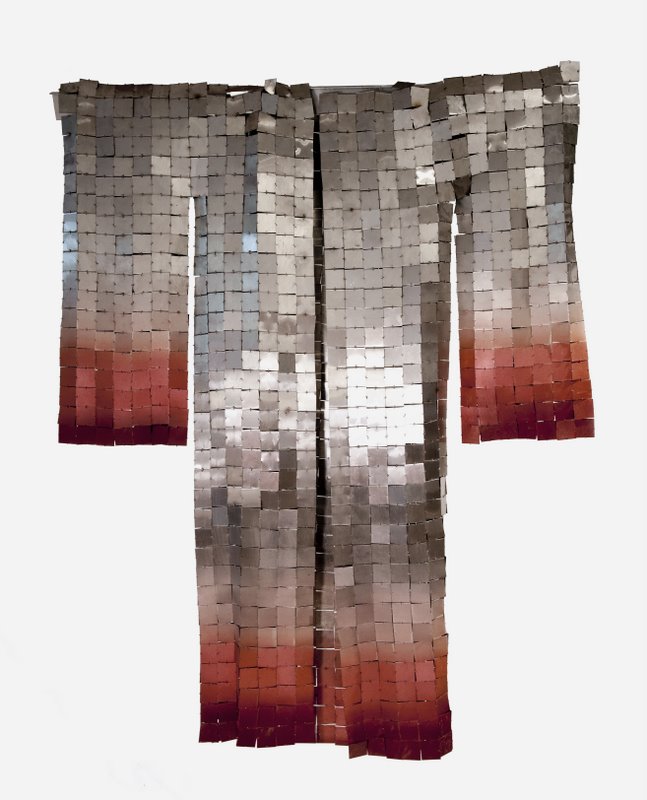
As part of an upcoming show at Sundaram Tagore Gallery in Chelsea, as well as a series of pieces investigating the traditional Japanese garment known as kimono, Miya Ando has hand-soldered over 4000 sterling silver rings and stainless steel plates to make a ‘Furisode‘ (long sleeve) kimono. Ando says she was inspired by a kimono that her grandmother made for her, which led to the creation of this unusual life-size replica.
Ando, in her mastery of steel – after all, she is a descendant of samurai-era Bizen sword makers – has somehow managed to maintain the beauty of a kimono while deviating so vastly from tradition. Typically, the furisode style, which is reserved primarily for unmarried women, are made from a single bolt of fabric, emphasizing continuity. They are known for being made from bright colors and bold patterns. With over 4000 plates that come together to form the stainless steel and sterling silver kimono, Ando’s piece couldn’t be more different. And yet it possesses the fluidity and gracefulness that defines the ceremonial attire. Fascinating!
July 5, 2011 / Johnny / Comments Off on Split Machiya by Atelier Bow Wow
photos by Manuel Oka | click to enlarge
Split Machiya is the latest work by Atelier Bow-Wow — the Tokyo architecture studio led by Yoshiharu Tsukamoto and Momoyo Kajima. Situated on a humorously small plot of land, the home appears to have been squashed and compressed between the 2 houses that sandwich it.
To overcome the constraints placed on the land, the architects designed 2 structures that mirror each other, separated only by a central courtyard. In addition, the residences feature split level designs aimed at generating a visually open and integrated living environment.
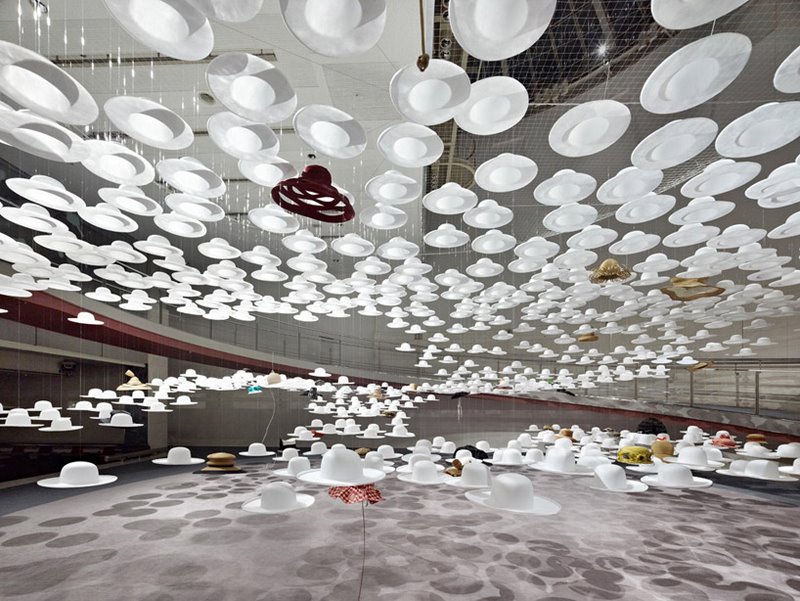
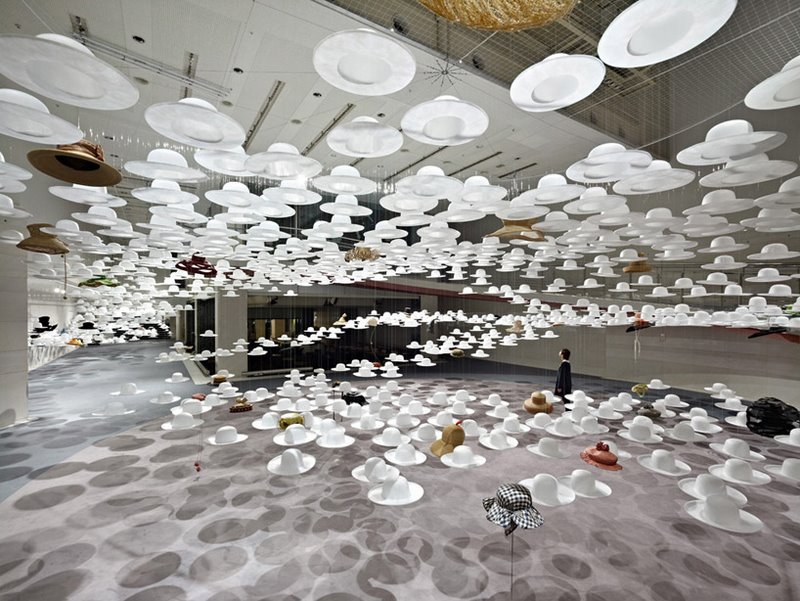
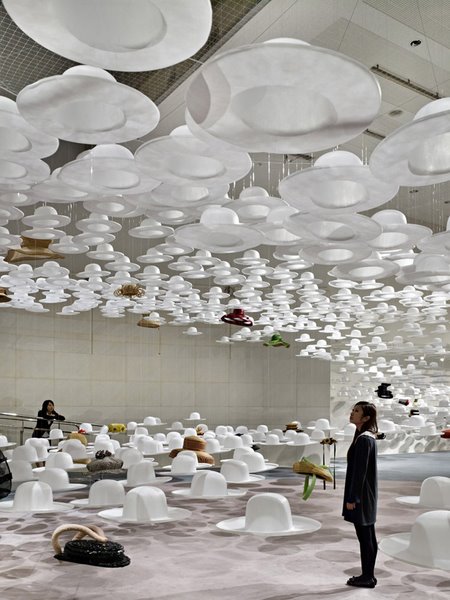
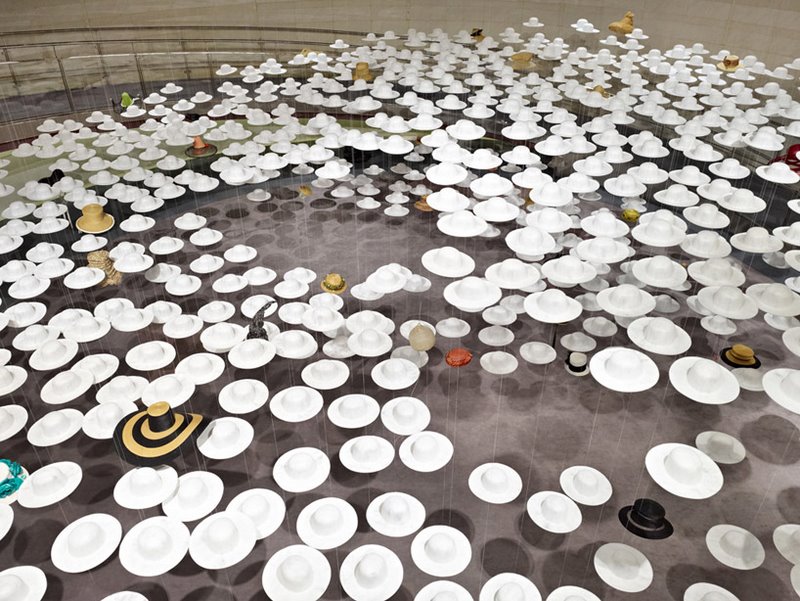
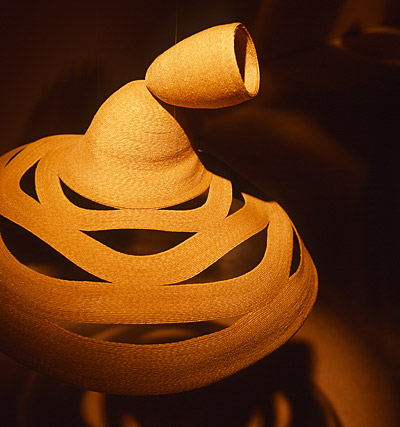
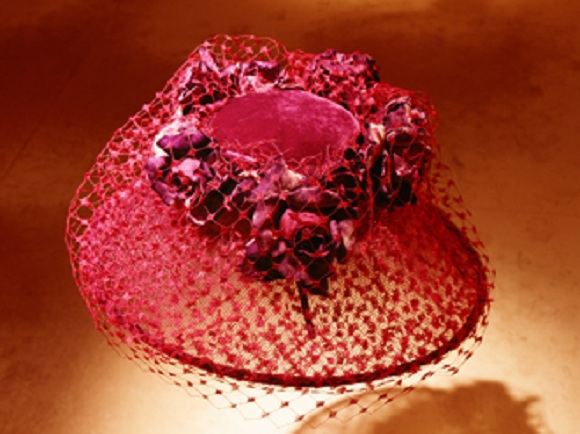
The last time I got excited about a hat exhibition was… well ok, not everything has a precedence. But when globally-acclaimed Japanese design studio Nendo are brought in to design a retrospective celebrating the 70-year career of Akio Hirata, one of Japan’s foremost avant-garde hat designers, sparks – or better yet, hats – are sure to fly.
Born in 1925, Hirata immersed himself in hat design at the tender age of 14. In 1962 he travelled to Paris to serve as apprentice to Jean Barthet, one of France’s most prominent milliners with a clientele that included Grace Kelly and Sophia Loren. Upon returning to Japan he established Haute Mode Hirata, and went on to design hats for the likes of Issey Miyake, Comme des Garçons and Yohji Yamamoto.
In response to a request from Rei Kawakubo (Comme des Garçons) to design a hat that looks like “it had been left unused in someone’s dresser,” Hirata once famously created a hat adorned with crushed flowers. Much in the same way that Hirata was known for grabbing the creative reins, Nendo, in an unexpected turn of events, decided to flood the gallery space with roughly 4000 “ghost hats” that define the flow of activity. But more importantly, they serves as an antithesis to the roughly 130 original Hirata hats – both new and old – that span the designer’s career. Rather than drowning out Hirata’s work, the calculated move serves as a point of contrast, differentiating the fine craftsmanship and artistic sensibility that has defined Hirata as an artist.
The show takes place at Spiral, a multi-purpose cultural center that was included in our Tokyo Design Guide. If you thought you missed the exhibition, you’re in luck because it’s been extended. Originally scheduled to close on June 26th, overwhelming popularity prompted organizers to extend the show through this weekend.
Hirata’s hats | click to enlarge
———————————————————-
Hirata no Boshi (Hirata’s hats) Spiral – 1F (Gmap)
06.15.2011 – 07.03
11:00 – 20:00
FREE