Page 227 of 406

Stuffed Cat Necklace is an Homage to Mischievous Cats Everywhere

LUC-2G59-612-B

We used to have a cat named Tabi who would jump onto the counter and eat all the meat out of our kids lunch boxes before they brought them to school. If the lid was shut Tabi would effectively empty the contents by knocking the boxes off the counter. We had a love-hate relationship that eventually led to him being adopted by my brother, but I digress.

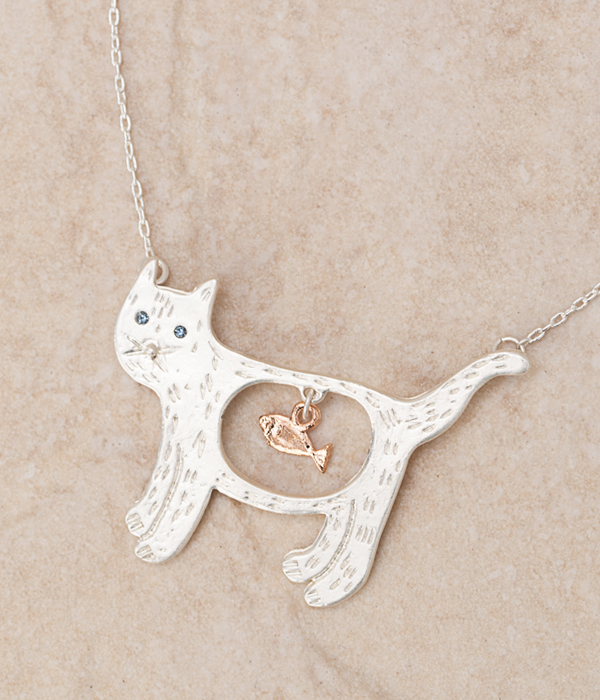
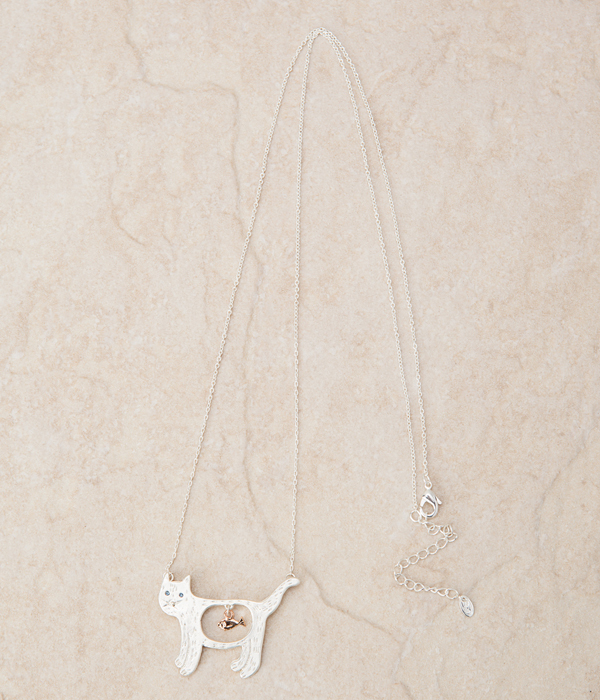
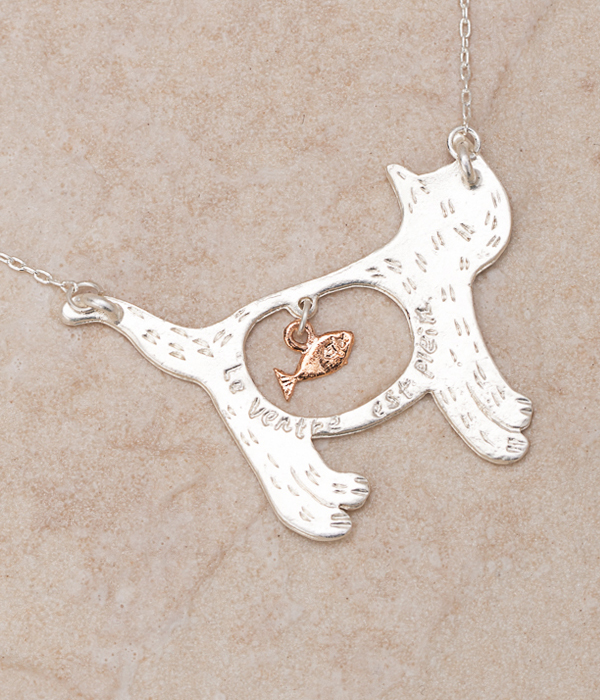
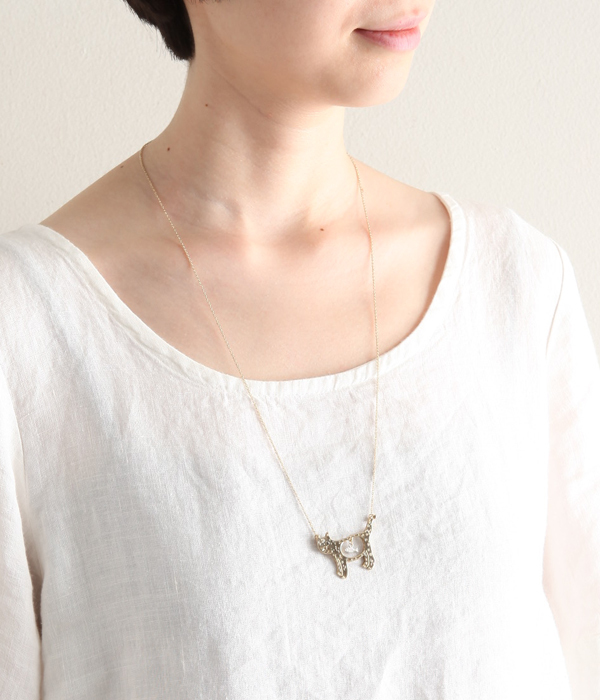
Capturing the wonderfully mischievous nature of cats everywhere is Luccica, a Japanese jewelry brand known for their quirky, whimsical jewelry. One of their latest designs is this cat necklace titled “Stuffed Cat Necklace.”

LUC-2G59-612-B-02LUC-2G59-612-B-01

LUC-2G59-612-A-04

source: matomeno | Luccica

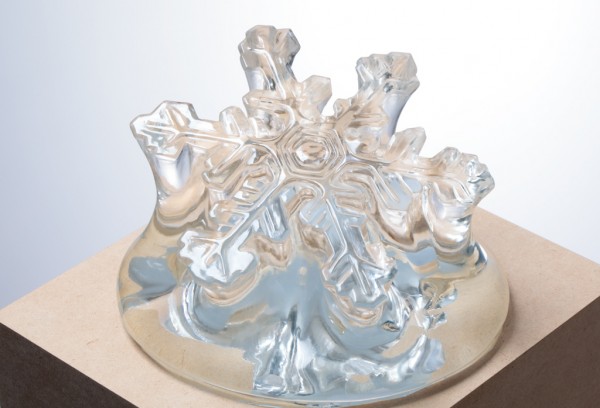
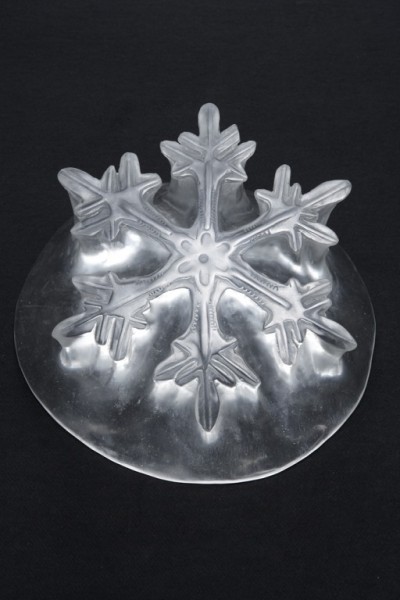
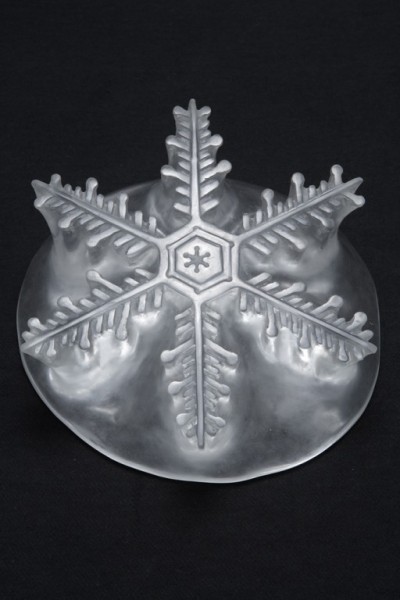
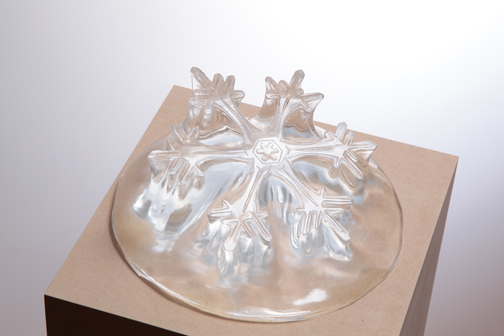
Cool down with Yutaka Sone’s crystal carved snowflakes

yutaka sone crystal snowflake (2)Images courtesy David Zwirner Gallery

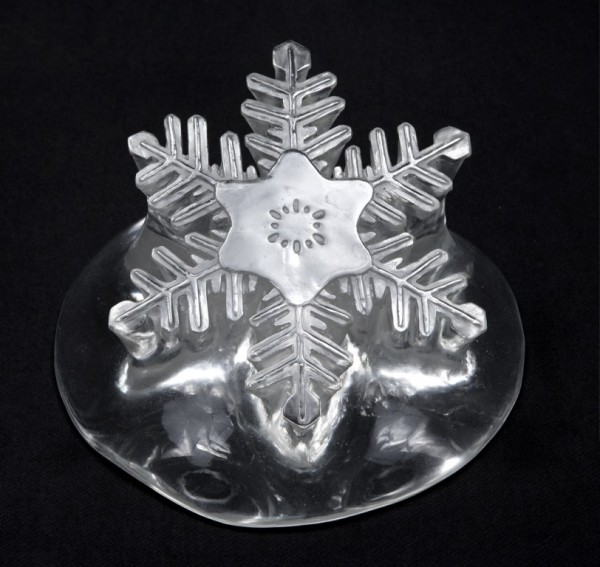
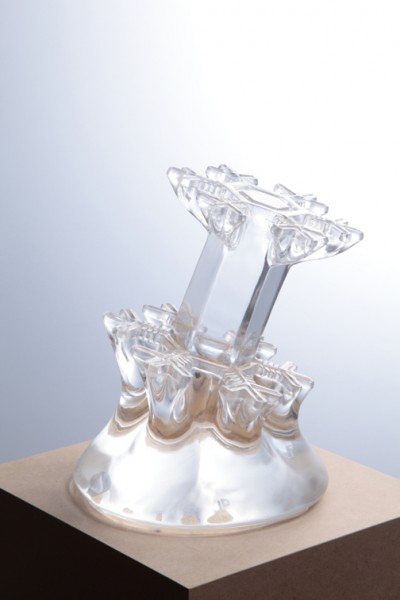
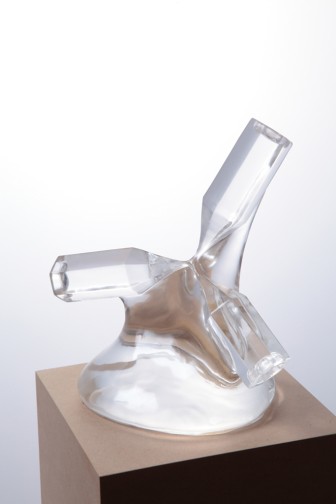
It’s going to be a hot week in New York – brutally hot. And our friends in Tokyo aren’t seeing much relief either with temperatures rising to between 97 and 100 degrees. So I suggest we start off our week by cooling off (in a state of mind, at least) by taking in the crystal-carved snowflakes by Yutaka Sone. Since the mid-2000s the 48-year old Japanese artist and sculptor has been carving massive snowflakes out of single blocks of crystal in an ongoing series titled “Every Snowflake has a Different Shape.”

After microscopically observing a large number of snowflakes and confirming that, indeed, no snowflake is identical, Sone created his own snowflakes based on his own imagination. In his flakes lie the possibility that they may someday appear in future snowfall. If they do, I suppose we can only hope that it will be in the middle of July.

yutaka sone crystal snowflake (3)yutaka sone crystal snowflake (4)

If you’ll recall, two years ago Sone carved an impressive map of Manhattan out of Marble.

yutaka sone crystal snowflake (5)

yutaka sone crystal snowflake (6)yutaka sone crystal snowflake (1)

yutaka sone crystal snowflake (7)

Dressing up to dress down | Yuji Susaki’s Cosplay made in Japan

susaki_press

Cosplay is somewhat of an anomaly – 2 borrowed foreign words (costume and play) used to describe something predominantly Japanese. If you don’t know, cosplay refers to the act of dressing up as a fictional character. It’s often practiced in groups  and its influence stretches far beyond Japan (you know this if you’ve ever been to any Japanese festival anywhere outside Japan).

Next month photographer Yuji Susaki‘s tantalizing photos will take center stage in a solo exhibition at Emon Photo Gallery in Tokyo. Susaki, who has spent the last fifteen years examining the relationship between eroticism and disguising oneself, describes cosplayers as novel, yet somewhat pensive. Mischievous yet unique and charming. “His models are sparsely adorned with only the key elements of each persona to create a “less is more” interpretation of cosplay that seeks to provoke an evolution of Japanese fetishism itself,” says the gallery.

susaki 003

One of the most popular manifestations of cosplay in Japan is the maid, and subsequent maid cafes in which customers are served food and drinks by girls dressed as maids. Critical theorist Azuma Hiroki describes the phenomenon as an “animalization” of the body. But you don’t need to have a degree in critical theory to understand Susaki’s work, which cuts through jargon and focuses on the essence of cosplay.

“The true enjoyment of maid cafes,” said Kiyoshi Hayakawa, founder of the Hayakawa publishing house, “is seeing the fictional characters of manga and anime come to real life.”

“COSPLAY made in Japan” is on display from August 24 – September 14, 2013.

susaki 005

susaki 002

cosplay1

source: submission

Studio Visit With Artist Shinji Murakami

Hi there! You’ve landed on a members-only article. If you’re interested, Consider supporting Spoon & Tamago by becoming a member.

You can read all about our membership program here. Thanks!

Soft Mocomoco Sculptures by Natsuko Hattori

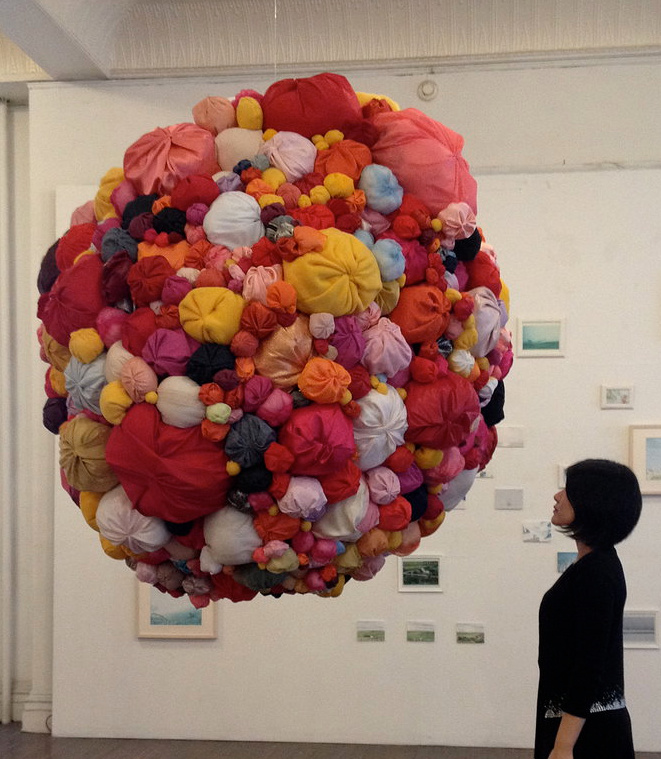
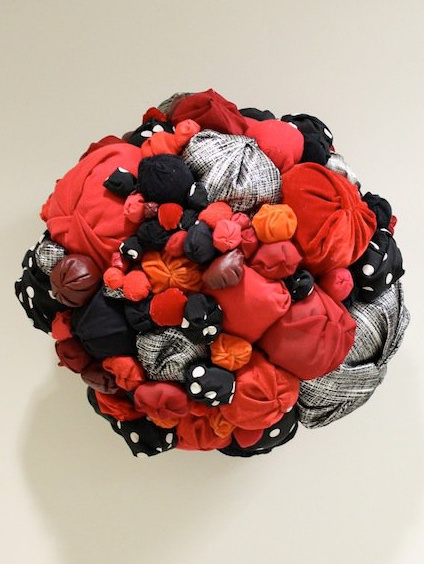
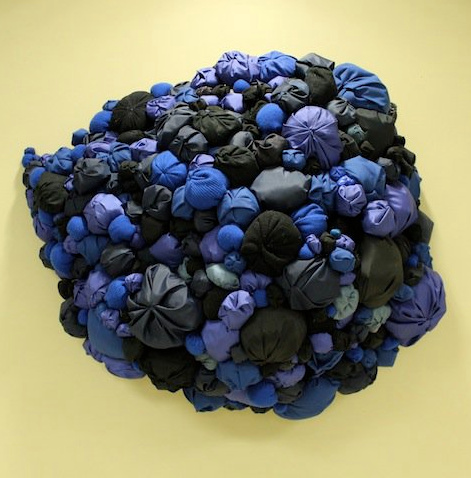
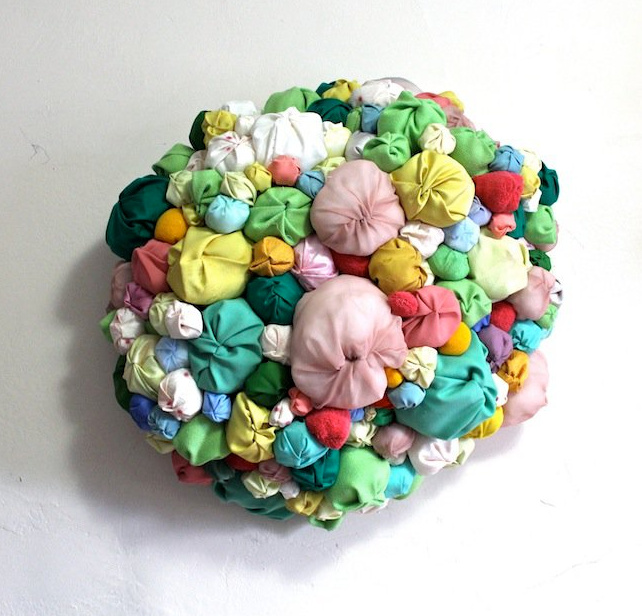
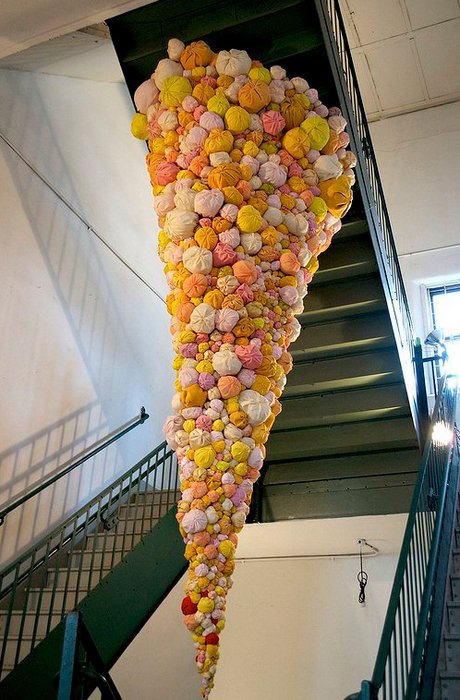
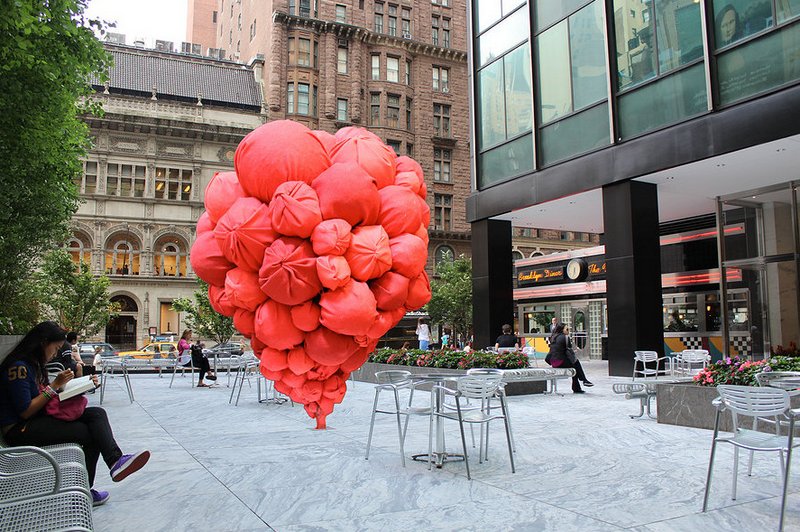
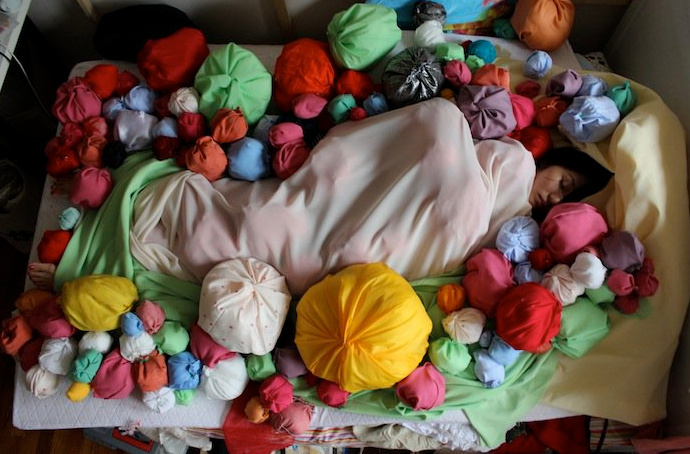
Mokomoko (もこもこ) is a haptic onomatopoeia – one of my favorites, in fact – that conjures up the soft, huggable qualities of billowing clouds or fluffy sheep. Don’t confuse it with mokumoku, which has similar connotations but refers specifically to movement, while the latter is grounded in the realm of motionless. It’s an important distinction to make when referring to New York-based Japanese artist Natsuko Hattori, who creates large, stationary sculptures from soft, huggable and colorful balls of fabric.

natsuko hattori (8)all images courtesy the artist

“Fabric is my medium of choice because people everywhere can relate more easily to this material, which conveys warmth, natural softness and the intimate human touch,” says Hattori.

And it’s the act of wrapping that is central to her sculptures. “The gesture of wrapping each round ball, is an act of transformation that converts pain, sadness and despair into positive energy, such as love or a prayer for comfort.”
natsuko hattori (7)

natsuko hattori (6)

natsuko hattori (4)

natsuko hattori (3)natsuko hattori (5)

natsuko hattori (2)

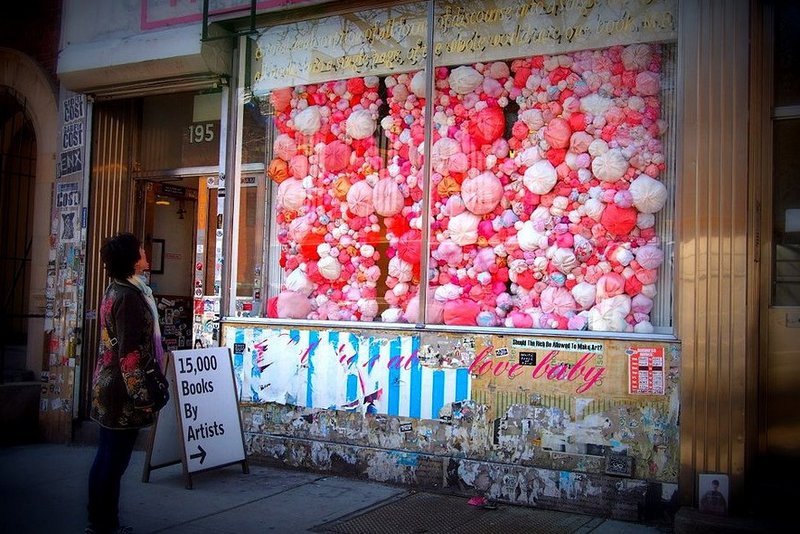
natsuko hattori (1)In a recent installation for Printed Matter, Hattori filled the storefront window with her balls of fabric in a piece titled “Spring (Haru).”

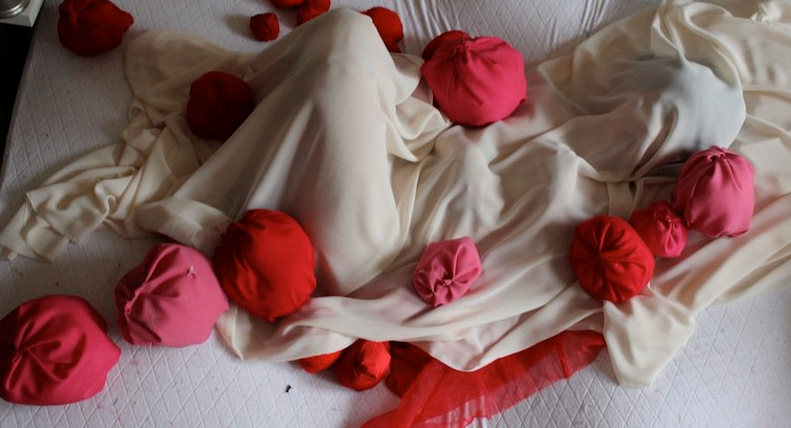
But for her recent work, Hattori has, in the truest sense, embraced the comforting qualities of her own art, working herself into her sculptures. In two pieces titled “Birth” and “Offering of flowers,” Hattori appears immersed in sensual fabric, surrounded by her balls of fabric. “My work conveys a sense of happiness,” explains Hattori, “and it celebrates the human spirit.”
natsuko hattori (9)

natsuko hattori (10)

rooftop living | Sou Fujimoto’s House K turns the roof into a terrace

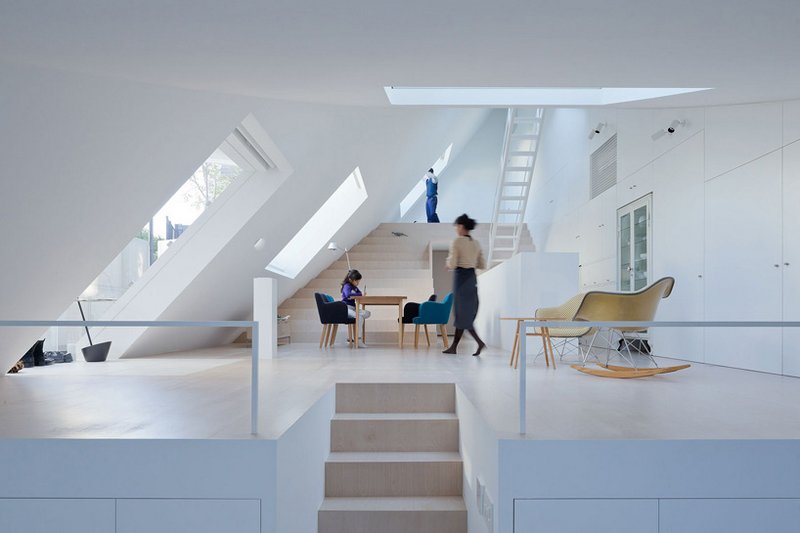
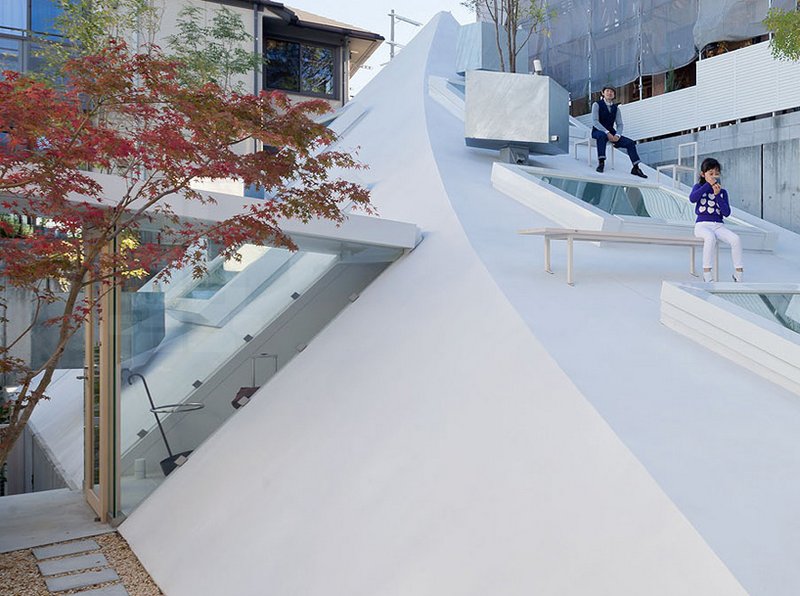
sou fujimoto house k (7)photos by Iwan Baan | click to enlarge

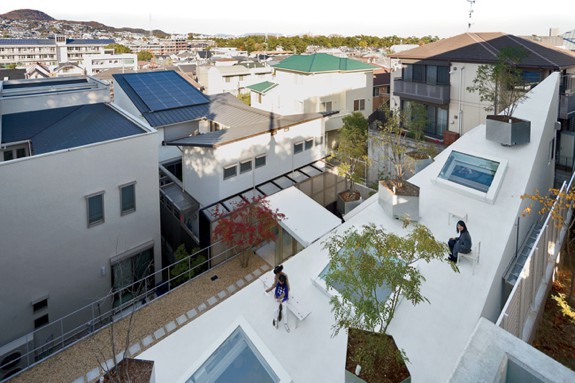
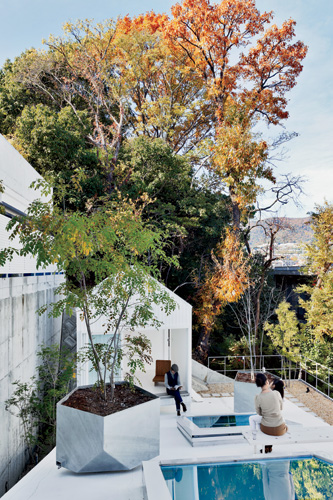
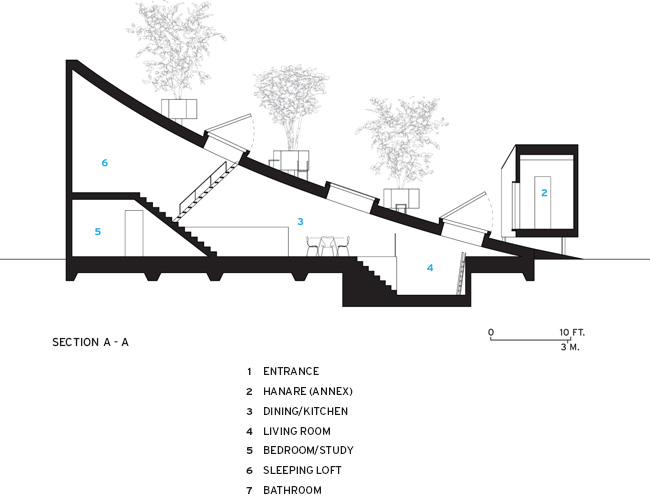
It appears to rise up from the land like a smooth mountain or, better yet, the pointed hull of a boat sticking its head out of the water. It’s a disorienting view, but one you quickly accept after learning that the architect is Sou Fujimoto, whose career has spanned numerous archetype-breaking houses with an emphasis on bringing the outdoors, in. This is House K, Fujimoto’s latest residence located in the city of Nishinomiya (Hyogo prefecture).

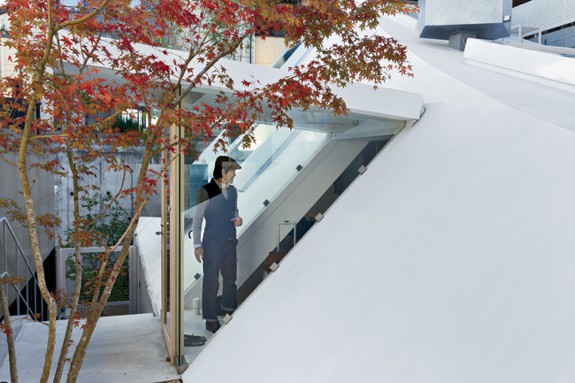
But the sleek, sloped roof is not just for show. It rises at an angle that allows for various interior volumes, but is also a gentle-enough incline to allow for benches and planters, effectively transforming it from roof to terrace. See more pictures over on designboom.

sou fujimoto house k (5)sou fujimoto house k (6)

sou fujimoto house k (4)

sou fujimoto house k (3)


sou fujimoto house k (plan)


Rasen Kaigan | Rieko Shiga’s Portrayal of an Isolated Japanese Village

shiga06_bgimages courtesy the artist

“Six years have passed since Lieko Shiga came to Miyagi Prefecture.” So begins our adventure into the photographer’s latest exhibition. After completing her highly acclaimed series “CANARY” in 2007, Shiga quietly ventured off into Kitakama, a remote part of Miyagi prefecture. Her goal was to not only photograph this isolated village – a population of about 320 – but to assimilate, converting from stranger to villager and in turn revealing the town’s hidden stories.

what one sees in Shiga’s works is not an auteur’s “answer” to telling the stories of Kitakama, but the revelation of Shiga’s ongoing engagement with the larger questions she asks herself: What is the nature of photography as a medium? And what is the nature of living and expressing oneself on land?

The fact that Shiga’s work was inclusive of the 3/11 earthquake and tsunami, rather than responsive to it, makes the photos all the more poignant and powerful. Shiga’s photographs – all 240 of them – were exhibited in a swirling pattern, allowing visitors to weave through them as they please. The exhibition was held at the Sendai Mediatheque, a structure designed by Toyo Ito and rendered symbolic when it withstood the earthquake.

shiga02

shiga01

shiga05

shiga03

shiga08 shiga04

shiga07

dim the lights | Spray Artist Tomoya Creates a New Galaxy in 3 Minutes

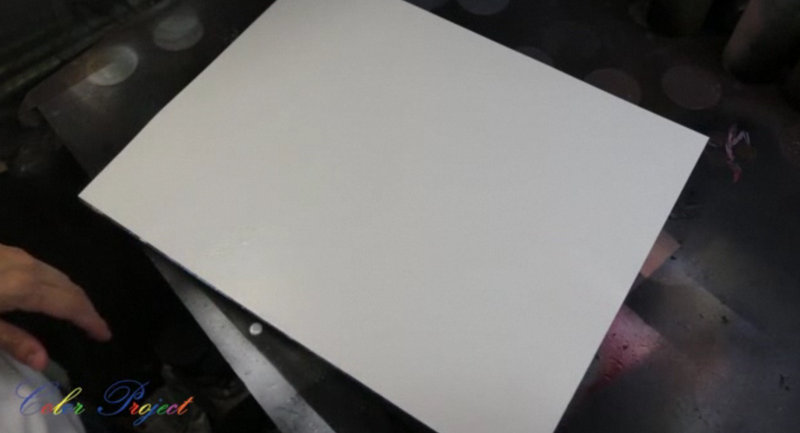
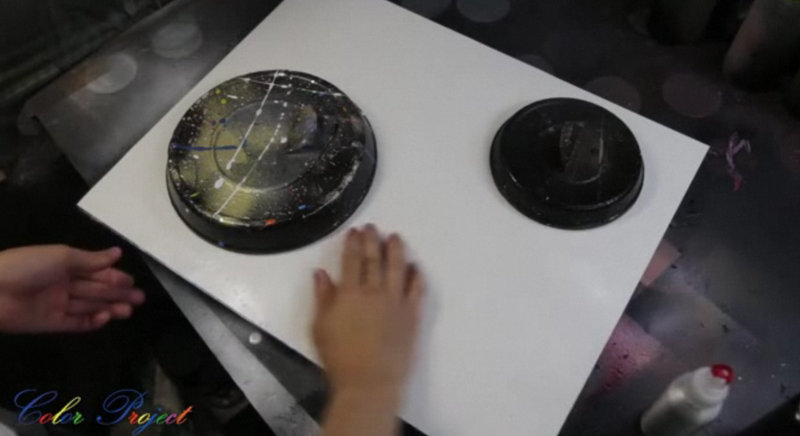
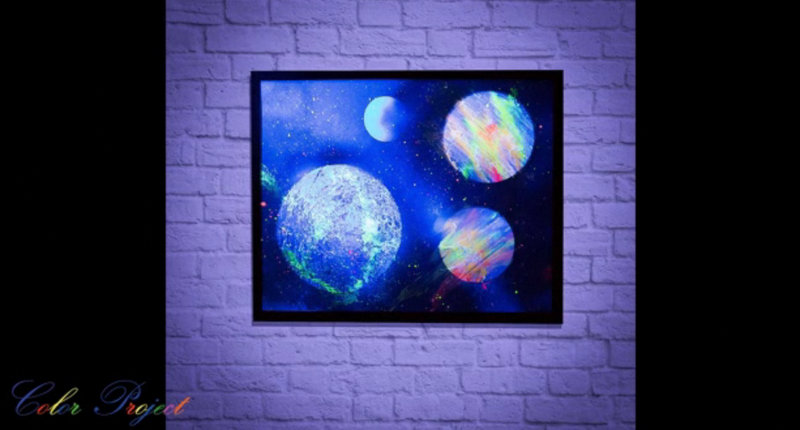
Move over God, we need to re-write the record books because 6 days is nothing compared to 3 minutes. Self-described spray artist Tomoya specializes in a form of performance spray paint art in which he hastily produces new creations in a matter of minutes. His latest work titled “Galaxy” was produced in just 3 minutes.

With a few sprays and a couple dabs of the fingers, Tomoya creates a mesmerizing landscape of a Galaxy that seems like it’s right out of a science fiction movie. “Galaxy” is especially meaningful because in Japan yesterday was the Tanabata star festival in which 2 lovers, Orihime and Hikoboshi (represented by the stars Vega and Altair) are allowed to meet only once a year on July 7th.

tomoya1

tomoya2

tomoya3

Tomoya’s lightning fast hand movements don’t even appear to be doing much. That is, of course, until the lights are dimmed, revealing the heavenly bodies.

tomoya4

Handmade wooden keyboards are customizable at a pop-up shop in Ginza

wireless keyboard in mapleall photos © Orée | click to enlarge

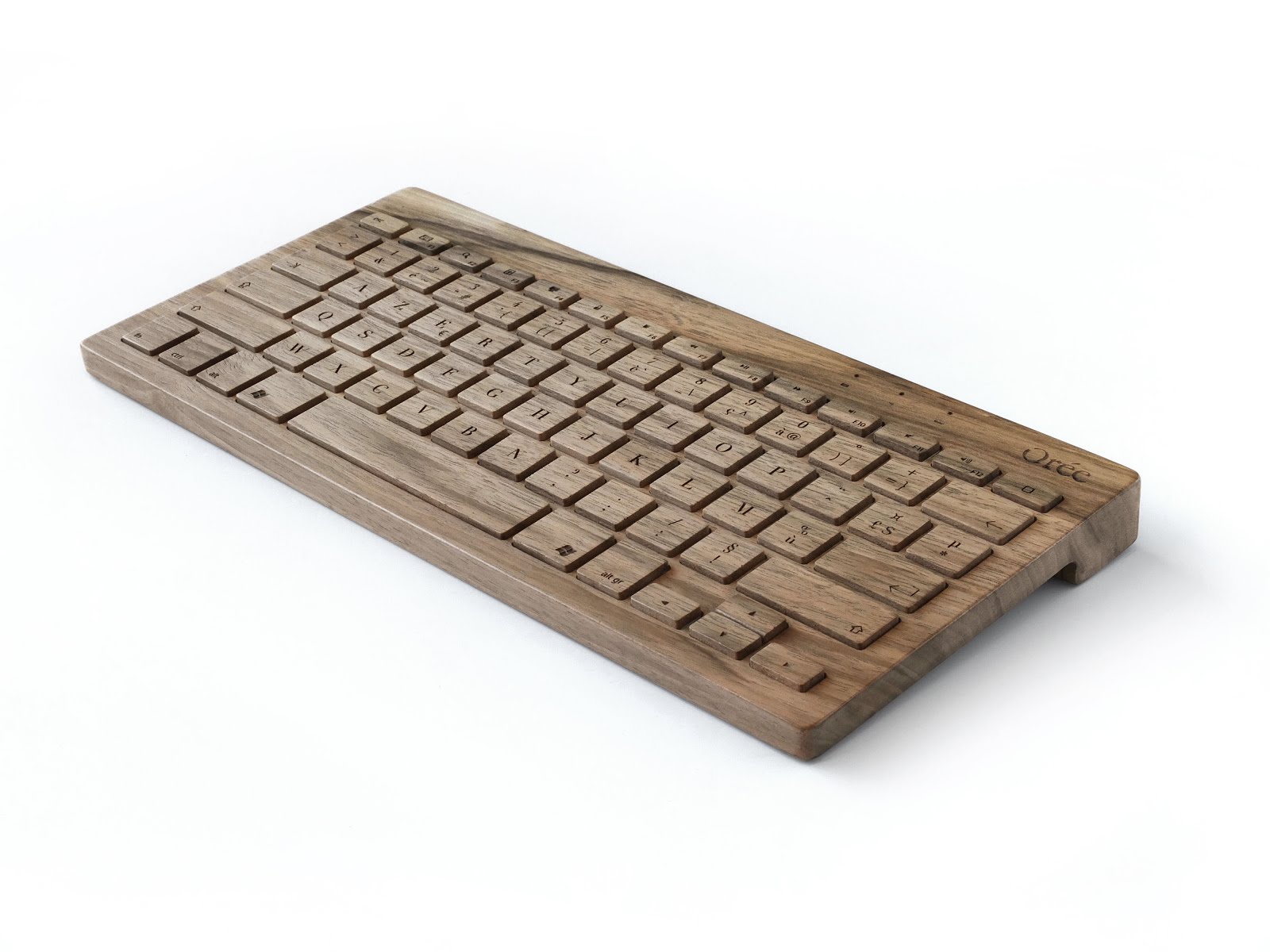
A pop-up shop in Tokyo’s Ginza district allows visitors to put the finishing touches on handmade wooden tech accessories. This week the French design company Orée introduces their portable wireless keyboard to Japan in their first open workshop of this kind.

wood keyboard workshop

Otherwise available for purchase online, the pop-up shop allows customers the opportunity to customize their keyboard with a choice of fonts and engraving, but the real treat is being able to select your piece of wood. Each keyboard is made from a single board, so grain lines that continue across the keys and shell can be striking. According to designer Franck Fontana, customer preferences vary greatly and some visitors spend hours deliberating over their choices. Once the tough decisions are made, however, engraving takes only about 20 minutes.

oree_2

The company plans to offer other tech products made of natural materials. Wood for these keyboards is sourced in the French Alps, and the accompanying cases are made from recycled pressed leather and natural latex.

Over time the wood keyboards change slightly, becoming glossy and in effect, growing with its user. The only problem is that your keyboard will eventually reveal how often you’re using that delete key.

Orée Popup Workshop
LEAGUE Ginza 502
3-11-1 Ginza, Chuo-ku, Tokyo 104-0061
Until July 7th, 2013

More event info in Japanese here.

Frontier Car | A Mobile Flower Arrangement by Yuji Ueno

yuji-uenoall photos courtesy PingMag | click to enlarge

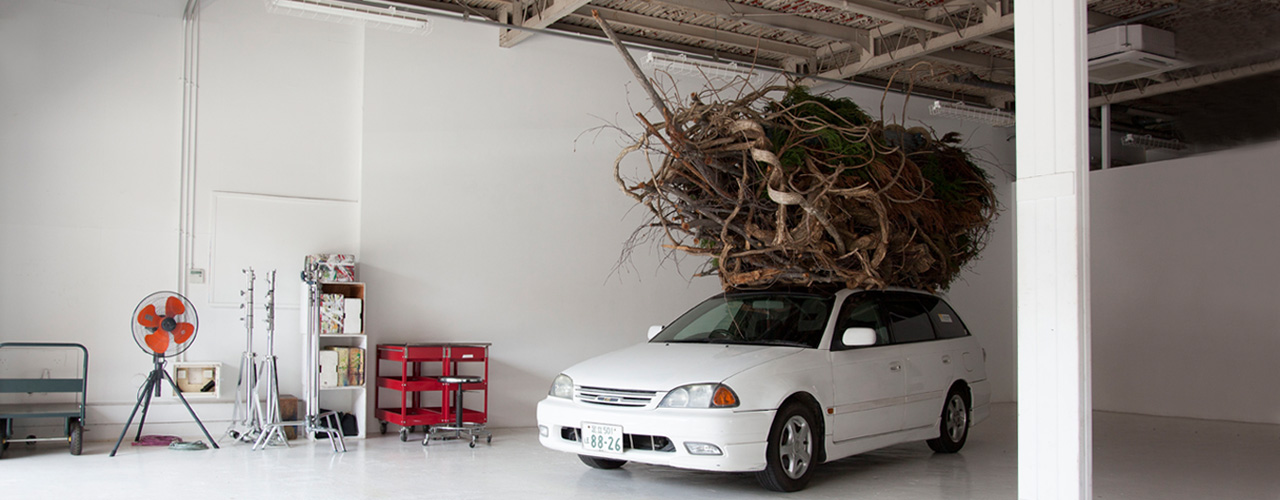
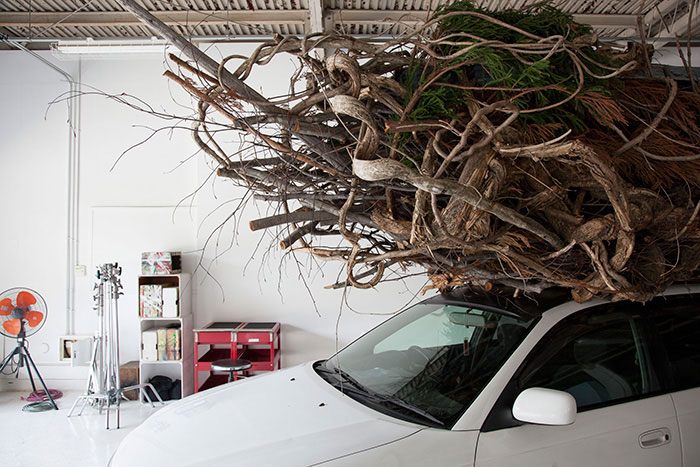
Yuji Ueno is a “budding” flower arrangement artist, known in Japanese as kadoka. But you won’t find Ueno’s work on a typical display table, or behind glass. Known as somewhat of an experimental punk in his field, Ueno has taken the traditional art of flower arrangement, quite literally, out into the streets.

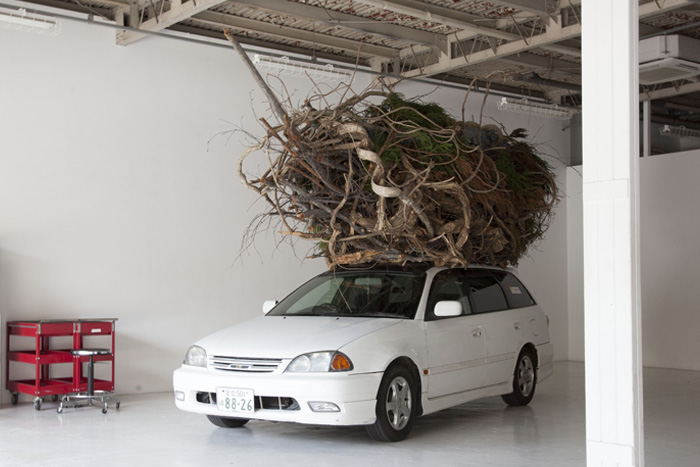
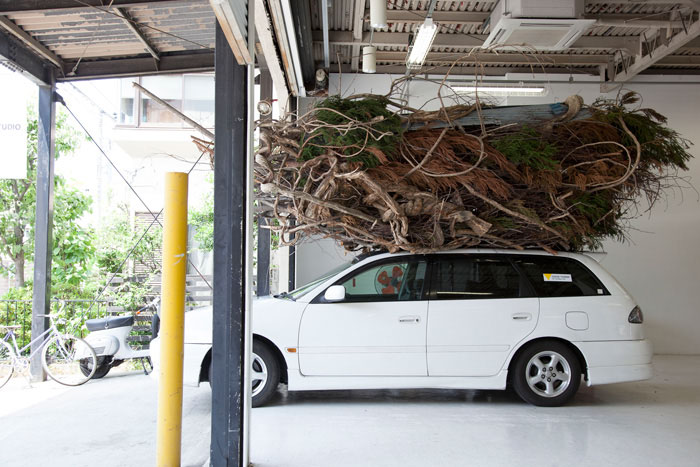
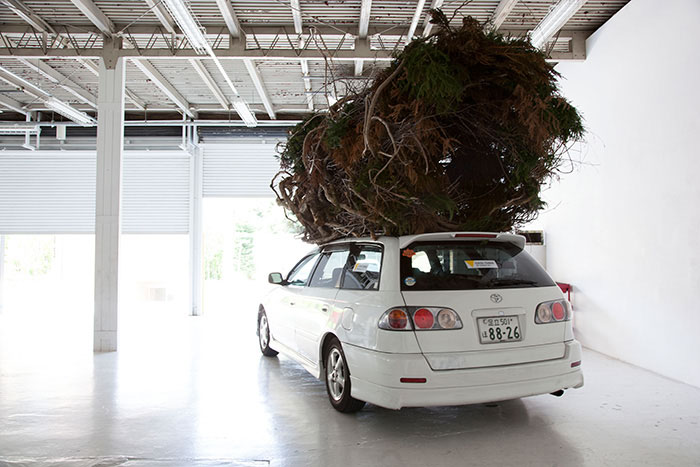
His latest creation is “Frontier Car,” an arrangement of vegetation and scrap wood collected from the mountains of a rural village that, from afar, could easily be mistaken as an oversized Christmas tree being carried home from the field. But this is the middle of summer. And, when given a closer look, it’s immediately clear that the human hand has been at work, carefully creating a symmetrical work of art in the shape of a boat.

PingMag recently spoke with the artist, who explained that “there was no better way to tell the world about the wonders of Ikebana” than to strap it to the hood of his car and drive around.

yuji-ueno04

yuji-ueno06

yuji-ueno07

yuji-ueno08

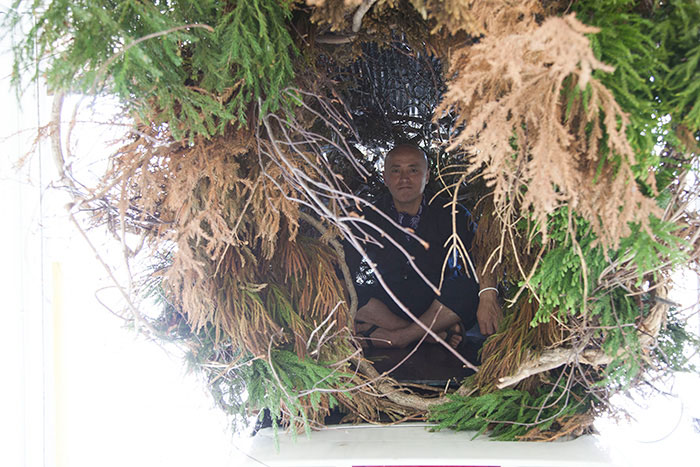
There’s even space to climb inside!

yuji-ueno09

« Older posts Newer posts »

© 2026 Spoon & Tamago

Up ↑

Design by Bento Graphics